
Ask AI
— answers from the official manualAnswers from the official manual.
Common questions
Common Questions
8 totalHow do I switch songs using my Hbq Q82tws?
Double click the L earphone touch key to go to the next song and double click the R earphone to go to the previous song. (Page 5)
How do I control volume using my Hbq Q82tws?
Long press the touch key on the R earphone to increase volume and long press the L earphone to decrease volume. (Page 5)
How do I connect my Hbq Q82tws to a Bluetooth device?
After removing both earphones from the charging case, turn on your mobile phone's Bluetooth and search for the 'W1' device. Connect successfully after seeing an alternating red and blue light on the host earphone (R) and a slow flashing blue light on the auxiliary headphone. (Page 2)
What should I do if my charging case does not charge properly?
Please check whether the interface is properly connected or try to replace the charging line as outlined in the manual on page 9.
How far can my earphones be from each other and still work?
The interconnection distance between the left and right earphones is within 3 meters of zero obstacles. (Page 9)
What does it mean when the light on my Hbq Q82tws flashes blue slowly?
A blue light flashing slowly indicates that the earphones are not connected to a device. (Page 6)
Full Manual
9 pages
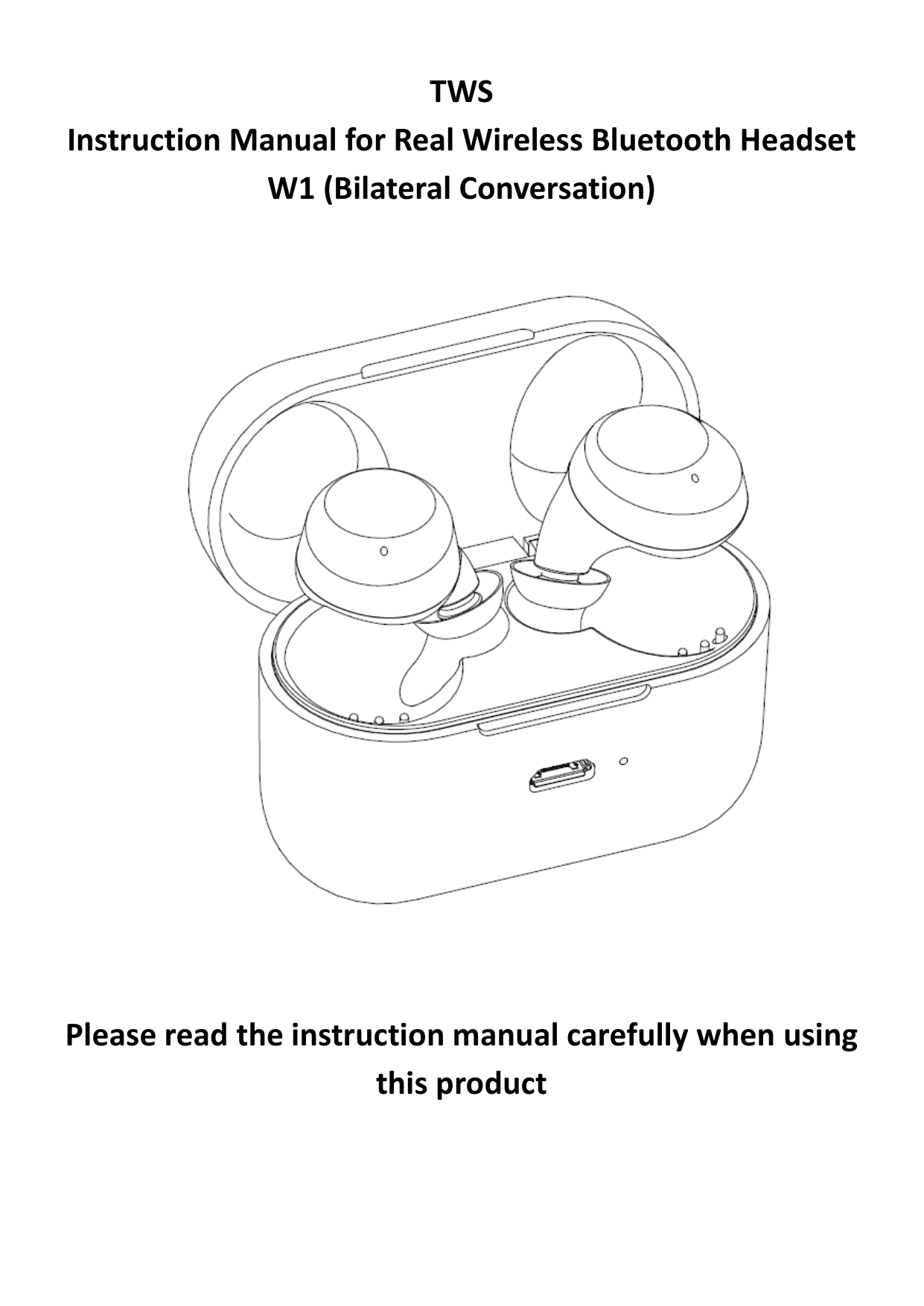
TWS Instruction Manual for Real Wireless Bluetooth Headset W1 (Bilateral Conversation)

Please read the instruction manual carefully when using this product
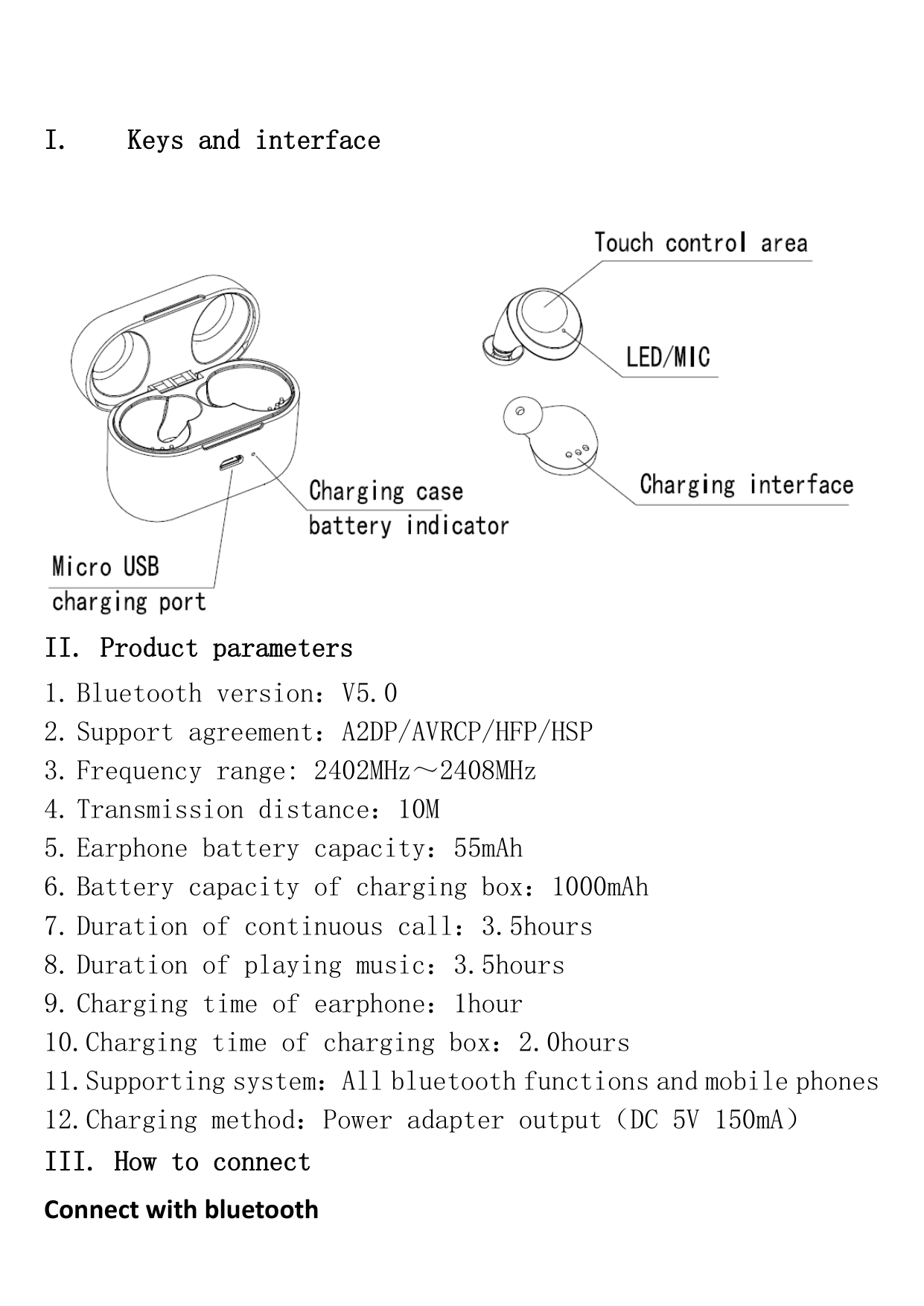

charging box, the earphones are turned on and automatically paired to stereo. After the successful connection, the host (R earphone) will flash the "red and blue light" alternately, and the auxiliary headphone indicator will slowly flash the blue light. At this point, turn on the bluetooth on mobile phone and search device "W1" to connect successfully.
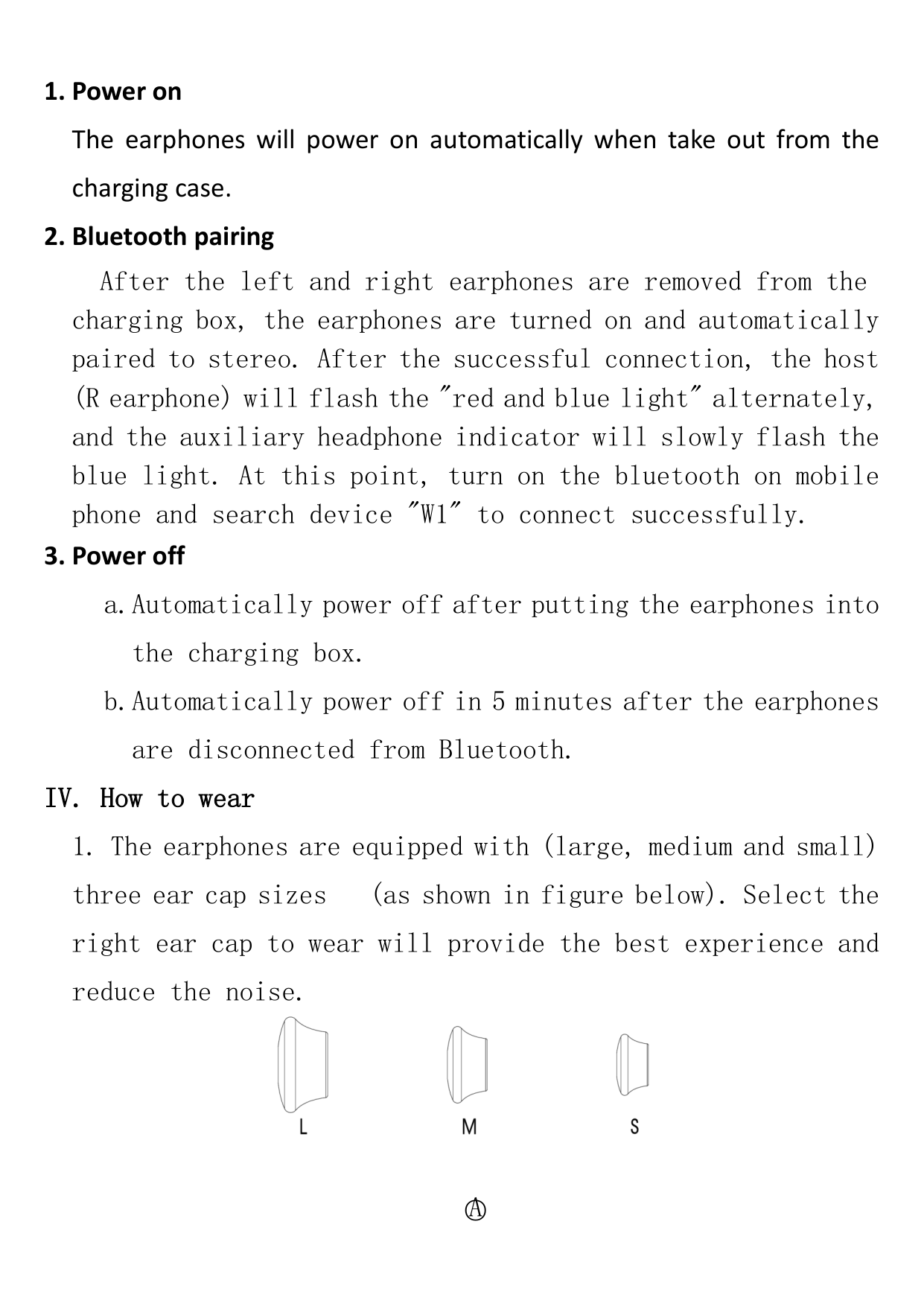
IV. How to wear

○A
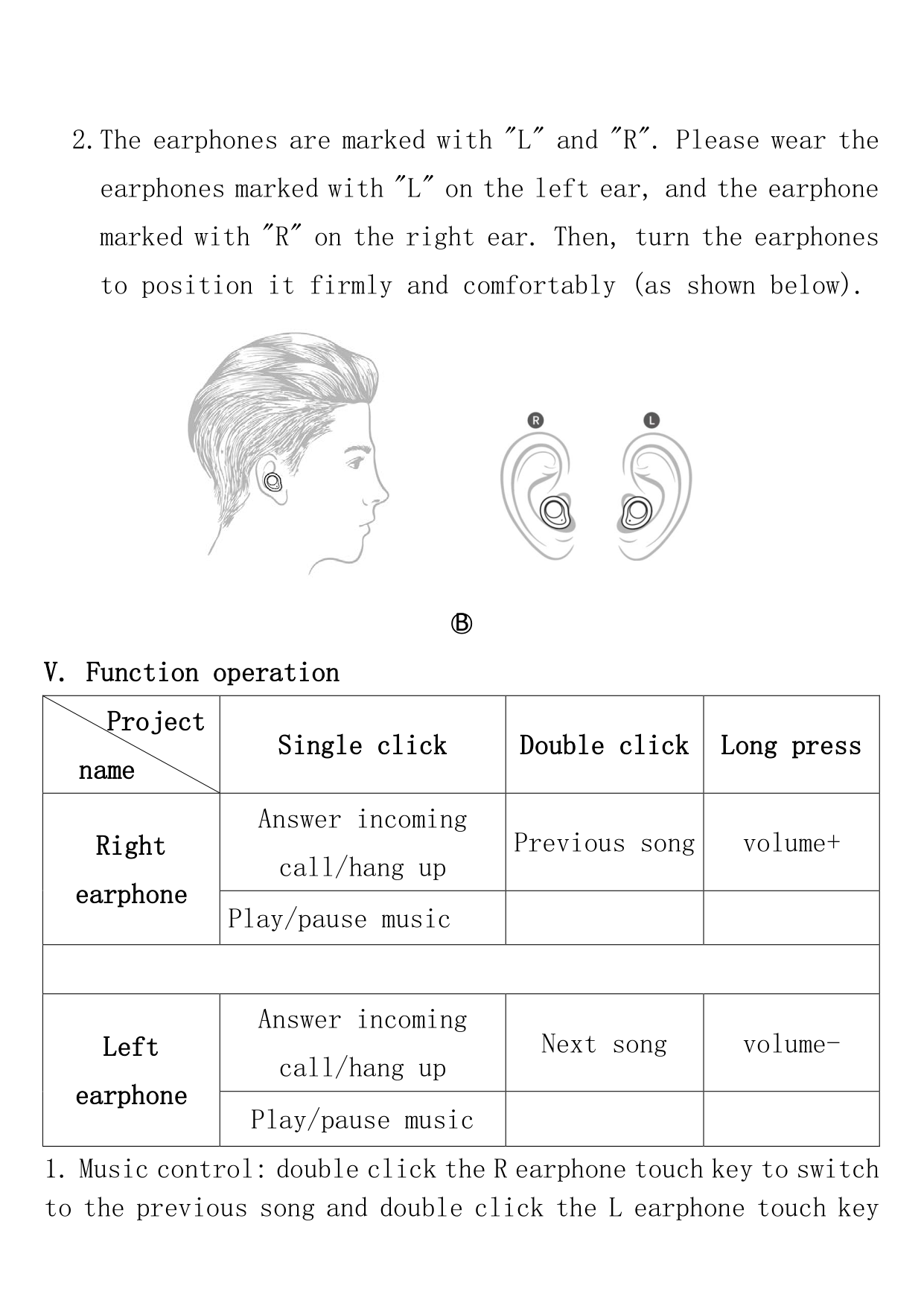


○B
V. Function operation
|Project name|Single click|Double click|Long press| |---|---|---|---| |Right earphone|Answer incoming call/hang up|Previous song|volume+| |Right earphone|Play/pause music| | | | | | | | |Left earphone|Answer incoming call/hang up|Next song|volume-| |Left earphone|Play/pause music| | |
to switch to the next song; Single click any earphone touch key to pause/play.
VI. Instructions of earphones indicator:
VII. Earphone charging
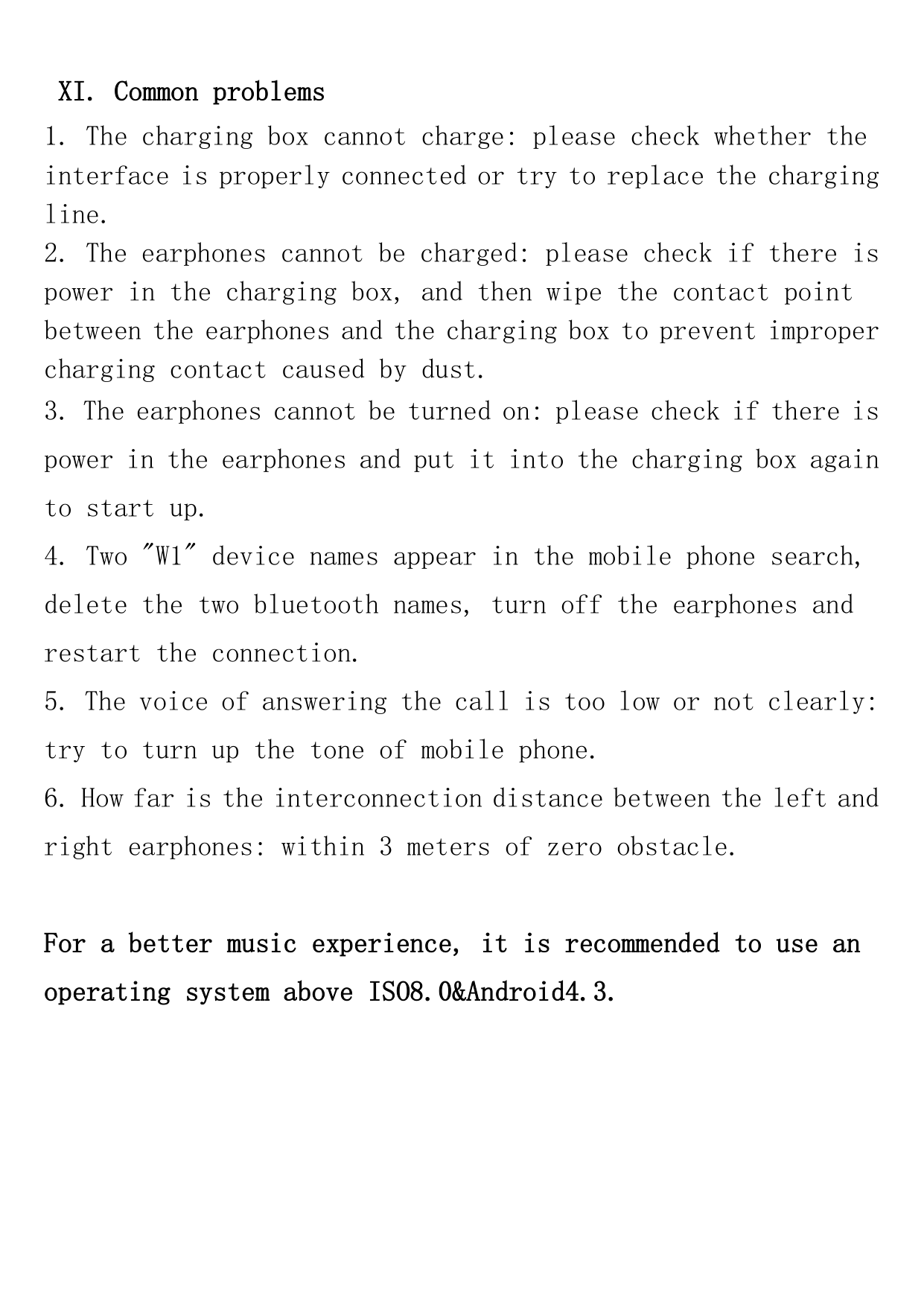
VIII. Charged by charging box

IX. Attention
X. Warning
XI. Common problems
For a better music experience, it is recommended to use an operating system above ISO8.0&Android4.3.
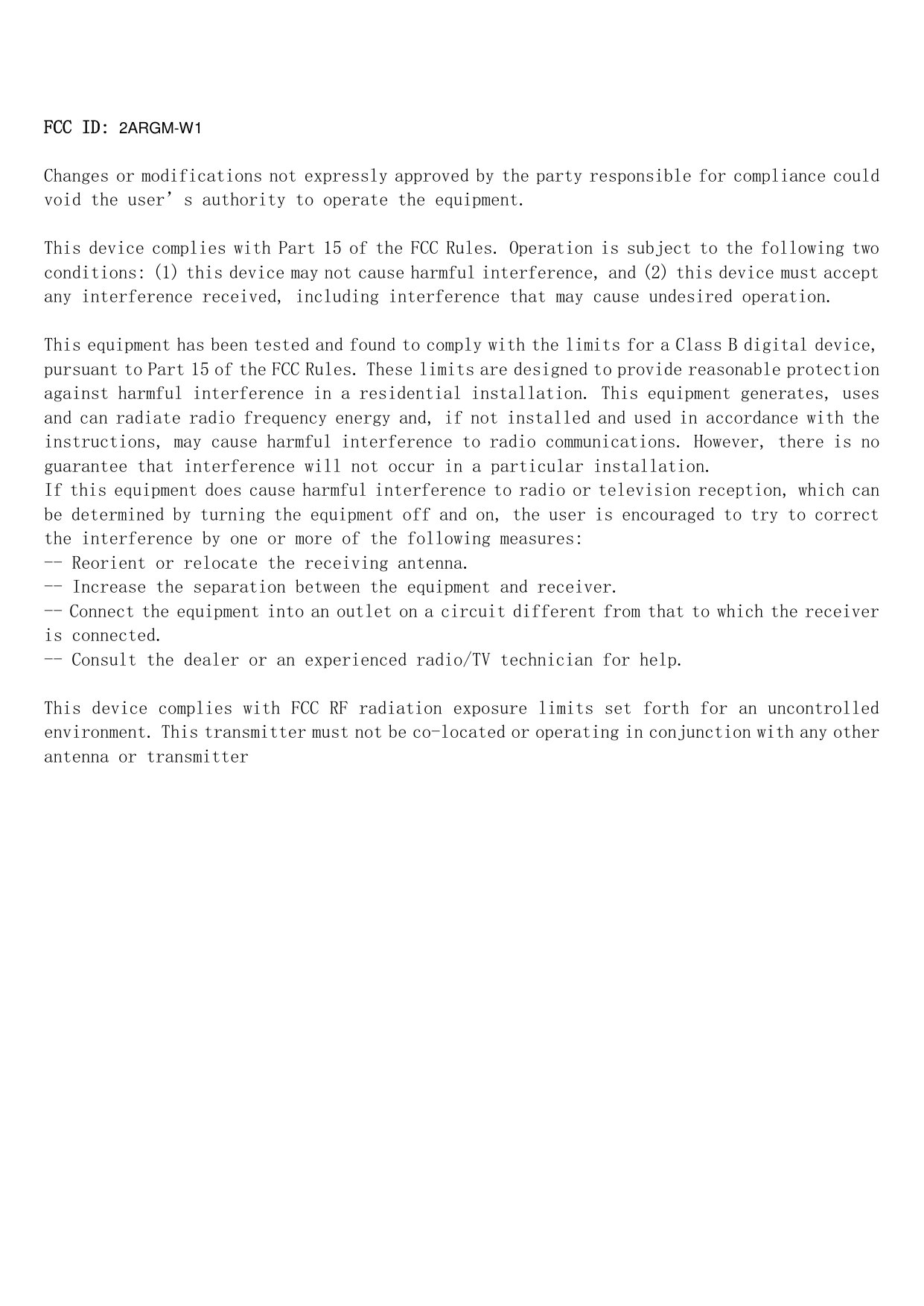
FCC ID: 2ARGM-W1
Changes or modifications not expressly approved by the party responsible for compliance could void the user’s authority to operate the equipment.
This device complies with Part 15 of the FCC Rules. Operation is subject to the following two conditions: (1) this device may not cause harmful interference, and (2) this device must accept any interference received, including interference that may cause undesired operation.
This equipment has been tested and found to comply with the limits for a Class B digital device, pursuant to Part 15 of the FCC Rules. These limits are designed to provide reasonable protection against harmful interference in a residential installation. This equipment generates, uses and can radiate radio frequency energy and, if not installed and used in accordance with the instructions, may cause harmful interference to radio communications. However, there is no guarantee that interference will not occur in a particular installation. If this equipment does cause harmful interference to radio or television reception, which can be determined by turning the equipment off and on, the user is encouraged to try to correct the interference by one or more of the following measures:
-- Reorient or relocate the receiving antenna.
-- Increase the separation between the equipment and receiver.
-- Connect the equipment into an outlet on a circuit different from that to which the receiver is connected.
-- Consult the dealer or an experienced radio/TV technician for help.
This device complies with FCC RF radiation exposure limits set forth for an uncontrolled environment. This transmitter must not be co-located or operating in conjunction with any other antenna or transmitter