
HP Laserjet Enterprise 600 Printer M601
Ask AI
— answers from the official manualAnswers from the official manual.
Common questions
Common Questions
29 totalHow do I change default duplex settings?
To change the default duplex setting, go to Administration > General Settings > Print Quality Image Registration > Sides. Select either '1-sided' or '2-sided'.
How do I calibrate my printer?
To initiate a calibration cycle, press the Home button twice to enter the Device Maintenance menu then select Calibrate/Cleaning. Choose Calibration tab and follow onscreen prompts.
How do I ensure that the USB cable is properly connected during setup?
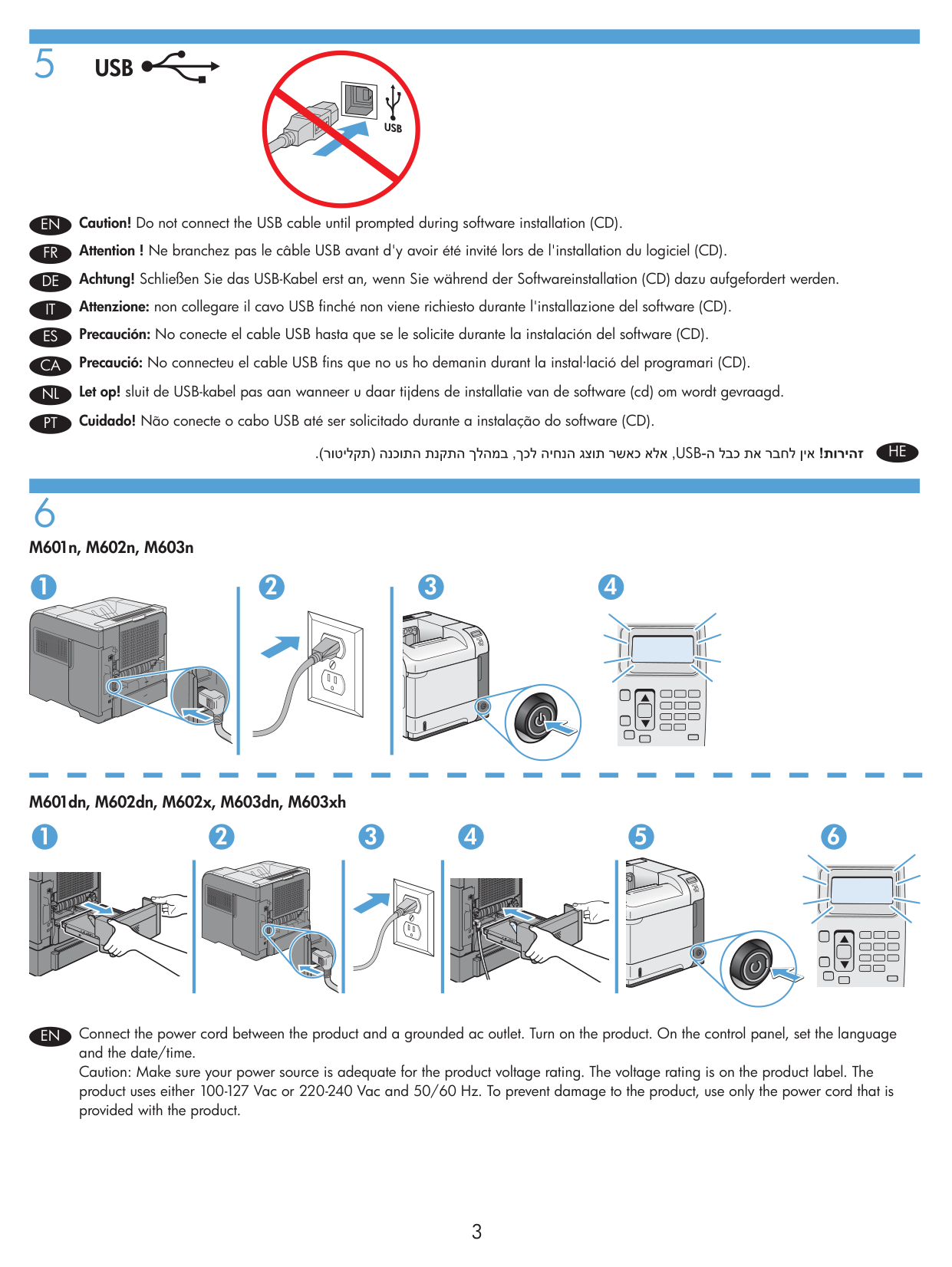
Do not connect the USB cable to the printer until prompted during software installation from the CD or via the HP website instructions. Connecting it prematurely may cause malfunction or damage. (Page 4)
What is the recommended temperature and humidity range for my HP LaserJet Enterprise 600?
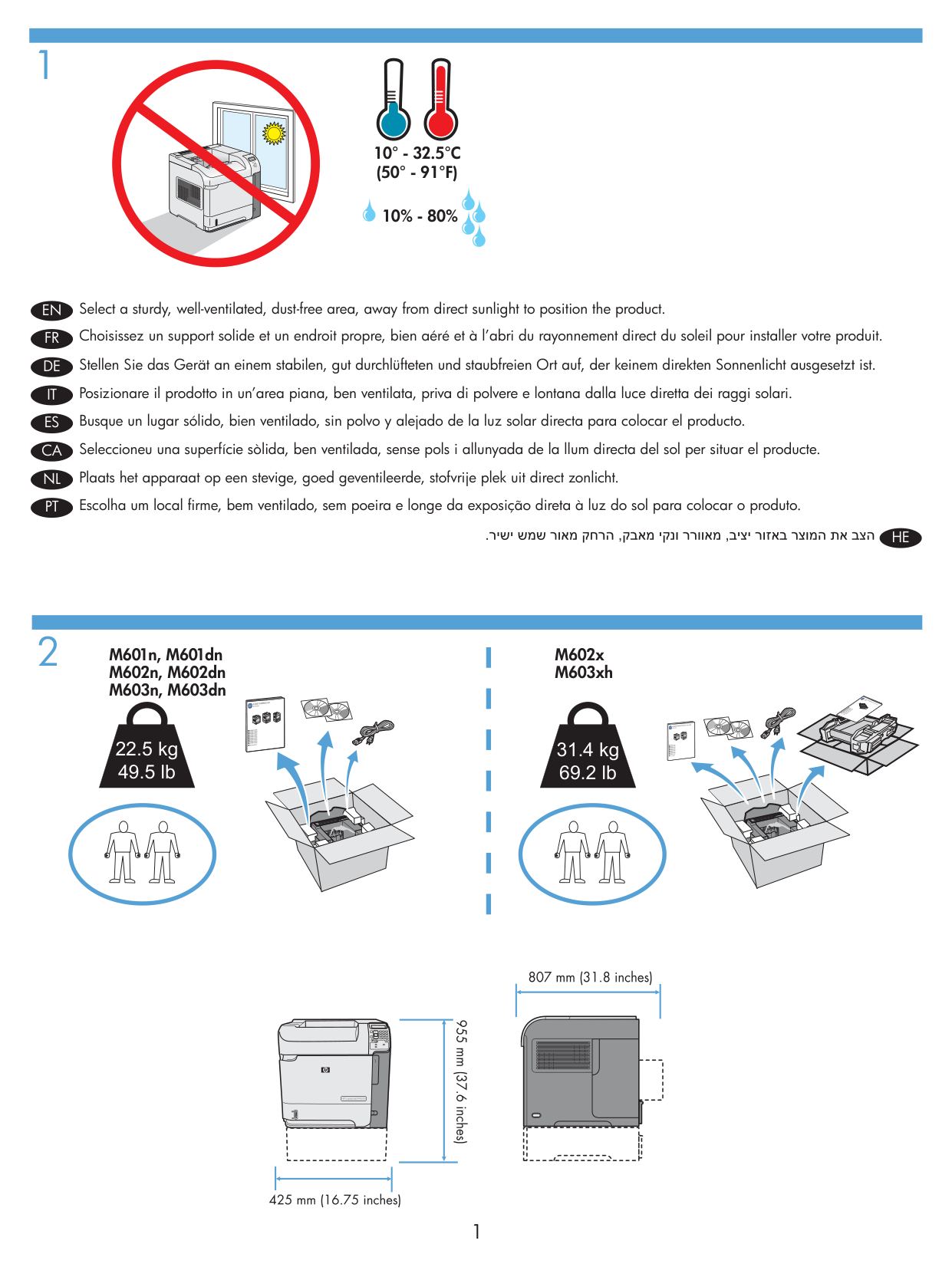
The printer should be operated within a relative humidity of 10% to 80% and at temperatures from 10°C to 32.5°C (50°F to 91°F) to ensure optimal performance and durability. (Page 2)
How can I find additional support and product details for my printer?
Visit the HP User Guide or go to www.hp.com/support/lj600QSeries for more information on your HP LaserJet Enterprise M601 and troubleshooting guides. (Page 7)
What should I do if my printer is experiencing harmful interference?
Ensure the equipment is installed and used in compliance with FCC rules and guidelines. If placed in a residential area, it might cause harmful interference to radio communications; users will be required to correct this at their own expense. (Page 8)
Show 23 more questions
How do I properly ventilate my HP LaserJet Enterprise M601 printer?
What are the voltage requirements for the HP LaserJet Enterprise M601?
How do I maintain my HP LaserJet Enterprise M601?
Is the HP LaserJet Enterprise 600 M601 suitable for use in a residential area?
What should I do if I see flashing lights indicating an issue?
Where should I place the HP LaserJet Enterprise 600 M601 printer?
What voltage does the HP LaserJet Enterprise 600 M601 require?
Can I use a third-party power cord with the HP LaserJet Enterprise 600 M601?
When should I connect the USB cable during setup of the HP LaserJet Enterprise 600 M601?
How do I complete the initial setup after powering on the HP LaserJet Enterprise 600 M601?
What are the operating temperature and humidity requirements for the HP LaserJet Enterprise 600 M601?
Where can I find additional troubleshooting information for the HP LaserJet Enterprise 600 M601?
Is the HP LaserJet Enterprise 600 M601 compliant with FCC regulations?
Can I modify the HP LaserJet Enterprise 600 M601 printer hardware?
How can I install additional fonts on my printer?
What power supply range does my printer use?
How do I add trays to my printer?
How do I safely connect the power cord to my HP LaserJet Enterprise 600?
What should I do first when setting up my HP LaserJet Enterprise 600?
How do I set the sleep mode timer on my printer?
How do I reset my printer to factory defaults?
What should I do if I get error code E247 when trying to print?
How do I add paper sizes not listed in the printer menu?
Full Manual
248 pages
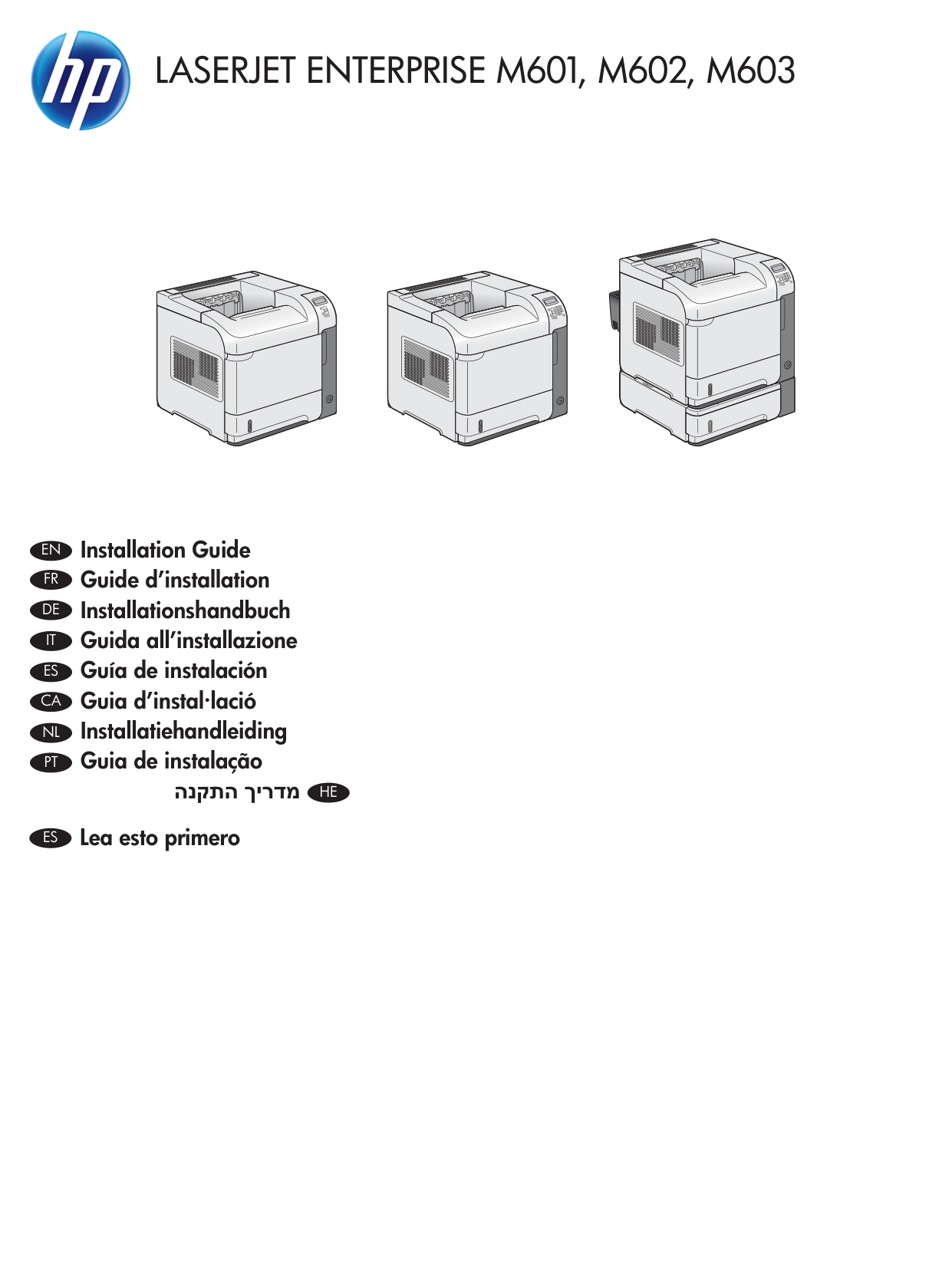

HP LaserJet Enterprise 600 M601, M602, and M603 Series Printer
User Guide
Copyright and License
© Copyright 2017 HP Development Company, L.P.
Reproduction, adaptation, or translation without prior written permission is prohibited, except as allowed under the copyright laws.
The information contained herein is subject to change without notice.
The only warranties for HP products and services are set forth in the express warranty statements accompanying such products and services. Nothing herein should be construed as constituting an additional warranty. HP shall not be liable for technical or editorial errors or omissions contained herein.
Edition 1, 8/2017
Trademark Credits
Adobe®, Acrobat®, and PostScript® are trademarks of Adobe Systems Incorporated.
Intel® Core™ is a trademark of Intel Corporation in the U.S. and other countries.
Microsoft®, Windows®, Windows® XP, and Windows Vista® are U.S. registered trademarks of Microsoft Corporation.
UNIX® is a registered trademark of The Open Group.
ENERGY STAR and the ENERGY STAR mark are registered U.S. marks.
Conventions used in this guide TIP: Tips provide helpful hints or shortcuts. NOTE: Notes provide important information to explain a concept or to complete a task. CAUTION: Cautions indicate procedures that you should follow to avoid losing data or damaging the product. WARNING! Warnings alert you to specific procedures that you should follow to avoid personal injury, catastrophic loss of data, or extensive damage to the product.
| | |---|
ENWW iii
####### iv Conventions used in this guide ENWW
Table of contents
###### 1 Product basics ........................................................................................................................................................................................... 1Product comparison ................................................................................................................................................................. 2
Environmental features ........................................................................................................................................................... 5 Accessibility features ................................................................................................................................................................ 6 Product views ............................................................................................................................................................................ 7
Front view .............................................................................................................................................................. 7 Rear view ............................................................................................................................................................... 8 Interface ports ...................................................................................................................................................... 9 Serial number and model number location ..................................................................................................... 9
####### 2 Control panel menus .............................................................................................................................................................................. 11Control-panel layout .............................................................................................................................................................. 12Retrieve Job from USB menu ............................................................................................................................................... 14Retrieve Job from Device Memory menu ........................................................................................................................... 15Supplies menu ........................................................................................................................................................................ 16Trays menu ............................................................................................................................................................................. 17Administration menu ............................................................................................................................................................. 18
Reports menu .................................................................................................................................................... 18 General Settings menu ..................................................................................................................................... 18 Retrieve From USB Settings menu ................................................................................................................. 20 General Print Settings menu ........................................................................................................................... 21 Default Print Options menu ............................................................................................................................. 23 Display Settings menu ...................................................................................................................................... 23 Manage Supplies menu .................................................................................................................................... 24 Manage Trays menu ......................................................................................................................................... 25 Stapler/Stacker Settings menu ....................................................................................................................... 26 Multi-Bin Mailbox Settings menu .................................................................................................................... 26 Network Settings menu ................................................................................................................................... 27 Troubleshooting menu ..................................................................................................................................... 30
ENWW v
Device Maintenance menu .................................................................................................................................................... 31 Backup/Restore menu ...................................................................................................................................... 31 Calibrate/Cleaning menu .................................................................................................................................. 31 USB Firmware Upgrade menu ......................................................................................................................... 32 Service menu ...................................................................................................................................................... 32
HP Universal Print Driver (UPD) ....................................................................................................................... 35 UPD installation modes ............................................................................................................... 36
Change print job settings for Windows .............................................................................................................................. 37 Priority for print settings .................................................................................................................................. 37 Change the settings for all print jobs until the software program is closed ............................................ 37 Change the default settings for all print jobs ............................................................................................... 37 Change the product configuration settings ................................................................................................... 37
Remove the printer driver from Windows .......................................................................................................................... 39 Supported utilities for Windows .......................................................................................................................................... 40
Priority for print settings .................................................................................................................................. 40 HP Embedded Web Server ............................................................................................................................... 40 HP ePrint ............................................................................................................................................................. 40
Software for other operating systems ............................................................................................................................... 41
Supported operating systems and printer drivers for Mac ......................................................................... 44 Install software for Mac operating systems .................................................................................................. 44
Install software for Mac computers connected directly to the product ............................... 44 Install software for Mac computers on a wired network ........................................................ 45
Configure the IP address ......................................................................................... 45 Install the software .................................................................................................. 46
Remove the printer driver from Mac operating systems ............................................................................ 46 Priority for print settings for Mac .................................................................................................................... 48 Change printer-driver settings for Mac .......................................................................................................... 48
Change the settings for all print jobs until the software program is closed ....................... 48 Change the default settings for all print jobs ........................................................................... 48 Change the product configuration settings .............................................................................. 48
Software for Mac computers ........................................................................................................................... 49
HP Utility for Mac ........................................................................................................................... 49 Open the HP Printer Utility ...................................................................................... 49 HP Utility features .................................................................................................... 49
Supported utilities for Mac ............................................................................................................................... 50 HP Embedded Web Server .......................................................................................................... 50 HP ePrint ........................................................................................................................................ 50 AirPrint ............................................................................................................................................ 50
Basic print tasks with Mac ..................................................................................................................................................... 51 Cancel a print job with Mac .............................................................................................................................. 51 Change the paper size and type with Mac ..................................................................................................... 51 Resize documents or print on a custom paper size with Mac .................................................................... 51 Create and use printing presets with Mac ..................................................................................................... 51 Print a cover page with Mac ............................................................................................................................. 52 Use watermarks with Mac ................................................................................................................................ 52 Print multiple pages on one sheet of paper with Mac ................................................................................. 53 Print on both sides of the page (duplex printing) with Mac ........................................................................ 53 Store jobs with Mac ........................................................................................................................................... 53
Solve problems with a Mac ................................................................................................................................................... 55
CD installation .................................................................................................................................................... 58
Connect to a network with Windows .................................................................................................................................. 59 Supported network protocols ......................................................................................................................... 59 Install the product on a wired network with Windows ................................................................................ 60
Configure the IP address .............................................................................................................. 60 Install the software ....................................................................................................................... 62
Configure network settings with Windows ................................................................................................... 63 View or change network settings ............................................................................................... 63 Set or change the network password ....................................................................................... 63 Manually configure IPv4 TCP/IP parameters from the control panel ................................... 64 Manually configure IPv6 TCP/IP parameters from the control panel ................................... 65 Link speed and duplex settings .................................................................................................. 66
Special paper guidelines ................................................................................................................................... 68 Change the printer driver to match the paper type and size in Windows ..................................................................... 70 Supported paper sizes .......................................................................................................................................................... 71 Supported paper types ......................................................................................................................................................... 73
Supported paper types for input options ...................................................................................................... 73 Supported paper types for output options ................................................................................................... 74
Tray and bin capacity ............................................................................................................................................................. 75
ENWW vii
Load paper trays .................................................................................................................................................................... 76
Load letterhead, preprinted, or prepunched paper ................................................................. 81 Load envelopes ............................................................................................................................. 82
Configure trays ....................................................................................................................................................................... 83 Configure a tray when loading paper ............................................................................................................. 83 Configure a tray to match print job settings ................................................................................................. 83 Configure a tray from the control panel ........................................................................................................ 83
Select an output bin ............................................................................................................................................................... 85 Print to the top (standard) output bin ............................................................................................................ 85 Print to the rear output bin .............................................................................................................................. 85 Print to the optional stacker or stapler/stacker ............................................................................................ 86 Print to the 5-bin mailbox ................................................................................................................................ 87
Print cartridge views ......................................................................................................................................... 91 Manage print cartridges ........................................................................................................................................................ 92
Change settings for print cartridges ............................................................................................................... 92 Print when a print cartridge is at estimated end of life .......................................................... 92 Enable or disable the Very Low Settings options from the control panel ........................... 92 Print with EconoMode .................................................................................................................. 93
Store and recycle supplies ............................................................................................................................... 93 Recycle supplies ............................................................................................................................ 93 Print-cartridge storage ................................................................................................................ 93 HP policy on non-HP print cartridges ........................................................................................ 93
HP anticounterfeit Web site ............................................................................................................................. 93
Replacement instructions ..................................................................................................................................................... 95 Replace the print cartridge .............................................................................................................................. 95 Replace staples .................................................................................................................................................. 97 Perform preventive maintenance ................................................................................................................... 98
Reset the maintenance-kit counter ........................................................................................... 98 Solve problems with print cartridges .................................................................................................................................. 99
Check the print cartridges ................................................................................................................................ 99 Inspect the print cartridge for damage ................................................................................... 100 Repeating defects ...................................................................................................................... 101 Print the Supplies Status page ................................................................................................. 101
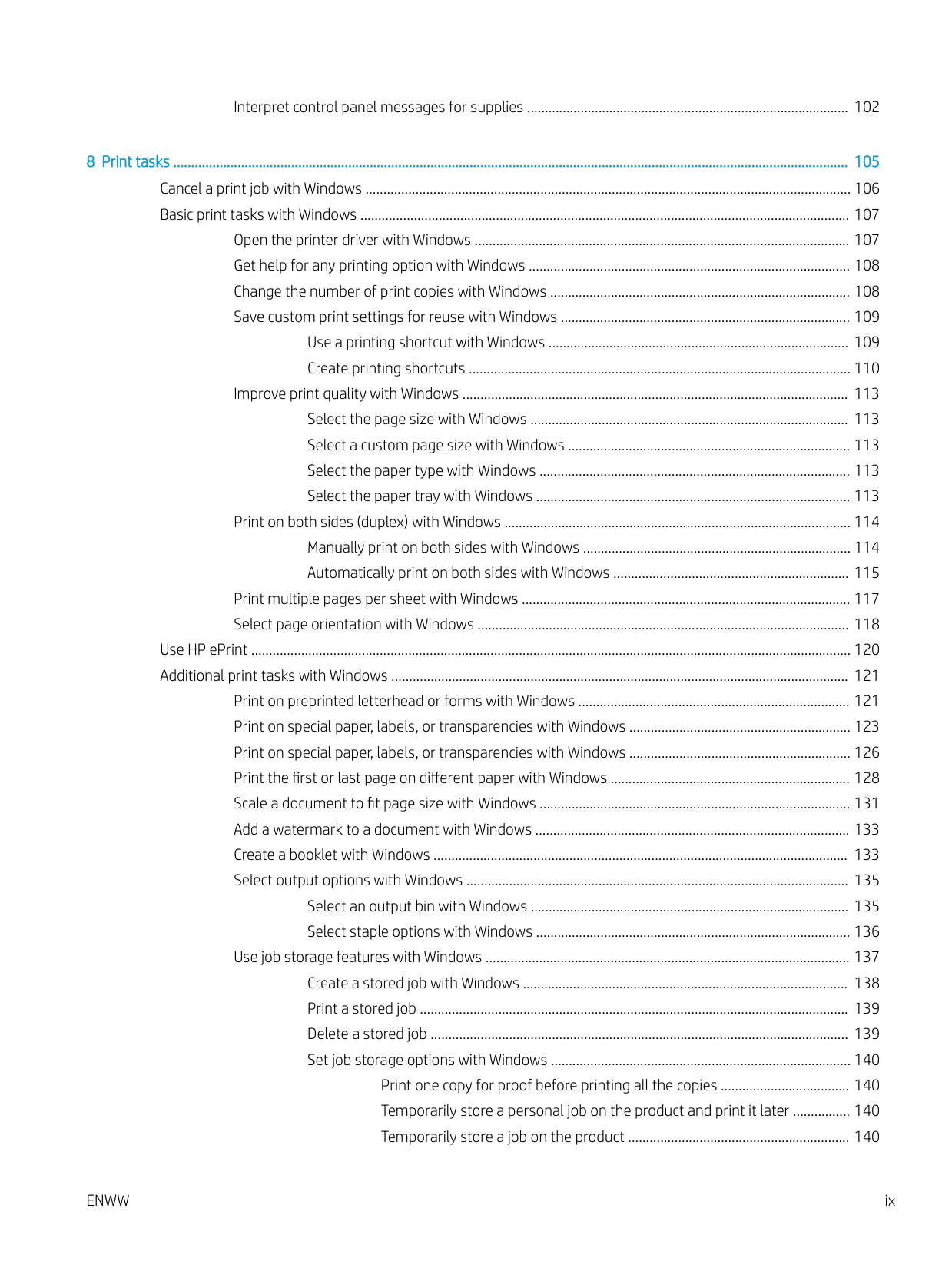
Interpret control panel messages for supplies .......................................................................................... 102
Open the printer driver with Windows ......................................................................................................... 107 Get help for any printing option with Windows .......................................................................................... 108 Change the number of print copies with Windows .................................................................................... 108 Save custom print settings for reuse with Windows ................................................................................. 109
Use a printing shortcut with Windows .................................................................................... 109 Create printing shortcuts ........................................................................................................... 110
Improve print quality with Windows ............................................................................................................ 113 Select the page size with Windows ......................................................................................... 113 Select a custom page size with Windows ............................................................................... 113 Select the paper type with Windows ....................................................................................... 113 Select the paper tray with Windows ........................................................................................ 113
Print on both sides (duplex) with Windows ................................................................................................. 114 Manually print on both sides with Windows ........................................................................... 114 Automatically print on both sides with Windows .................................................................. 115
Print multiple pages per sheet with Windows ............................................................................................ 117 Select page orientation with Windows ........................................................................................................ 118
Use HP ePrint ........................................................................................................................................................................ 120 Additional print tasks with Windows ................................................................................................................................ 121
Print on preprinted letterhead or forms with Windows ............................................................................ 121 Print on special paper, labels, or transparencies with Windows .............................................................. 123 Print on special paper, labels, or transparencies with Windows .............................................................. 126 Print the first or last page on different paper with Windows ................................................................... 128 Scale a document to fit page size with Windows ....................................................................................... 131 Add a watermark to a document with Windows ........................................................................................ 133 Create a booklet with Windows .................................................................................................................... 133 Select output options with Windows ........................................................................................................... 135
Select an output bin with Windows ......................................................................................... 135 Select staple options with Windows ........................................................................................ 136
Use job storage features with Windows ...................................................................................................... 137 Create a stored job with Windows ........................................................................................... 138 Print a stored job ........................................................................................................................ 139 Delete a stored job ..................................................................................................................... 139 Set job storage options with Windows .................................................................................... 140
Print one copy for proof before printing all the copies .................................... 140 Temporarily store a personal job on the product and print it later ................ 140 Temporarily store a job on the product .............................................................. 140
ENWW ix
Permanently store a job on the product ............................................................ 141 Make a permanently stored job private so that anyone who tries to print it must provide a PIN ............................................................................................. 141 Receive notification when someone prints a stored job .................................. 141 Set the user name for a stored job ..................................................................... 141 Specify a name for the stored job ....................................................................... 142
Print special jobs with Windows ................................................................................................................... 142
Set the duplex alignment .......................................................................................................... 142 Walk-up USB printing .......................................................................................................................................................... 143
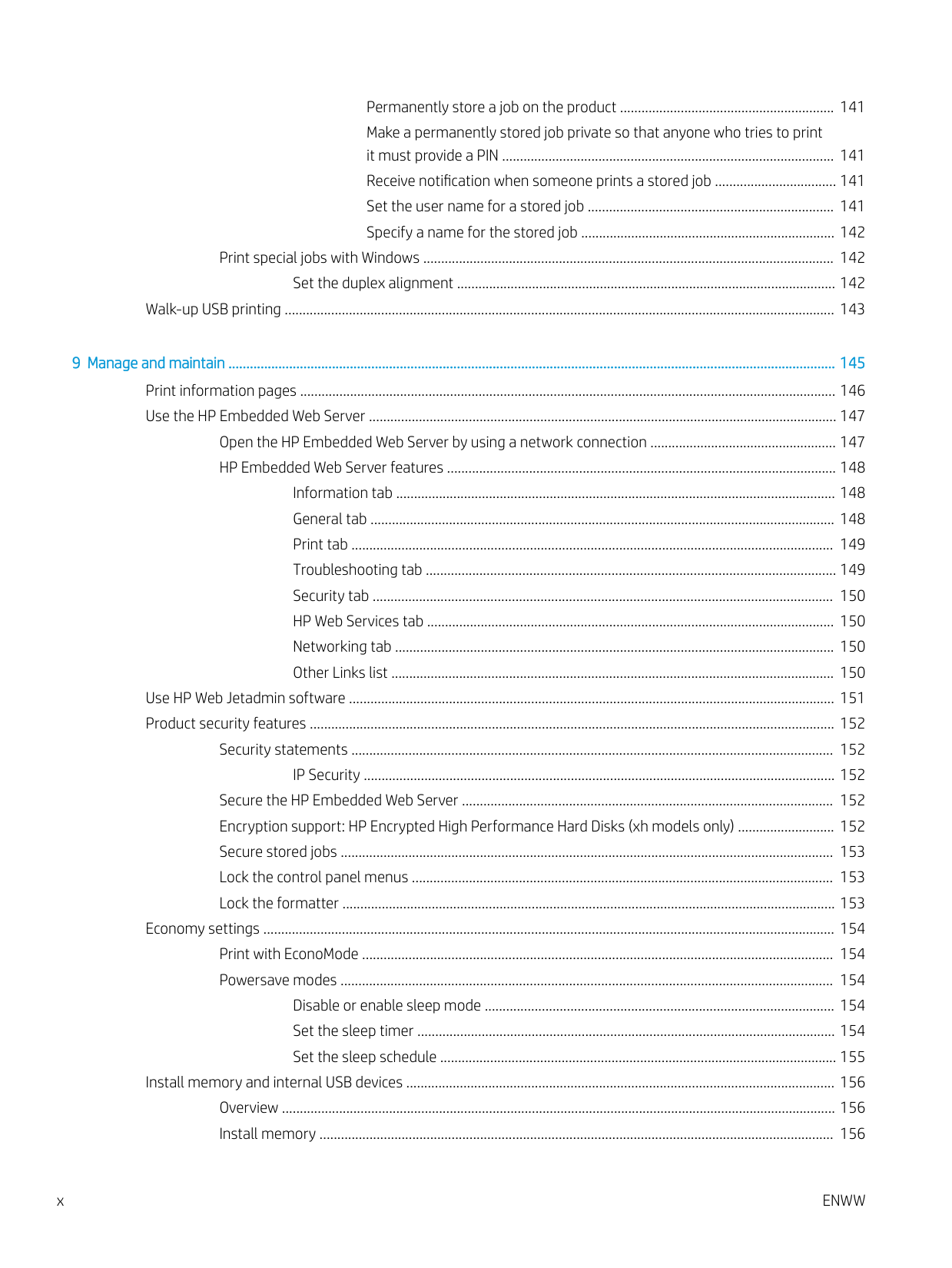
Open the HP Embedded Web Server by using a network connection .................................................... 147 HP Embedded Web Server features ............................................................................................................. 148
Information tab ........................................................................................................................... 148 General tab .................................................................................................................................. 148 Print tab ....................................................................................................................................... 149 Troubleshooting tab ................................................................................................................... 149 Security tab ................................................................................................................................. 150 HP Web Services tab .................................................................................................................. 150 Networking tab ........................................................................................................................... 150 Other Links list ............................................................................................................................ 150
Use HP Web Jetadmin software ........................................................................................................................................ 151 Product security features ................................................................................................................................................... 152
Security statements ....................................................................................................................................... 152
IP Security .................................................................................................................................... 152 Secure the HP Embedded Web Server ........................................................................................................ 152 Encryption support: HP Encrypted High Performance Hard Disks (xh models only) ........................... 152 Secure stored jobs .......................................................................................................................................... 153 Lock the control panel menus ...................................................................................................................... 153 Lock the formatter .......................................................................................................................................... 153
Economy settings ................................................................................................................................................................ 154 Print with EconoMode .................................................................................................................................... 154 Powersave modes .......................................................................................................................................... 154
Disable or enable sleep mode .................................................................................................. 154 Set the sleep timer ..................................................................................................................... 154 Set the sleep schedule ............................................................................................................... 155
Install memory and internal USB devices ........................................................................................................................ 156 Overview ........................................................................................................................................................... 156 Install memory ................................................................................................................................................ 156
Install product memory ............................................................................................................. 156 Enable memory ............................................................................................................................................... 157 Check DIMM installation ................................................................................................................................. 158 Memory allocation .......................................................................................................................................... 158 Install internal USB devices ........................................................................................................................... 160
Clean the product ................................................................................................................................................................. 161
Clean the paper path ...................................................................................................................................... 161 Product updates ................................................................................................................................................................... 161
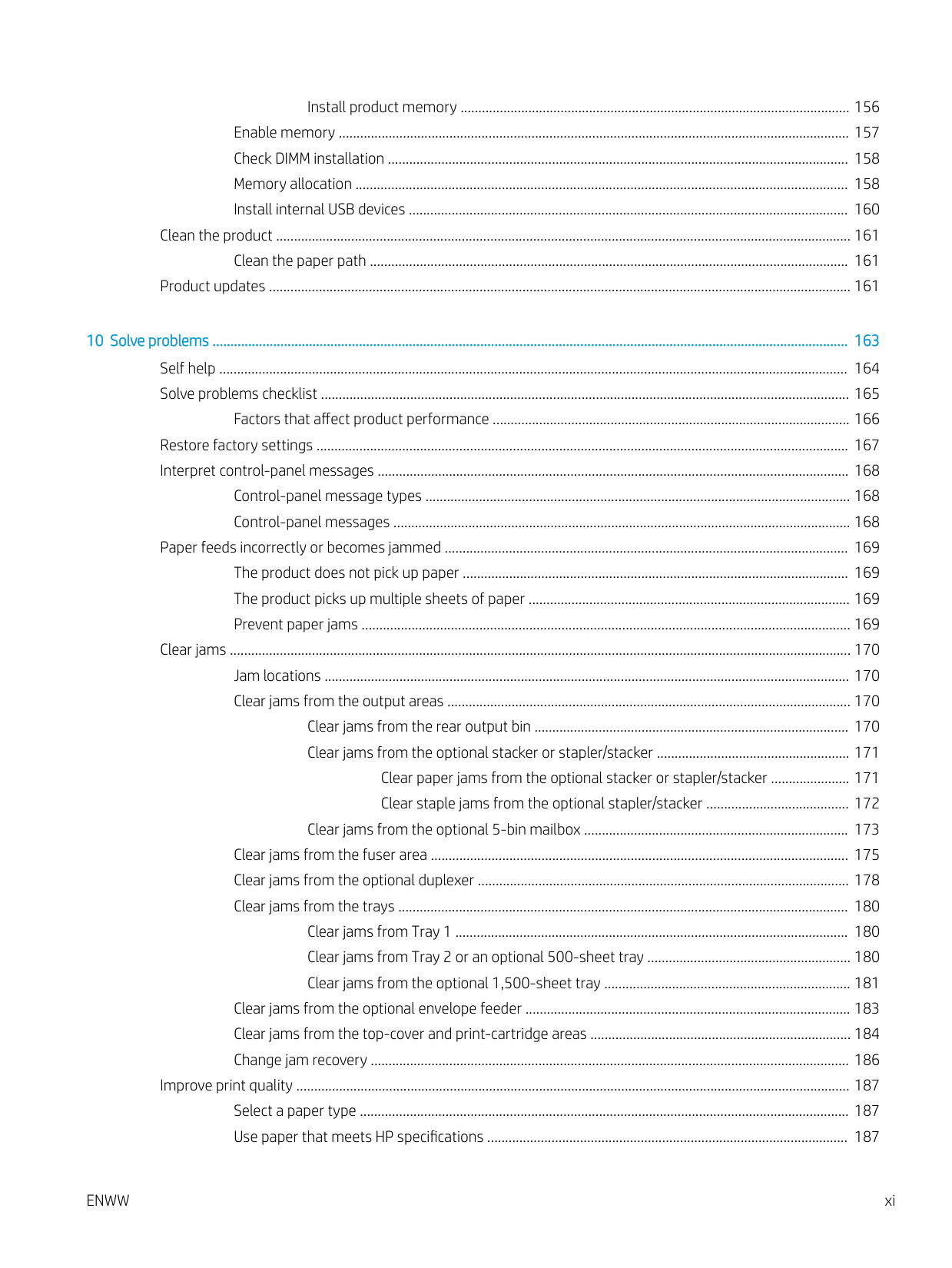
Factors that affect product performance .................................................................................................... 166 Restore factory settings ..................................................................................................................................................... 167 Interpret control-panel messages .................................................................................................................................... 168
Control-panel message types ....................................................................................................................... 168 Control-panel messages ................................................................................................................................ 168
Paper feeds incorrectly or becomes jammed ................................................................................................................. 169 The product does not pick up paper ............................................................................................................ 169 The product picks up multiple sheets of paper .......................................................................................... 169 Prevent paper jams ......................................................................................................................................... 169
Clear jams .............................................................................................................................................................................. 170 Jam locations ................................................................................................................................................... 170 Clear jams from the output areas ................................................................................................................. 170
Clear jams from the rear output bin ........................................................................................ 170 Clear jams from the optional stacker or stapler/stacker ...................................................... 171
Clear paper jams from the optional stacker or stapler/stacker ...................... 171 Clear staple jams from the optional stapler/stacker ........................................ 172
Clear jams from the optional 5-bin mailbox .......................................................................... 173 Clear jams from the fuser area ..................................................................................................................... 175 Clear jams from the optional duplexer ........................................................................................................ 178 Clear jams from the trays .............................................................................................................................. 180
Clear jams from the optional envelope feeder ........................................................................................... 183 Clear jams from the top-cover and print-cartridge areas ......................................................................... 184 Change jam recovery ...................................................................................................................................... 186
Improve print quality ........................................................................................................................................................... 187 Select a paper type ......................................................................................................................................... 187 Use paper that meets HP specifications ..................................................................................................... 187
ENWW xi
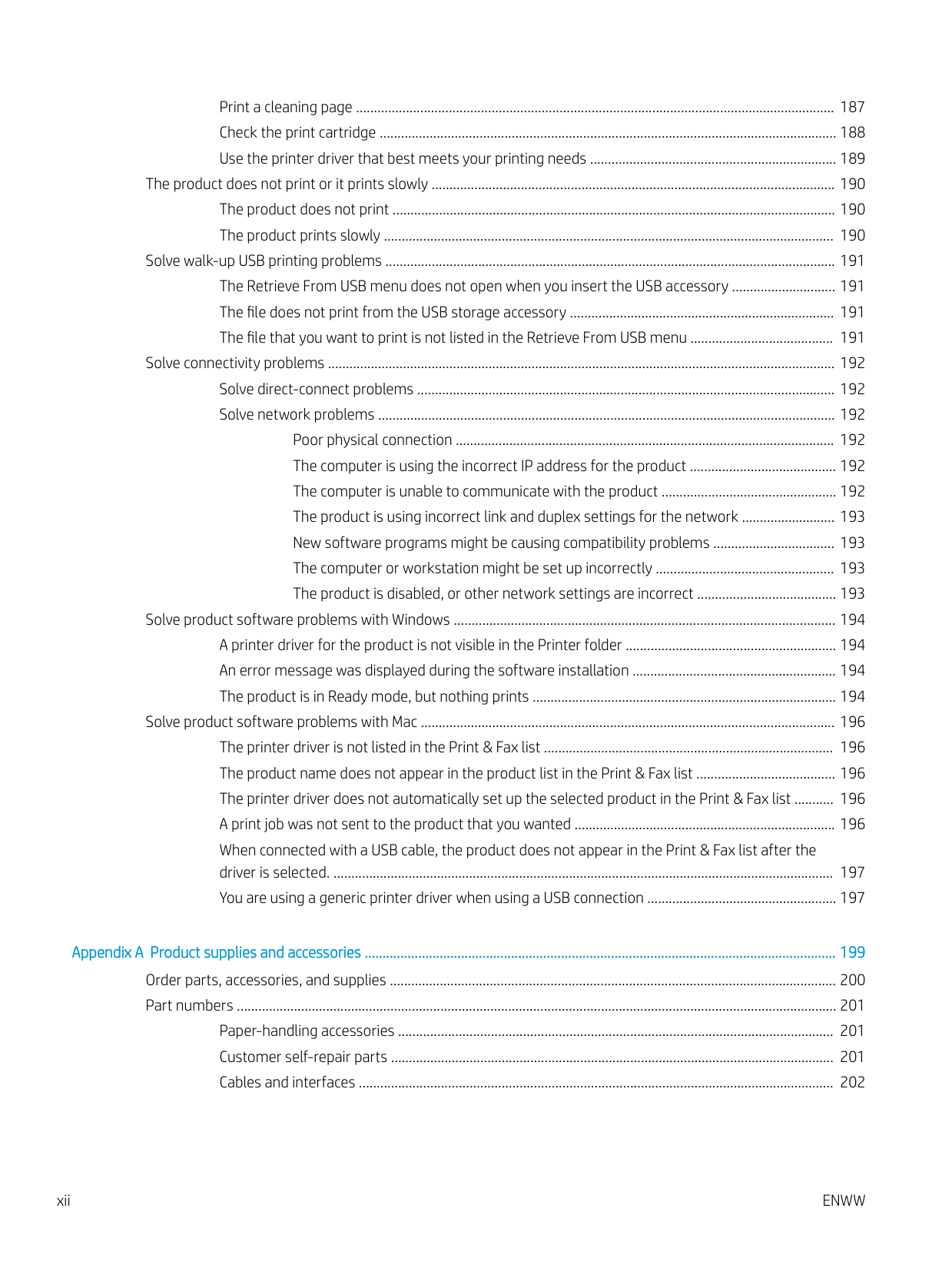
Print a cleaning page ...................................................................................................................................... 187 Check the print cartridge ................................................................................................................................ 188 Use the printer driver that best meets your printing needs ..................................................................... 189
The product does not print or it prints slowly ................................................................................................................. 190 The product does not print ............................................................................................................................ 190 The product prints slowly .............................................................................................................................. 190
Solve walk-up USB printing problems .............................................................................................................................. 191 The Retrieve From USB menu does not open when you insert the USB accessory ............................. 191 The file does not print from the USB storage accessory .......................................................................... 191 The file that you want to print is not listed in the Retrieve From USB menu ........................................ 191
Solve connectivity problems .............................................................................................................................................. 192 Solve direct-connect problems ..................................................................................................................... 192 Solve network problems ................................................................................................................................ 192
Poor physical connection .......................................................................................................... 192 The computer is using the incorrect IP address for the product ......................................... 192 The computer is unable to communicate with the product ................................................. 192 The product is using incorrect link and duplex settings for the network .......................... 193 New software programs might be causing compatibility problems .................................. 193 The computer or workstation might be set up incorrectly .................................................. 193 The product is disabled, or other network settings are incorrect ....................................... 193
Solve product software problems with Windows ........................................................................................................... 194 A printer driver for the product is not visible in the Printer folder ........................................................... 194 An error message was displayed during the software installation ......................................................... 194 The product is in Ready mode, but nothing prints ..................................................................................... 194
Solve product software problems with Mac .................................................................................................................... 196 The printer driver is not listed in the Print & Fax list ................................................................................. 196 The product name does not appear in the product list in the Print & Fax list ....................................... 196 The printer driver does not automatically set up the selected product in the Print & Fax list ........... 196 A print job was not sent to the product that you wanted ......................................................................... 196 When connected with a USB cable, the product does not appear in the Print & Fax list after the driver is selected. ............................................................................................................................................ 197 You are using a generic printer driver when using a USB connection ..................................................... 197
Paper-handling accessories .......................................................................................................................... 201 Customer self-repair parts ............................................................................................................................ 201 Cables and interfaces ..................................................................................................................................... 202
Protecting the environment .......................................................................................................................... 217 Ozone production ............................................................................................................................................ 217 Power consumption ........................................................................................................................................ 217 Toner consumption ......................................................................................................................................... 217 Paper use .......................................................................................................................................................... 217 Plastics .............................................................................................................................................................. 217 HP LaserJet print supplies ............................................................................................................................. 217 Return and recycling instructions ................................................................................................................. 218
United States and Puerto Rico .................................................................................................. 218 Multiple returns (more than one cartridge) ....................................................... 218 Single returns ......................................................................................................... 218 Shipping ................................................................................................................... 218
Non-U.S. returns ......................................................................................................................... 219 Paper ................................................................................................................................................................. 219 Material restrictions ........................................................................................................................................ 219 Disposal of waste equipment by users in private households in the European Union ........................ 220 Chemical substances ...................................................................................................................................... 220 Material Safety Data Sheet (MSDS) .............................................................................................................. 220 For more information ..................................................................................................................................... 220
Declaration of Conformity .................................................................................................................................................. 221 Safety statements ............................................................................................................................................................... 223
Laser safety ..................................................................................................................................................... 223 Canadian DOC regulations ............................................................................................................................. 223
ENWW xiii
VCCI statement (Japan) .................................................................................................................................. 223 Power cord instructions ................................................................................................................................. 223 Power cord statement (Japan) ...................................................................................................................... 223 EMC statement (Korea) .................................................................................................................................. 223 Product Stability .............................................................................................................................................. 224 Laser statement for Finland .......................................................................................................................... 224 GS statement (Germany) ............................................................................................................................... 224 Substances Table (China) ............................................................................................................................... 225 Restriction on Hazardous Substances statement (Turkey) ...................................................................... 225
###### Index ........................................................................................................................................................................................................... 227
1 Product basics
ENWW 1
Product comparison
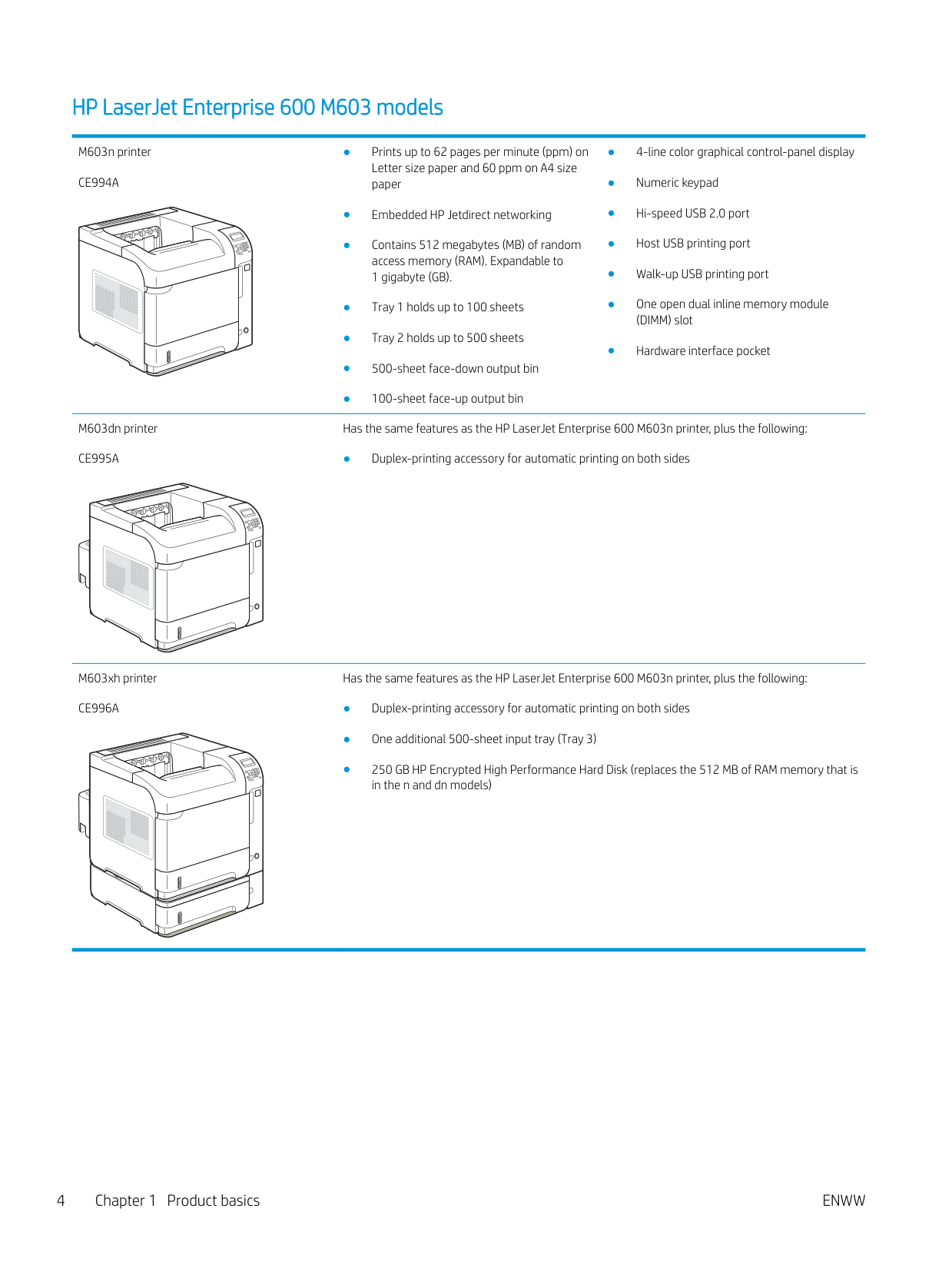
#### HP LaserJet Enterprise 600 M601 models
M601n printer
Has the same features as the HP LaserJet Enterprise 600 M601n printer, plus the following:
● Duplex-printing accessory for automatic printing on both sides

Has the same features as the HP LaserJet Enterprise 600 M602n printer, plus the following:
● Duplex-printing accessory for automatic printing on both sides
Has the same features as the HP LaserJet Enterprise 600 M602n printer, plus the following:
ENWW Product comparison 3
(DIMM) slot
● Hardware interface pocket
Has the same features as the HP LaserJet Enterprise 600 M603n printer, plus the following:
● Duplex-printing accessory for automatic printing on both sides
Has the same features as the HP LaserJet Enterprise 600 M603n printer, plus the following:
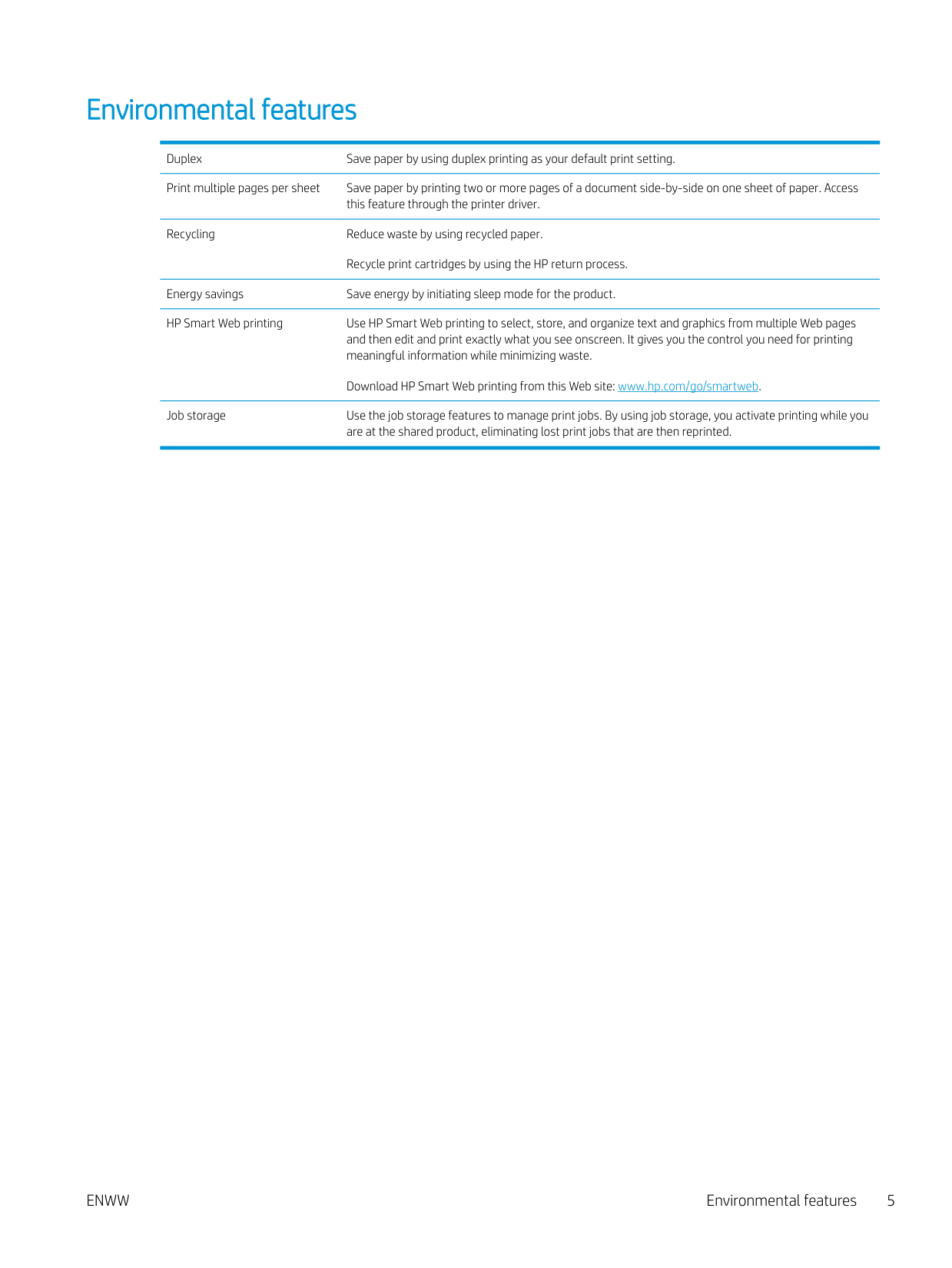
Environmental features
Duplex Save paper by using duplex printing as your default print setting. Print multiple pages per sheet Save paper by printing two or more pages of a document side-by-side on one sheet of paper. Access
this feature through the printer driver. Recycling Reduce waste by using recycled paper.
Recycle print cartridges by using the HP return process. Energy savings Save energy by initiating sleep mode for the product. HP Smart Web printing Use HP Smart Web printing to select, store, and organize text and graphics from multiple Web pages
and then edit and print exactly what you see onscreen. It gives you the control you need for printing meaningful information while minimizing waste.
Download HP Smart Web printing from this Web site: www.hp.com/go/smartweb. Job storage Use the job storage features to manage print jobs. By using job storage, you activate printing while you are at the shared product, eliminating lost print jobs that are then reprinted.
ENWW Environmental features 5
Accessibility features
The product includes several features that aid you with accessibility issues.
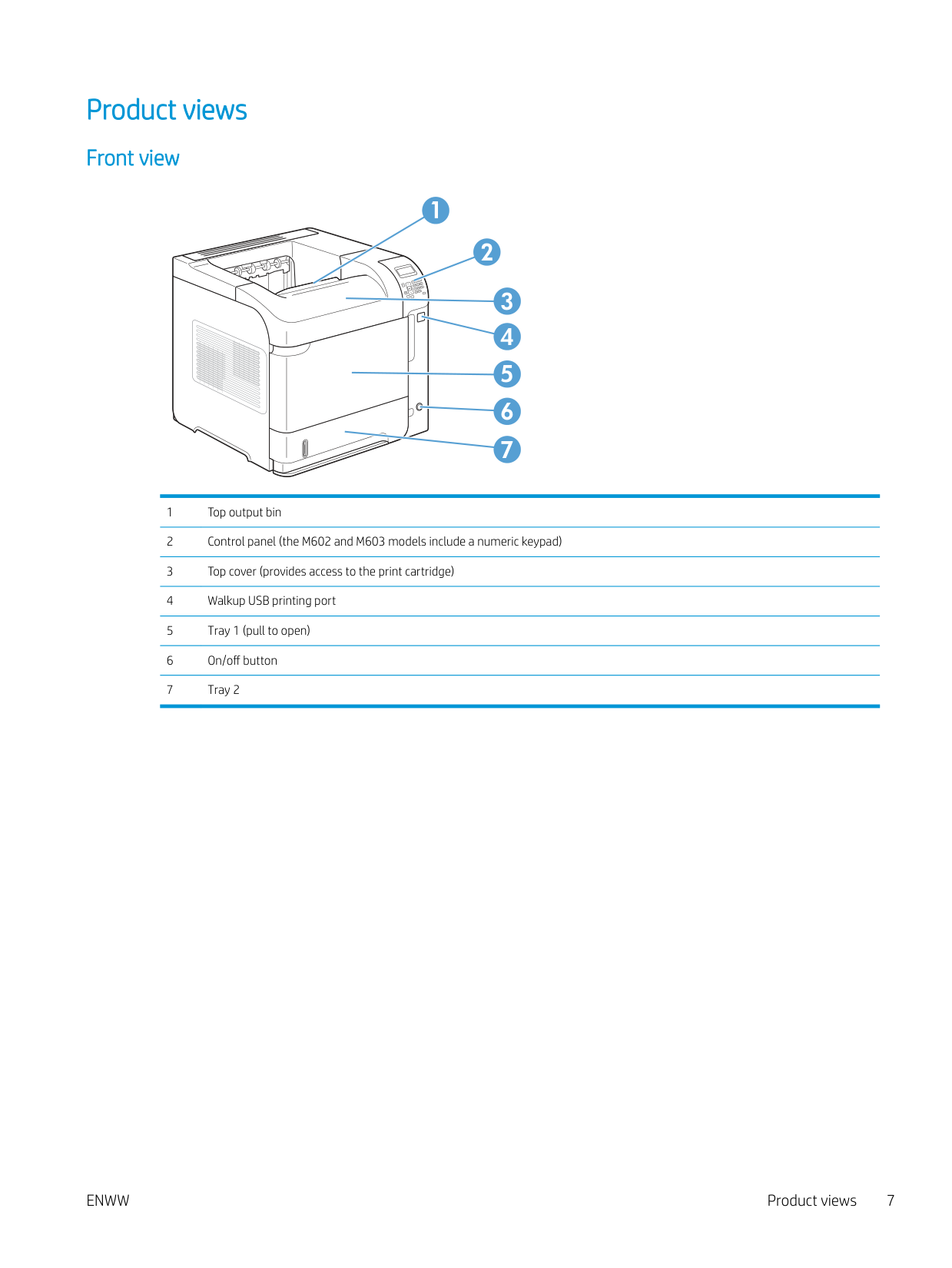
Product views
Front view
1
7
4
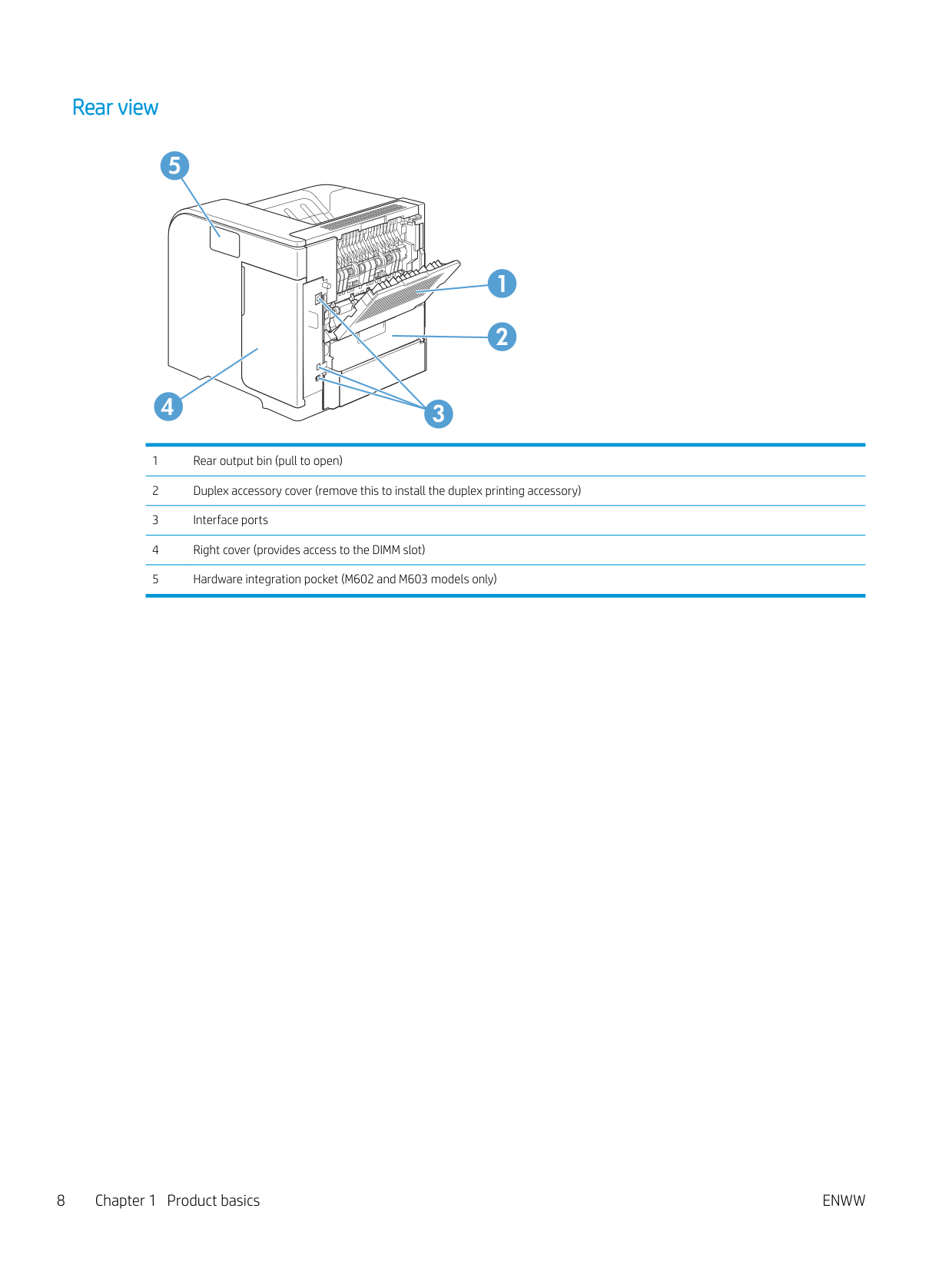
#### Rear view

5
34
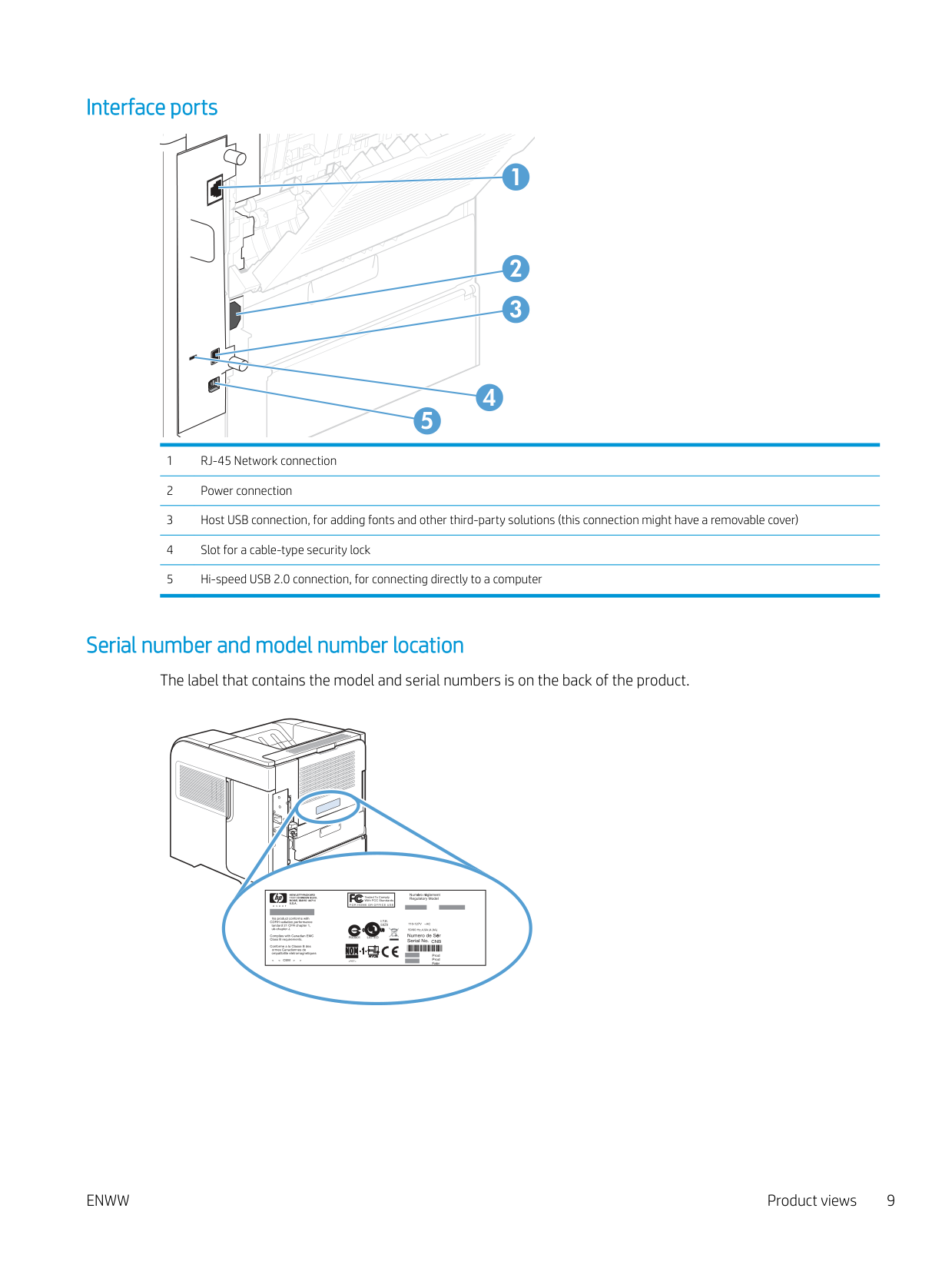
#### Interface ports
5
1 RJ-45 Network connection 2 Power connection 3 Host USB connection, for adding fonts and other third-party solutions (this connection might have a removable cover) 4 Slot for a cable-type security lock 5 Hi-speed USB 2.0 connection, for connecting directly to a computer
#### Serial number and model number location
The label that contains the model and serial numbers is on the back of the product.
| | | |---|---| |||
2 Control panel menus
ENWW 11
Control-panel layout
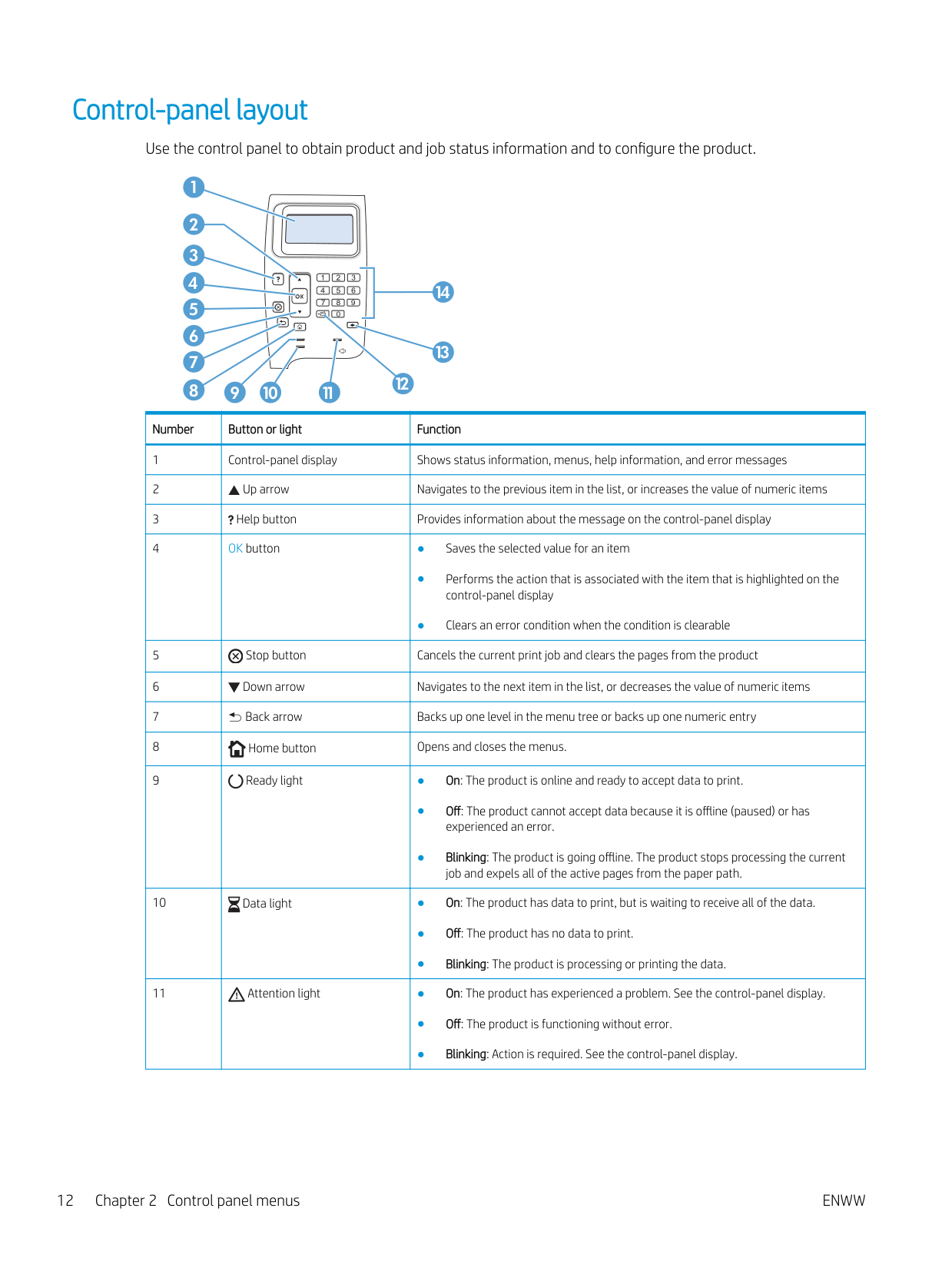
Use the control panel to obtain product and job status information and to configure the product.
9
12
|Number|Button or light|Function| |---|---|---| |1|Control-panel display|Shows status information, menus, help information, and error messages| |2|Up arrow|Navigates to the previous item in the list, or increases the value of numeric items| |3|Help button|Provides information about the message on the control-panel display| |4|OK button|● Saves the selected value for an item
● Performs the action that is associated with the item that is highlighted on the control-panel display
● Clears an error condition when the condition is clearable
| |5|Stop button|Cancels the current print job and clears the pages from the product| |6|Down arrow|Navigates to the next item in the list, or decreases the value of numeric items| |7|Back arrow|Backs up one level in the menu tree or backs up one numeric entry| |8|Home button|Opens and closes the menus.| |9|Ready light|● On: The product is online and ready to accept data to print.
● Off: The product cannot accept data because it is offline (paused) or has experienced an error.
● Blinking: The product is going offline. The product stops processing the current job and expels all of the active pages from the paper path.
|

|10|Data light|● On: The product has data to print, but is waiting to receive all of the data.
● Off: The product has no data to print.
● Blinking: The product is processing or printing the data.
| |11|Attention light|● On: The product has experienced a problem. See the control-panel display.
● Off: The product is functioning without error.
● Blinking: Action is required. See the control-panel display.
|
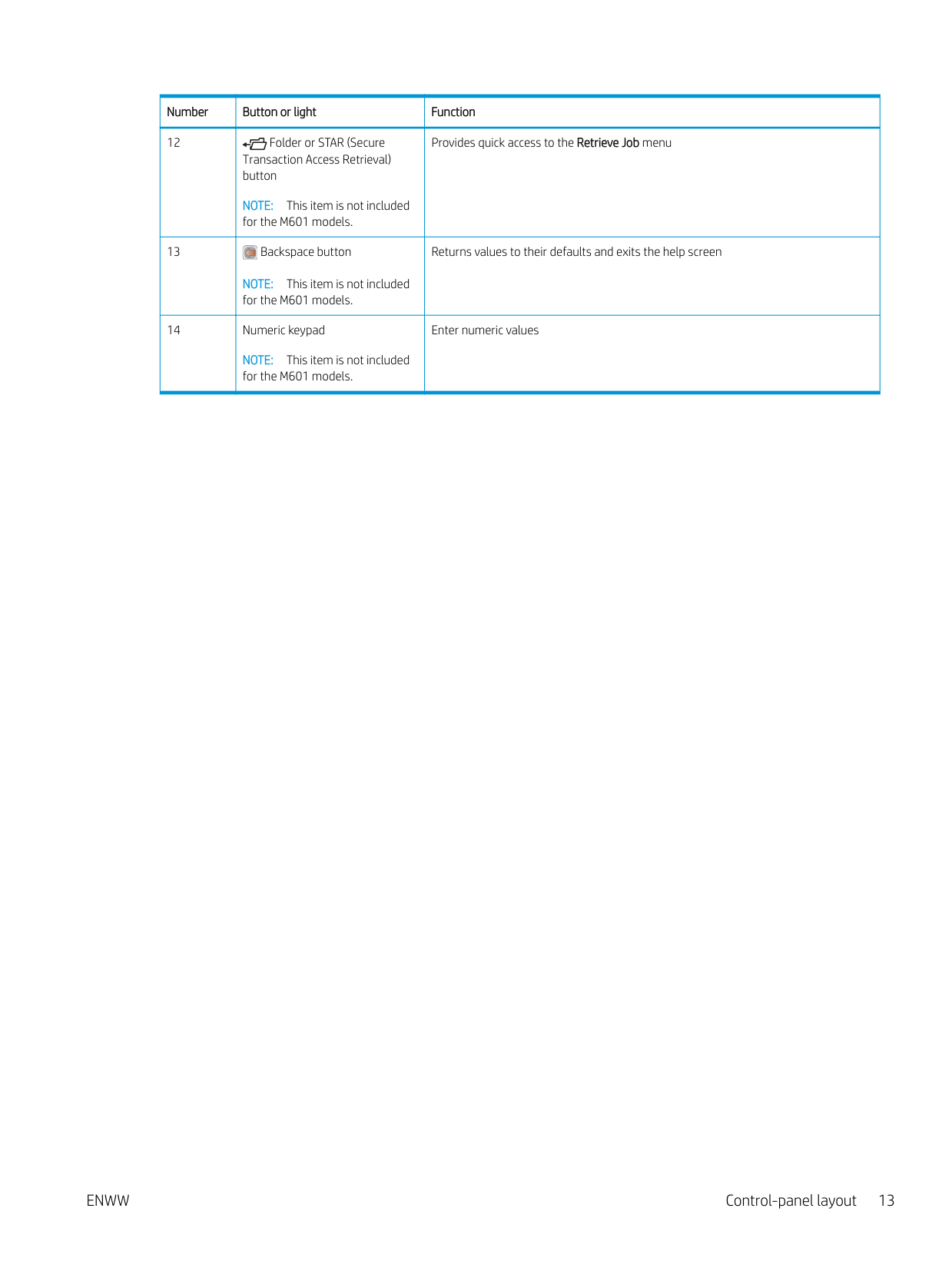
|Number|Button or light|Function| |---|---|---| |12|Folder or STAR (Secure Transaction Access Retrieval) button
NOTE: This item is not included for the M601 models.|Provides quick access to the Retrieve Job menu| |13|Backspace button
NOTE: This item is not included for the M601 models.|Returns values to their defaults and exits the help screen| |14|Numeric keypad NOTE: This item is not included for the M601 models.|Enter numeric values|
####### ENWW Control-panel layout 13
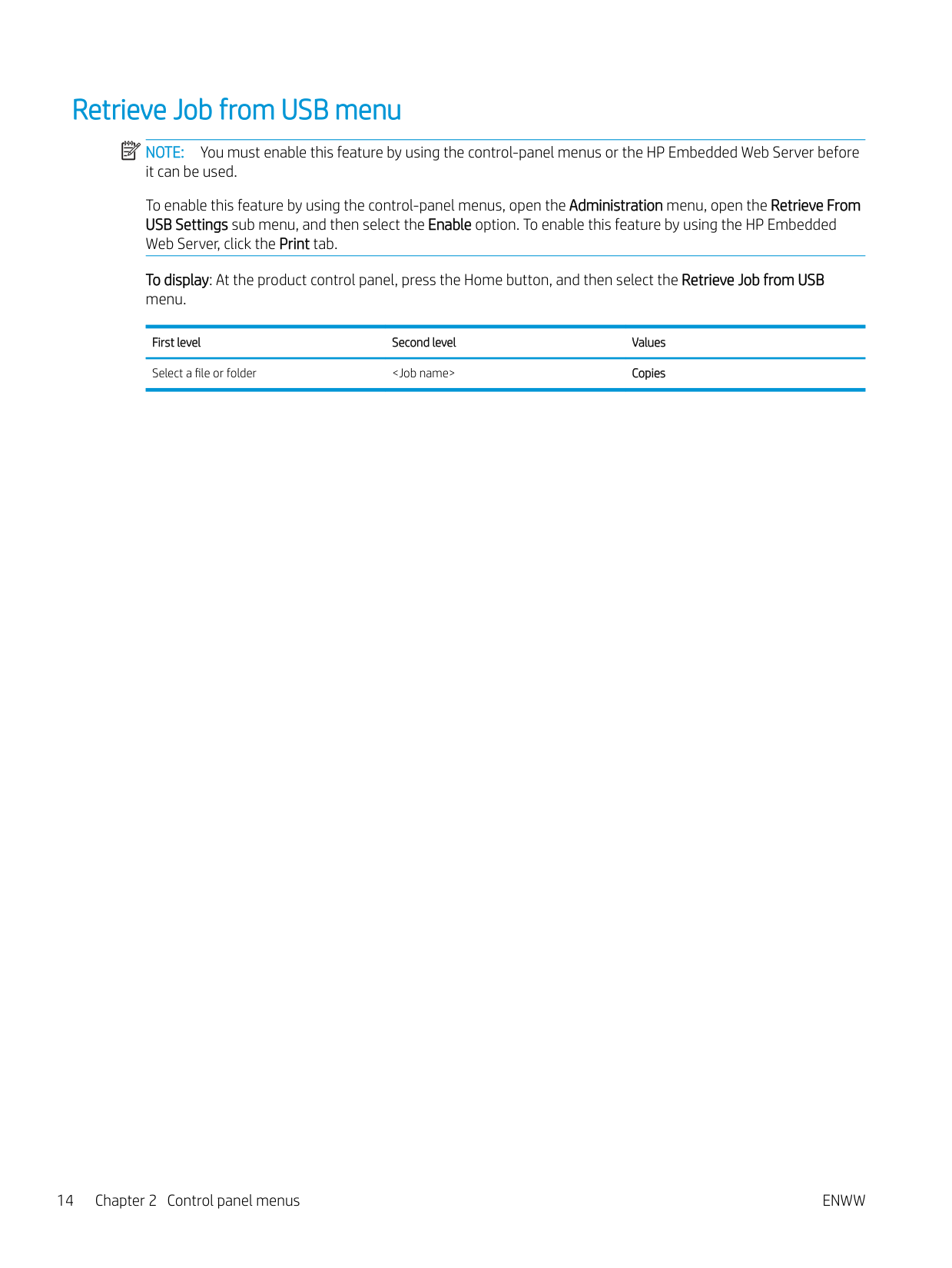
Retrieve Job from USB menu NOTE: You must enable this feature by using the control-panel menus or the HP Embedded Web Server before it can be used. To enable this feature by using the control-panel menus, open the Administration menu, open the Retrieve From USB Settings sub menu, and then select the Enable option. To enable this feature by using the HP Embedded Web Server, click the Print tab. To display: At the product control panel, press the Home button, and then select the Retrieve Job from USB menu.
| | |---|
First level Second level Values Select a file or folder
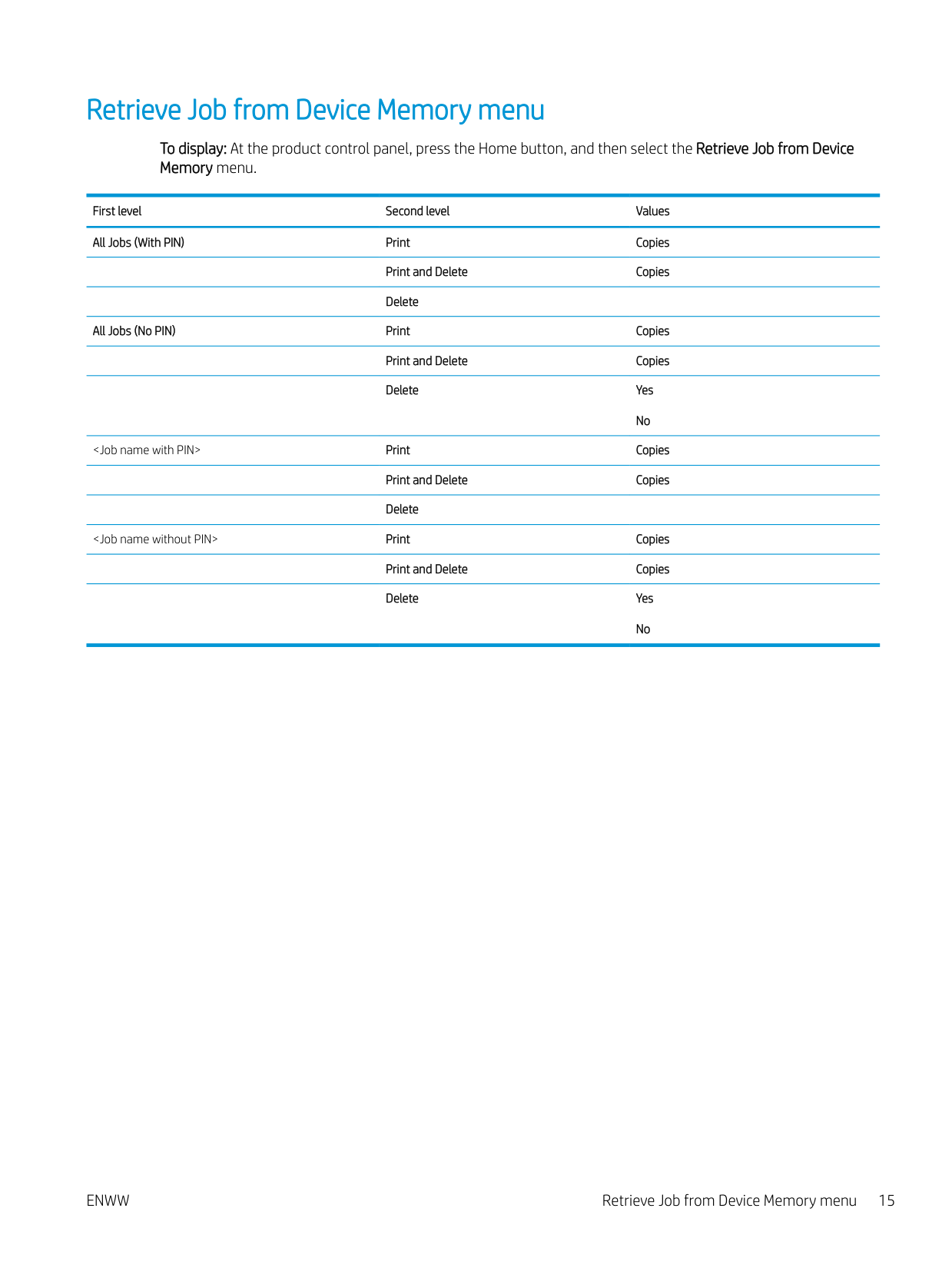
Retrieve Job from Device Memory menu
To display: At the product control panel, press the Home button, and then select the Retrieve Job from Device Memory menu.
First level Second level Values All Jobs (With PIN) Print Copies
Print and Delete Copies Delete
All Jobs (No PIN) Print Copies Print and Delete Copies Delete Yes
No
No
ENWW Retrieve Job from Device Memory menu 15
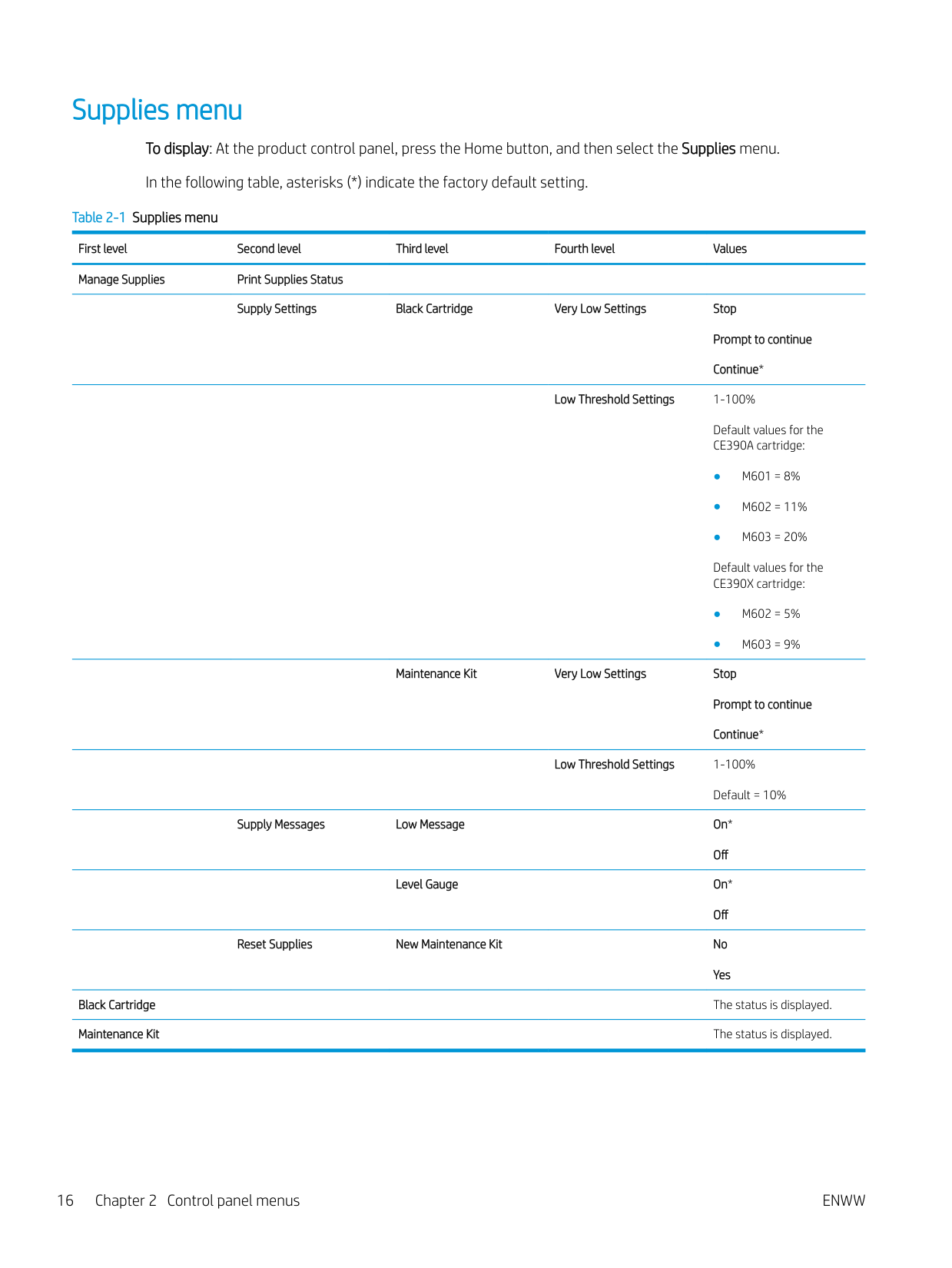
Supplies menu To display: At the product control panel, press the Home button, and then select the Supplies menu. In the following table, asterisks (*) indicate the factory default setting.
Table 2-1 Supplies menu First level Second level Third level Fourth level Values Manage Supplies Print Supplies Status
Supply Settings Black Cartridge Very Low Settings Stop Prompt to continue Continue*
Low Threshold Settings 1-100%
Default values for the CE390A cartridge:
Default values for the CE390X cartridge:
Maintenance Kit Very Low Settings Stop Prompt to continue Continue*
Low Threshold Settings 1-100%
Default = 10% Supply Messages Low Message On*
Off Level Gauge On*
Off Reset Supplies New Maintenance Kit No
Yes
Black Cartridge The status is displayed. Maintenance Kit The status is displayed.
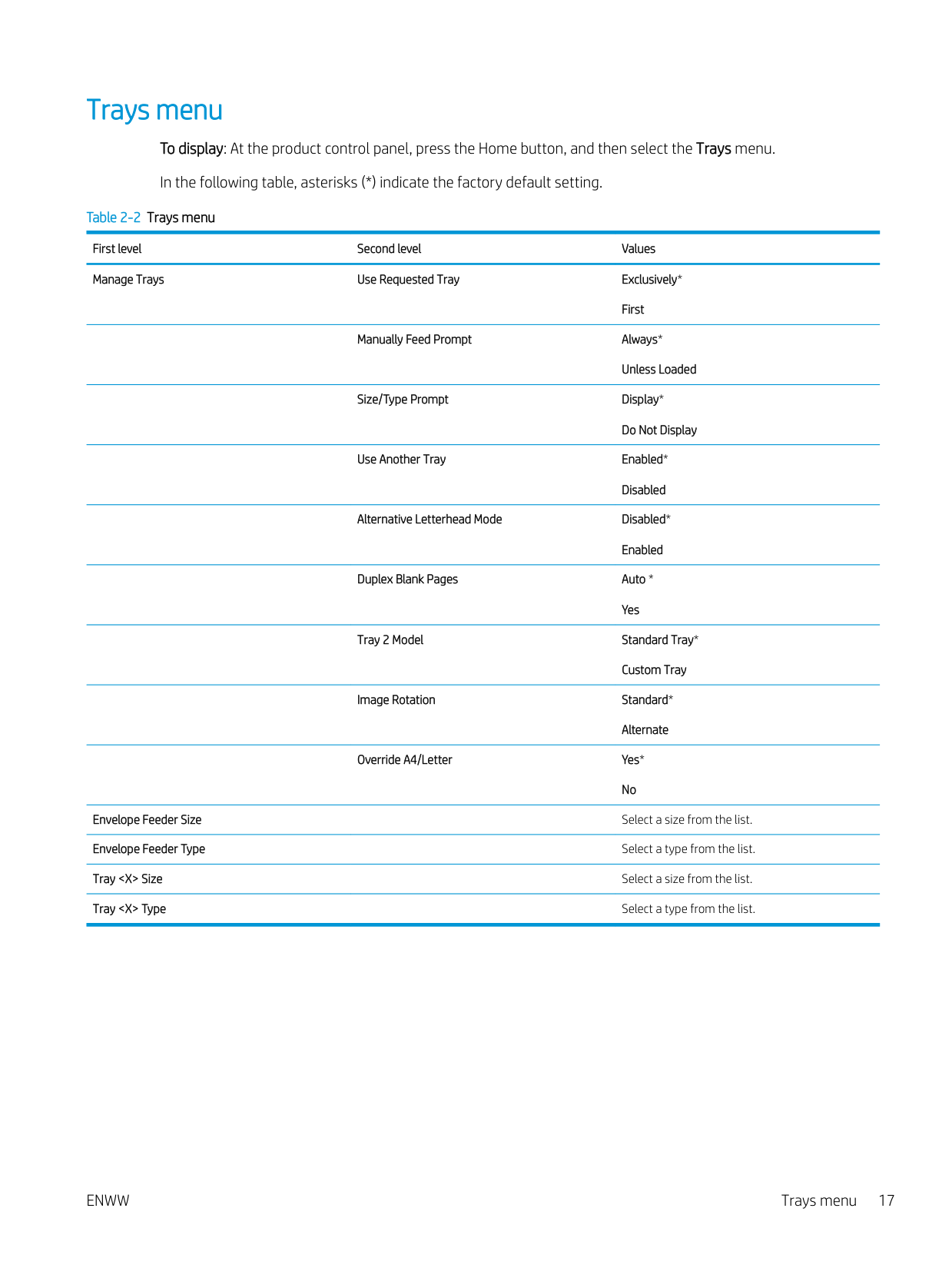
Trays menu To display: At the product control panel, press the Home button, and then select the Trays menu. In the following table, asterisks (*) indicate the factory default setting.
First Manually Feed Prompt Always*
Unless Loaded Size/Type Prompt Display*
Do Not Display Use Another Tray Enabled*
Disabled Alternative Letterhead Mode Disabled*
Enabled Duplex Blank Pages Auto *
Yes Tray 2 Model Standard Tray*
Custom Tray Image Rotation Standard*
Alternate Override A4/Letter Yes*
No Envelope Feeder Size Select a size from the list. Envelope Feeder Type Select a type from the list. Tray
ENWW Trays menu 17
Administration menu
#### Reports menu
To display: At the product control panel, press the Home button, select the Administration menu, and then select the Reports menu.
Configuration Page Supplies Status Page Usage Page File Directory Page Current Settings Page
Other Pages PCL Font List PS Font List
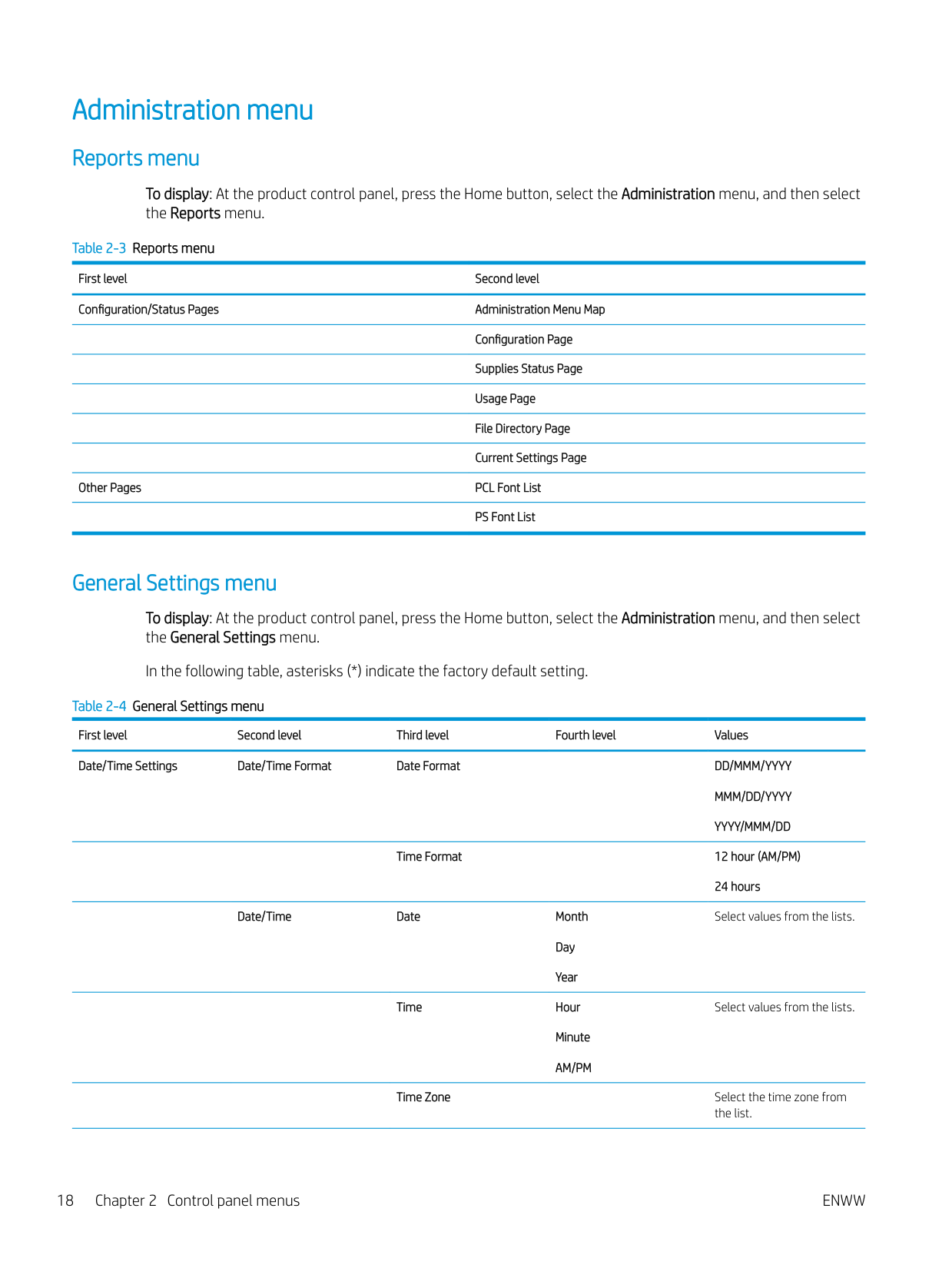
General Settings menu To display: At the product control panel, press the Home button, select the Administration menu, and then select the General Settings menu. In the following table, asterisks (*) indicate the factory default setting.
MMM/DD/YYYY YYYY/MMM/DD
Time Format 12 hour (AM/PM) 24 hours
Date/Time Date Month Day Year
Time Hour
Select values from the lists.
Select values from the lists.
Minute AM/PM
Time Zone Select the time zone from
the list.
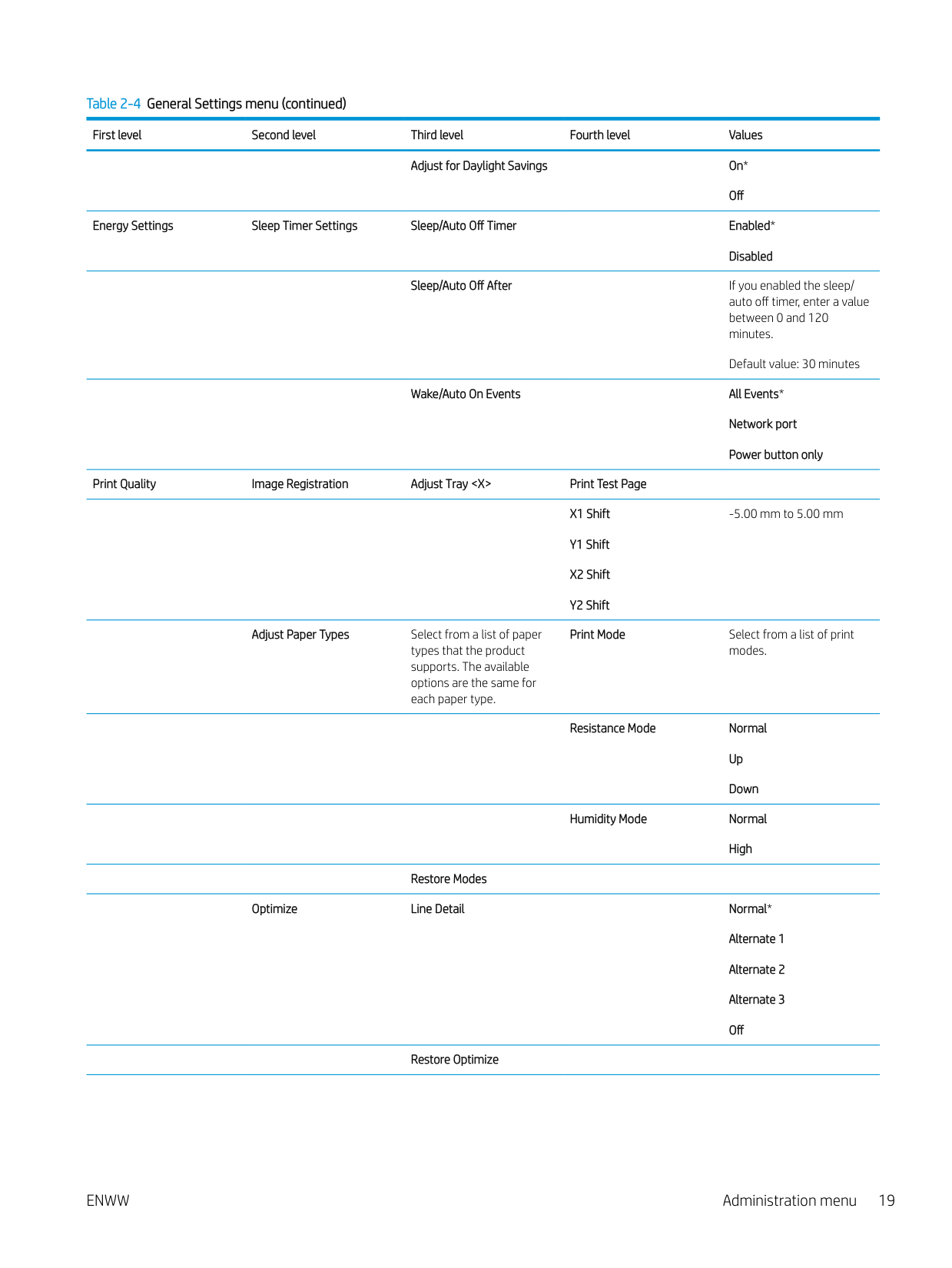
Adjust for Daylight Savings On* Off
Energy Settings Sleep Timer Settings Sleep/Auto Off Timer Enabled* Disabled
Sleep/Auto Off After If you enabled the sleep/ auto off timer, enter a value between 0 and 120 minutes.
Default value: 30 minutes
Wake/Auto On Events All Events* Network port Power button only
Print Quality Image Registration Adjust Tray
-5.00 mm to 5.00 mm
Adjust Paper Types Select from a list of paper types that the product supports. The available options are the same for each paper type.
Print Mode Select from a list of print
modes.
Resistance Mode Normal Up Down
Humidity Mode Normal
High Restore Modes
Optimize Line Detail Normal*
Restore Optimize
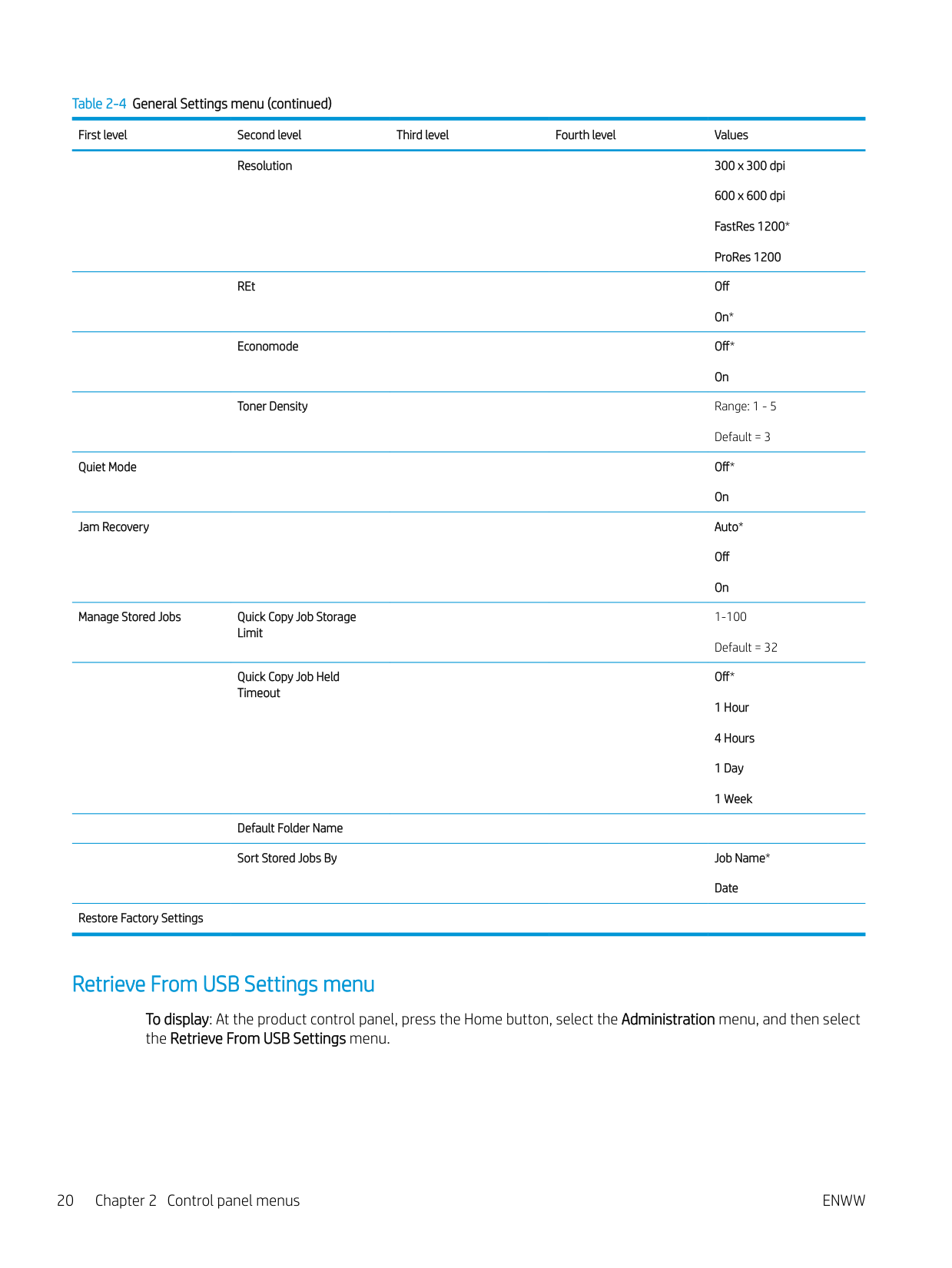
Resolution 300 x 300 dpi 600 x 600 dpi FastRes 1200* ProRes 1200
REt Off
On* Economode Off*
On Toner Density Range: 1 - 5
Default = 3 Quiet Mode Off*
On Jam Recovery Auto*
Off On
Manage Stored Jobs Quick Copy Job Storage Limit
1-100 Default = 32
Quick Copy Job Held Timeout
Off* 1 Hour 4 Hours 1 Day 1 Week
Default Folder Name Sort Stored Jobs By Job Name*
Date Restore Factory Settings
#### Retrieve From USB Settings menu
To display: At the product control panel, press the Home button, select the Administration menu, and then select the Retrieve From USB Settings menu.
Disabled*
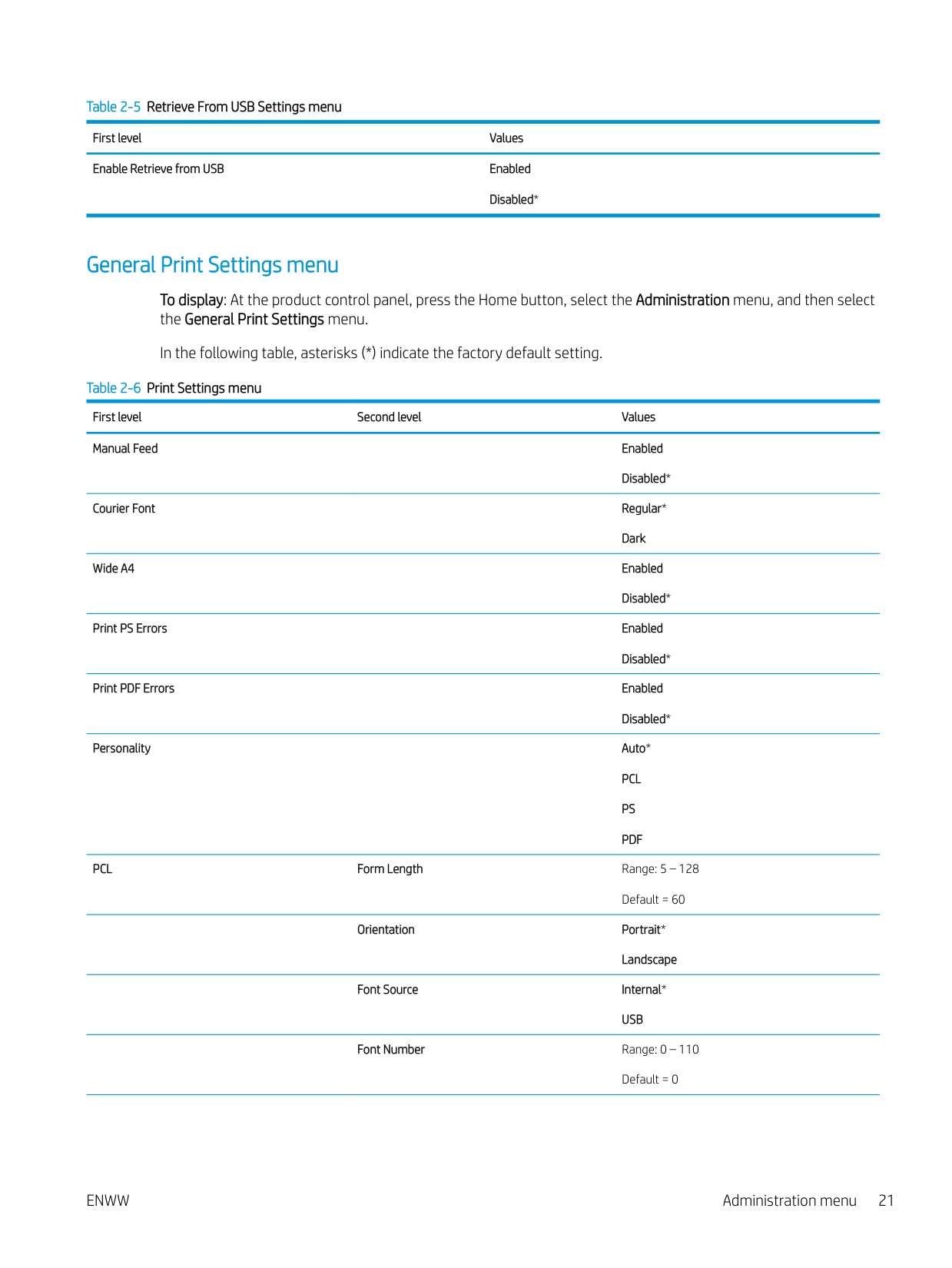
General Print Settings menu To display: At the product control panel, press the Home button, select the Administration menu, and then select the General Print Settings menu. In the following table, asterisks (*) indicate the factory default setting.
Disabled* Courier Font Regular*
Dark Wide A4 Enabled
Disabled* Print PS Errors Enabled
Disabled* Print PDF Errors Enabled
Disabled*
Personality Auto* PCL PS PDF
PCL Form Length Range: 5 – 128
Default = 60 Orientation Portrait*
Landscape Font Source Internal*
USB Font Number Range: 0 – 110
Default = 0
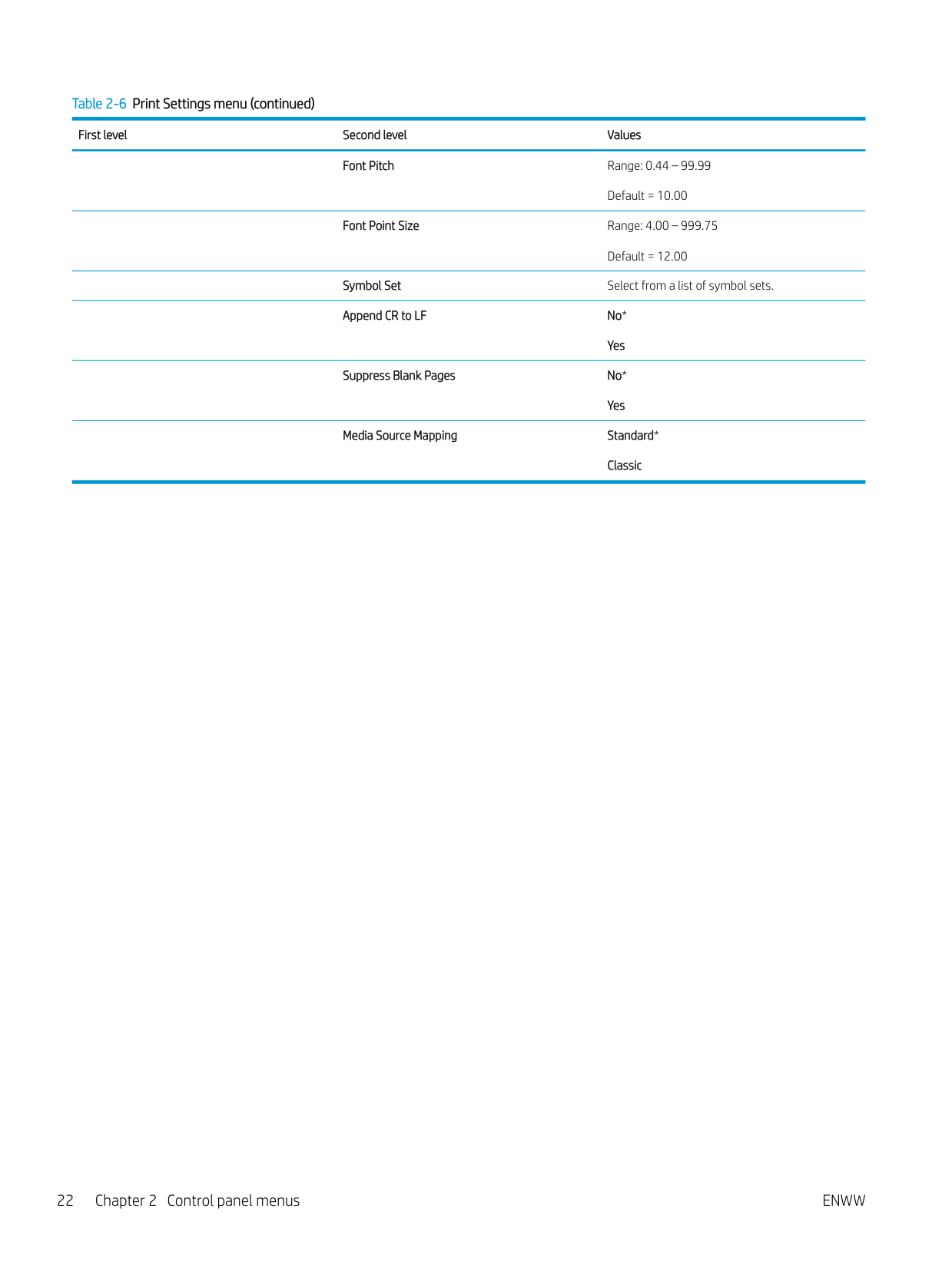
######## Table 2-6 Print Settings menu (continued)First level Second level Values
Font Pitch Range: 0.44 – 99.99
Default = 10.00
Font Point Size Range: 4.00 – 999.75
Default = 12.00 Symbol Set Select from a list of symbol sets. Append CR to LF No*
Yes Suppress Blank Pages No* Yes
Media Source Mapping Standard* Classic
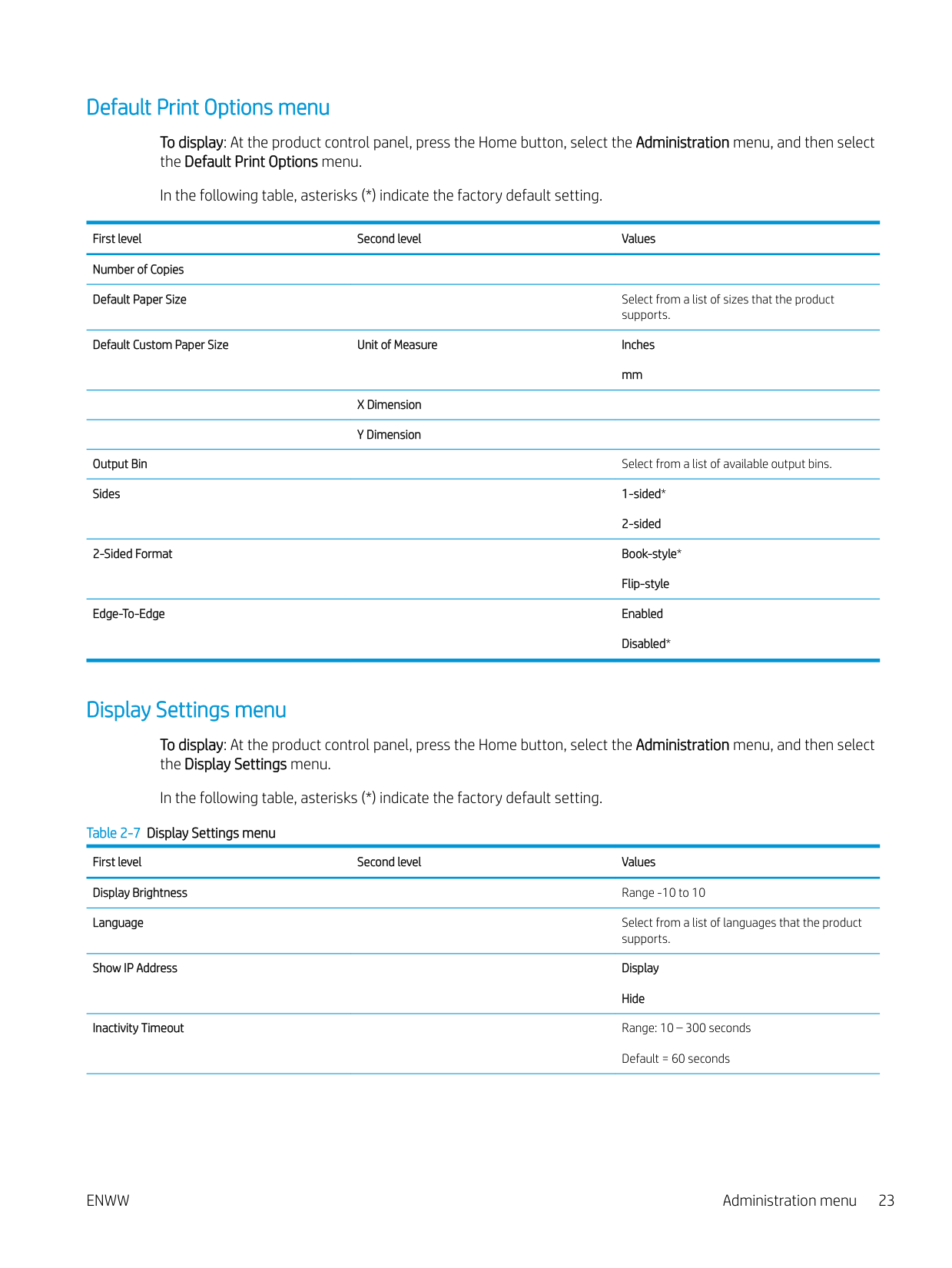
Default Print Options menu To display: At the product control panel, press the Home button, select the Administration menu, and then select the Default Print Options menu. In the following table, asterisks (*) indicate the factory default setting.
First level Second level Values Number of Copies Default Paper Size Select from a list of sizes that the product
supports. Default Custom Paper Size Unit of Measure Inches
mm
Output Bin Select from a list of available output bins. Sides 1-sided*
2-sided 2-Sided Format Book-style*
Flip-style Edge-To-Edge Enabled
Disabled*
Display Settings menu To display: At the product control panel, press the Home button, select the Administration menu, and then select the Display Settings menu. In the following table, asterisks (*) indicate the factory default setting.
Language Select from a list of languages that the product
supports. Show IP Address Display
Hide Inactivity Timeout Range: 10 – 300 seconds
Default = 60 seconds
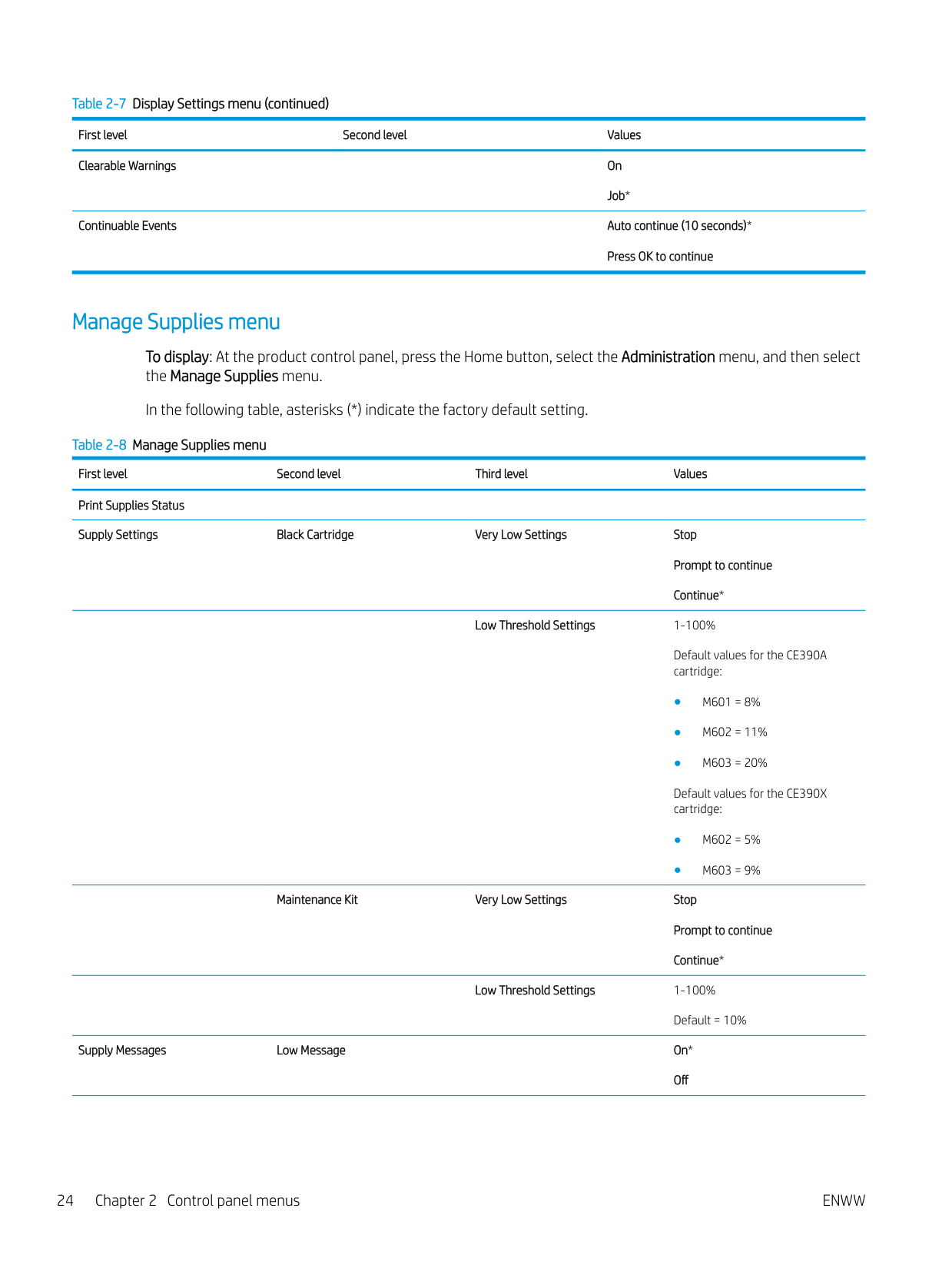
Job* Continuable Events Auto continue (10 seconds)* Press OK to continue
Manage Supplies menu To display: At the product control panel, press the Home button, select the Administration menu, and then select the Manage Supplies menu. In the following table, asterisks (*) indicate the factory default setting.
Prompt to continue Continue*
Low Threshold Settings 1-100%
Default values for the CE390A cartridge:
Default values for the CE390X cartridge:
Maintenance Kit Very Low Settings Stop Prompt to continue Continue*
Low Threshold Settings 1-100%
Default = 10% Supply Messages Low Message On*
Off
Level Gauge On*
Off Reset Supplies New Maintenance Kit No
Yes
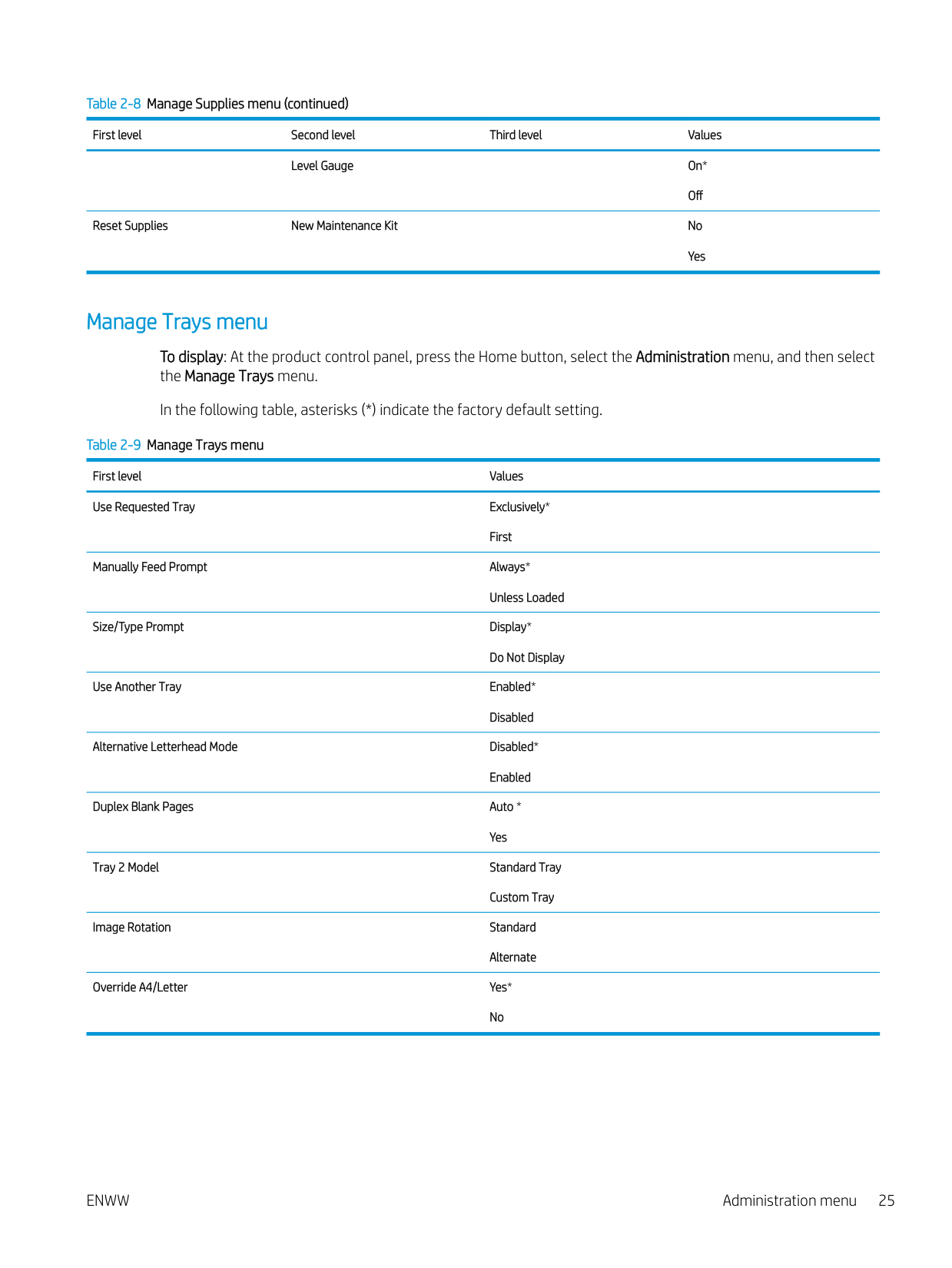
Manage Trays menu To display: At the product control panel, press the Home button, select the Administration menu, and then select the Manage Trays menu. In the following table, asterisks (*) indicate the factory default setting.
First Manually Feed Prompt Always*
Unless Loaded Size/Type Prompt Display*
Do Not Display Use Another Tray Enabled*
Disabled Alternative Letterhead Mode Disabled*
Enabled Duplex Blank Pages Auto *
Yes Tray 2 Model Standard Tray
Custom Tray Image Rotation Standard
Alternate Override A4/Letter Yes*
No
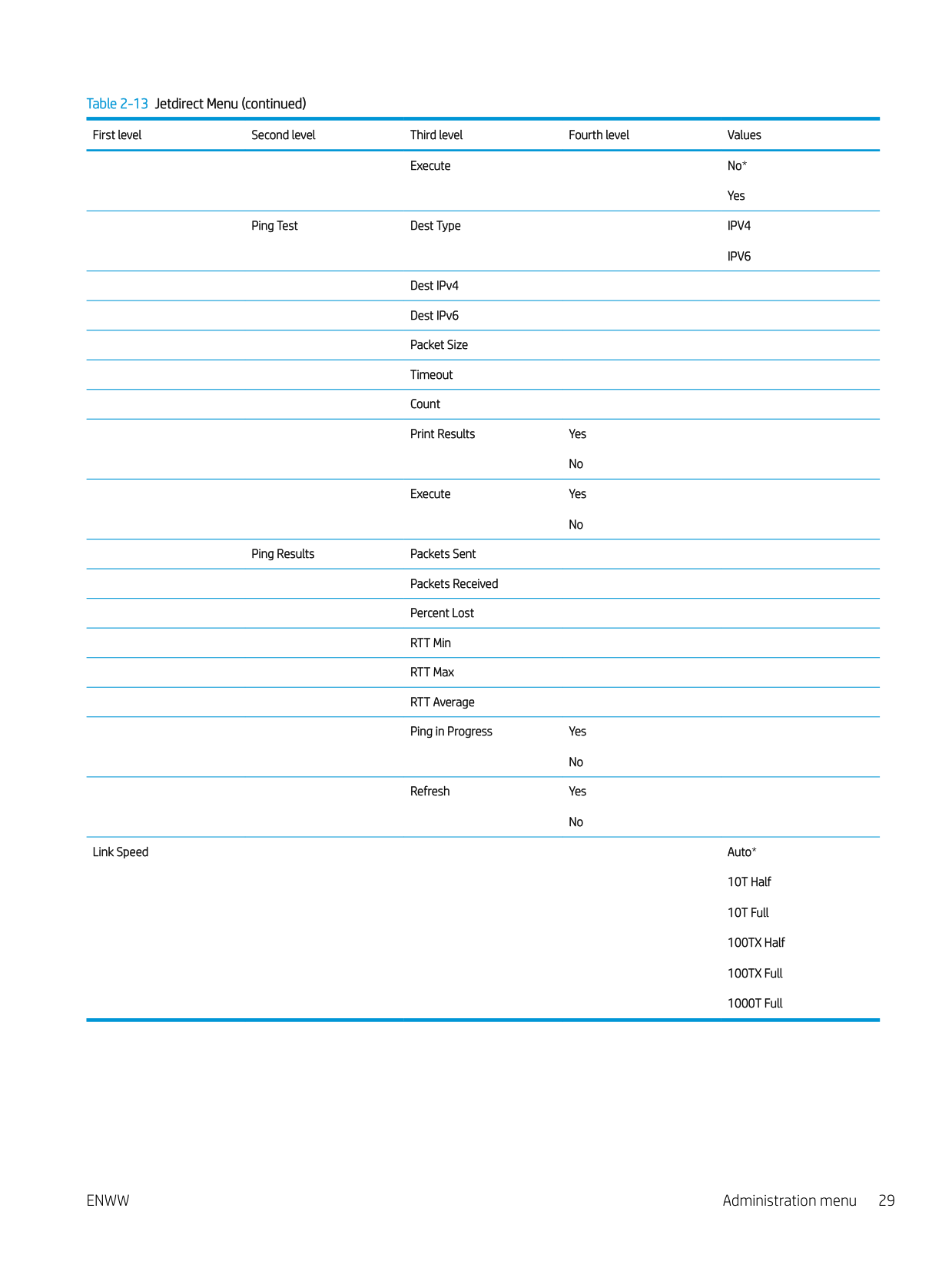
Stapler/Stacker Settings menu To display: At the product control panel, press the Home button, select the Administration menu, and then select the Stapler/Stacker Settings menu. In the following table, asterisks (*) indicate the factory default setting.
Top left or right Top left Top right
Staples Very Low Continue* Stop
Multi-Bin Mailbox Settings menu To display: At the product control panel, press the Home button, select the Administration menu, and then select the Multi-Bin Mailbox Settings menu. In the following table, asterisks (*) indicate the factory default setting. Table 2-11 Multi-Bin Mailbox Settings menu
First level Values Operation Mode Mailbox*
Stacker Job Separator Collator
Network Settings menu To display: At the product control panel, press the Home button, select the Administration menu, and then select the Network Settings menu. In the following table, asterisks (*) indicate the factory default setting.
Default = 15
Jetdirect Menu See the table that follows for details.
No* TCP/IP Enable On*
Off
Host Name IPV4 Settings Config Method Bootp
DHCP* Auto IP Manual
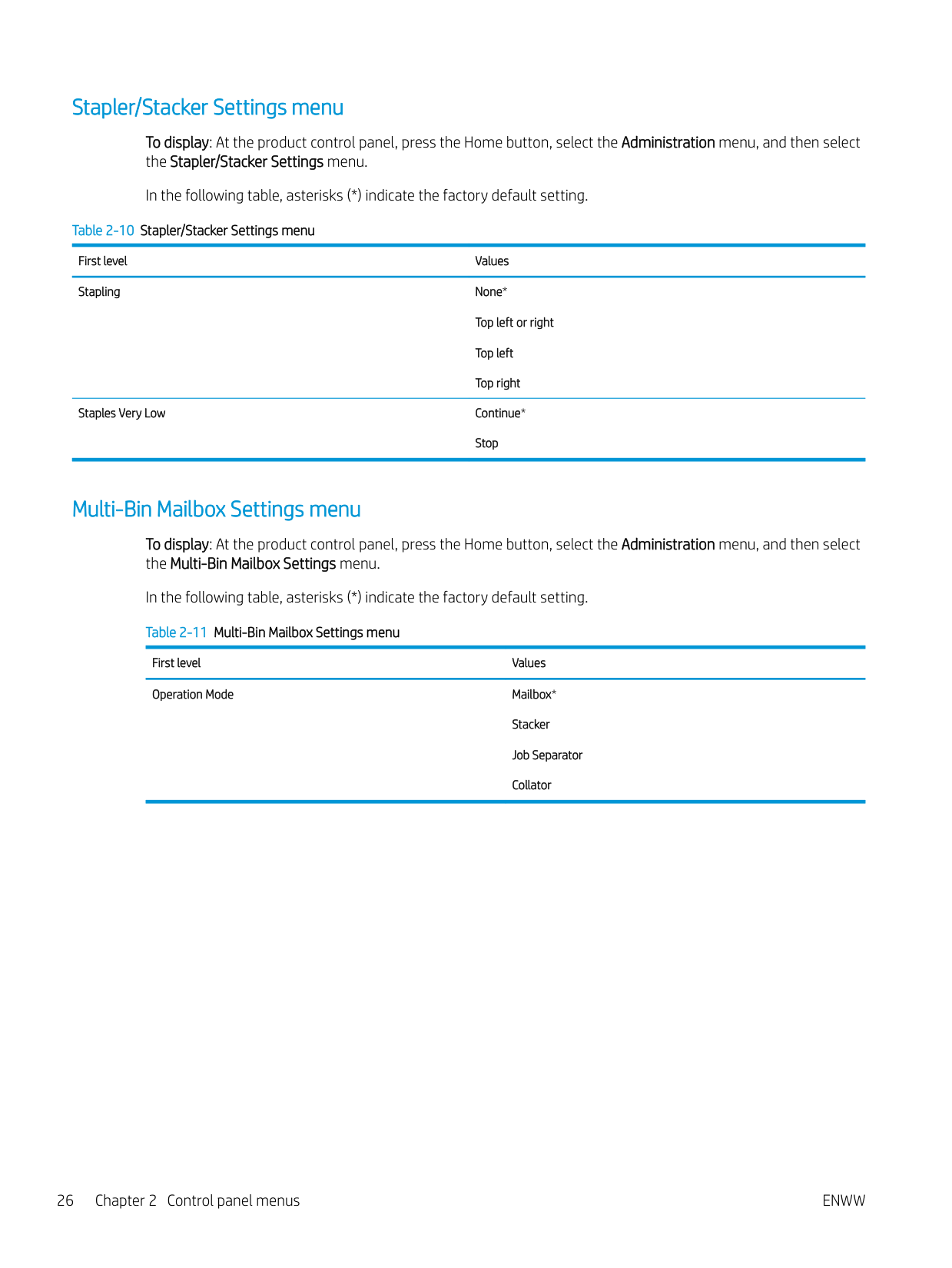
Manual Settings NOTE: This menu is available only if you select the Manual option under the Config Method menu.
IP Address Enter the address.
Subnet Mask Enter the address. Default Gateway Enter the address.
Default IP Auto IP*
Legacy DHCP Release No*
Yes DHCP Renew No* Yes
Primary DNS Secondary DNS
IPV6 Settings Enable Off On* Address Manual Settings Enable Address
Proxy Server Proxy Port Idle Timeout
DHCPV6 Policy Router Specified Router Unavailable* Always
Primary DNS Secondary DNS
Security Secure Web HTTPS Required*
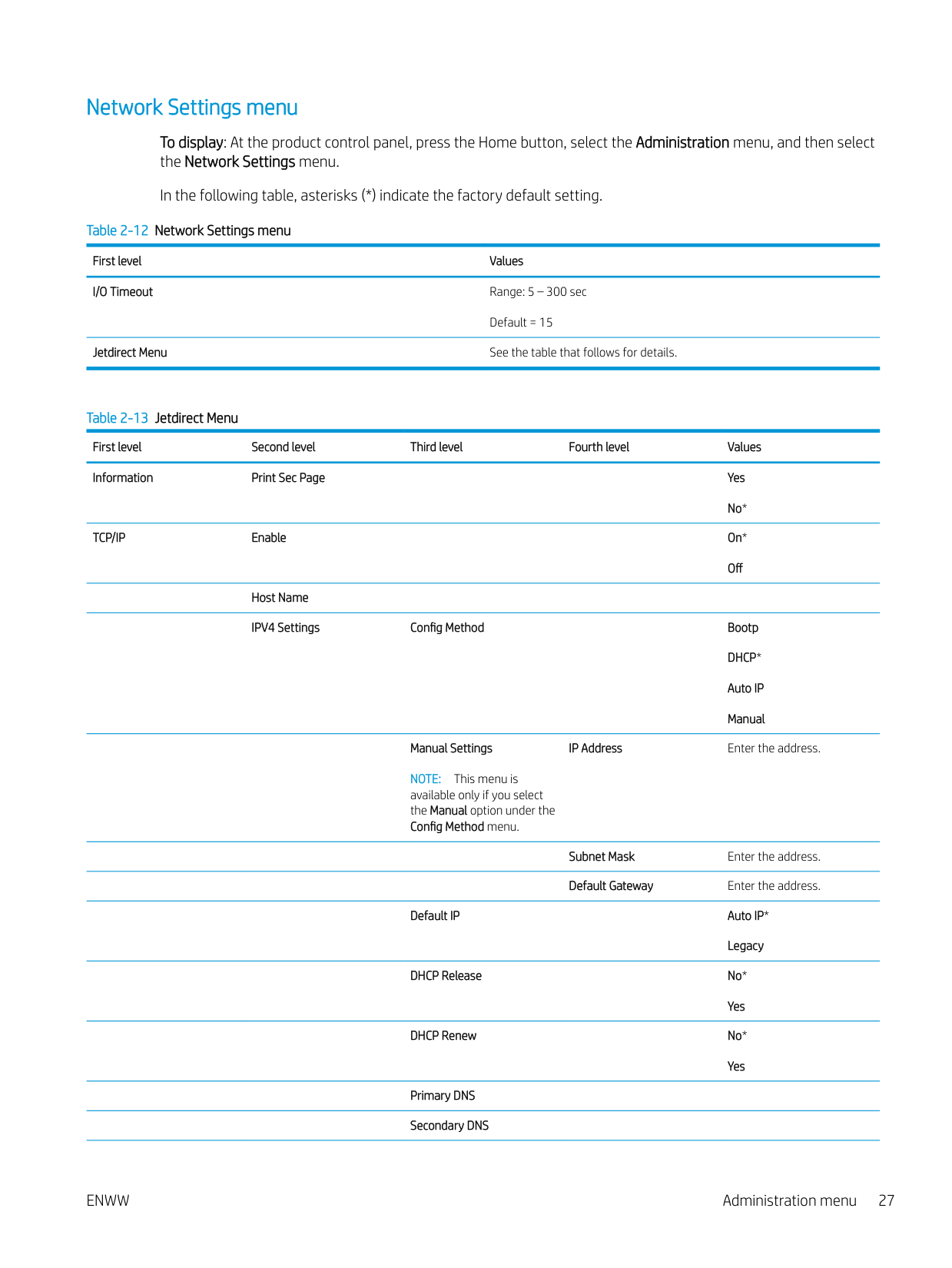
HTTPS Optional IPSEC Keep
Disable* 802.1X Reset
Keep* Reset Security Yes
No* Diagnostics Embedded Tests LAN HW Test Yes
No* HTTP Test Yes
No* SNMP Test Yes
No* Data Path Test Yes
No* Select All Tests Yes
No* Execution Time [H] Range: 1 – 60 hours
Default = 1 hour
Execute No* Yes
Ping Test Dest Type IPV4 IPV6
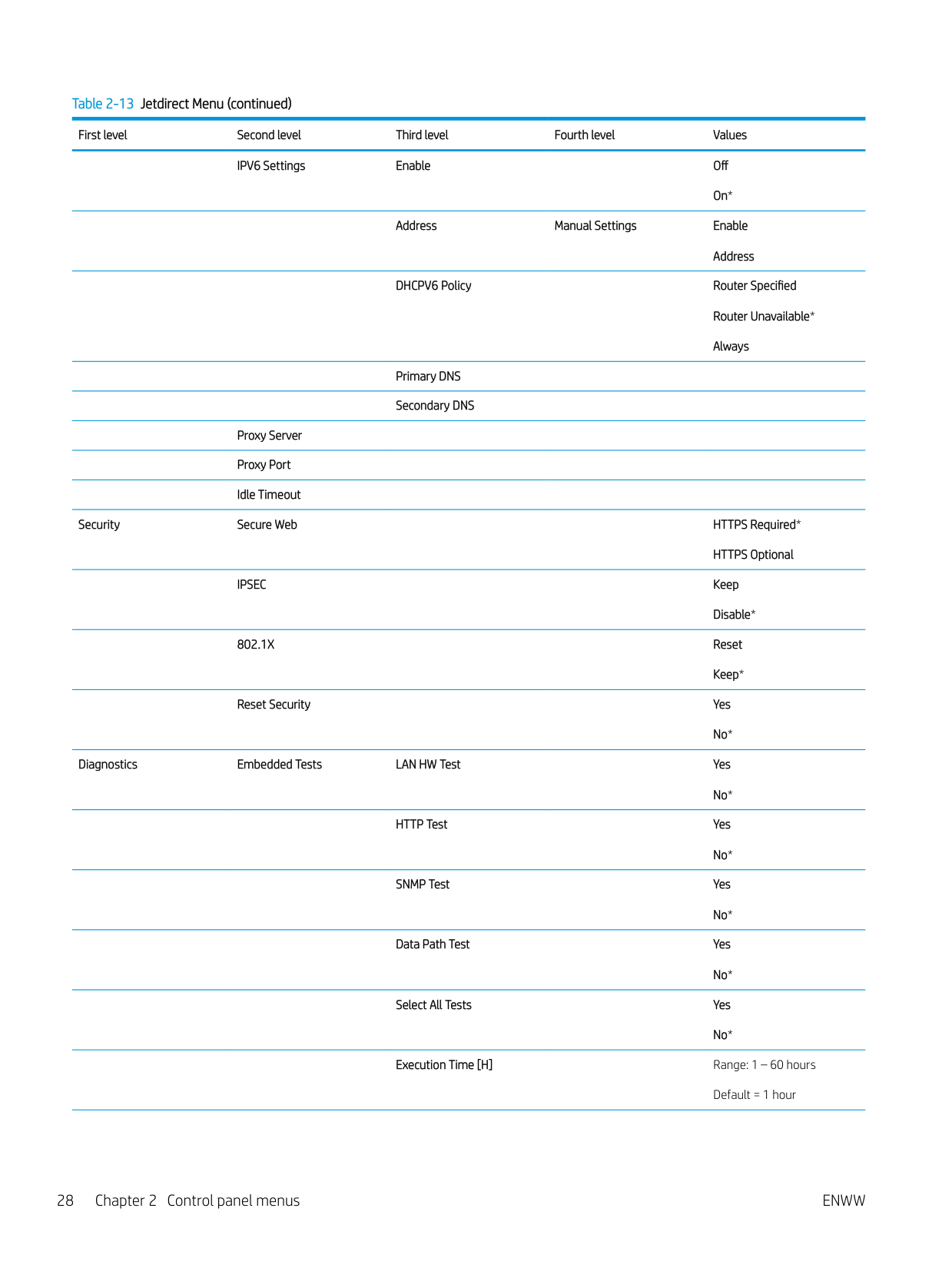
Dest IPv4 Dest IPv6 Packet Size Timeout Count Print Results Yes
No Execute Yes No
Ping Results Packets Sent Packets Received Percent Lost RTT Min RTT Max RTT Average Ping in Progress Yes
No Refresh Yes No
Link Speed Auto* 10T Half 10T Full 100TX Half 100TX Full 1000T Full
Troubleshooting menu To display: At the product control panel, press the Home button, select the Administration menu, and then select the Troubleshooting menu. In the following table, asterisks (*) indicate the factory default setting.
Diagnostic Tests Paper Path Sensors Select from a list of the product
sensors.
Paper Path Test Print Test Page Source Select from a list of the available
trays.
Destination Select from a list of the available
bins. Duplex Off*
On
Copies 1* 10 50 100 500
Stacking Off On
Manual Sensor Test Manual Tray/Bin Sensor Test Component Test Print/Stop Test Range: 0 – 60,000
Device Maintenance menu
Backup/Restore menu To display: At the product control panel, press the Home button, select the Device Maintenance menu, and then select the Backup/Restore menu. In the following table, asterisks (*) indicate the factory default setting.
Days Between Enter the number of days
Backup Now Export Last Backup
Restore Data Insert a USB drive that contains the
backup file.
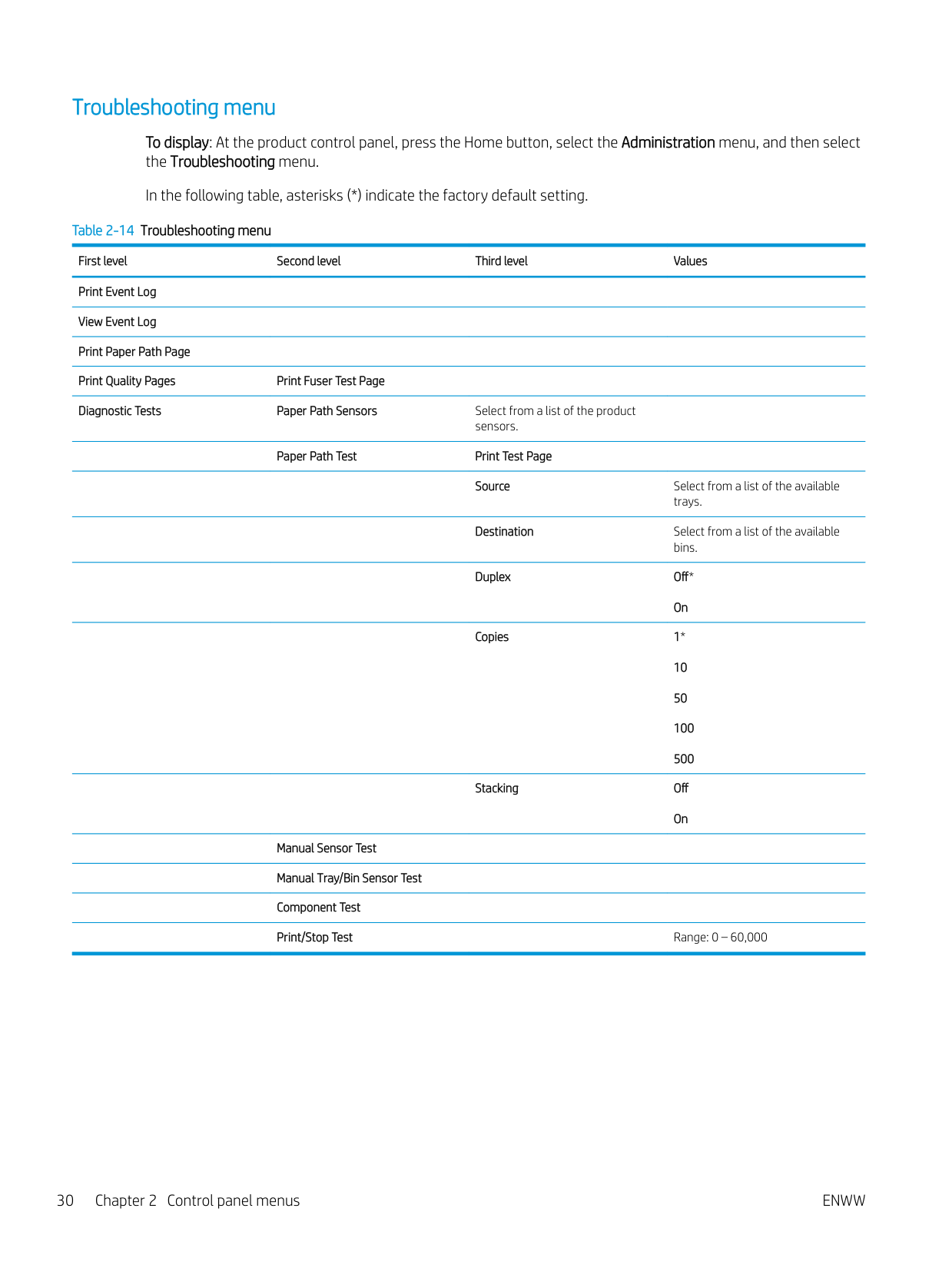
Calibrate/Cleaning menu To display: At the product control panel, press the Home button, select the Device Maintenance menu, and then select the Calibrate/Cleaning menu. In the following table, asterisks (*) indicate the factory default setting.
On Cleaning Interval From the list, select the number of pages at
which to automatically clean the product. Cleaning Size Letter
A4 Print Cleaning Page
ENWW Device Maintenance menu 31
USB Firmware Upgrade menu To display: At the product control panel, press the Home button, select the Device Maintenance menu, and then select the USB Firmware Upgrade menu. Insert a USB storage device with a firmware upgrade bundle into the USB port, and follow the on-screen instructions.
Service menu To display: At the product control panel, press the Home button, select the Device Maintenance menu, and then select the Service menu. The Service menu is locked and requires a PIN for access. This menu is intended for use by authorized service personnel.
3 Software for Windows
ENWW 33
Supported operating systems and printer drivers for Windows
The product supports the following Windows operating systems:
| | |---|
The installation program on the software CD that came with the product supports the following Windows operating systems:
NOTE: You also can install the product software on 64-bit Windows XP and 64-bit Windows Server 2003 operating systems by using the Windows Add Printer feature. The product supports the following Windows printer drivers:
The printer drivers include online Help that has instructions for common printing tasks and also describes the buttons, checkboxes, and drop-down lists that are in the printer driver.
| | |---|
NOTE: For more information about the UPD, see www.hp.com/go/upd.
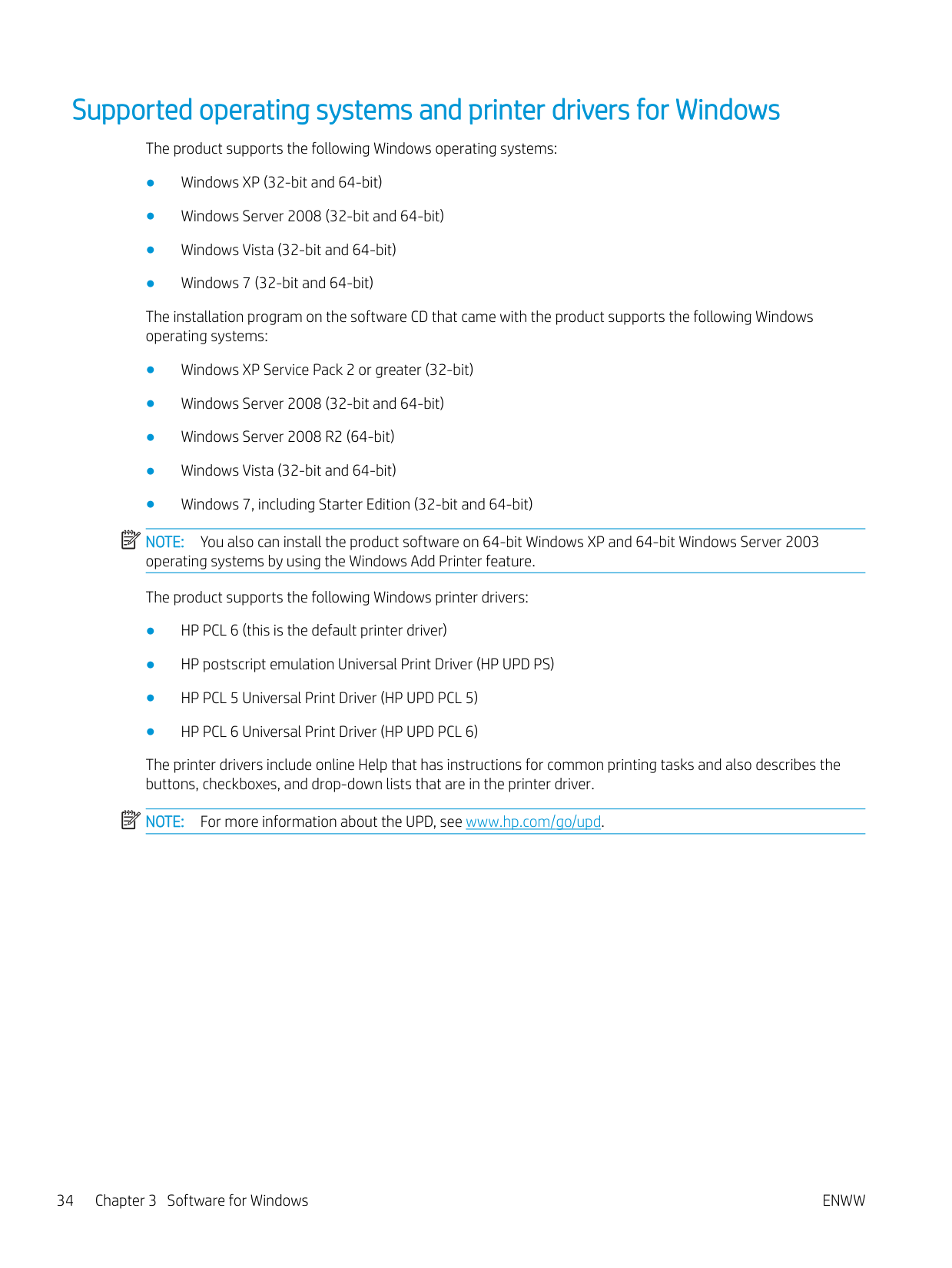
Select the correct printer driver for Windows
Printer drivers provide access to the product features and allow the computer to communicate with the product (using a printer language). The following printer drivers are available at www.hp.com/go/lj600Series_software.
HP PCL 6 driver ● Provided as the default driver. This driver is automatically installed unless you select a
different one.
HP UPD PS driver ● Recommended for printing with Adobe® software programs or with other highly
graphics-intensive software programs
● Provides support for printing from postscript emulation needs, or for postscript flash
font support
#### HP Universal Print Driver (UPD)
The HP Universal Print Driver (UPD) for Windows is a single driver that gives you instant access to virtually any HP LaserJet product, from any location, without downloading separate drivers. It is built on proven HP print driver technology and has been tested thoroughly and used with many software programs. It is a powerful solution that performs consistently over time.
The HP UPD communicates directly with each HP product, gathers configuration information, and then customizes the user interface to show the product’s unique, available features. It automatically enables features that are available for the product, such as two-sided printing and stapling, so you do not need to enable them manually.
ENWW Select the correct printer driver for Windows 35
For more information, go to www.hp.com/go/upd. UPD installation modes
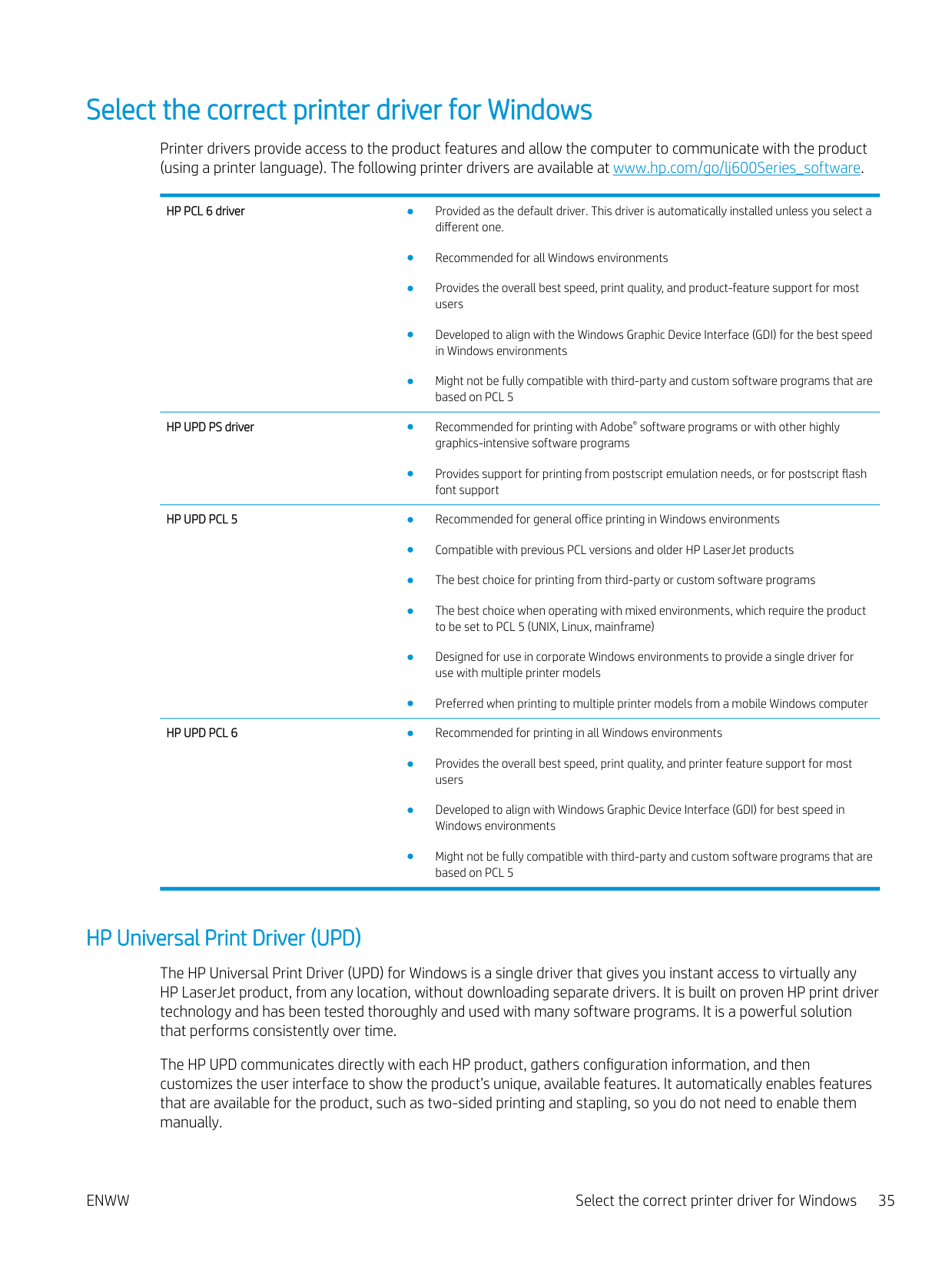
Traditional mode ● Use this mode if you are installing the driver from a CD for a single computer.
Dynamic mode ● To use this mode, download UPD from the Internet. See www.hp.com/go/upd.
Change print job settings for Windows
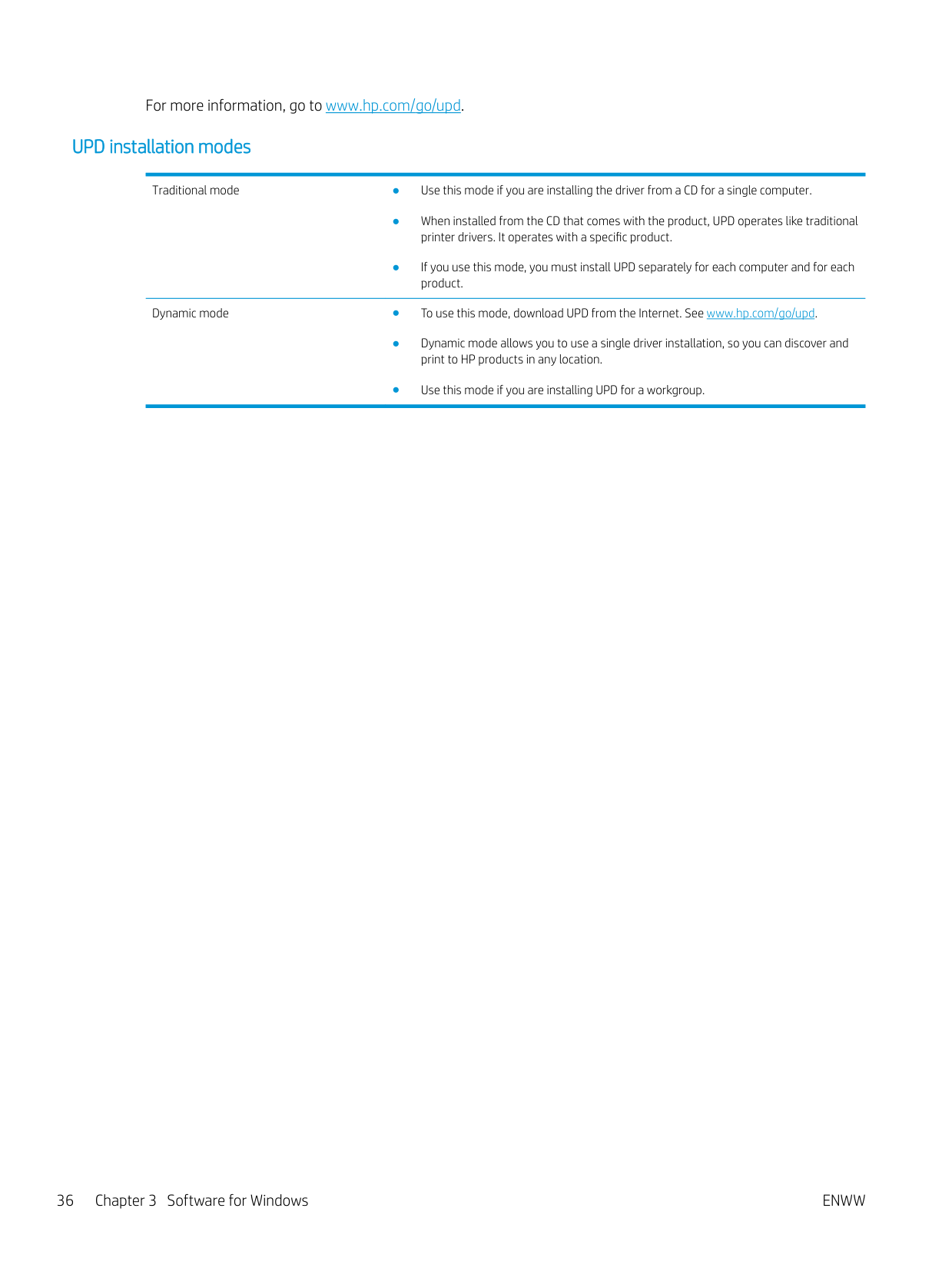
Priority for print settings Changes to print settings are prioritized depending on where the changes are made: NOTE: The names of commands and dialog boxes might vary depending on your software program.
| | |---|
#### Change the settings for all print jobs until the software program is closed
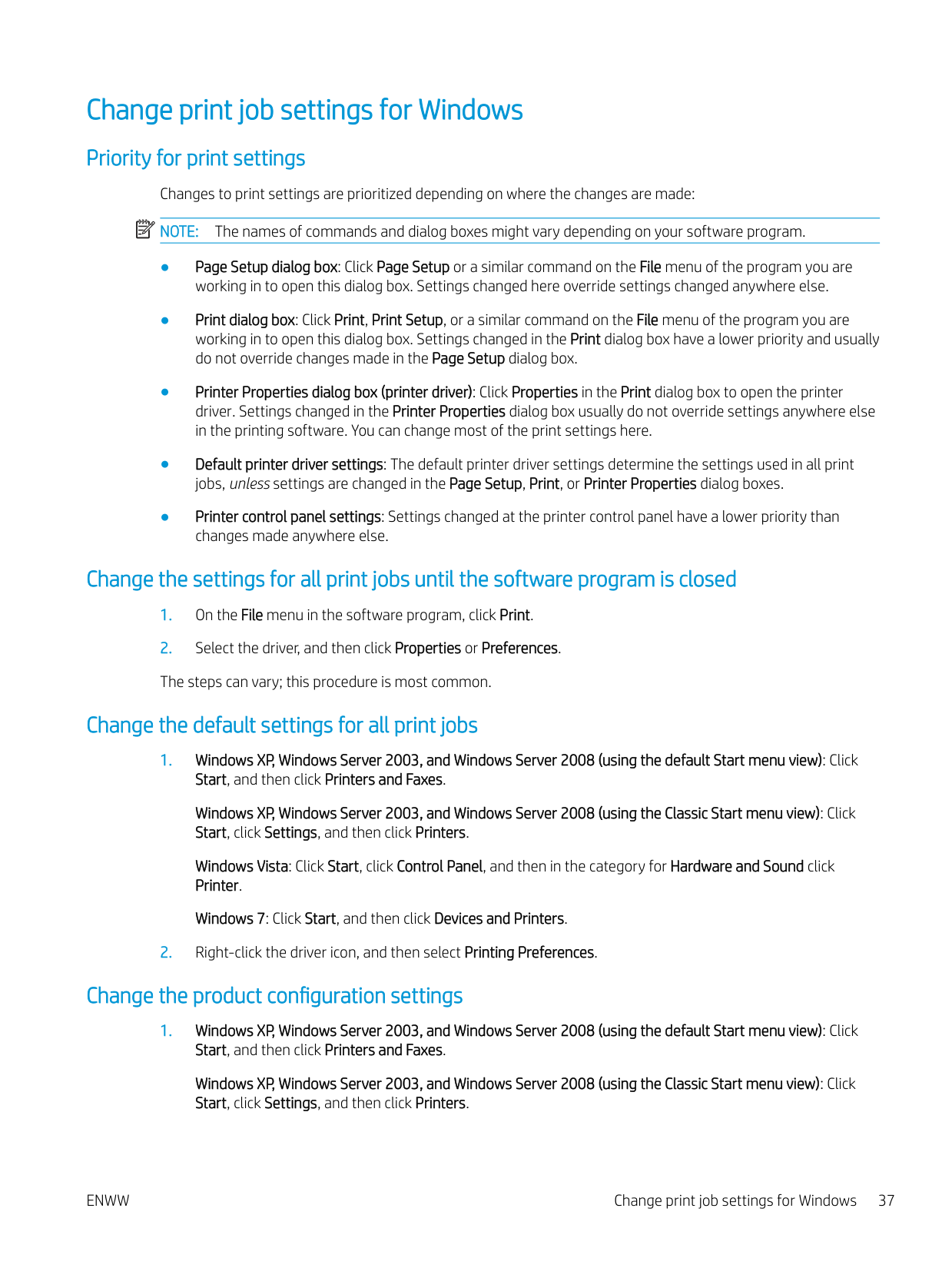
#### Change the default settings for all print jobs
Windows XP, Windows Server 2003, and Windows Server 2008 (using the Classic Start menu view): Click Start, click Settings, and then click Printers.
Windows Vista: Click Start, click Control Panel, and then in the category for Hardware and Sound click Printer.
Windows 7: Click Start, and then click Devices and Printers.
#### Change the product configuration settings
ENWW Change print job settings for Windows 37
Windows Vista: Click Start, click Control Panel, and then in the category for Hardware and Sound click Printer.
Windows 7: Click Start, and then click Devices and Printers.
Remove the printer driver from Windows
Windows XP
Windows Vista

Windows 7
ENWW Remove the printer driver from Windows 39
Supported utilities for Windows
Priority for print settings Changes to print settings are prioritized depending on where the changes are made: NOTE: The names of commands and dialog boxes might vary depending on your software program.
| | |---|
● Page Setup dialog box: Click Page Setup or a similar command on the File menu of the program you are
working in to open this dialog box. Settings changed here override settings changed anywhere else.
jobs, unless settings are changed in the Page Setup, Print, or Printer Properties dialog boxes.
● Printer control panel settings: Settings changed at the printer control panel have a lower priority than
changes made anywhere else.
#### HP Embedded Web Server
The product is equipped with the HP Embedded Web Server, which provides access to information about product and network activities. This information appears in a Web browser, such as Microsoft Internet Explorer, Netscape Navigator, Apple Safari, or Mozilla Firefox.
The HP Embedded Web Server resides on the product. It is not loaded on a network server. The HP Embedded Web Server provides an interface to the product that anyone who has a network-connected computer and a standard Web browser can use. No special software is installed or configured, but you must have a supported Web browser on your computer. To gain access to the HP Embedded Web Server, type the IP address for the product in the address line of the browser. (To find the IP address, print a configuration page. For more information about printing a configuration page, see Print information pages on page 146). For a complete explanation of the features and functionality of the HP Embedded Web Server, see Use the HP Embedded Web Server on page 147.
#### HP ePrint
With HP ePrint , you can print anywhere, anytime, from a mobile phone, laptop, or any other mobile device. HP ePrint works with any email-capable device. If you can e-mail, you can print to an HP ePrint-enabled product. For more details, go to www.hpeprintcenter.com.
| |
|---|
NOTE: The product must be connected to a network and have Internet access to use HP ePrint. HP ePrint is disabled as a default setting in the product. Use this procedure to enable it.
Software for other operating systems
OS Software UNIX For HP-UX and Solaris networks, go to www.hp.com/go/jetdirectunix_software to install model
scripts using the HP Jetdirect printer installer (HPPI) for UNIX. For the latest model scripts, go to www.hp.com/go/unixmodelscripts.
Linux For information, go to www.hplip.net. SAP devices For drivers, go to www.hp.com/go/sap/drivers.
For information, go to www.hp.com/go/sap/print.
####### ENWW Software for other operating systems 41
4 Use the product with Mac
ENWW 43
Software for Mac
#### Supported operating systems and printer drivers for Mac
The product supports the following Mac operating systems:
| | |---|
● Mac OS X 10.5 and 10.6 NOTE: For Mac OS X 10.5 and later, PPC and Intel® Core™ Processor Macs are supported. For Mac OS X 10.6, Intel Core Processor Macs are supported. The HP LaserJet software installer provides PostScript® Printer Description (PPD) files, Printer Dialog Extensions (PDEs), and the HP Utility for use with Mac OS X computers. The HP printer PPD and PDE files, in combination with the built-in Apple PostScript printer drivers, provide full printing functionality and access to specific HP printer features.
#### Install software for Mac operating systems Install software for Mac computers connected directly to the product
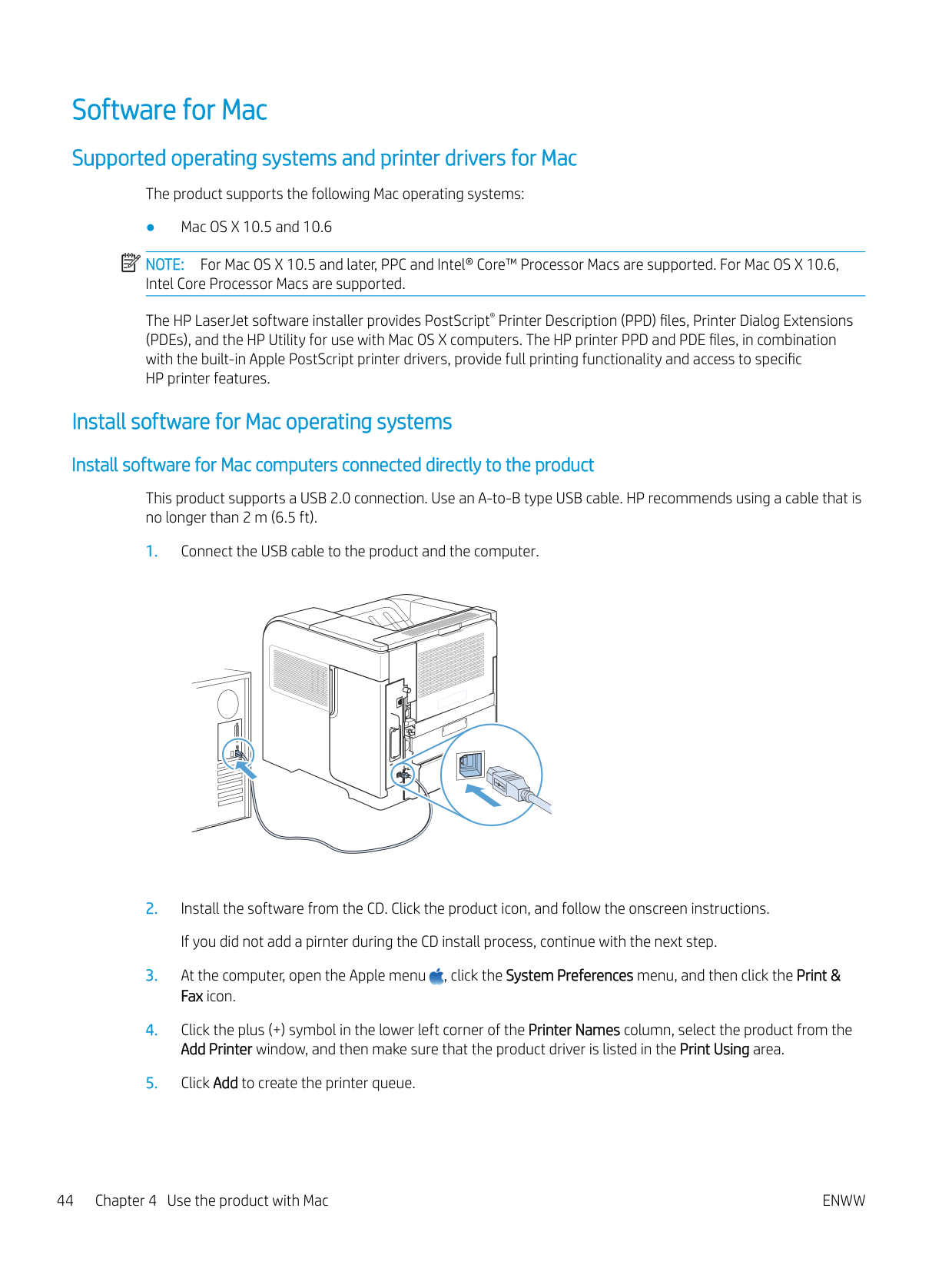
This product supports a USB 2.0 connection. Use an A-to-B type USB cable. HP recommends using a cable that is no longer than 2 m (6.5 ft).

| | |---|
NOTE: For Mac OS X 10.5 and 10.6, the installation procedure should automatically configure the installed options.
| | |---|
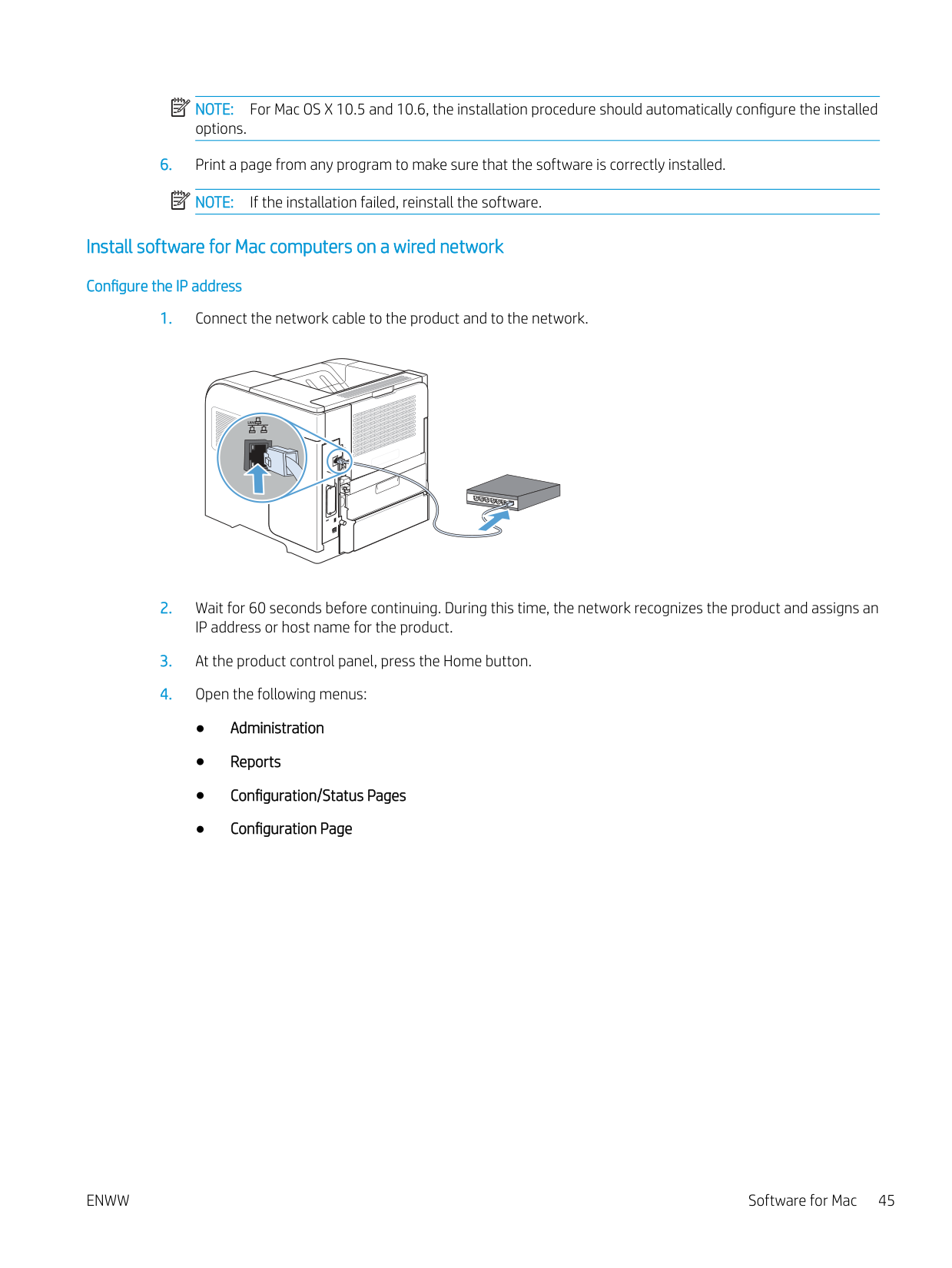
##### Install software for Mac computers on a wired network Configure the IP address

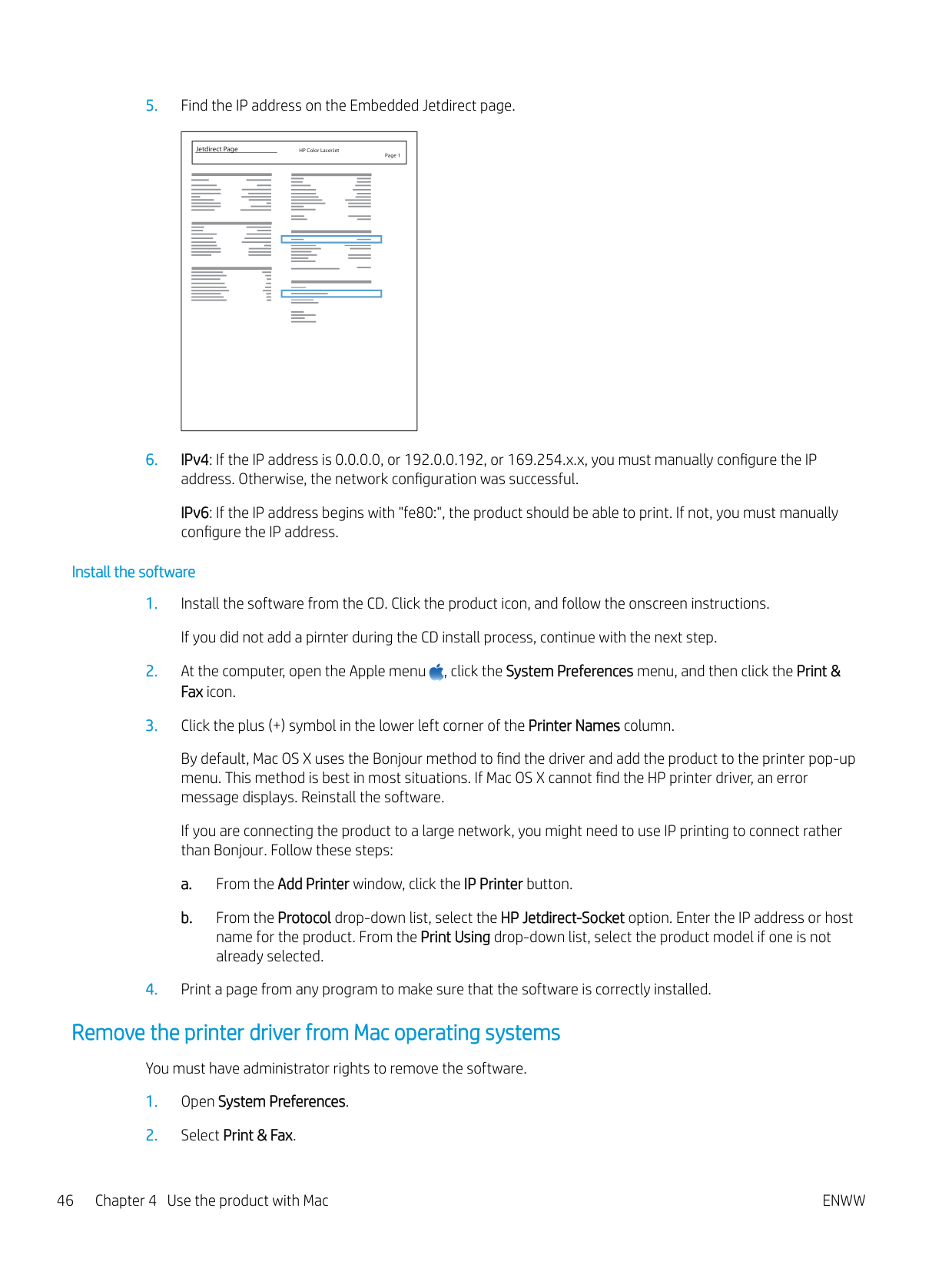
||Jetdirect Page HP Color LaserJet
Page 1| |---| | |---|
IPv6: If the IP address begins with "fe80:", the product should be able to print. If not, you must manually configure the IP address.
###### Install the software
By default, Mac OS X uses the Bonjour method to find the driver and add the product to the printer pop-up menu. This method is best in most situations. If Mac OS X cannot find the HP printer driver, an error message displays. Reinstall the software.
If you are connecting the product to a large network, you might need to use IP printing to connect rather than Bonjour. Follow these steps:
#### Remove the printer driver from Mac operating systems
You must have administrator rights to remove the software.
Priority for print settings for Mac Changes to print settings are prioritized depending on where the changes are made: NOTE: The names of commands and dialog boxes might vary depending on your software program.
| | |---|
#### Change printer-driver settings for Mac Change the settings for all print jobs until the software program is closed
##### Change the default settings for all print jobs
These settings are saved in the Presets menu. To use the new settings, you must select the saved preset option every time you open a program and print.
##### Change the product configuration settings
#### Software for Mac computers HP Utility for Mac
Use the HP Utility to set up product features that are not available in the printer driver. You can use the HP Utility when the product uses a universal serial bus (USB) cable or is connected to a TCP/IPbased network.

Open the HP Printer Utility
▲ From the dock, click HP Utility.
-orFrom Applications, click Hewlett Packard, and then click HP Utility.
HP Utility features
The HP Utility consists of pages that you open by clicking in the Configuration Settings list. The following table describes the tasks that you can perform from these pages. At the top of any page, click the HP Support link to access technical assistance, online supplies ordering, online registration, and recycling and return information.
Menu Item Description Information And Support Supplies Status Shows the product supplies status and provides links for online supplies-
ordering. Device Information Shows information about the currently selected product. File Upload Transfers files from the computer to the product. Upload Fonts Transfers font files from the computer to the product. Update Firmware Transfers a firmware update file to the product. Commands Sends special characters or print commands to the product after the print
job.
Printer Settings Trays Configuration Changes the default tray settings. Economode & Toner Density Changes toner density to use toner more economically Resolution Sets the default print resolution for the product Output Devices Manages settings for the optional output accessories Duplex Mode Turns on the automatic two-sided printing mode. Stored Jobs Manages print jobs that are stored on the product hard disk. E-mail Alerts Configures the product to send e-mail notices for certain events. Network Settings Configures the network settings, such as the IPv4 and IPv6 settings. Supplies Management Configures how the product should behave when supplies are nearing the
end of their estimated life. Protect Direct Ports Disables printing over USB or parallel ports. Additional Settings Provides access to the HP Embedded Web Server.
#### Supported utilities for Mac HP Embedded Web Server
The product is equipped with the HP Embedded Web server, which provides access to information about product and network activities. Access the HP Embedded Web Server from the HP Utility. Open the Printer Settings menu, and then select the Additional Settings option.
You can also access the HP Embedded Web Server from the Safari Web browser:
With HP ePrint , you can print anywhere, anytime, from a mobile phone, laptop, or any other mobile device. HP ePrint works with any email-capable device. If you can e-mail, you can print to an HP ePrint-enabled product. For more details, go to www.hpeprintcenter.com.
| | |---|
NOTE: The product must be connected to a network and have Internet access to use HP ePrint. HP ePrint is disabled as a default setting in the product. Use this procedure to enable it.
##### AirPrint
Direct printing using Apple’s AirPrint is supported for iOS 4.2 or later. Use AirPrint to print directly to the product from an iPad (iOS 4.2), iPhone (3GS or later), or iPod touch (third generation or later) in the following applications:
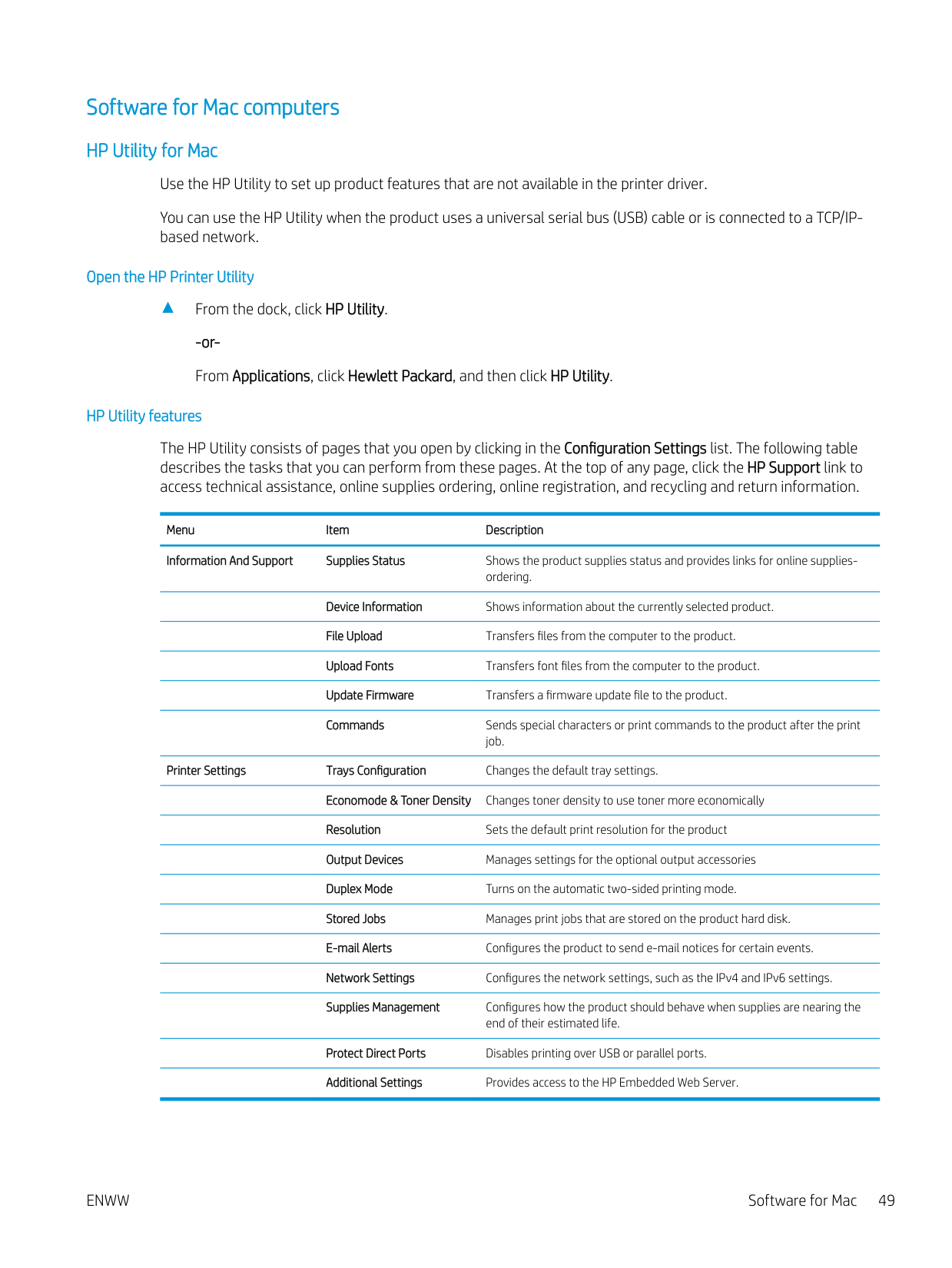
To use AirPrint, the product must be connected to a network. For more information about using AirPrint and about which HP products are compatible with AirPrint, go to www.hp.com/go/airprint.
| | |---|
NOTE: You might need to upgrade the product firmware to use AirPrint. Go to www.hp.com/go/ lj600Series_firmware.
Basic print tasks with Mac
#### Cancel a print job with Mac
#### Change the paper size and type with Mac
#### Resize documents or print on a custom paper size with Mac
Mac OS X 10.5 and 10.6 Use one of these methods.
#### Create and use printing presets with Mac
Use printing presets to save the current printer driver settings for reuse.
###### Create a printing preset
###### Use printing presets
| | |---|
#### Print a cover page with Mac
| | |---|
#### Use watermarks with Mac
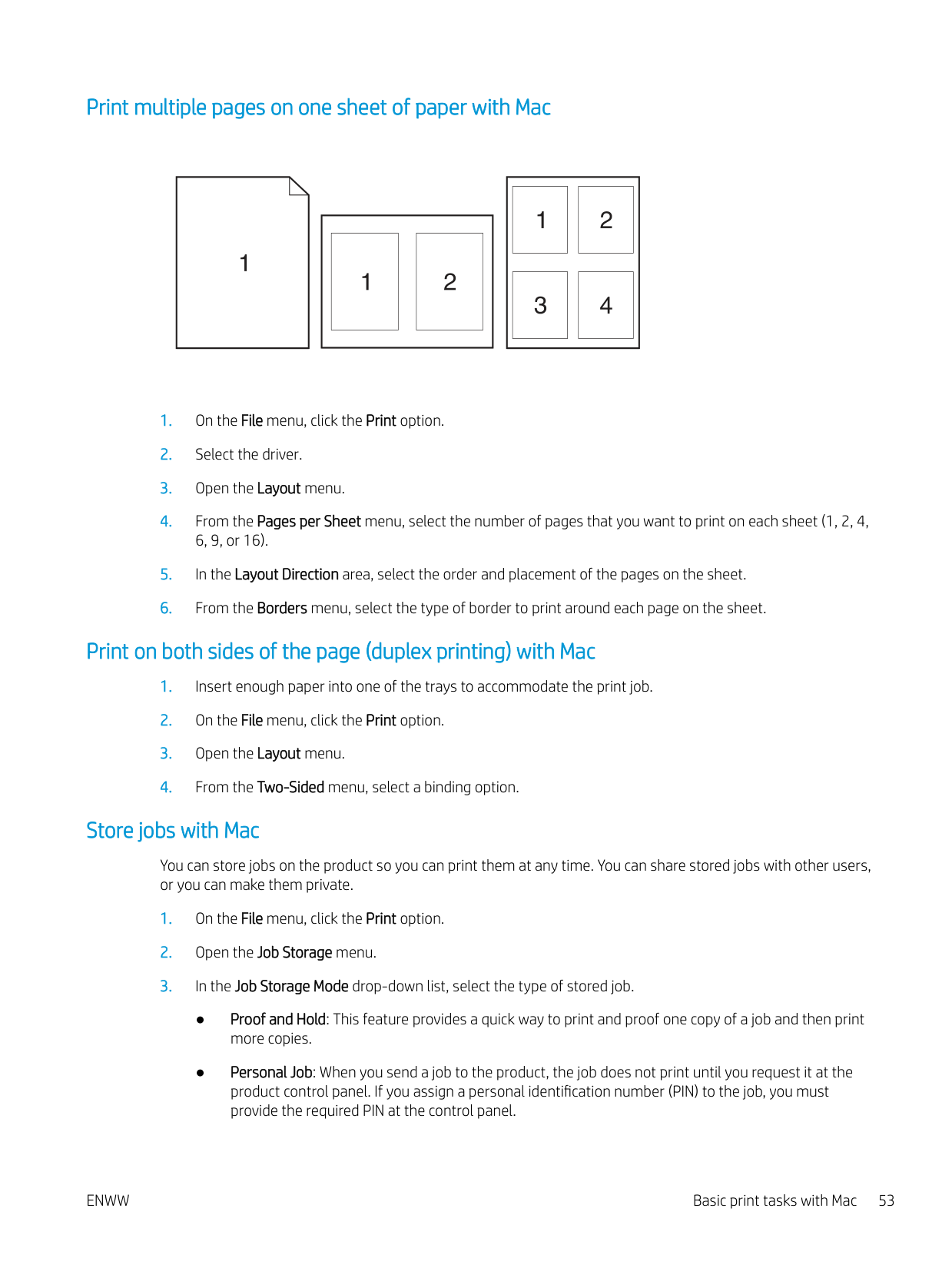
#### Print multiple pages on one sheet of paper with Mac
#### Print on both sides of the page (duplex printing) with Mac
#### Store jobs with Mac
You can store jobs on the product so you can print them at any time. You can share stored jobs with other users, or you can make them private.
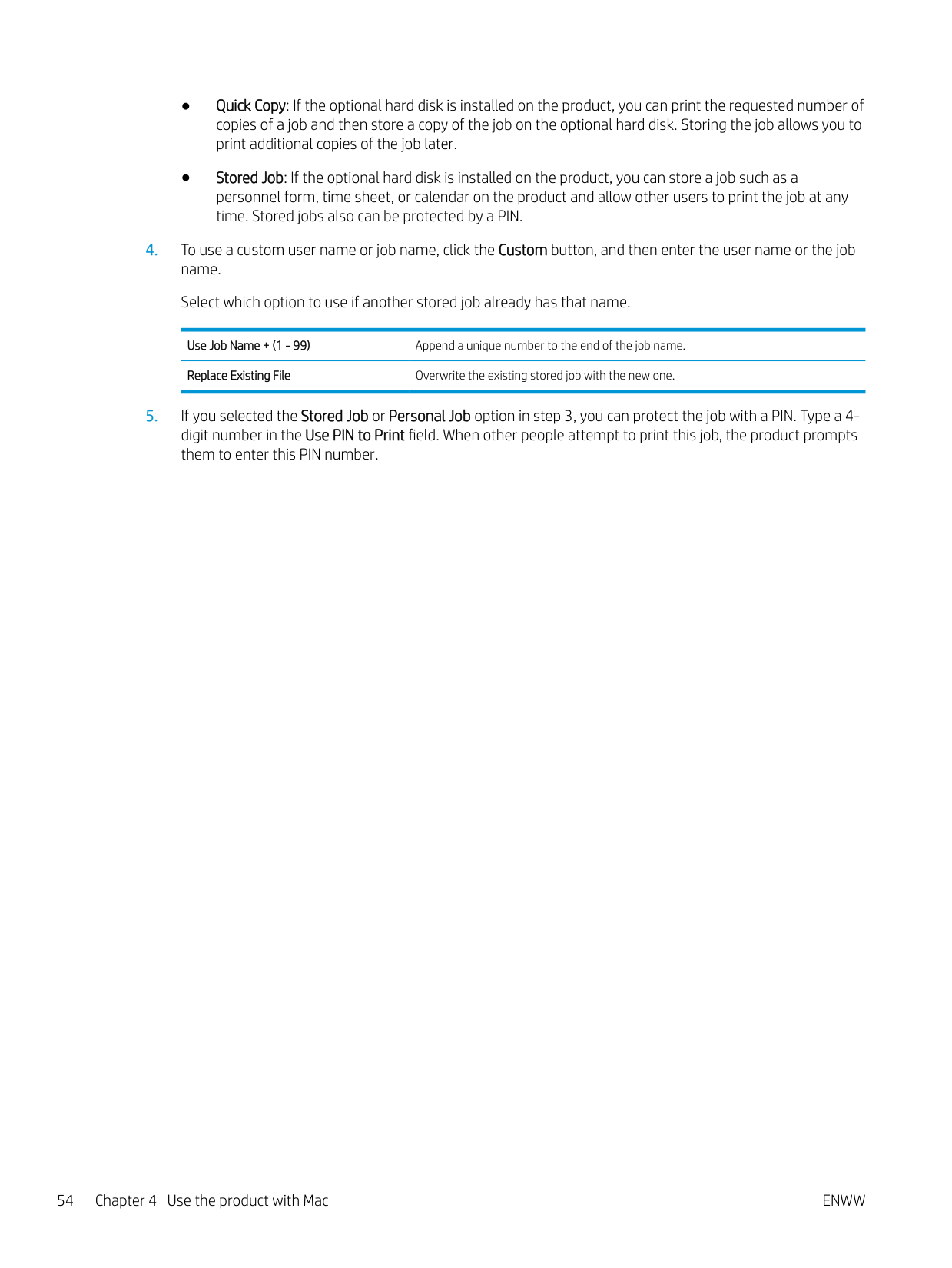
Use Job Name + (1 - 99) Append a unique number to the end of the job name. Replace Existing File Overwrite the existing stored job with the new one.
Solve problems with a Mac
See Solve product software problems with Mac on page 196.

ENWW Solve problems with a Mac 55
5 Connect the product with Windows
ENWW 57
Printer sharing disclaimer
HP does not support peer-to-peer networking, as the feature is a function of Microsoft operating systems and not of the HP printer drivers. Go to Microsoft at www.microsoft.com.
Connect with USB
This product supports a USB 2.0 connection. Use an A-to-B type USB cable. HP recommends using a cable that is no longer than 2 m (6.5 ft).
CAUTION: Do not connect the USB cable until the installation software prompts you to connect it.
#### CD installation

| | |---|
Connect to a network with Windows
You can configure network parameters from the control panel, the HP Embedded Web Server, or for most networks, from the HP Web Jetadmin software.
| | |---|
NOTE: HP Web Jetadmin software is not supported on Mac OS X operating systems.
For a complete list of supported networks and for instructions on configuring network parameters from software, see the HP Jetdirect Embedded Print Server Administrator’s Guide. The guide comes with products in which an HP Jetdirect embedded print server is installed.
#### Supported network protocols
Table 5-1 Supported network protocols Network type Supported protocols TCP/IP IPv4 and IPv6 networks ● Bonjour
TCP/IP IPv4 networks only ● Auto IP
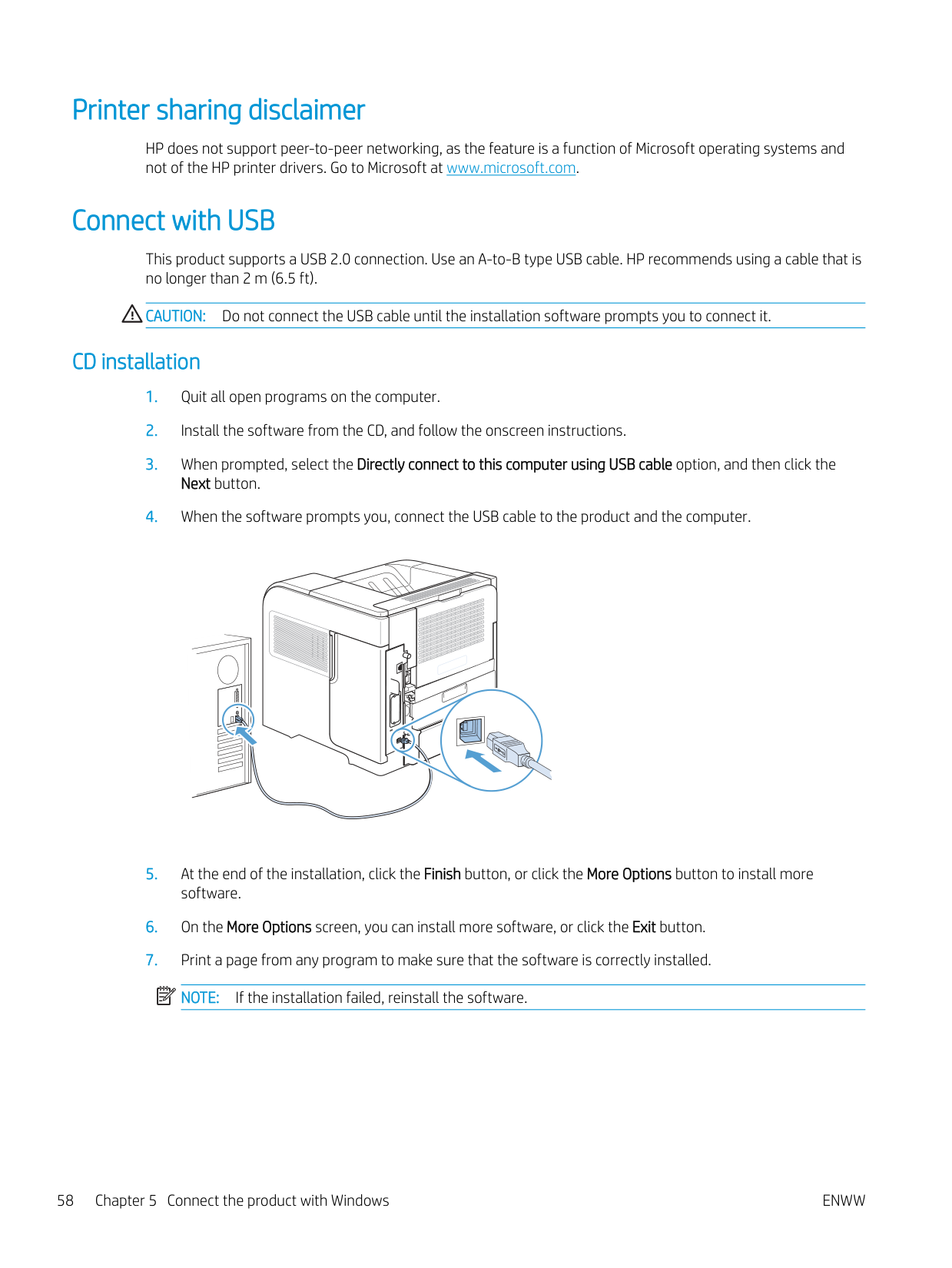
Other supported network protocols ● Internetwork Packet Exchange/Sequenced Packet Exchange (IPX/SPX)
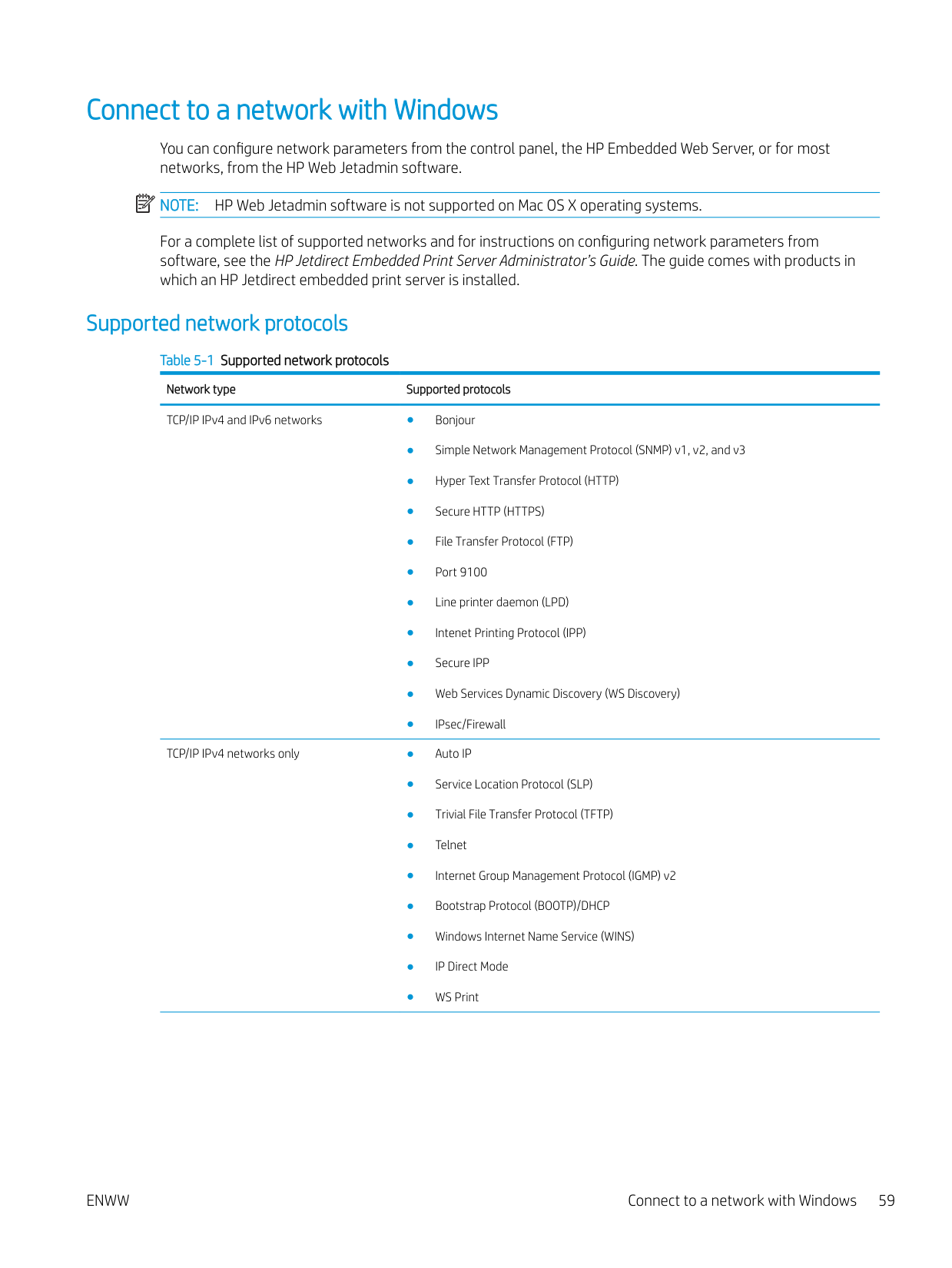
IPsec/Firewall Provides network-layer security on IPv4 and IPv6 networks. A firewall provides simple control of IP traffic. IPsec provides additional protection through authentication and encryption protocols.
Kerberos Allows you to exchange private information across an open network by assigning a unique key, called a ticket, to each user who logs on to the network. The ticket is then embedded in messages to identify the sender.
SNMP v3 Employs a user-based security model for SNMP v3, which provides user authentication and data privacy through encryption.
SSL/TLS Allows you to transmit private documents via the Internet and guarantee privacy and data integrity between the client and server applications.
IPsec batch configuration Provides network-layer security through the simple control of IP traffic to and from the product. This protocol provides the benefits of encryption and authentication and allows for multiple configurations.
#### Install the product on a wired network with Windows Configure the IP address
||Jetdirect Page HP Color LaserJet
Page 1| |---| | |---|
IPv6: If the IP address begins with "fe80:", the product should be able to print. If not, you must manually configure the IP address.
##### Install the software
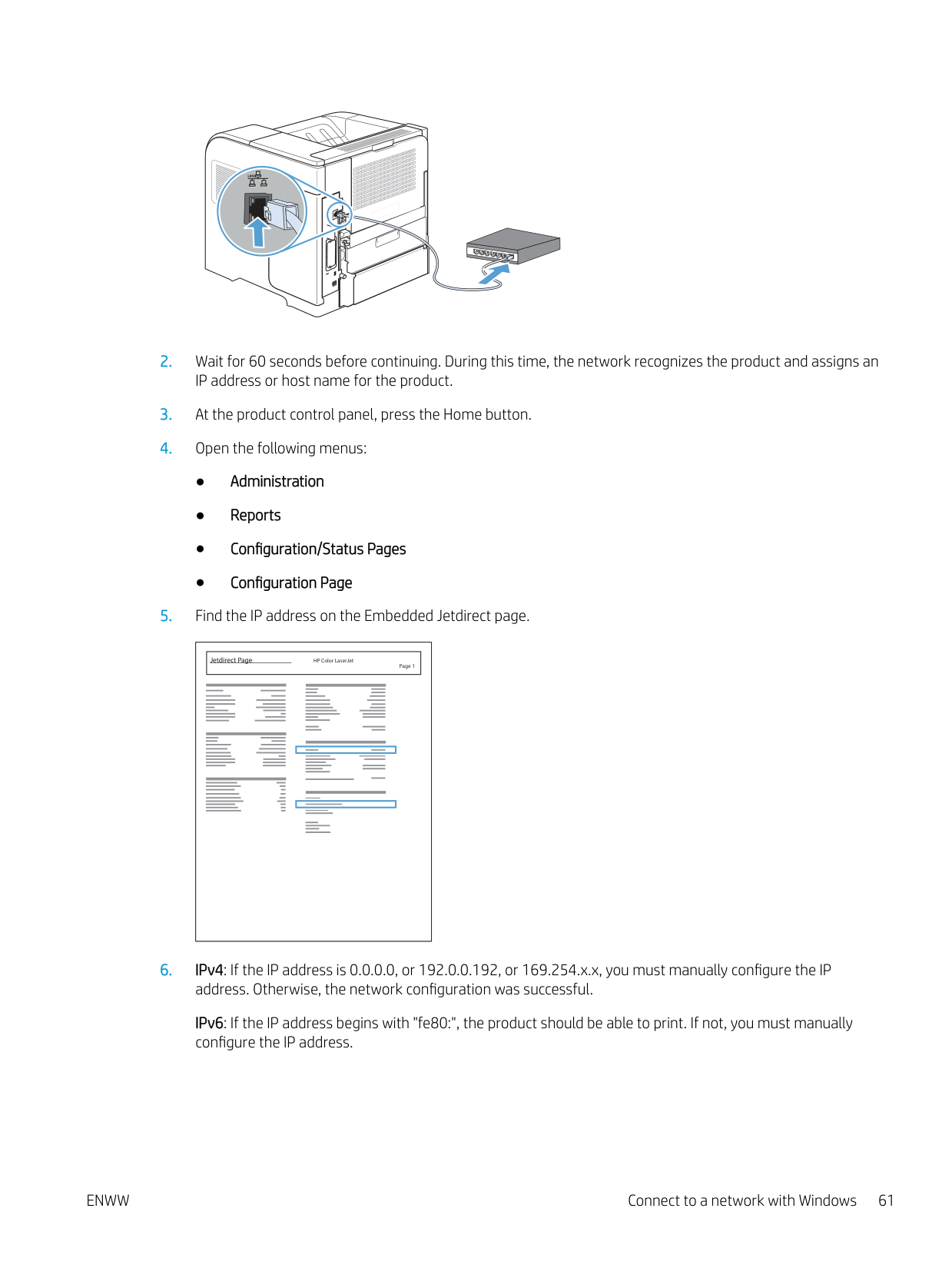
#### Configure network settings with Windows View or change network settings
Use the embedded Web server to view or change IP configuration settings.
##### Set or change the network password
Use the embedded Web server to set a network password or change an existing password.
NOTE: If a password has previously been set, you are prompted to type the password. Type the password, and then click the Apply button.

| | |---|
##### Manually configure IPv4 TCP/IP parameters from the control panel
Use the control-panel Administration menus to manually set an IPv4 address, subnet mask, and default gateway.
##### Manually configure IPv6 TCP/IP parameters from the control panel
Use the control-panel Administration menus to manually set an IPv6 address.
Use the numeric keypad, or press the up arrow or the down arrow to enter the address. Press the OK button.
| | |---|
NOTE: If you are using the arrow buttons, you must press the OK button after entering each digit.
##### Link speed and duplex settings
The link speed and communication mode of the print server must match the network. For most situations, leave the product in Auto mode. Incorrect changes to the link speed and duplex settings might prevent the product from communicating with other network devices. If you need to make changes, use the product control panel.
| |
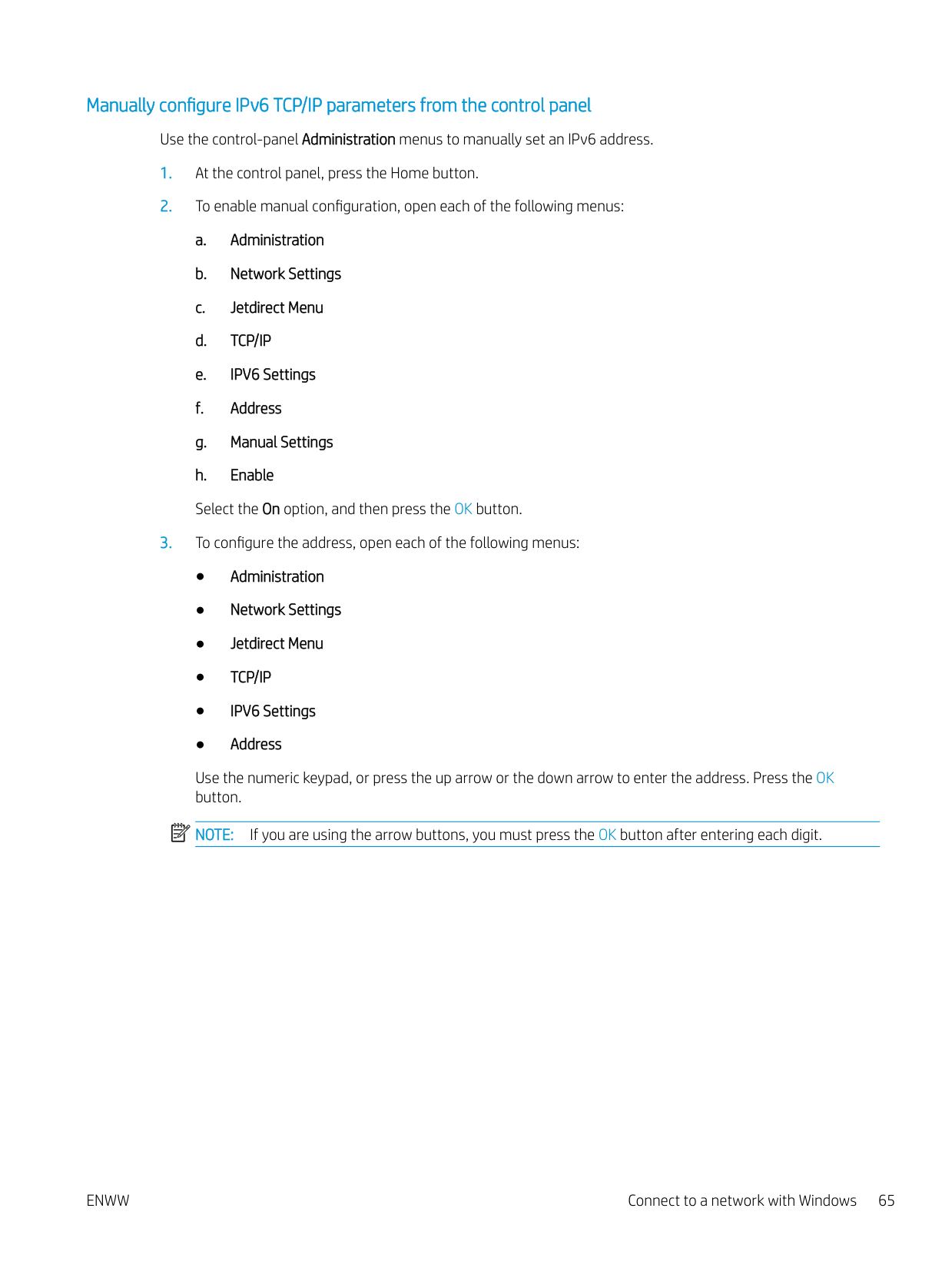
|---|
NOTE: Making changes to these settings causes the product to turn off and then on. Make changes only when the product is idle.
Setting Description Auto The print server automatically configures itself for the highest link speed and
communication mode allowed on the network. 10T Half 10 megabytes per second (Mbps), half-duplex operation 10T Full 10 Mbps, full-duplex operation 100TX Half 100 Mbps, half-duplex operation 100TX Full 100 Mbps, full-duplex operation 100TX Auto Limits auto-negotiation to a maximum link speed of 100 Mbps 1000T Full 1000 Mbps, full-duplex operation
6 Paper and print media
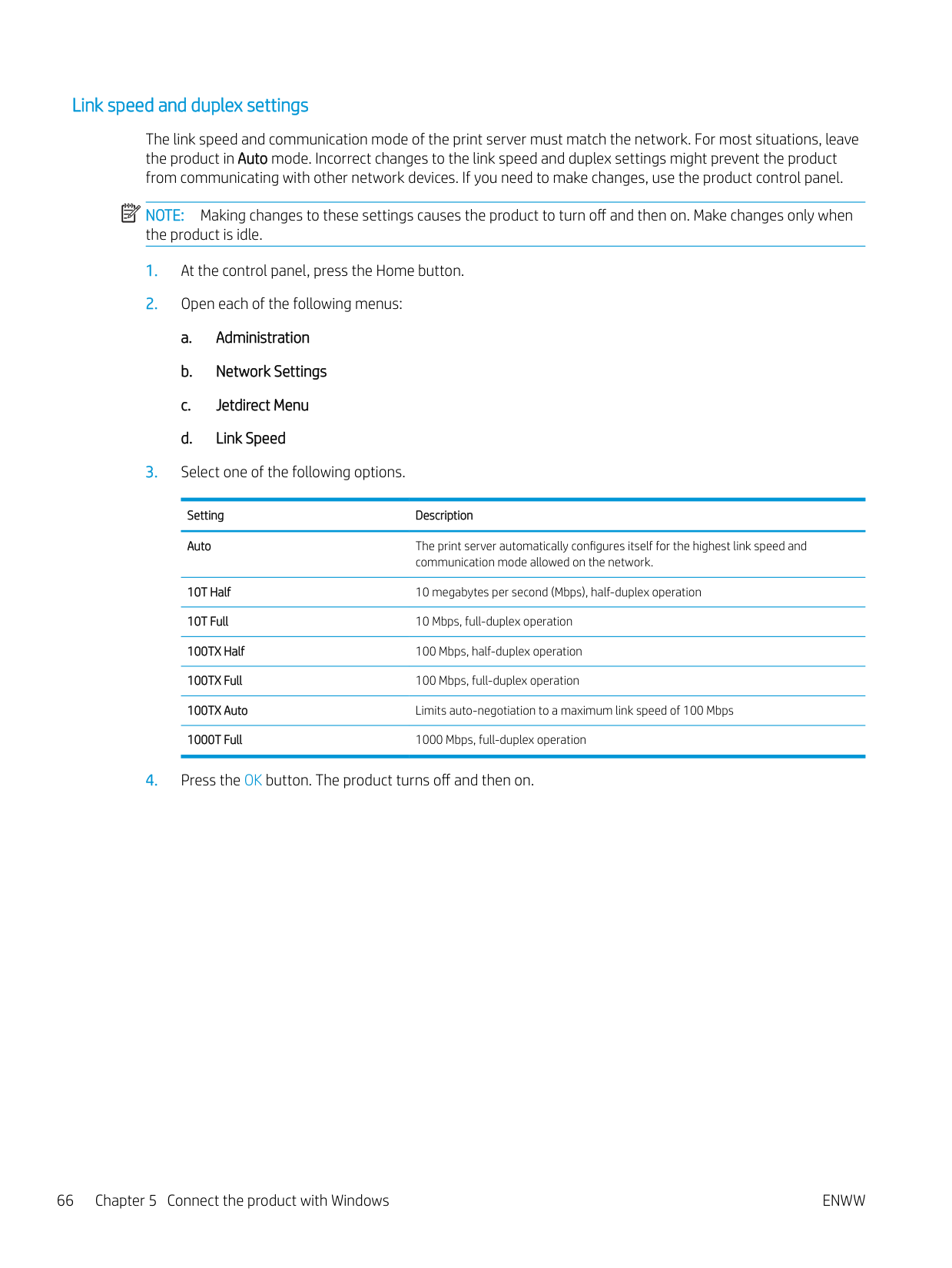
ENWW 67
Understand paper use
This product supports a variety of paper and other print media in accordance with the guidelines in this user guide. Paper or print media that does not meet these guidelines might cause poor print quality, increased jams, and premature wear on the product.
For best results, use only HP-brand paper and print media designed for laser printers or multiuse. Do not use paper or print media made for inkjet printers. HP cannot recommend the use of other brands of media because HP cannot control their quality.
Store paper in the original package to prevent exposing the paper to moisture and other damage. Do not open the package until you are ready to use the paper.
It is possible for paper to meet all of the guidelines in this user guide and still not produce satisfactory results. This might be the result of improper handling, unacceptable temperature and/or humidity levels, or other variables over which HP has no control.
CAUTION: Using paper or print media that does not meet HP's specifications might cause problems for the product, requiring repair. This repair is not covered by the HP warranty or service agreements.
#### Special paper guidelines
This product supports printing on special media. Use the following guidelines to obtain satisfactory results. When using special paper or print media, be sure to set the type and size in the printer driver to obtain the best results.
CAUTION: HP LaserJet products use fusers to bond dry toner particles to the paper in very precise dots. HP laser paper is designed to withstand this extreme heat. Using inkjet paper could damage the product.
Media type Do Do not Envelopes ● Store envelopes flat.
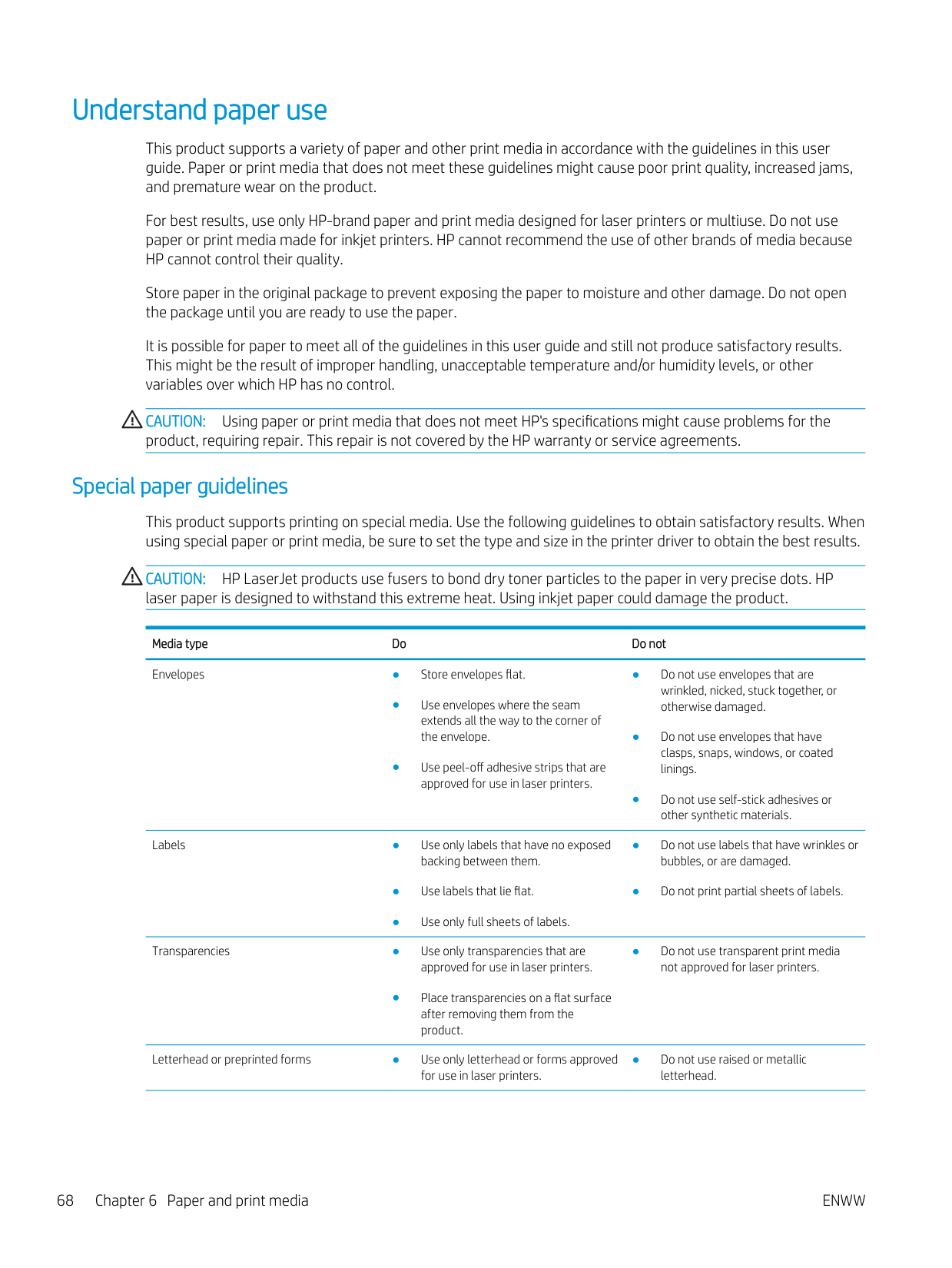
Labels ● Use only labels that have no exposed backing between them.
Transparencies ● Use only transparencies that are approved for use in laser printers.
● Do not use transparent print media
not approved for laser printers.
● Place transparencies on a flat surface after removing them from the product.
Letterhead or preprinted forms ● Use only letterhead or forms approved for use in laser printers.
● Do not use raised or metallic
letterhead.
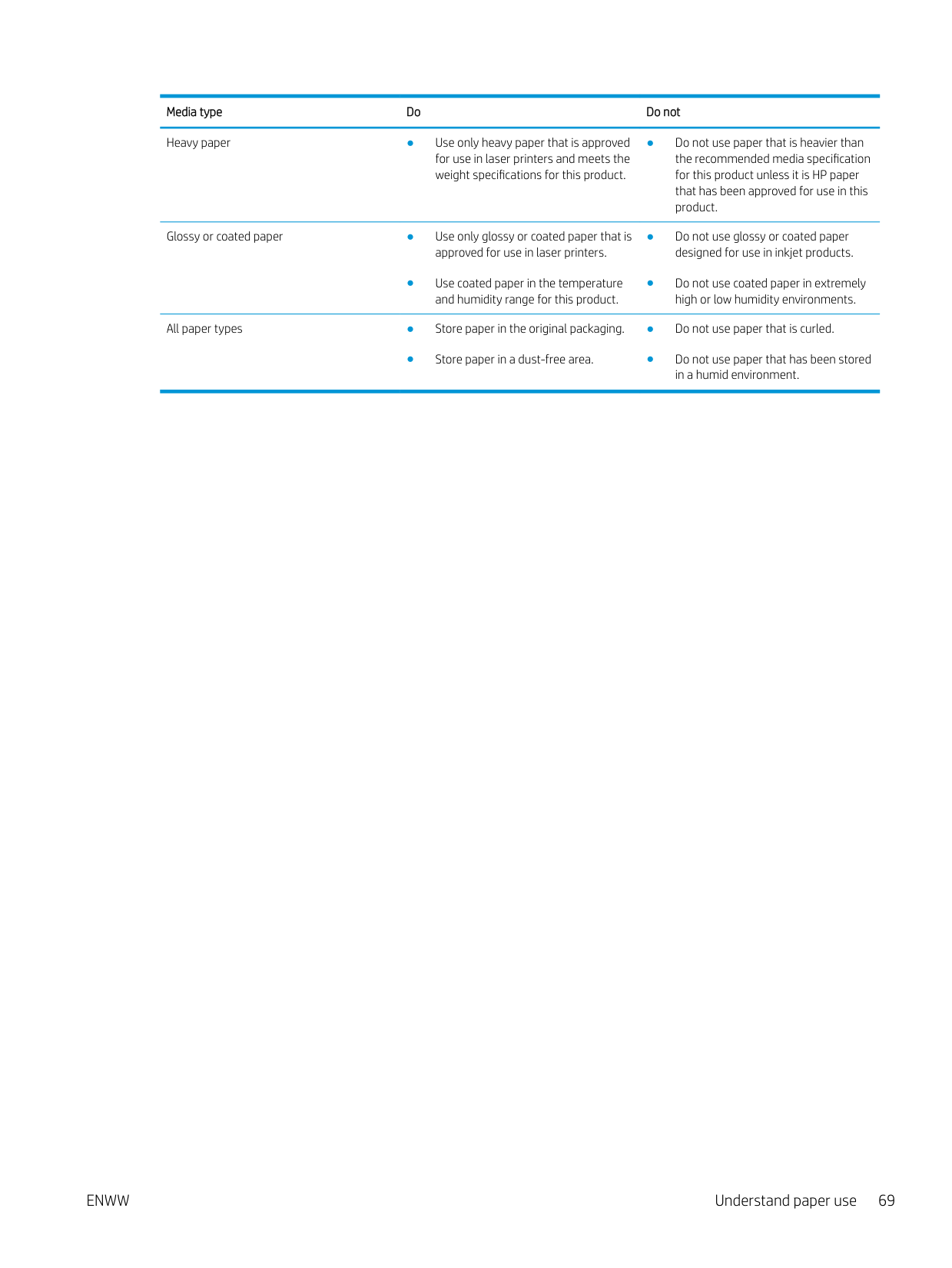
Media type Do Do not Heavy paper ● Use only heavy paper that is approved
● Do not use paper that is heavier than the recommended media specification for this product unless it is HP paper that has been approved for use in this product.
for use in laser printers and meets the weight specifications for this product.
Glossy or coated paper ● Use only glossy or coated paper that is approved for use in laser printers.
● Do not use glossy or coated paper
designed for use in inkjet products.
● Use coated paper in the temperature
● Do not use coated paper in extremely
high or low humidity environments. All paper types ● Store paper in the original packaging.
and humidity range for this product.
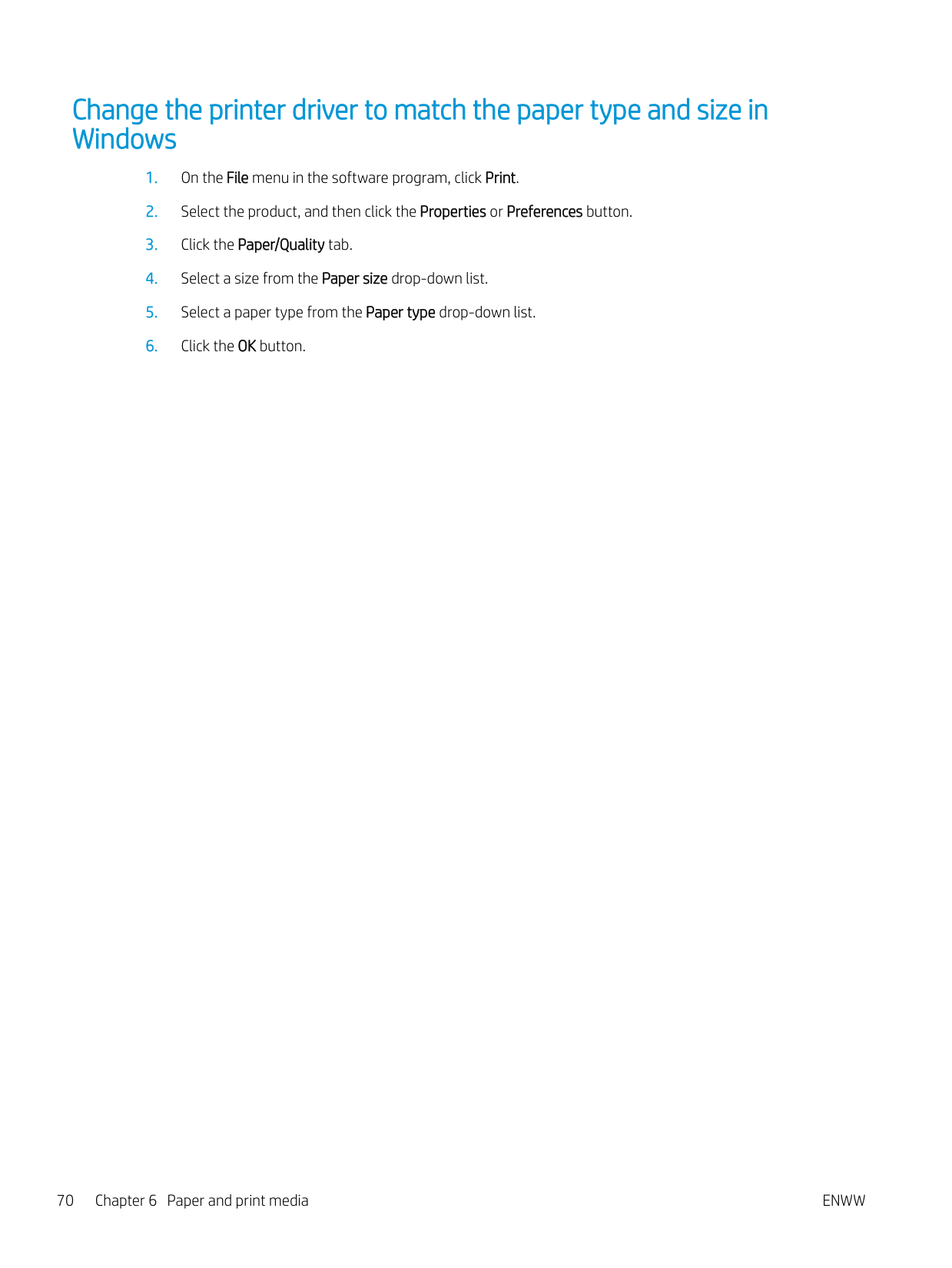
● Store paper in a dust-free area.
ENWW Understand paper use 69
Change the printer driver to match the paper type and size in Windows
Supported paper sizes This product supports a number of paper sizes, and it adapts to various media. NOTE: To obtain best results, select the correct paper size and type in the printer driver before printing.
| | |---|
Table 6-1 Supported paper and print media sizes
Size and dimensions Tray 1
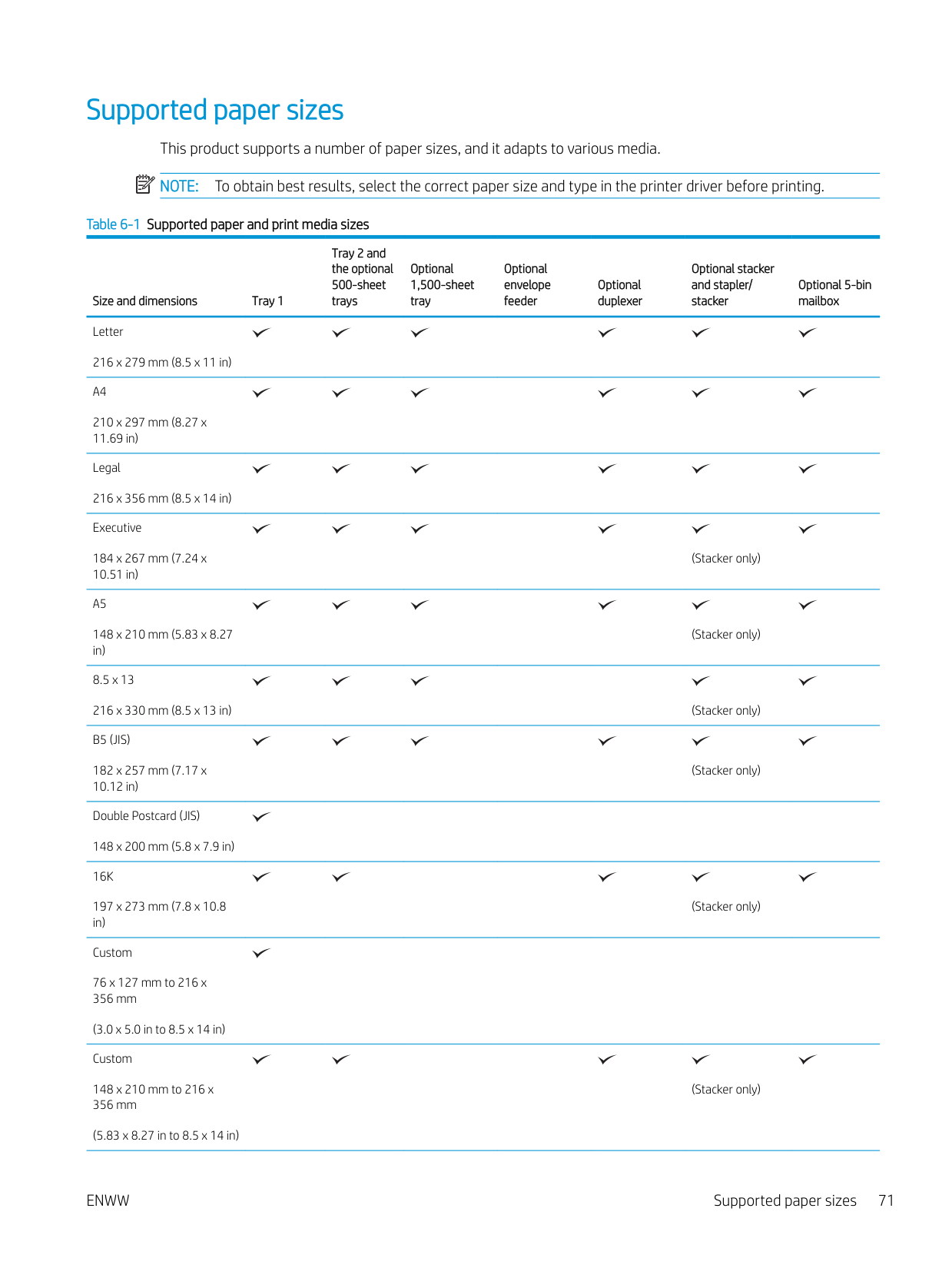
Tray 2 and the optional 500-sheet trays
Optional 1,500-sheet tray
Optional envelope feeder
Optional duplexer
Optional stacker and stapler/ stacker
Letter 216 x 279 mm (8.5 x 11 in)
210 x 297 mm (8.27 x 11.69 in)
Legal 216 x 356 mm (8.5 x 14 in) Executive 184 x 267 mm (7.24 x 10.51 in)
(Stacker only)
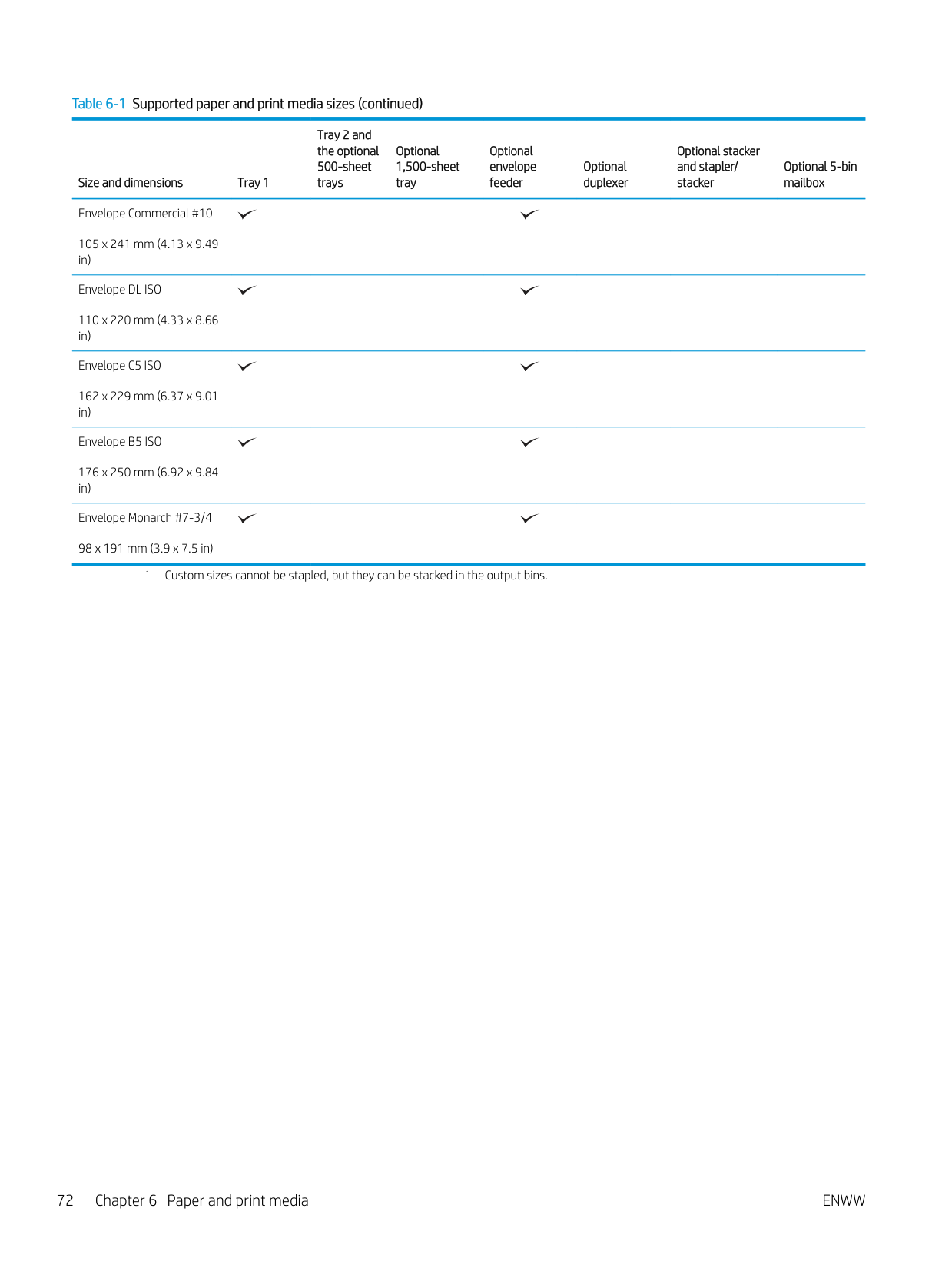
148 x 210 mm (5.83 x 8.27 in)
(Stacker only)
8.5 x 13 216 x 330 mm (8.5 x 13 in) (Stacker only) B5 (JIS) 182 x 257 mm (7.17 x 10.12 in)
(Stacker only)
Double Postcard (JIS) 148 x 200 mm (5.8 x 7.9 in) 16K 197 x 273 mm (7.8 x 10.8 in)
Custom 76 x 127 mm to 216 x 356 mm (3.0 x 5.0 in to 8.5 x 14 in) Custom 148 x 210 mm to 216 x 356 mm (5.83 x 8.27 in to 8.5 x 14 in)
(Stacker only)
(Stacker only)
Optional 5-bin mailbox
ENWW Supported paper sizes 71
Size and dimensions Tray 1
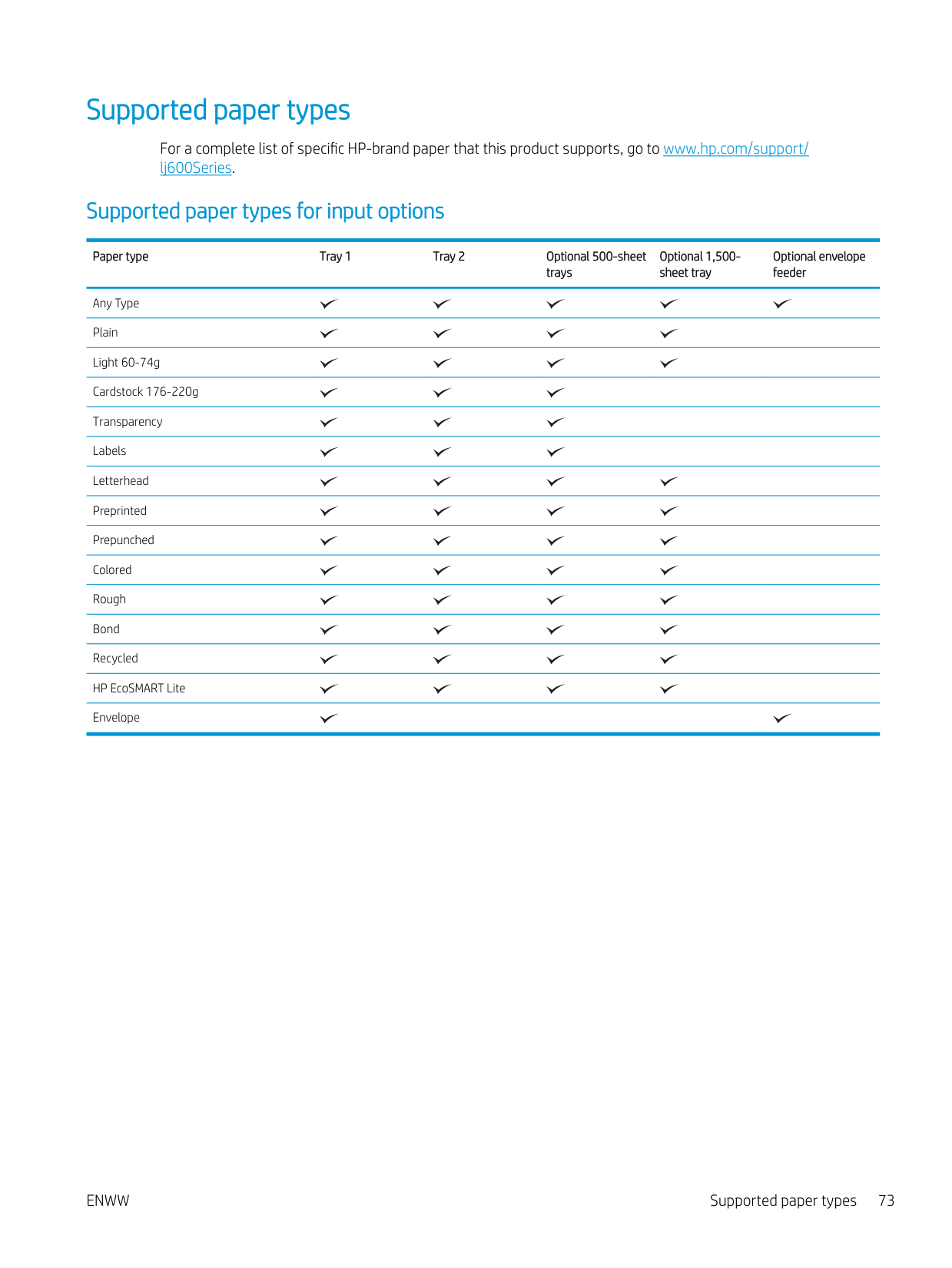
Tray 2 and the optional 500-sheet trays
Optional 1,500-sheet tray
Optional envelope feeder
Envelope Commercial #10 105 x 241 mm (4.13 x 9.49 in) Envelope DL ISO 110 x 220 mm (4.33 x 8.66 in) Envelope C5 ISO 162 x 229 mm (6.37 x 9.01 in) Envelope B5 ISO 176 x 250 mm (6.92 x 9.84 in) Envelope Monarch #7-3/4 98 x 191 mm (3.9 x 7.5 in)
1 Custom sizes cannot be stapled, but they can be stacked in the output bins.
Optional duplexer
Optional stacker and stapler/ stacker
Optional 5-bin mailbox
Supported paper types
For a complete list of specific HP-brand paper that this product supports, go to www.hp.com/support/ lj600Series.
#### Supported paper types for input options
Paper type Tray 1 Tray 2 Optional 500-sheet trays
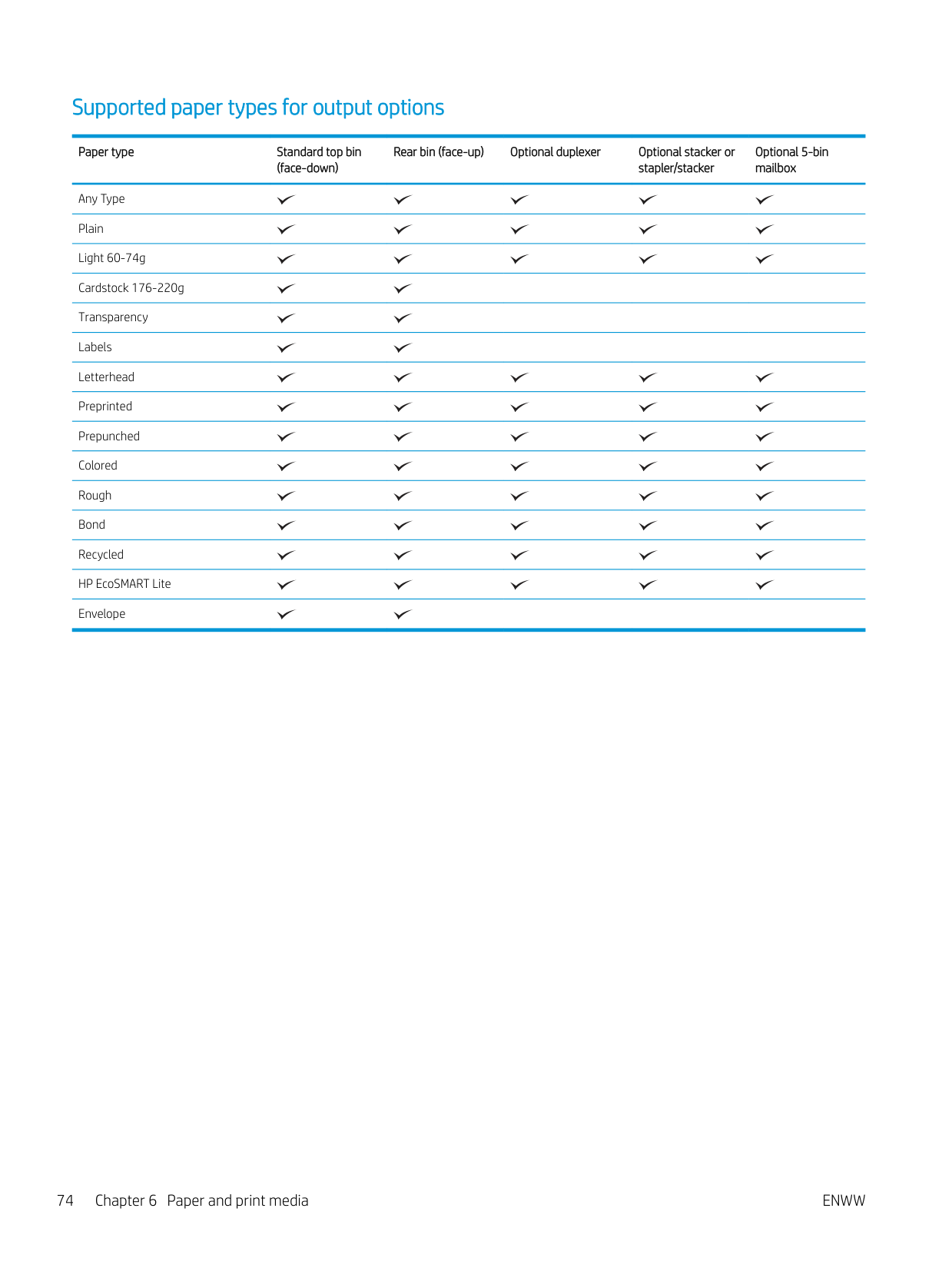
Optional 1,500sheet tray
Any Type Plain Light 60-74g Cardstock 176-220g Transparency Labels Letterhead Preprinted Prepunched Colored Rough Bond Recycled HP EcoSMART Lite Envelope
Optional envelope feeder
ENWW Supported paper types 73
#### Supported paper types for output options
Paper type Standard top bin (face-down)
Any Type Plain Light 60-74g Cardstock 176-220g Transparency Labels Letterhead Preprinted Prepunched Colored Rough Bond Recycled HP EcoSMART Lite Envelope
Rear bin (face-up) Optional duplexer Optional stacker or stapler/stacker
Optional 5-bin mailbox
Tray and bin capacity
Tray or bin Paper type Specifications Quantity
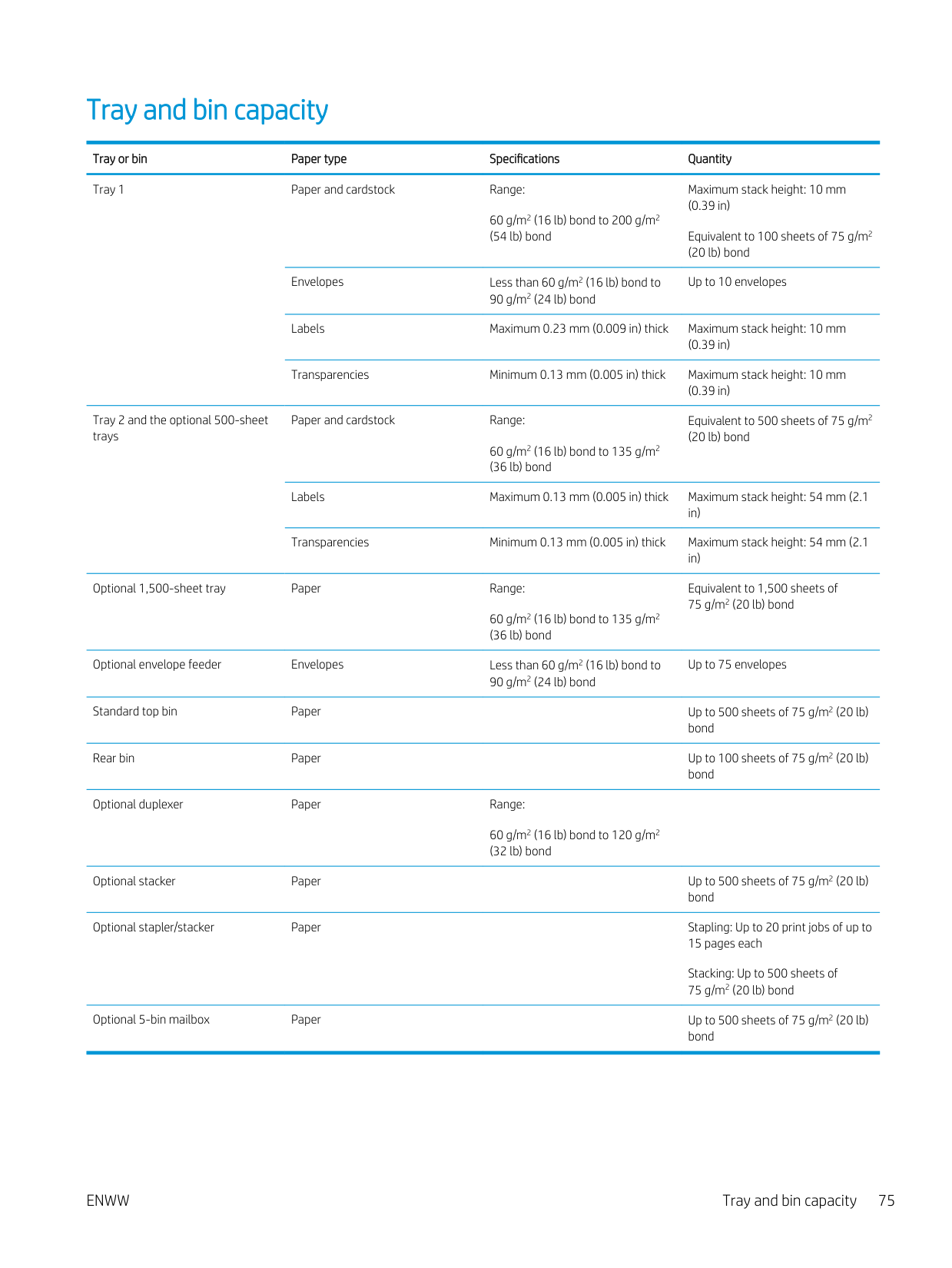
60 g/m2 (16 lb) bond to 200 g/m2 (54 lb) bond
Maximum stack height: 10 mm (0.39 in)
Equivalent to 100 sheets of 75 g/m2 (20 lb) bond
Envelopes Less than 60 g/m2 (16 lb) bond to 90 g/m2 (24 lb) bond
Up to 10 envelopes
Labels Maximum 0.23 mm (0.009 in) thick Maximum stack height: 10 mm (0.39 in)
Transparencies Minimum 0.13 mm (0.005 in) thick Maximum stack height: 10 mm (0.39 in)
Paper and cardstock Range:
60 g/m2 (16 lb) bond to 135 g/m2 (36 lb) bond
Equivalent to 500 sheets of 75 g/m2 (20 lb) bond
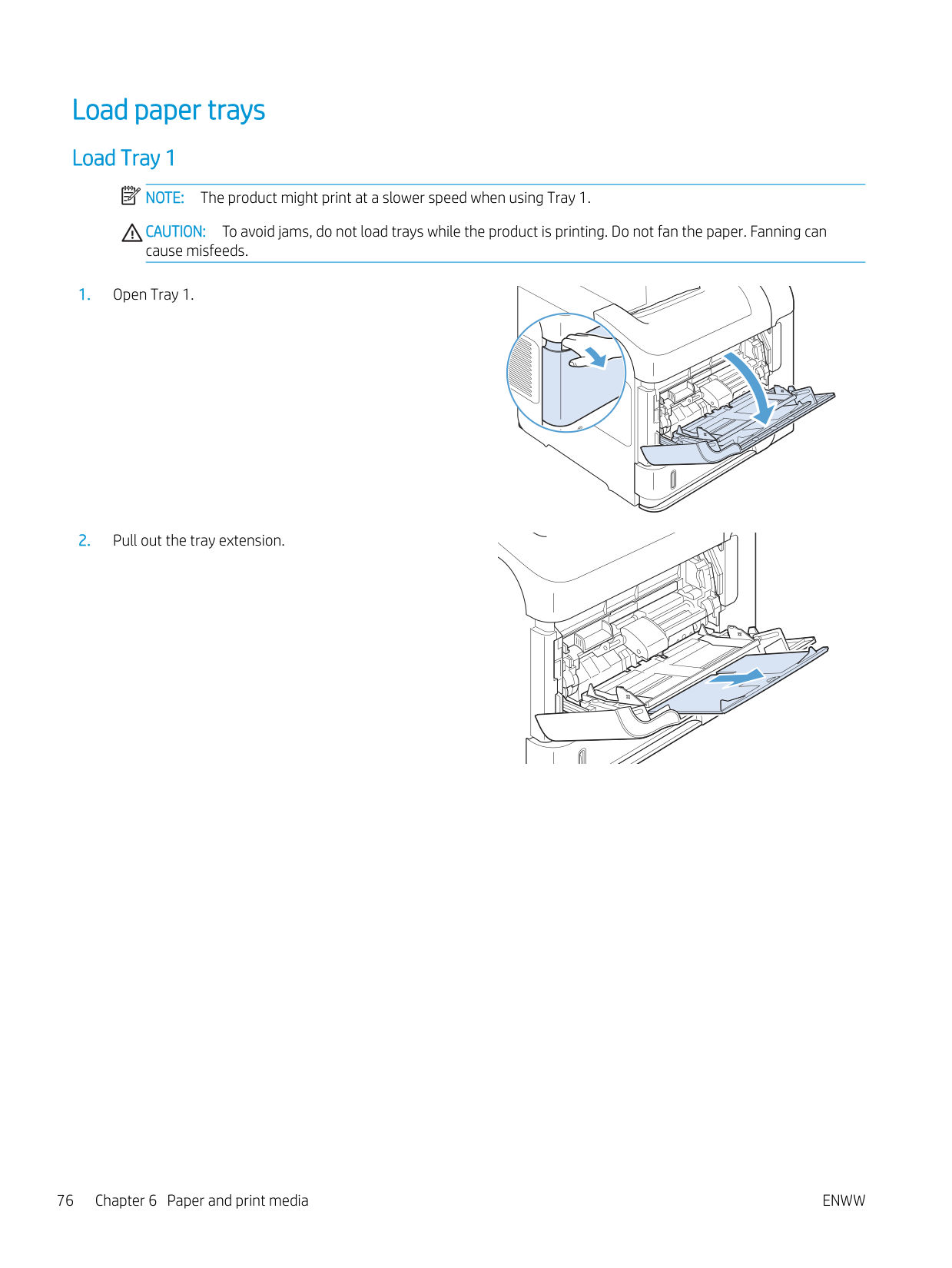
Labels Maximum 0.13 mm (0.005 in) thick Maximum stack height: 54 mm (2.1 in)
Transparencies Minimum 0.13 mm (0.005 in) thick Maximum stack height: 54 mm (2.1
in) Optional 1,500-sheet tray Paper Range:
Equivalent to 1,500 sheets of 75 g/m2 (20 lb) bond
60 g/m2 (16 lb) bond to 135 g/m2 (36 lb) bond
Optional envelope feeder Envelopes Less than 60 g/m2 (16 lb) bond to 90 g/m2 (24 lb) bond
Up to 75 envelopes
Standard top bin Paper Up to 500 sheets of 75 g/m2 (20 lb) bond
Rear bin Paper Up to 100 sheets of 75 g/m2 (20 lb)
bond Optional duplexer Paper Range:
60 g/m2 (16 lb) bond to 120 g/m2 (32 lb) bond
Optional stacker Paper Up to 500 sheets of 75 g/m2 (20 lb) bond
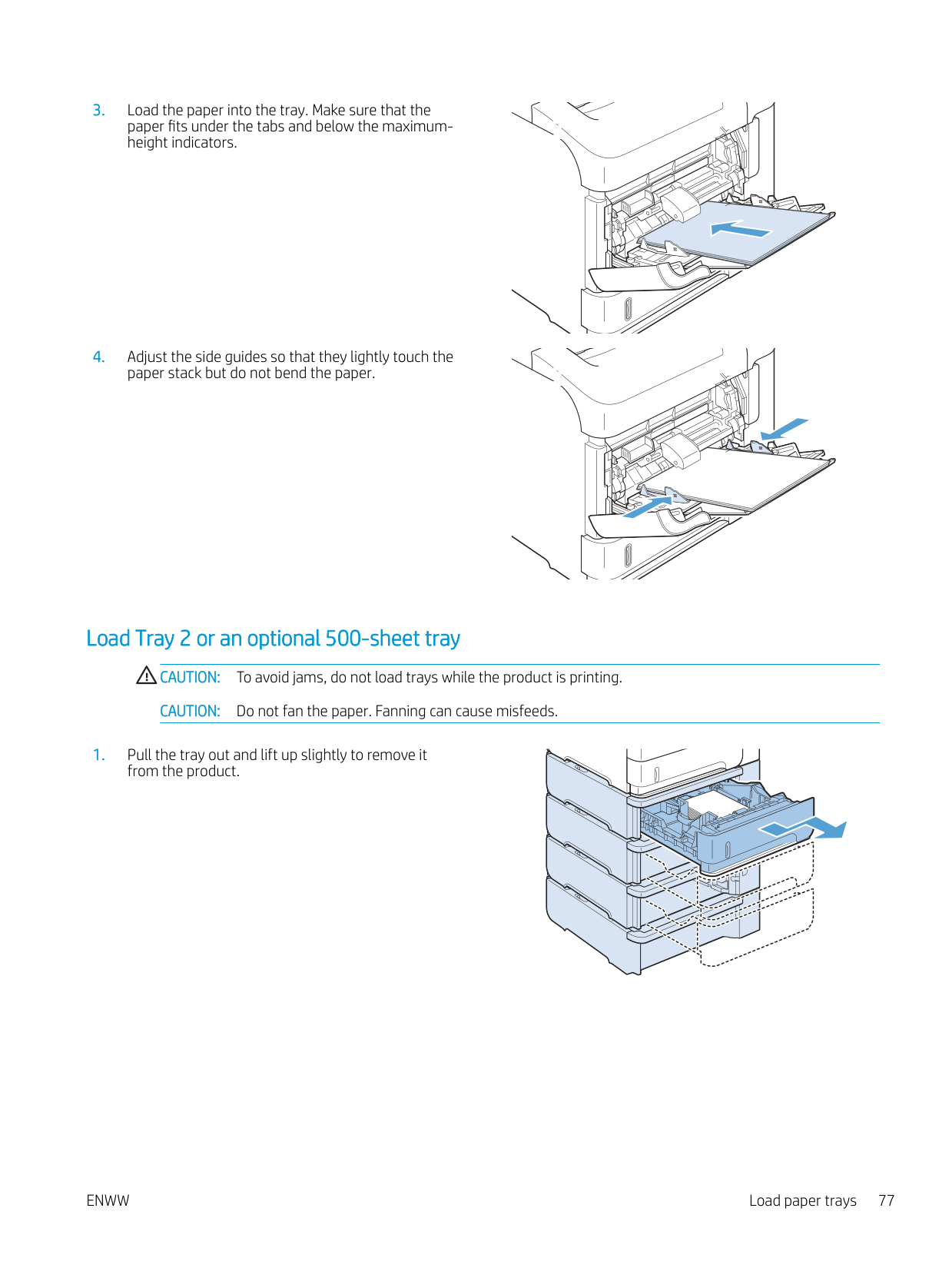
Optional stapler/stacker Paper Stapling: Up to 20 print jobs of up to 15 pages each Stacking: Up to 500 sheets of 75 g/m2 (20 lb) bond
Optional 5-bin mailbox Paper Up to 500 sheets of 75 g/m2 (20 lb) bond
ENWW Tray and bin capacity 75
Load paper trays
#### Load Tray 1
NOTE: The product might print at a slower speed when using Tray 1. CAUTION: To avoid jams, do not load trays while the product is printing. Do not fan the paper. Fanning can cause misfeeds.
| | |---|
| | | |---|---| | | |
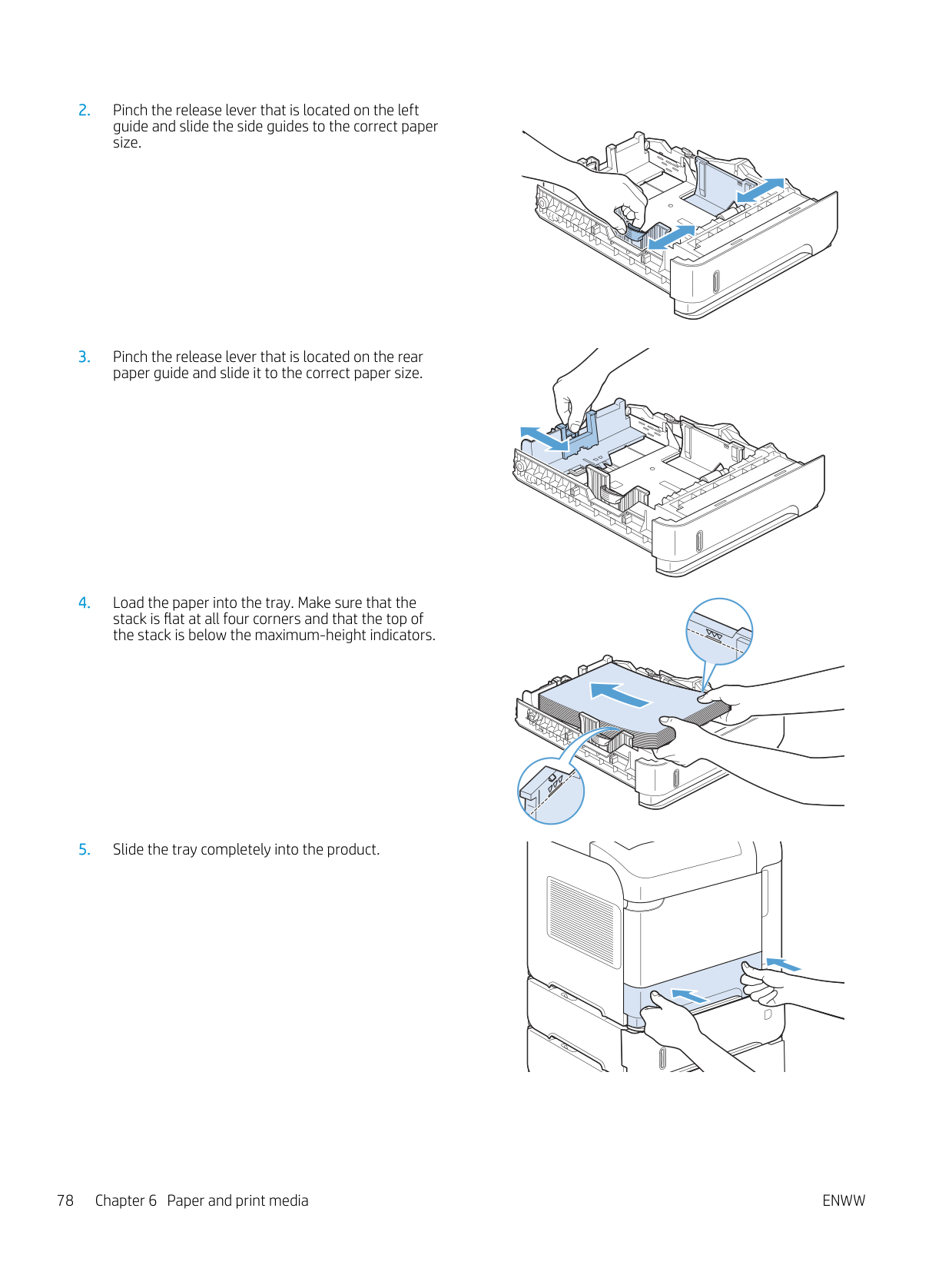
height indicators. 2
paper stack but do not bend the paper. 2
#### Load Tray 2 or an optional 500-sheet tray
CAUTION: To avoid jams, do not load trays while the product is printing. CAUTION: Do not fan the paper. Fanning can cause misfeeds.
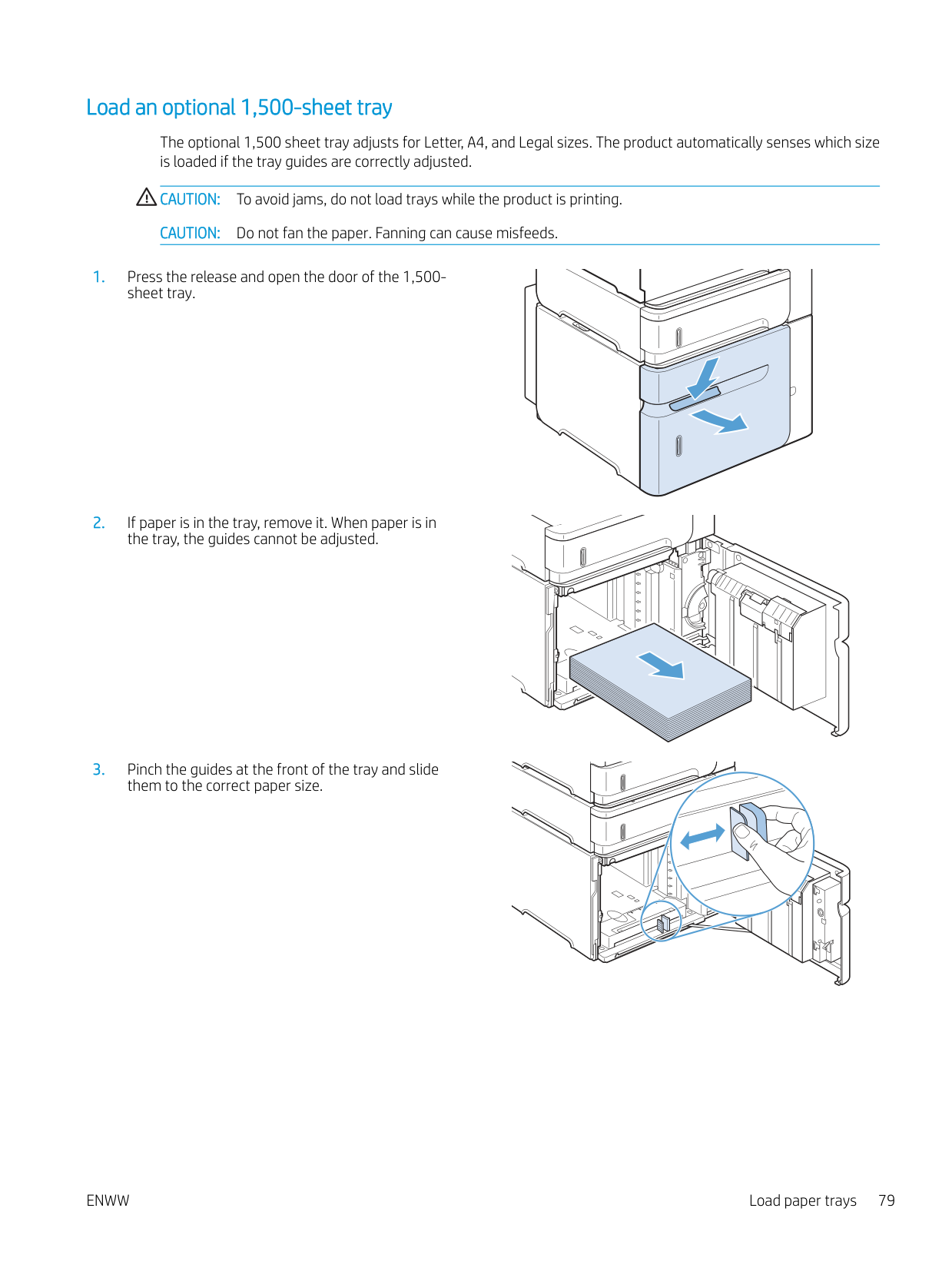
#### Load an optional 1,500-sheet tray
The optional 1,500 sheet tray adjusts for Letter, A4, and Legal sizes. The product automatically senses which size is loaded if the tray guides are correctly adjusted.
CAUTION: To avoid jams, do not load trays while the product is printing. CAUTION: Do not fan the paper. Fanning can cause misfeeds.
#### Paper orientation for loading trays Load letterhead, preprinted, or prepunched paper
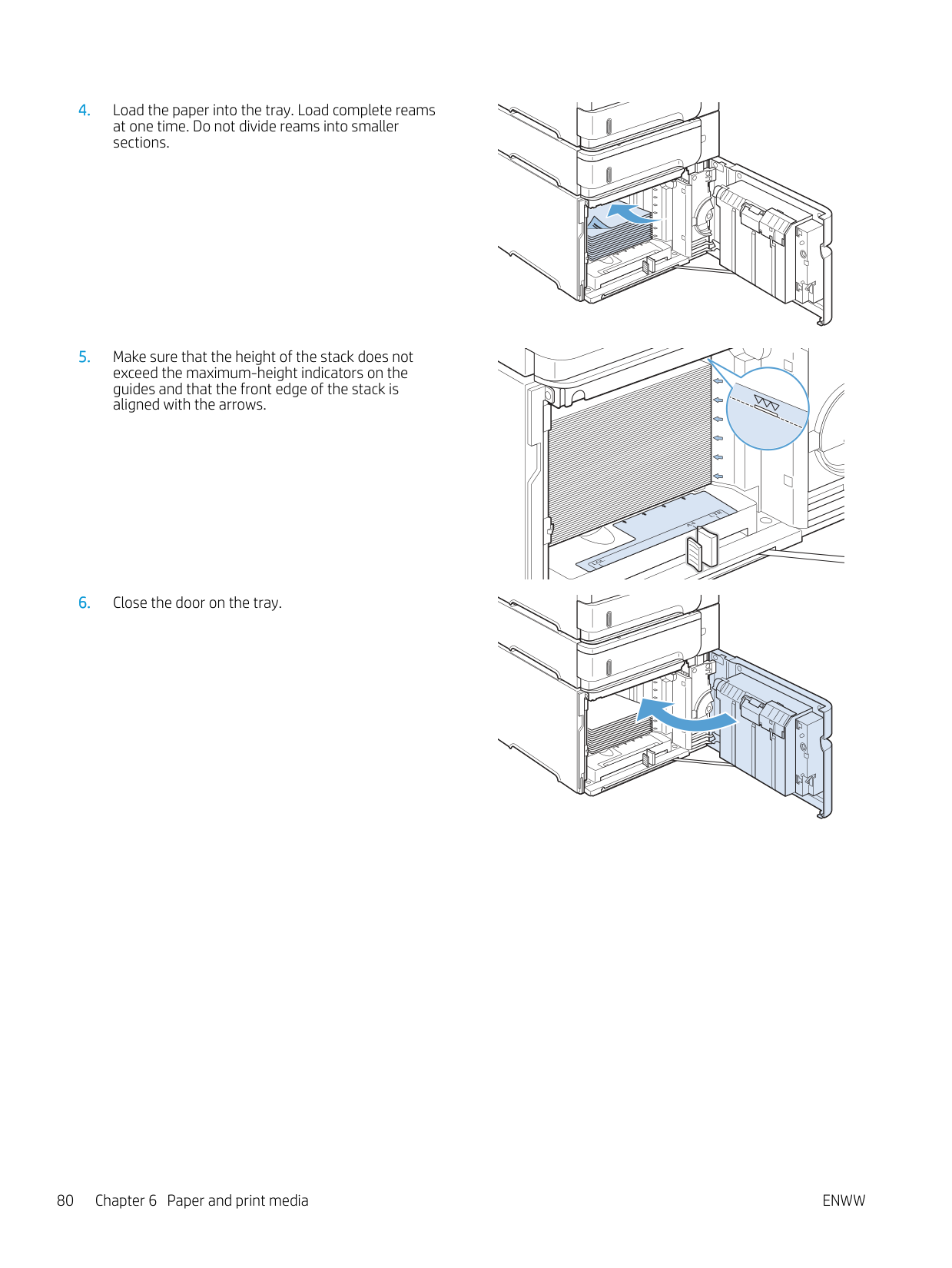
If a duplexer is installed, or if a stapler/stacker is installed, the product alters the way the images for each page are arranged. If you are using paper that requires a specific orientation, load it according to the information in the following table.
Tray Single-sided printing, no stapler/stacker
Duplex printing, no stapler/ stacker
Single-sided printing with the stapler/stacker
Duplex printing with the stapler/stacker
Tray 1 Face-up
Face-down Bottom edge leading into the product
Face-up Bottom edge leading into the product
Face-down Top edge leading into the product
Top edge leading into the product
All other trays Face-down
Top edge at the front of the tray
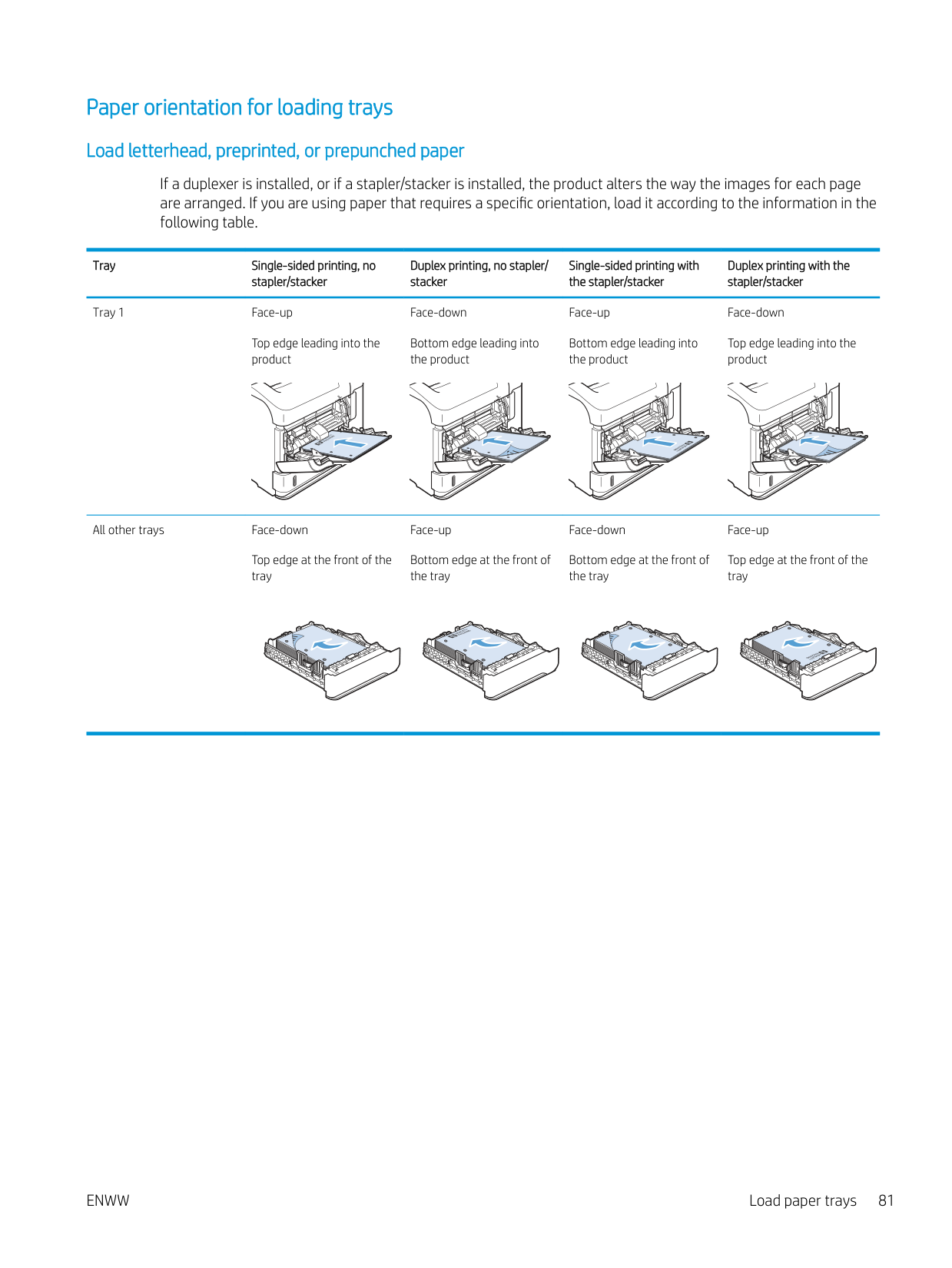
Face-up Bottom edge at the front of the tray
Face-down Bottom edge at the front of the tray
Face-up Top edge at the front of the tray
##### Load envelopes
Load envelopes into Tray 1 or the optional envelope feeder with the front of the envelope facing up, and the short, postage-edge leading into the product.
Configure trays
The product automatically prompts you to configure a tray for type and size in the following situations:
| | |---|
NOTE: The prompt does not appear if you are printing from Tray 1, and it is configured for the Any Size paper size and the Any Type paper type settings. In this situation, if the print job does not specify a tray, the product prints from Tray 1, even if the paper size and type settings in the print job do not match the paper loaded in Tray 1.
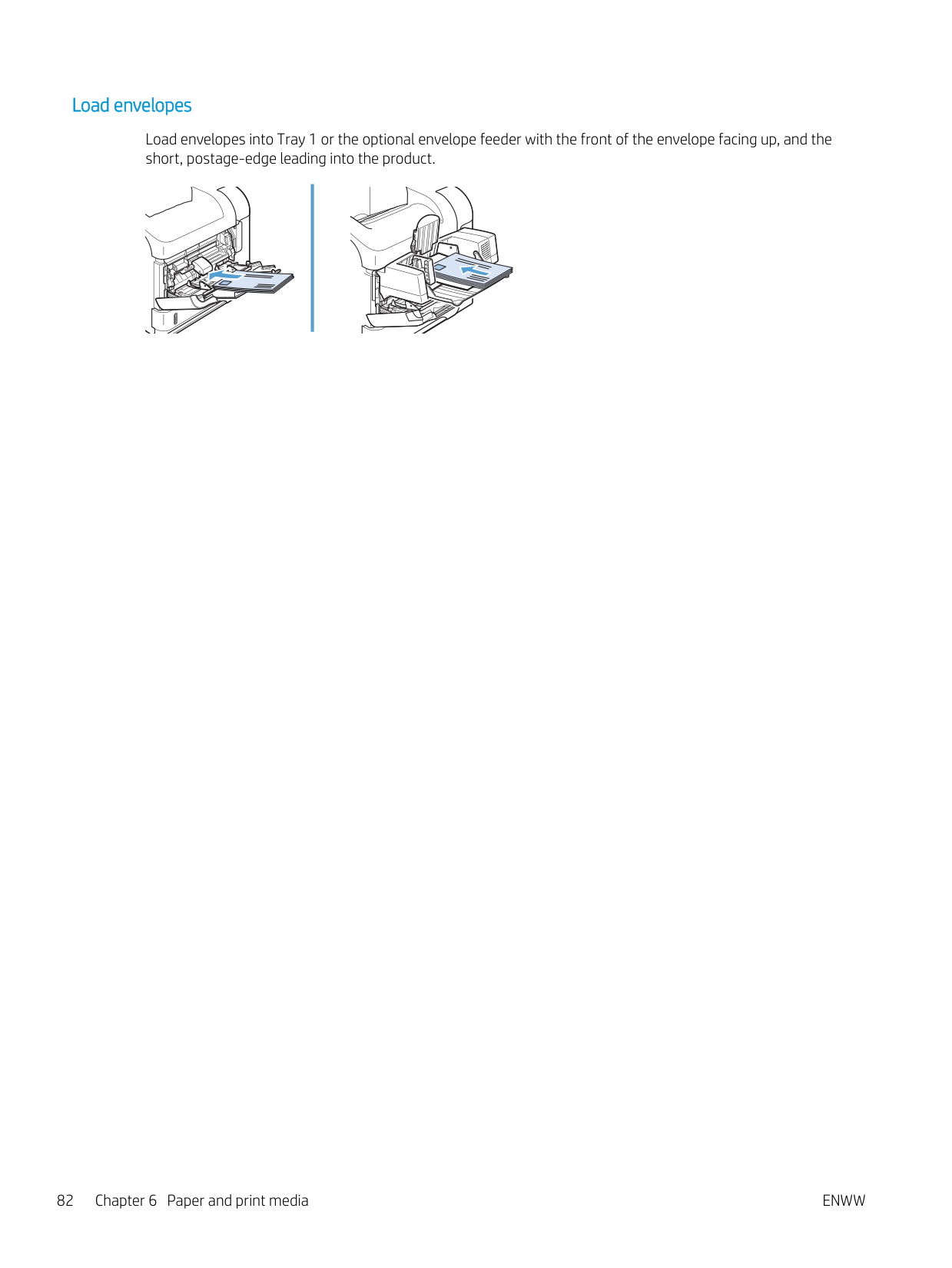
#### Configure a tray when loading paper
| | |---|
#### Configure a tray to match print job settings
#### Configure a tray from the control panel
You can also configure the trays for type and size without a prompt from the product.
ENWW Configure trays 83
Select an output bin
The product has four output locations: the top (standard) output bin, the rear output bin, the optional stacker or stapler/stacker, and the optional 5-bin mailbox.
#### Print to the top (standard) output bin
The top output bin collects paper face-down, in the correct order. The top output bin should be used for most print jobs, including transparencies. To use the top output bin, be sure that the rear output bin is closed. To avoid jams, do not open or close the rear output bin while the product is printing.

#### Print to the rear output bin
The product always prints to the rear output bin if it is open. Paper that is printed to this bin will exit face-up, with the last page on top (reverse order).
Printing from Tray 1 to the rear output bin provides the straightest path. Opening the rear output bin might improve performance with the following items:
Opening the rear output bin makes the duplexer (if installed) and the top output bin unavailable. To avoid jams, do not open or close the rear output bin while the product is printing.
#### Print to the optional stacker or stapler/stacker
The optional stacker or optional stapler/stacker can hold up to 500 sheets of paper (20-lb paper). The stacker accepts standard and custom paper sizes. The stapler/stacker accepts standard and custom paper sizes, but only Letter, Legal, and A4 sizes can be stapled. Do not try to send other types of print media, such as labels or envelopes.
| |
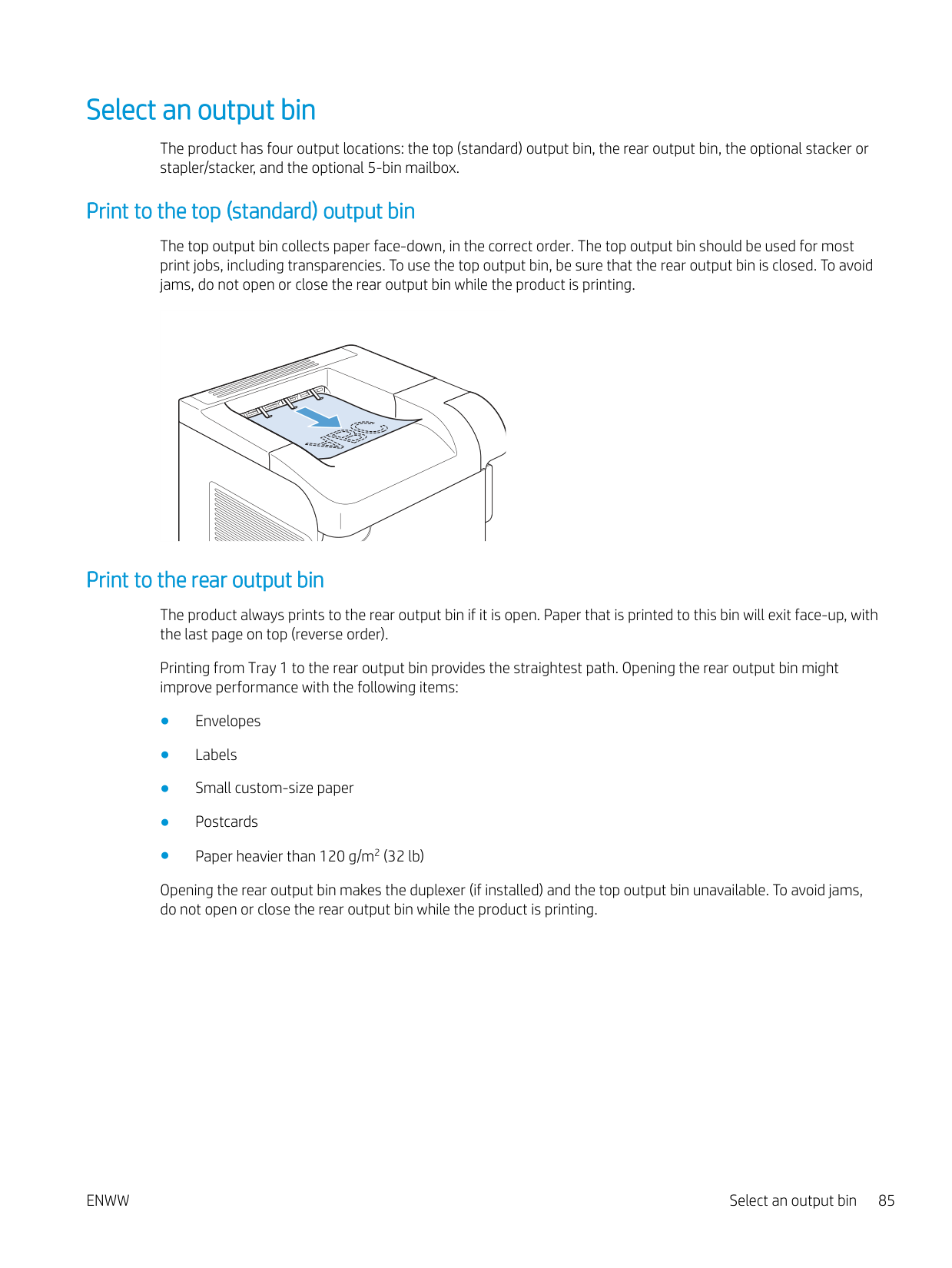
|---|
NOTE: When a stapler/stacker is installed, the product automatically rotates the printed images 180° on all paper sizes, regardless of whether the job is stapled. Paper types that must be printed in the correct orientation, such as letterhead or prepunched paper, need to be loaded in a different direction.
To print to the optional stacker or optional stapler/stacker, select the option in the program, in the printer driver, or at the printer control panel.
Before you use the optional stacker or optional stapler/stacker, ensure that the printer driver is set to recognize it. You need to set this setting only once.
Windows
Windows XP, Windows Server 2003, and Windows Server 2008 (using the Classic Start menu view): Click Start, click Settings, and then click Printers.
Windows Vista: Click Start, click Control Panel, and then in the category for Hardware and Sound click Printer.
Windows 7: Click Start, and then click Devices and Printers.
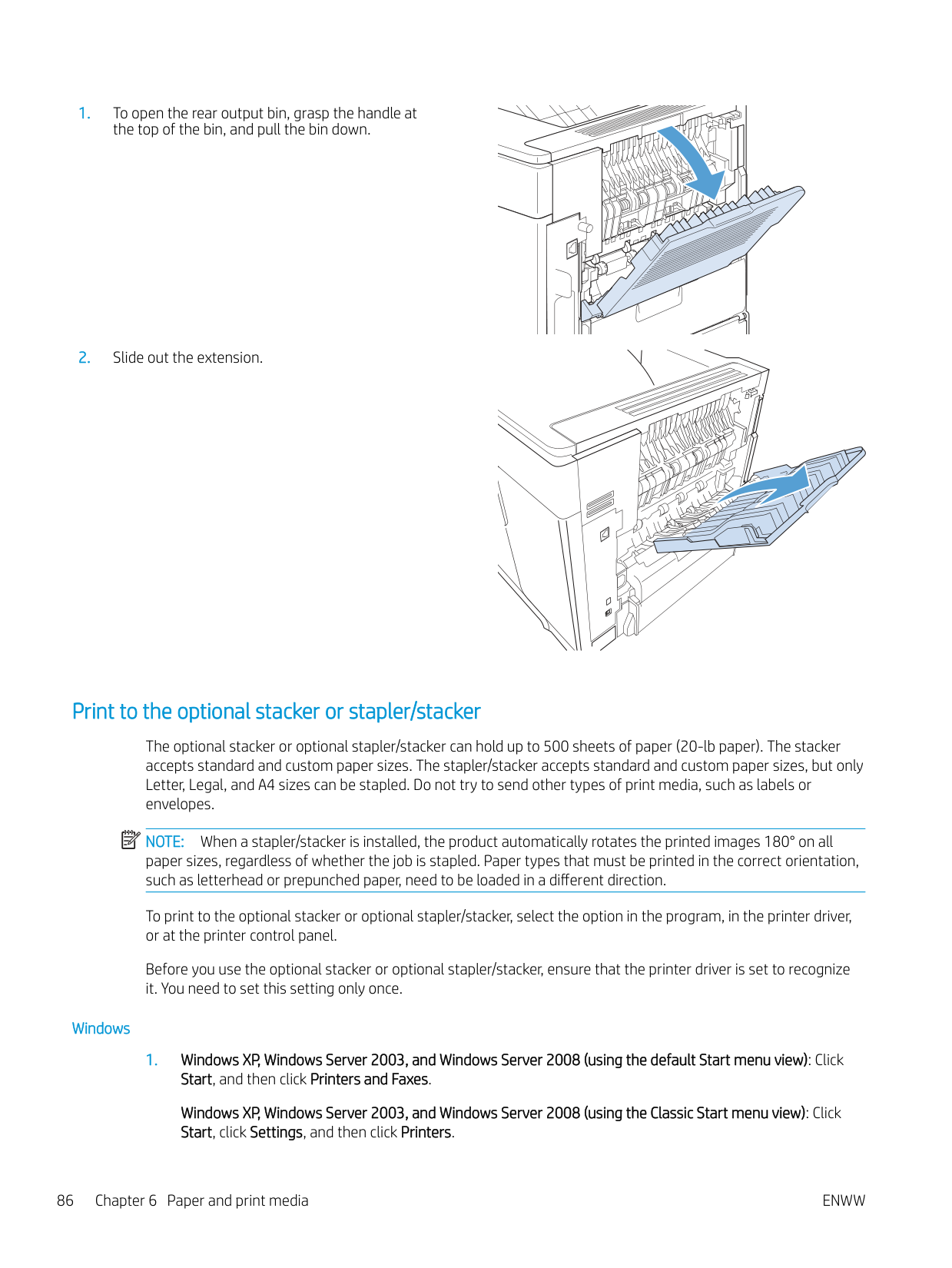
###### Mac
#### Print to the 5-bin mailbox
The optional 5-bin mailbox provides five output bins that can be configured from the control panel to sort print jobs in a variety of ways.
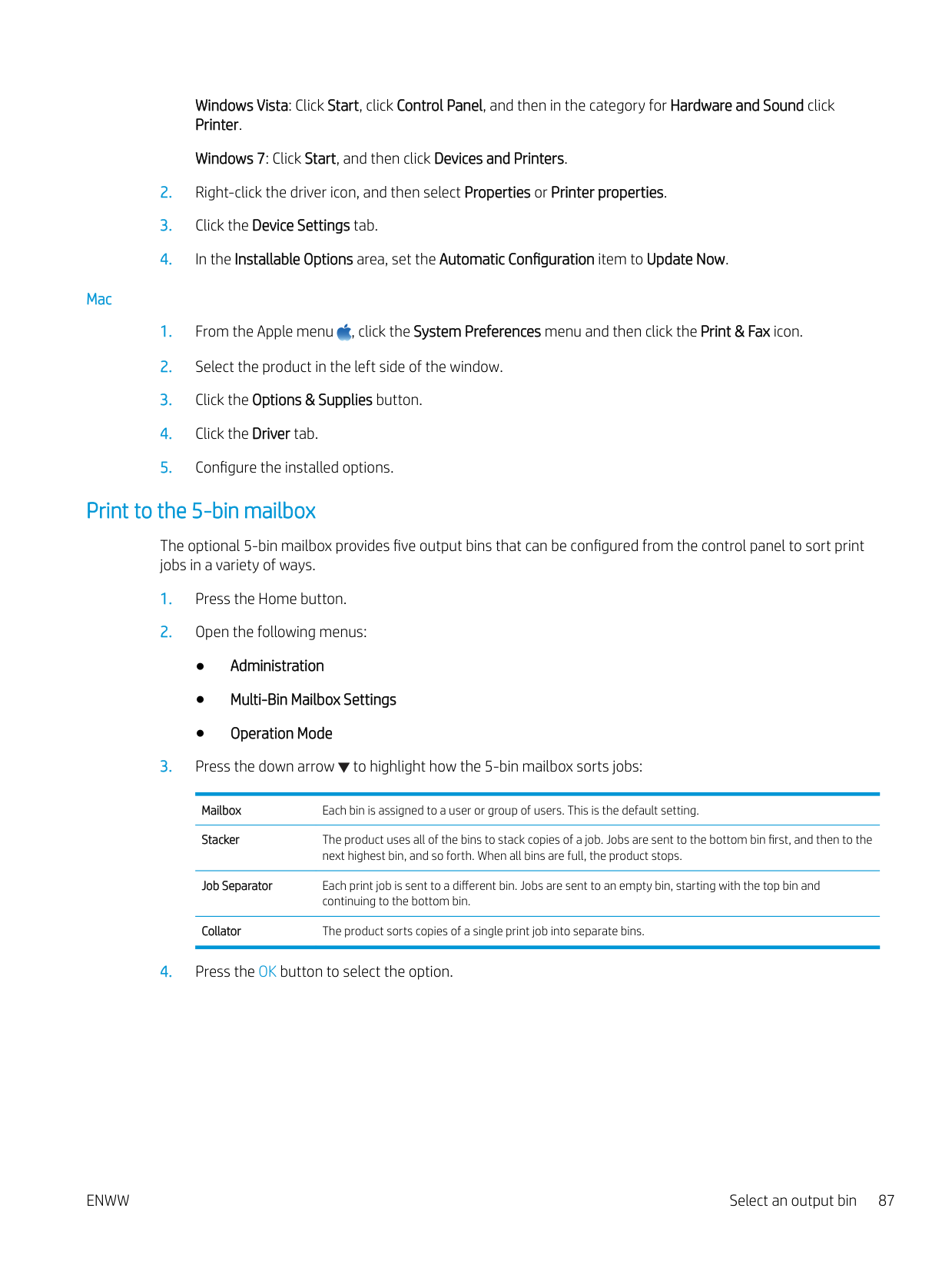
Mailbox Each bin is assigned to a user or group of users. This is the default setting. Stacker The product uses all of the bins to stack copies of a job. Jobs are sent to the bottom bin first, and then to the
next highest bin, and so forth. When all bins are full, the product stops.
Job Separator Each print job is sent to a different bin. Jobs are sent to an empty bin, starting with the top bin and
continuing to the bottom bin.
Collator The product sorts copies of a single print job into separate bins.
7 Print cartridges
The information contained herein is subject to change without notice. For the latest User Guide information go to www.hp.com/support/lj600Series_manuals.

ENWW 89
Print cartridge information
Feature Description Part numbers ● Standard-capacity print cartridge: CE390A
For more information about supplies, go to www.hp.com/go/learnaboutsupplies.
Supplies views
Print cartridge views
1
2
3
ENWW Supplies views 91
Manage print cartridges
Correctly using, storing, and monitoring the print cartridge can help ensure high-quality print output. Change settings for print cartridges Print when a print cartridge is at estimated end of life
Continue printing with the current cartridge until redistributing the toner no longer yields acceptable print quality. To redistribute the toner, remove the toner cartridge from the printer and gently rock the cartridge back and forth about its horizontal axis. For graphical representation, see cartridge replacement instructions. Reinsert the toner cartridge into the printer and close the cover.
Once an HP print cartridge has reached “Very Low”, HP’s Premium Protection Warranty on that print cartridge has ended. HP's Premium Protection Warranty applies only to the print cartridge for this product.
##### Enable or disable the Very Low Settings options from the control panel

You can enable or disable the default settings at any time, and you do not have to re-enable them when you install a new cartridge.
NOTE: Using the Continue setting allows printing beyond Very Low without customer interaction and can result in unsatisfactory print quality.
| |
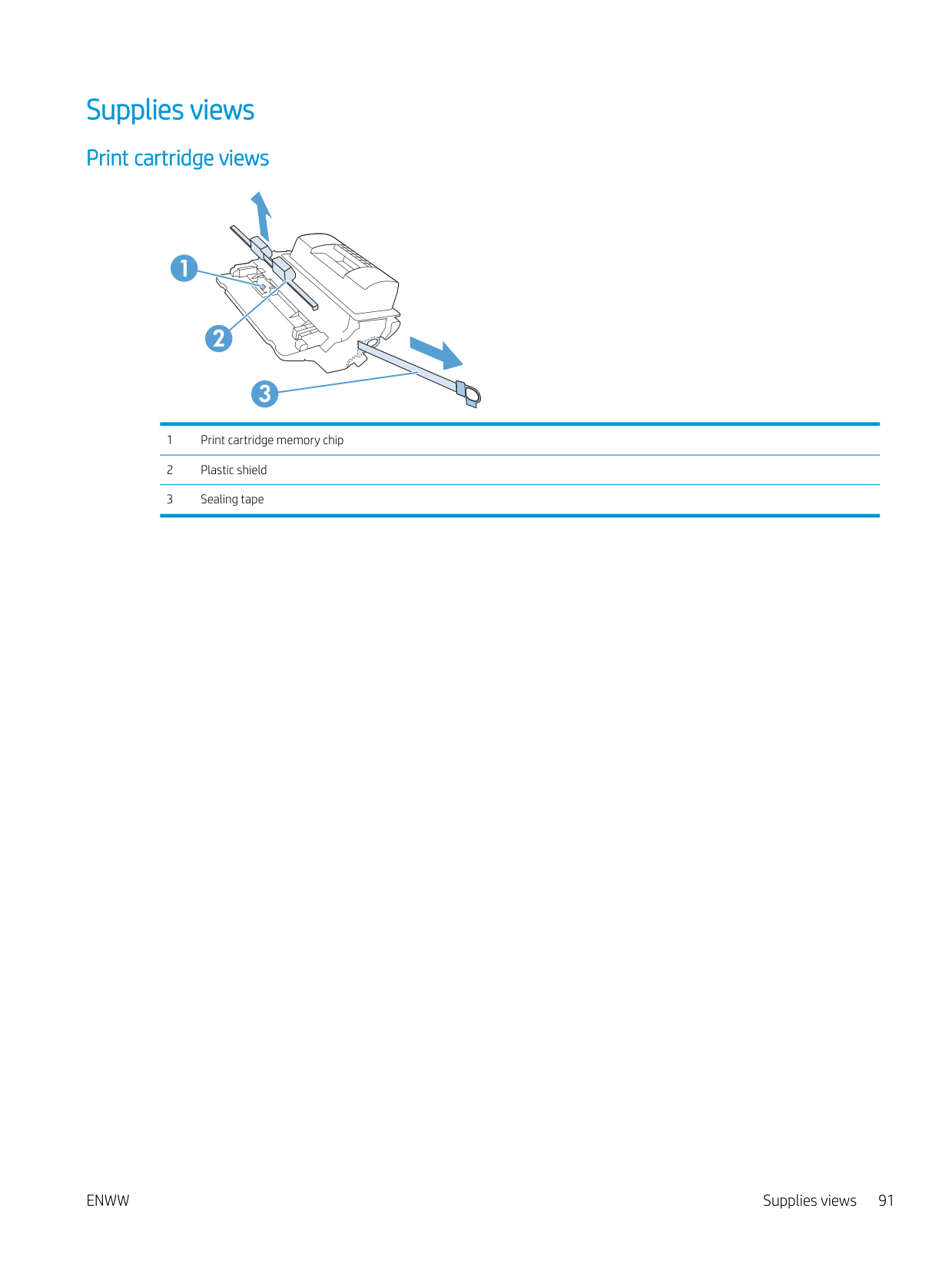
|---|
If you select the Stop or Prompt to continue option, the product stops printing when it reaches the Very Low threshold. When you replace the cartridge, the product automatically resumes printing.
##### Print with EconoMode
This product has an EconoMode option for printing drafts of documents. Using EconoMode can use less toner and decrease the cost per page. However, using EconoMode can also reduce print quality.
HP does not recommend the full-time use of EconoMode. If EconoMode is used full-time, the toner supply might outlast the mechanical parts in the print cartridge. If print quality begins to degrade and is no longer acceptable, consider replacing the print cartridge.
| | |---|
NOTE: This feature is available with the PCL 6 printer driver for Windows. If you are not using that driver, you can enable the feature by using the HP Embedded Web Server.
#### Store and recycle supplies Recycle supplies
To recycle a genuine HP print cartridge, place the used cartridge in the box in which the new cartridge arrived. Use the enclosed return label to send the used supply to HP for recycling. For complete information, see the recycling guide that is included with each new HP supply item.
Print-cartridge storage Do not remove the print cartridge from its package until you are ready to use it. CAUTION: To prevent damage to the print cartridge, do not expose it to light for more than a few minutes.
HP policy on non-HP print cartridges HP cannot recommend the use of non-HP print cartridges, either new or remanufactured. NOTE: Any damage caused by a non-HP print cartridge is not covered under the HP warranty and service agreements.
| | |---|
#### HP anticounterfeit Web site
Go to www.hp.com/go/anticounterfeit when you install an HP print cartridge and the control-panel message says the cartridge is non-HP. HP will help determine if the cartridge is genuine and take steps to resolve the problem.
Your print cartridge might not be a genuine HP print cartridge if you notice the following:
ENWW Manage print cartridges 93
Replacement instructions
#### Replace the print cartridge
Continue printing with the current cartridge until redistributing the toner no longer yields acceptable print quality. To redistribute the toner, remove the toner cartridge from the printer and gently rock the cartridge back and forth about its horizontal axis. For graphical representation, see cartridge replacement instructions. Reinsert the toner cartridge into the printer and close the cover.
CAUTION: Do not touch the shutter or the surface of the roller.
After a short time, the control panel should display the Ready message.

#### Replace staples
Replace staples if the product control-panel display prompts you with a message. If the stapler runs out of staples, jobs continue to print to the stapler/stacker, but they are not stapled.
#### Perform preventive maintenance
To ensure optimum performance from the product, replace certain parts when the Replace Maintenance Kit message appears on the control-panel display.
The kit includes the following items:
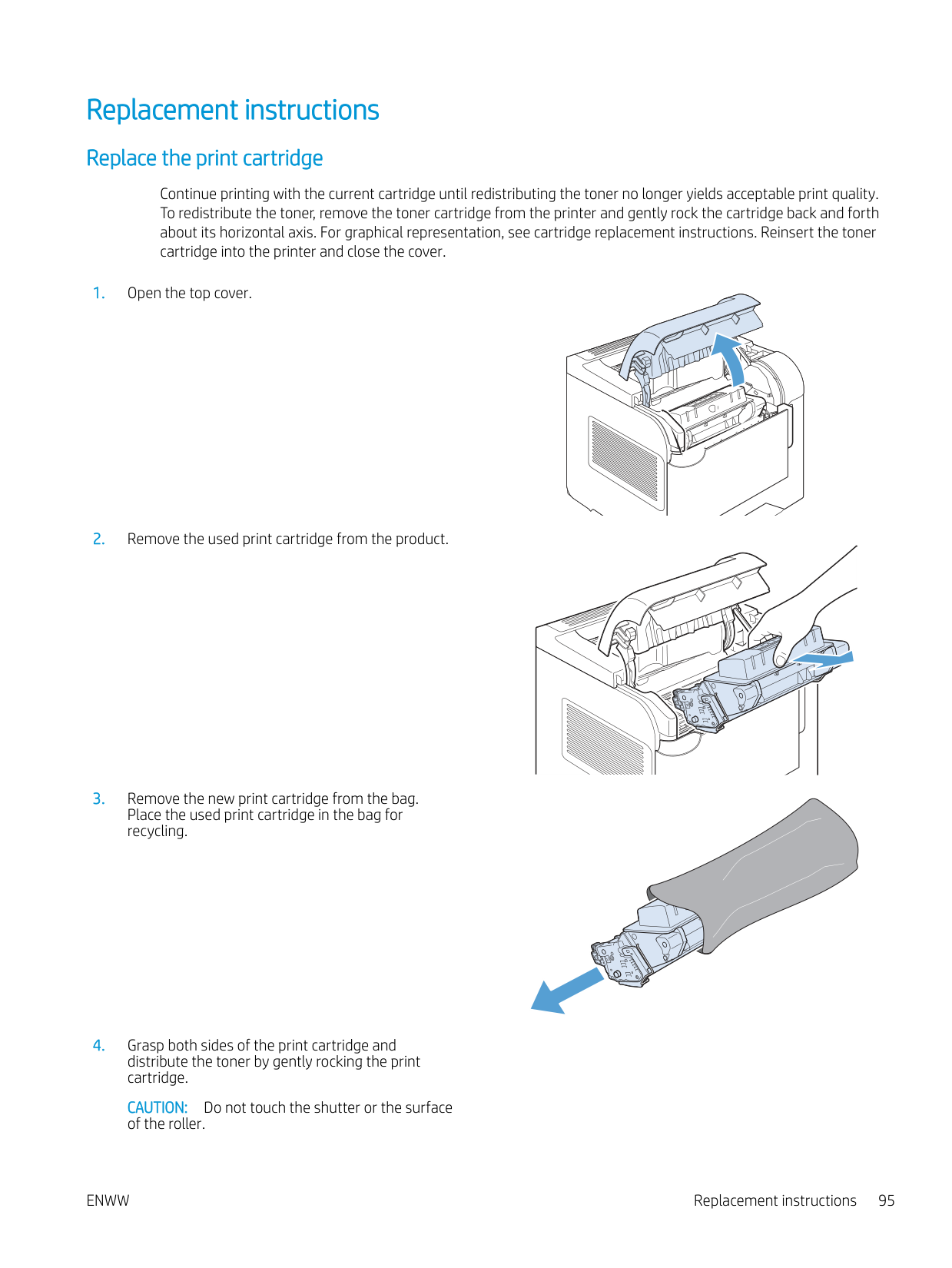
| | |---|
NOTE: The maintenance kit is a consumable item and is not covered under the original product warranty or under most extended warranties. Installing the maintenance kit is the customer's responsibility. After a maintenance kit is installed, the maintenance-kit counter must be reset.
##### Reset the maintenance-kit counter
| | |---|
NOTE: Perform this procedure only after a maintenance kit has been installed. Do not use this procedure to temporarily clear the Replace Maintenance Kit message.
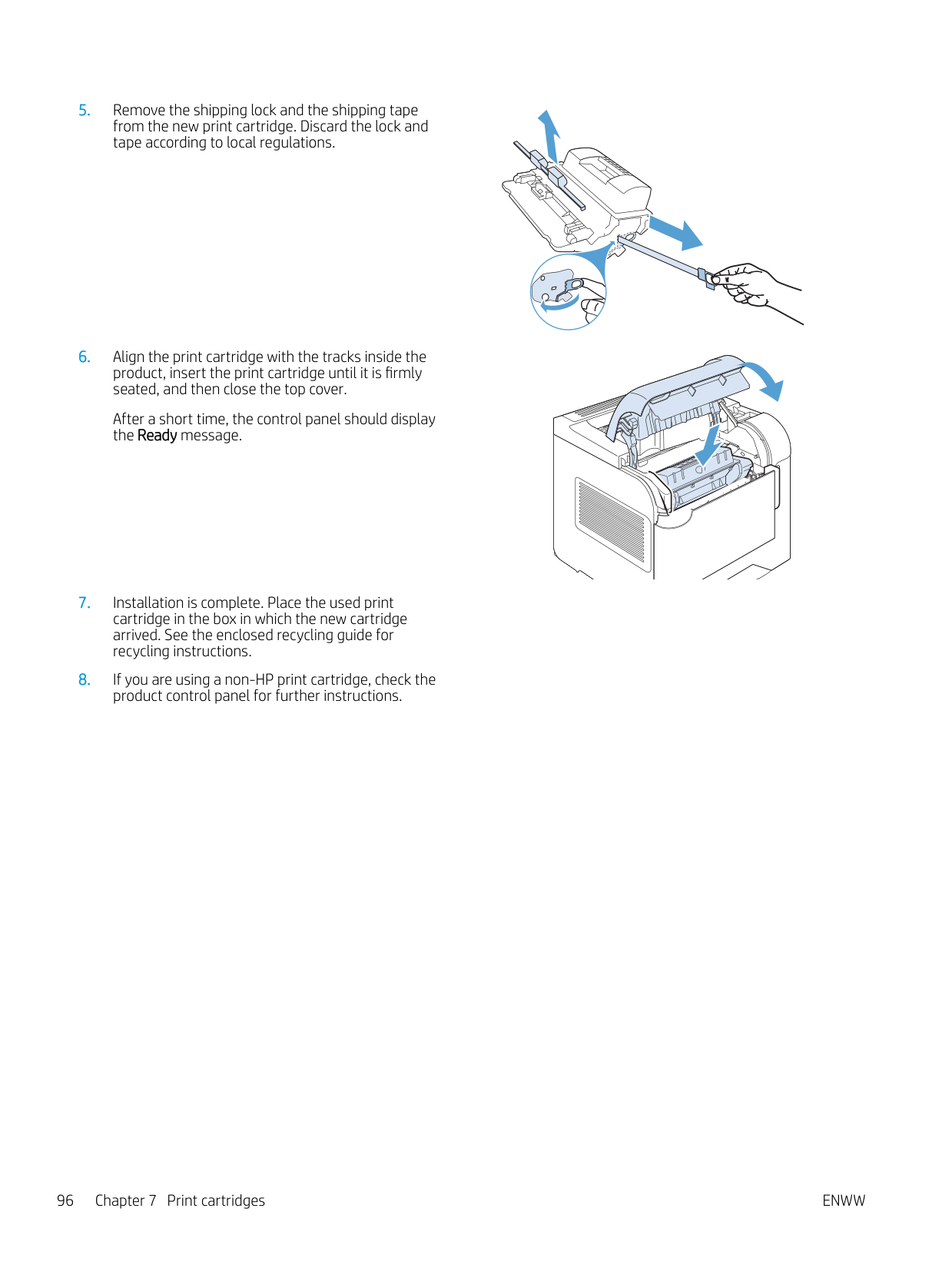
Solve problems with print cartridges
#### Check the print cartridges
Check the print cartridge, and replace it if necessary, if you are having any of the following problems:
| | |---|
If you determine that you need to replace a print cartridge, print the supplies status page to find the part number for the correct genuine HP print cartridge.
Type of print cartridge Steps to resolve the problem
Refilled or remanufactured print cartridge HP cannot recommend the use of non-HP supplies, either new or remanufactured. Because they are not HP products, HP cannot influence their design or control their quality. If you are using a refilled or remanufactured print cartridge and are not satisfied with the print quality, replace the cartridge with a genuine HP cartridge.
Genuine HP print cartridge 1. The product control panel or the supplies status page indicates Very Low status when the cartridge has reached the end of its designated life. Replace the print cartridge if print quality is no longer acceptable.
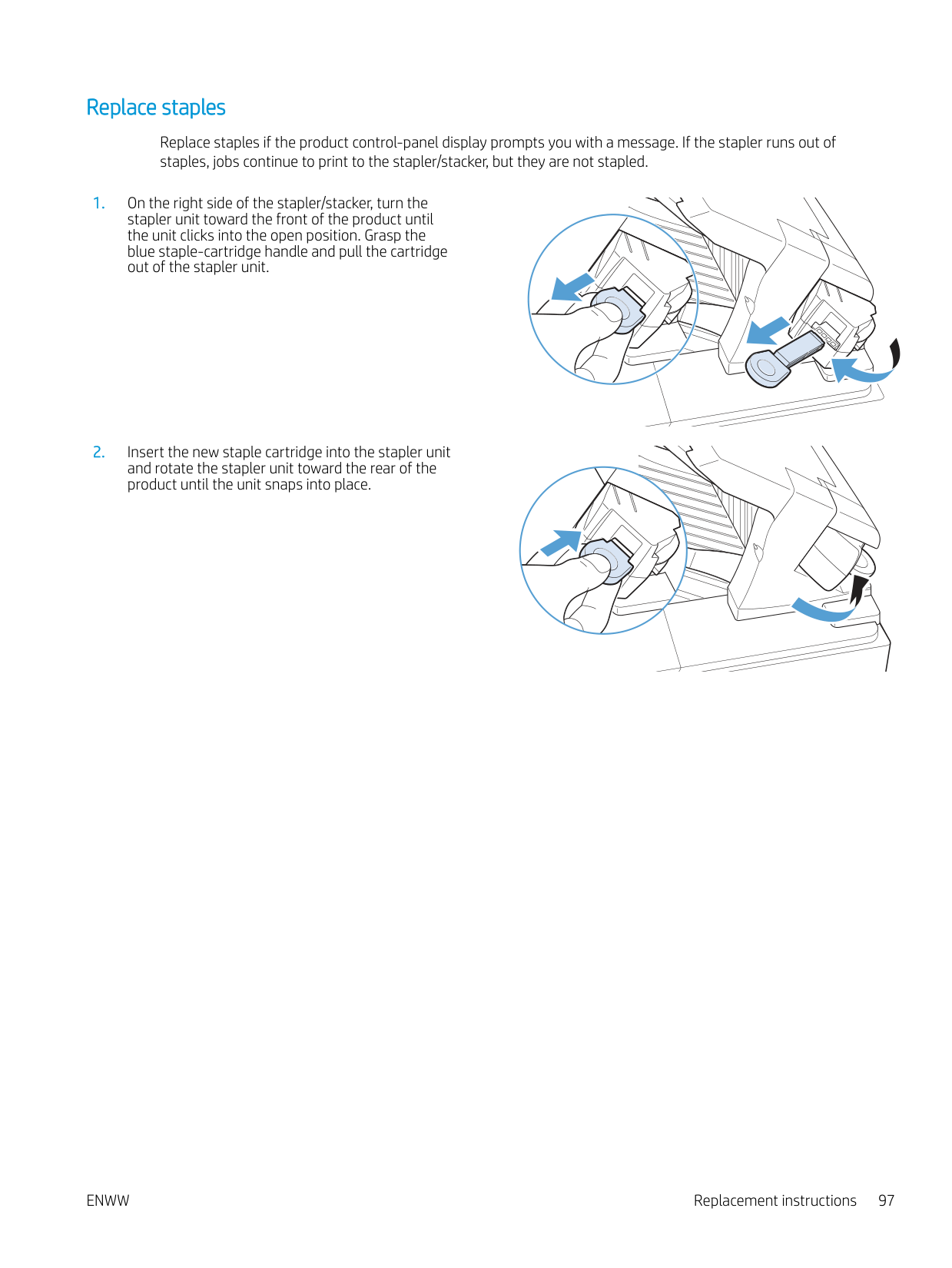
##### Inspect the print cartridge for damage
CAUTION: Do not touch the green roller (imaging drum) on the bottom of the cartridge. Fingerprints on the imaging drum can cause print-quality problems.
##### Repeating defects
If defects repeat at any of the following approximate intervals on the page, the print cartridge might be damaged.
##### ● 37 mm ● 63 mm ● 94 mm Print the Supplies Status page
The Supplies Status page indicates the estimated life remaining in print cartridges. It also lists the part number for the correct genuine HP print cartridge for your product so you can order a replacement print cartridge, as well as other useful information.
#### Interpret control panel messages for supplies
10.0X.Y0 Supply memory error The product cannot read or write to the print cartridge memory chip or the memory chip is missing from the print cartridge.
Black cartridge low The product indicates when a supply level is low. Actual print cartridge life might vary. You do not need to replace the print cartridge at this time unless print quality is no longer acceptable.
Black cartridge very low The product indicates when a supply level is very low. Actual print cartridge life might vary. You do not need to replace the print cartridge at this time unless print quality is no longer acceptable. After an HP supply has reached the very low threshold, the HP Premium Protection Warranty for that supply has ended.
Incompatible
product.
Incompatible supplies Supply items are installed that were not designed for this product. The product cannot print with these supplies installed.
Maintenance Kit low The maintenance kit is low. The actual supply life remaining might vary. Consider having a replacement maintenance kit available to install when print quality is no longer acceptable. You do not need to replace the maintenance kit at this time unless print quality is no longer acceptable.
Maintenance Kit very low The maintenance kit is very low. The actual supply life remaining might vary. You do not need to replace the maintenance kit at this time unless print quality is no longer acceptable. After an HP supply has reached the very low threshold, the HP Premium Protection Warranty for that supply has ended.
Replace
Reinstall the print cartridge, or install a new print cartridge.
If print quality is no longer acceptable, replace the print cartridge. Consider purchasing a replacement cartridge so it is available when the installed cartridge has reached the end of its estimated life.
If print quality is no longer acceptable, replace the print cartridge.
Replace the supply with one that is designed for this product.
Press the down arrow button to identify the incompatible supplies. Install supplies that are designed for this product.
If print quality is no longer acceptable, replace the maintenance kit. Instructions are included with the maintenance kit.
If print quality is no longer acceptable, replace the maintenance kit. Instructions are included with the maintenance kit.
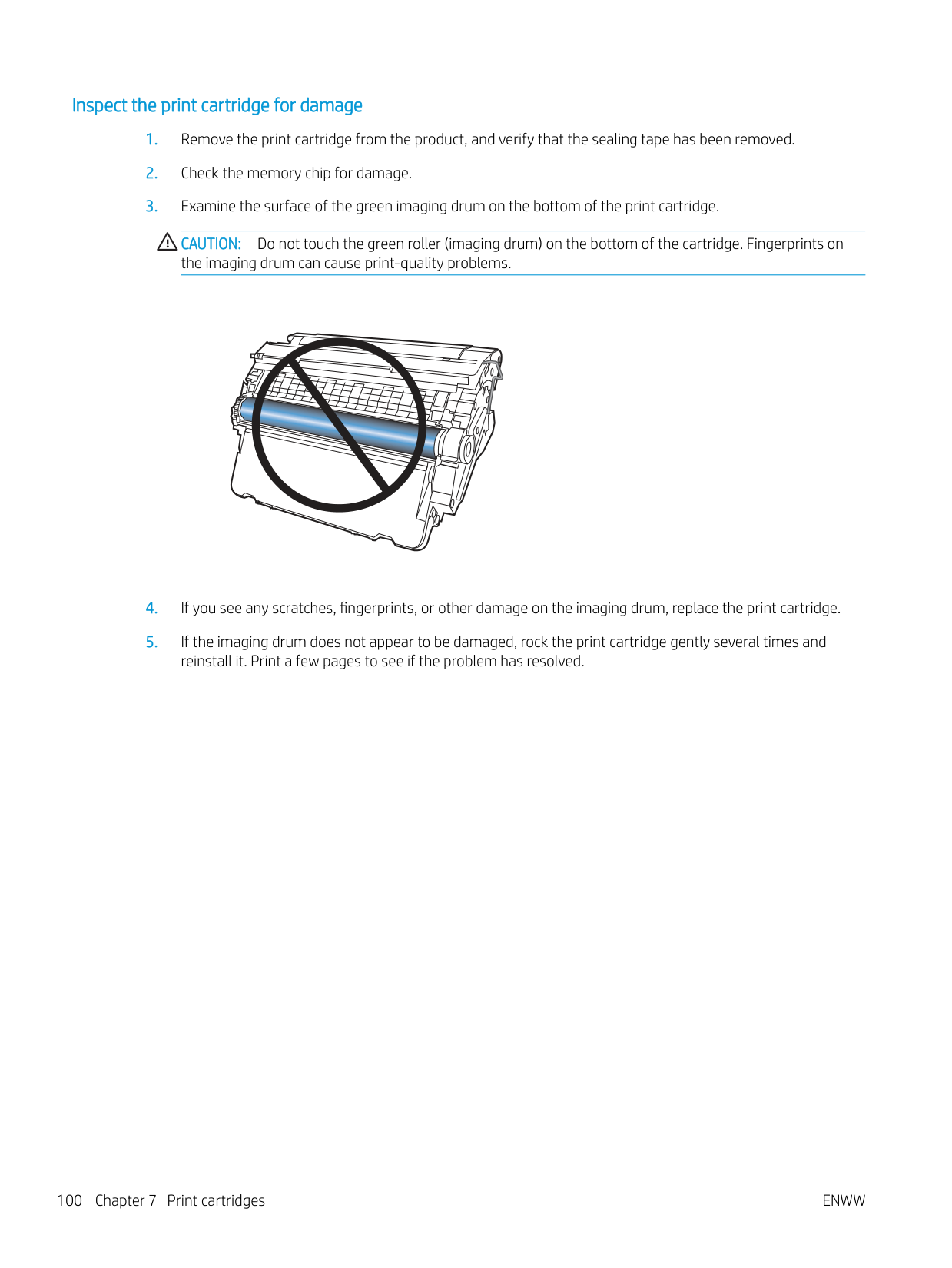
Replace the specified supply. Or, configure the product to continue printing by using the Manage Supplies menu.
Table 7-1 Supplies status messages (continued) Control panel message Description Recommended action Replace supplies Two or more supplies are at the estimated end of
Press the down arrow button to see which supplies need to be replaced.
life. The actual life remaining might be different than the estimation. Consider having replacement supplies available to install when print quality is no longer acceptable. The supply does not need to be replaced now unless the print quality is no longer acceptable. After an HP supply has reached its approximated end of life, HP’s Premium Protection Warranty on that supply ends.
Or, configure the product to continue printing by using the Manage Supplies menu.
Supplies low This message appears when at least two supplies have reached the low threshold. The actual supply life remaining might vary. Press the down arrow button to see which supplies are low. You do not need to replace the supplies at this time unless print quality is no longer acceptable. After an HP supply has reached the very low threshold, the HP Premium Protection Warranty for that supply has ended.
To continue printing, either replace the supply or reconfigure the product by using the Manage Supplies menu on the control panel.
Supplies very low This message appears when at least two supplies have reached the very low threshold. Press the down arrow button to see which supplies are low. The actual supply life remaining might vary. You do not need to replace the supplies at this time unless print quality is no longer acceptable. After an HP supply has reached the very low threshold, the HP Premium Protection Warranty for that supply has ended.
To continue printing, either replace the supply or reconfigure the product by using the Manage Supplies menu on the control panel.
Unsupported supply installed The print cartridge is for a different HP product. If print quality is no longer acceptable, replace
the print cartridge.
Used supply in use The print cartridge has been previously used. If you believe you purchased a genuine
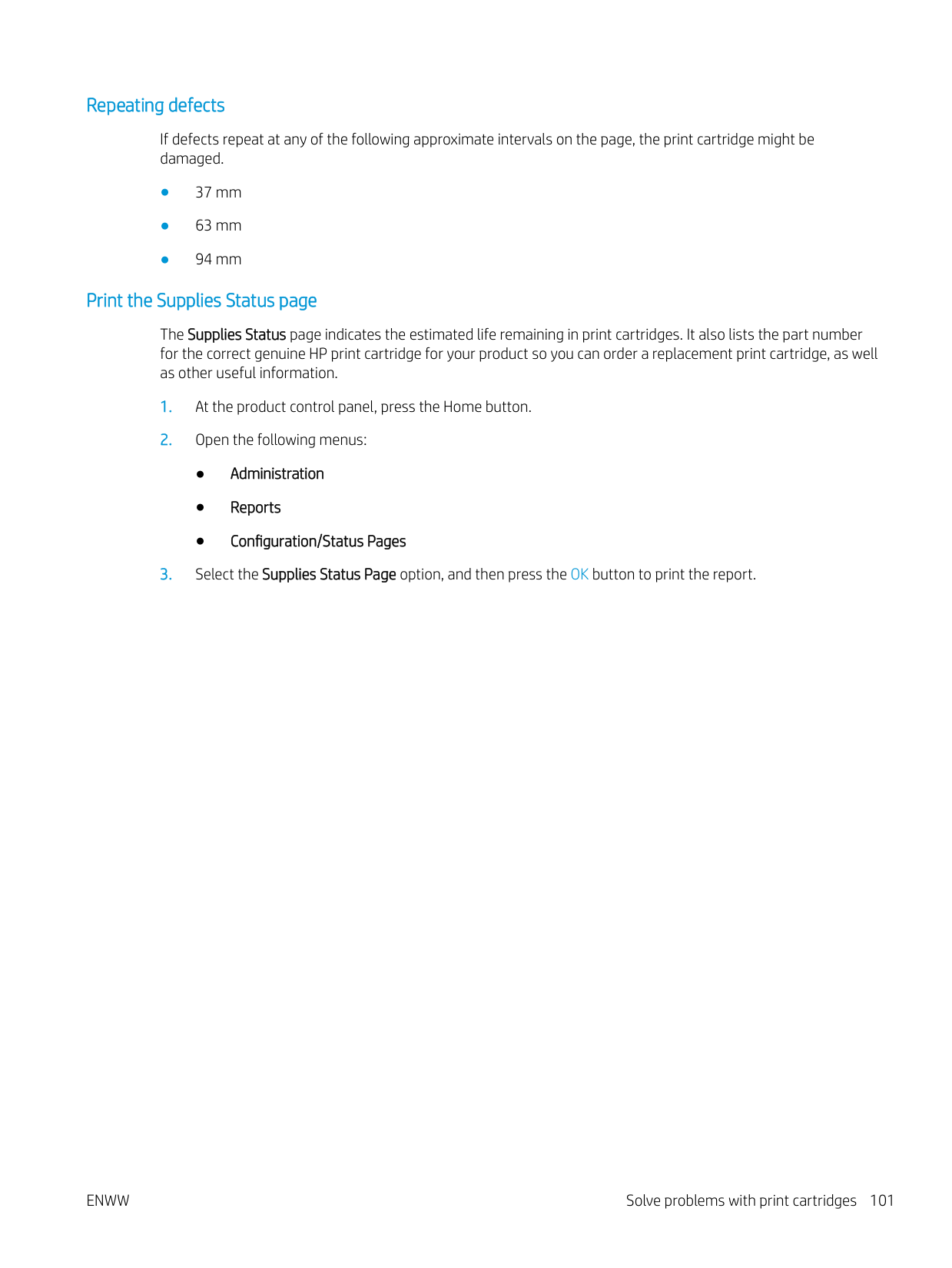
HP supply, go to www.hp.com/go/anticounterfeit.
8 Print tasks
ENWW 105
Cancel a print job with Windows
| | |---|
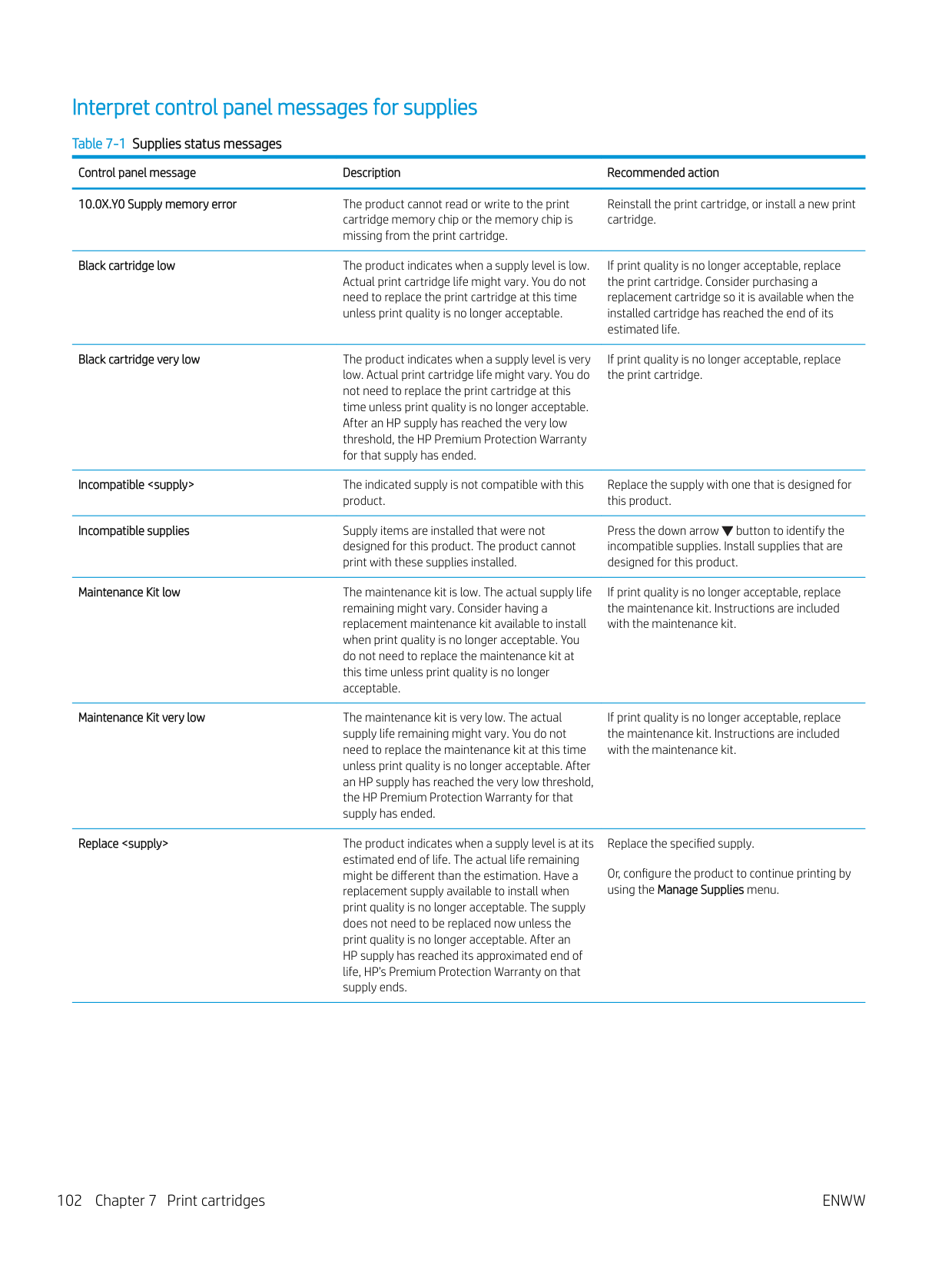
NOTE: If the print job is too far into the printing process, you might not have the option to cancel it.
Basic print tasks with Windows
The methods to open the print dialog from software programs can vary. The procedures that follow include a typical method. Some software programs do not have a File menu. See the documentation for your software program to learn how to open the print dialog.
#### Open the printer driver with Windows
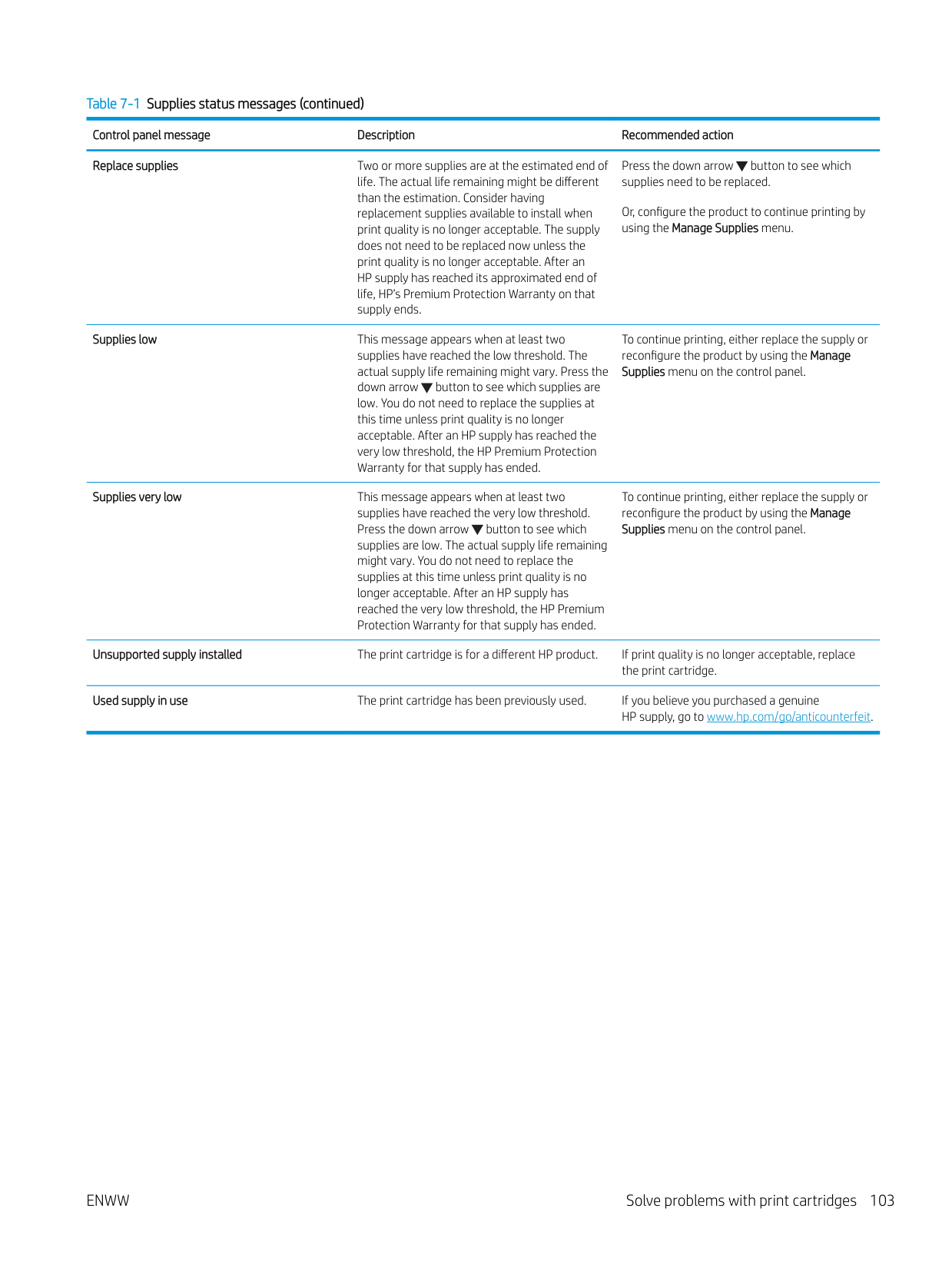


#### Get help for any printing option with Windows

#### Change the number of print copies with Windows
#### Save custom print settings for reuse with Windows Use a printing shortcut with Windows


###### 3. Click the Printing Shortcuts tab.
####### 4. Select one of the shortcuts, and then click the OKbutton.
NOTE: When you select a shortcut, the corresponding settings change on the other tabs in the printer driver.
##### Create printing shortcuts




NOTE: Always select a shortcut before adjusting any of the settings on the right side of the screen. If you adjust the settings and then select a shortcut, all your adjustments are lost.

####### 5. Select the print options for the new shortcut.
####### 6. Click the Save As button.
####### 7. Type a name for the shortcut, and click the OKbutton.



#### Improve print quality with Windows Select the page size with Windows
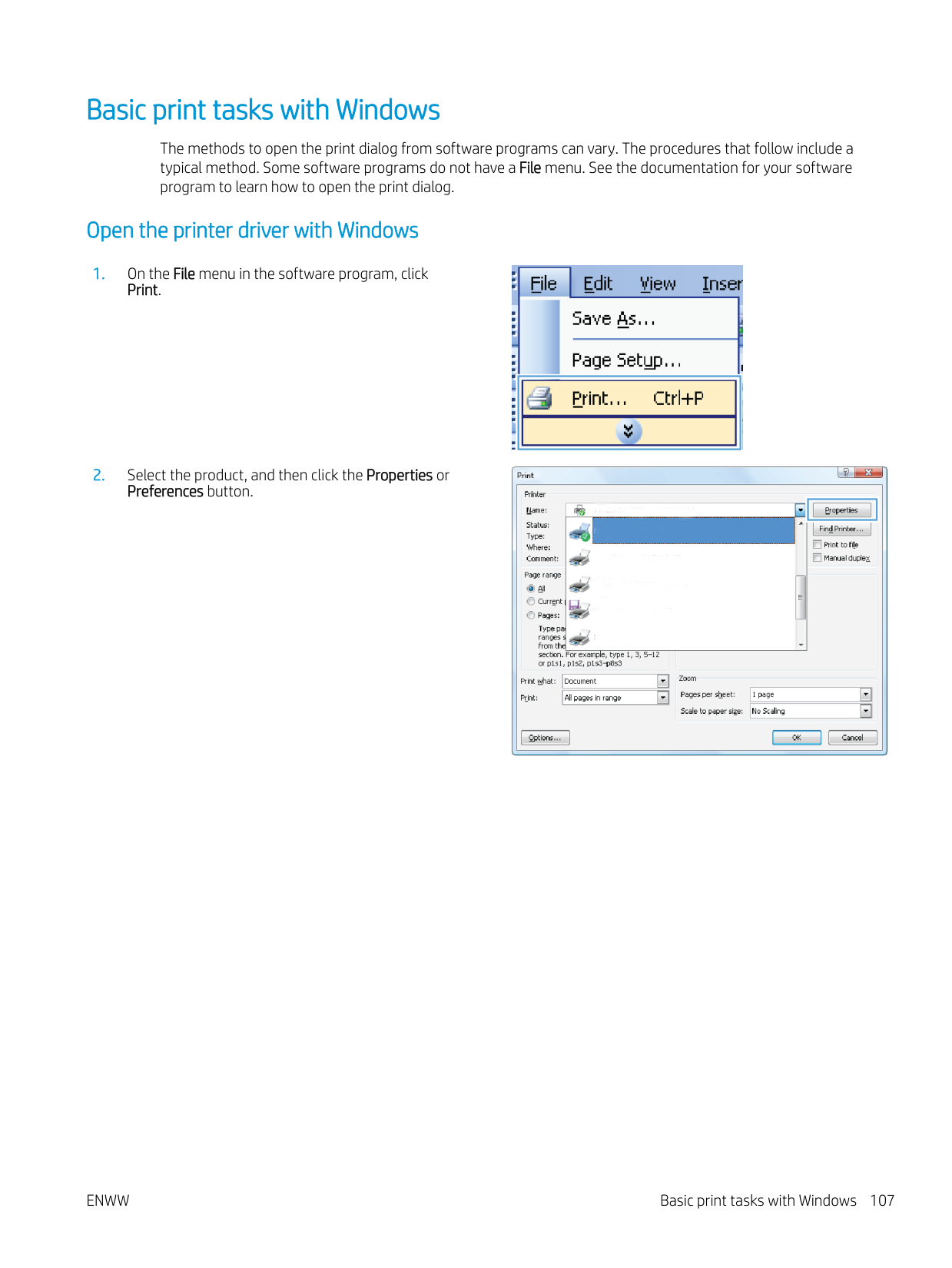
##### Select the paper tray with Windows
#### Print on both sides (duplex) with Windows Manually print on both sides with Windows
| | |---|
NOTE: This information applies only to products that do not have an automatic duplexer.

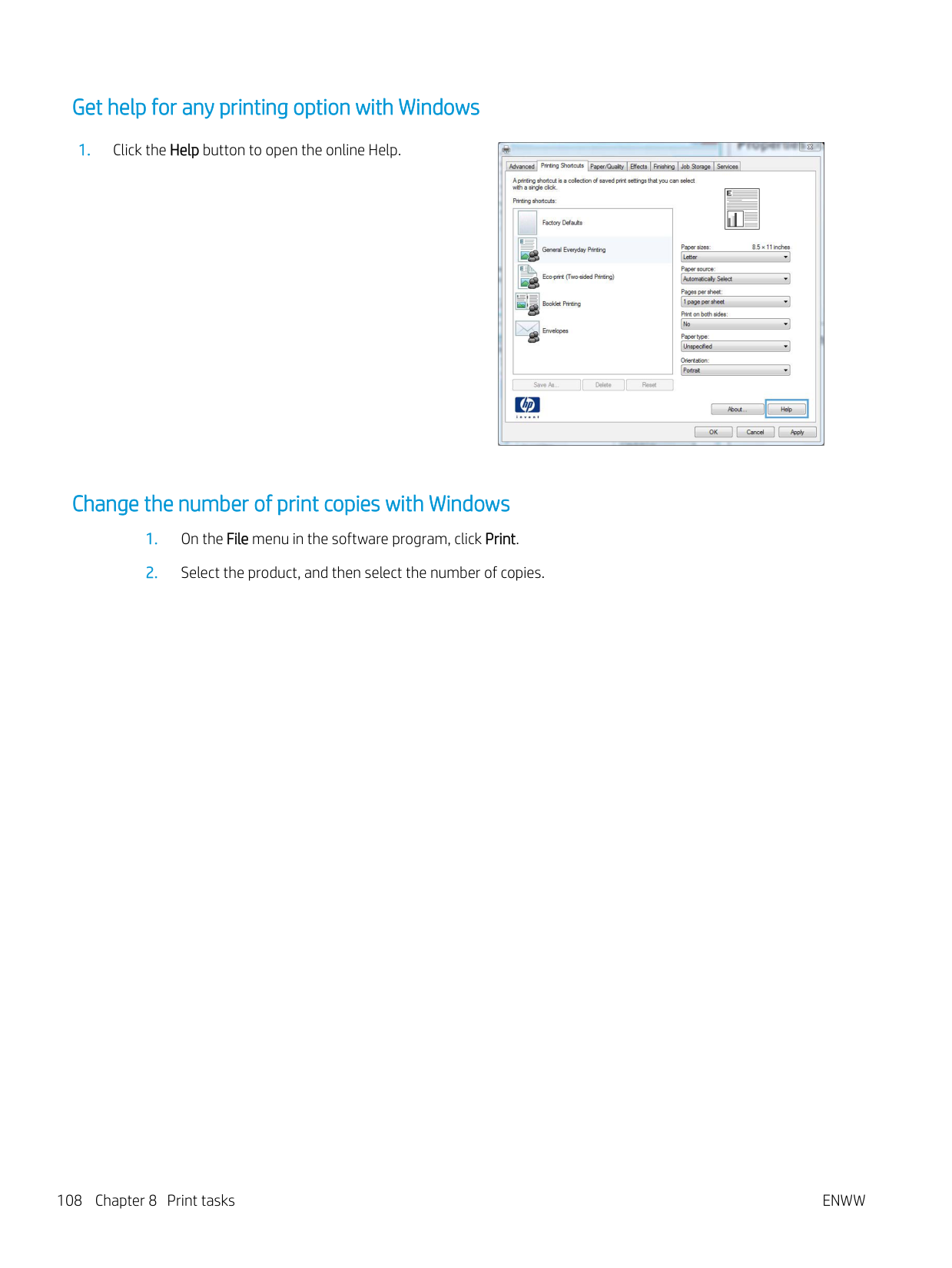


| | | |---|---| | | |
##### Automatically print on both sides with Windows
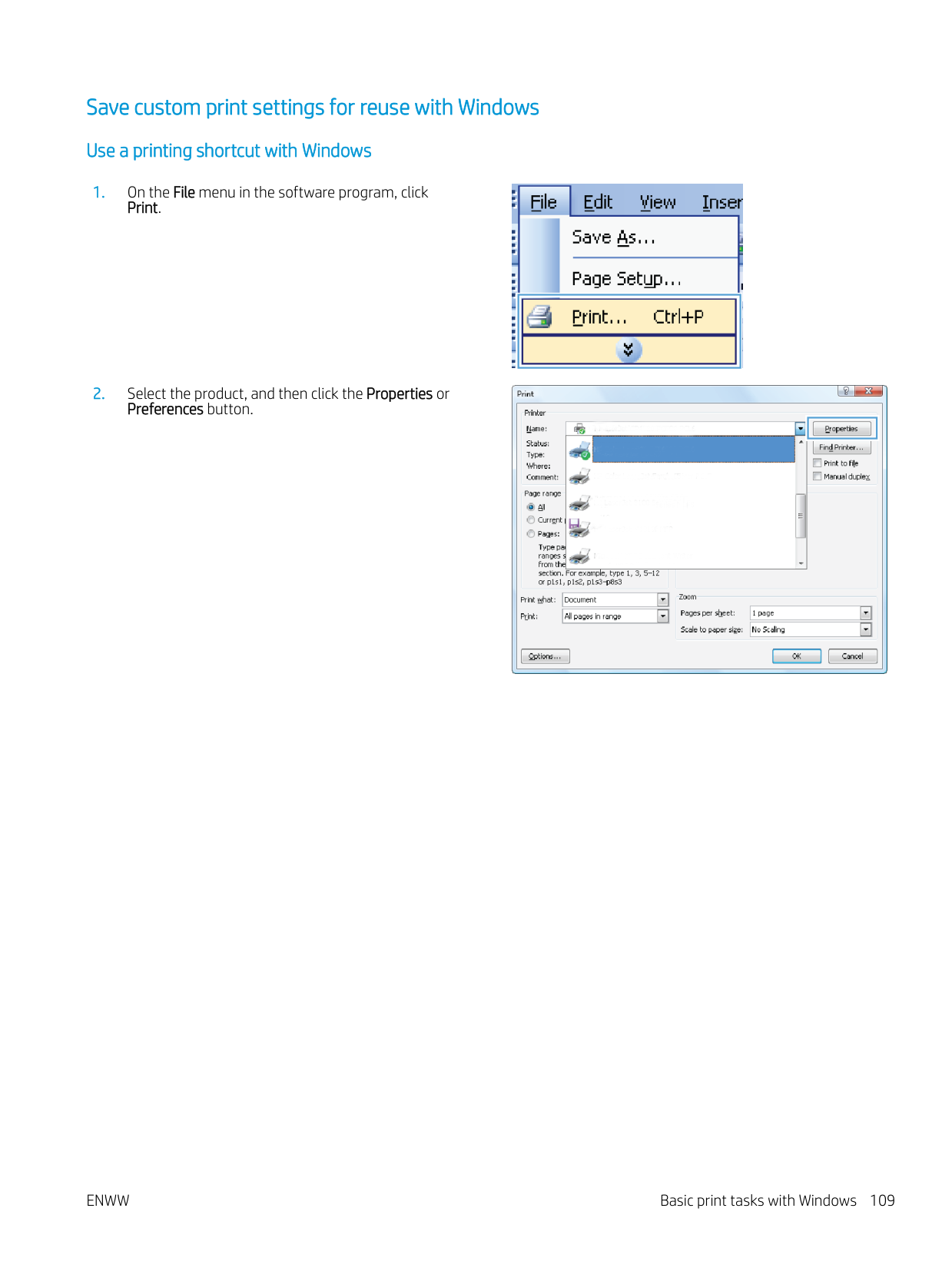
| | |---|
NOTE: This information applies only to products that have an automatic duplexer.

####### 2. Select the product, and then click the Properties orPreferences button.
####### 3. Click the Finishing tab.
####### 4. Select the Print on both sides check box. Click theOK button to print the job.


#### Print multiple pages per sheet with Windows
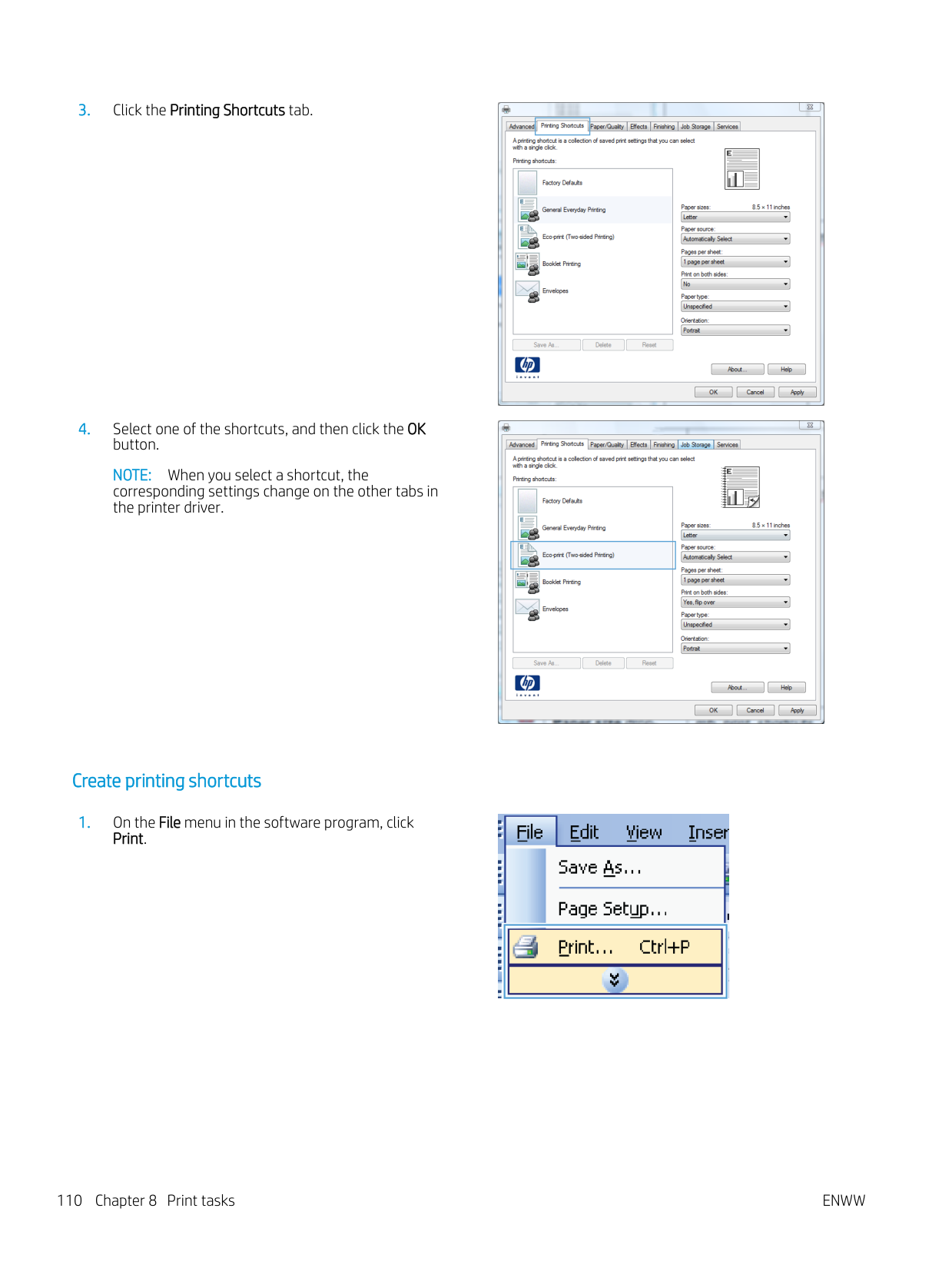


#### Select page orientation with Windows
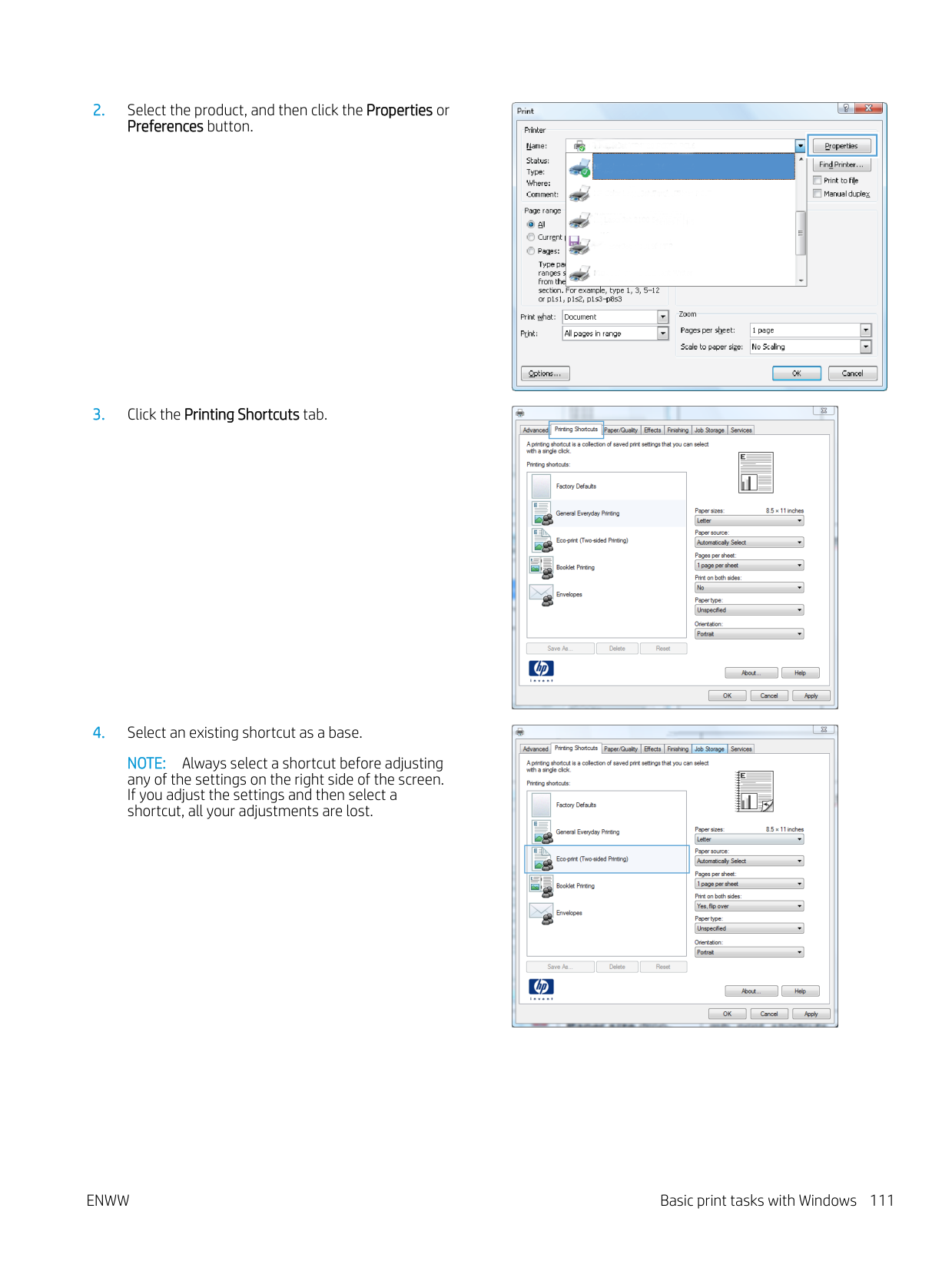


To print the page image upside down, select the Rotate by 180 degrees option.

Use HP ePrint
Use HP ePrint to print documents by sending them as an e-mail attachment to the product's e-mail address from any e-mail enabled device.
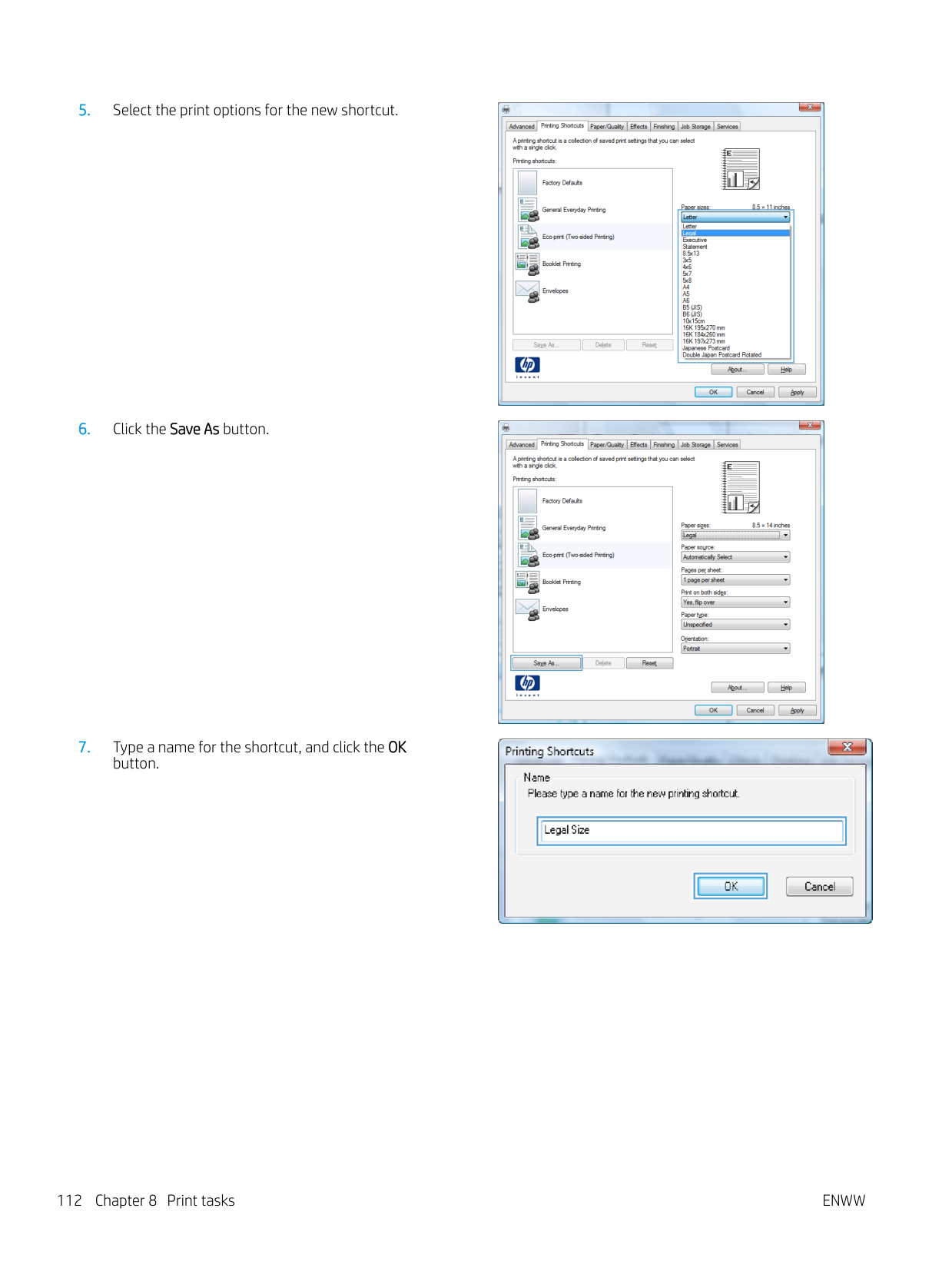
| | |---|
NOTE: The product must be connected to a network and have Internet access to use HP ePrint.
NOTE: This code is valid for only 24 hours from the time you enable HP Web Services. If it expires, follow the instructions to enable HP Web Services again, and obtain a new code.
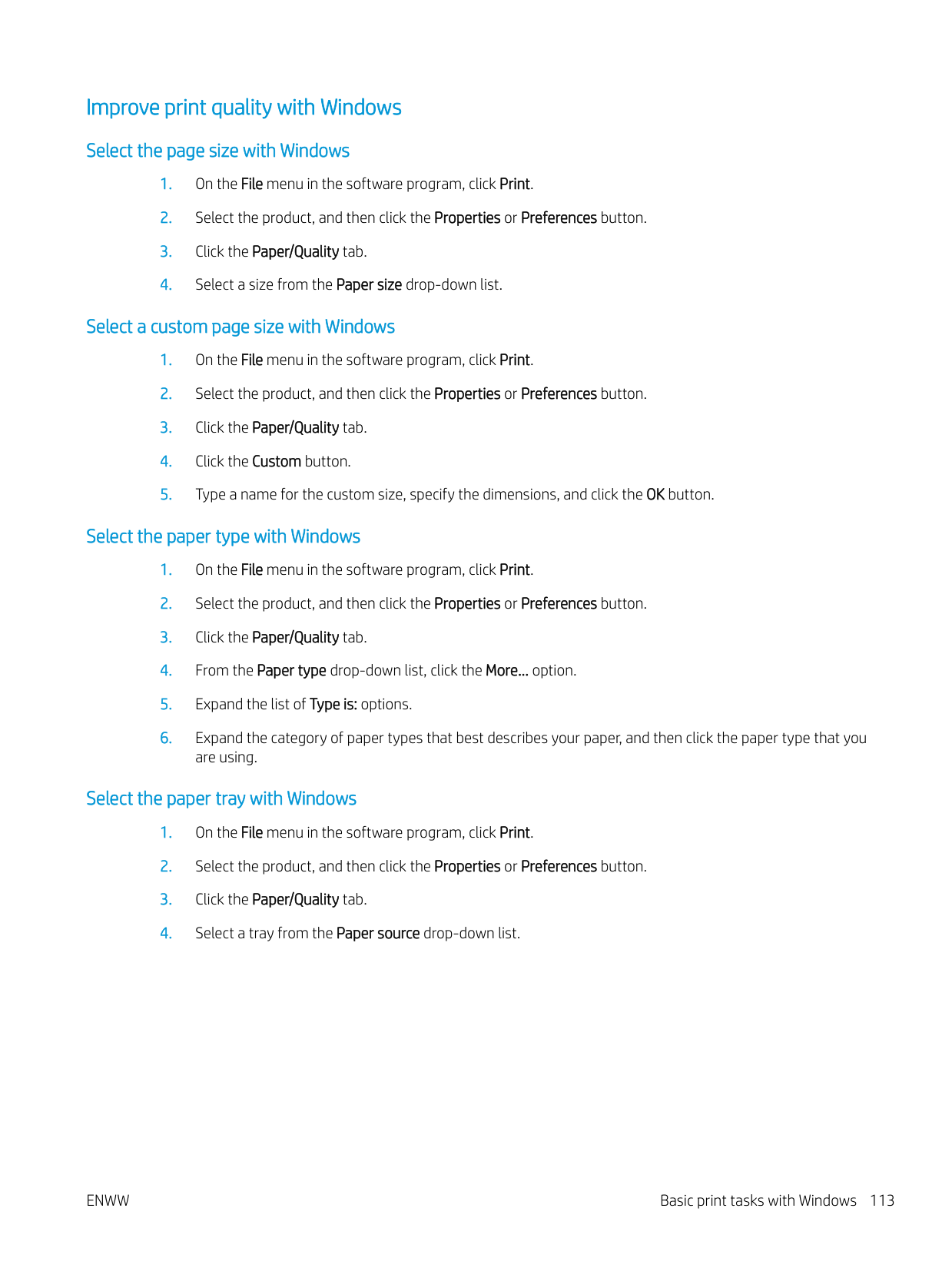
| | |---|
Additional print tasks with Windows
#### Print on preprinted letterhead or forms with Windows


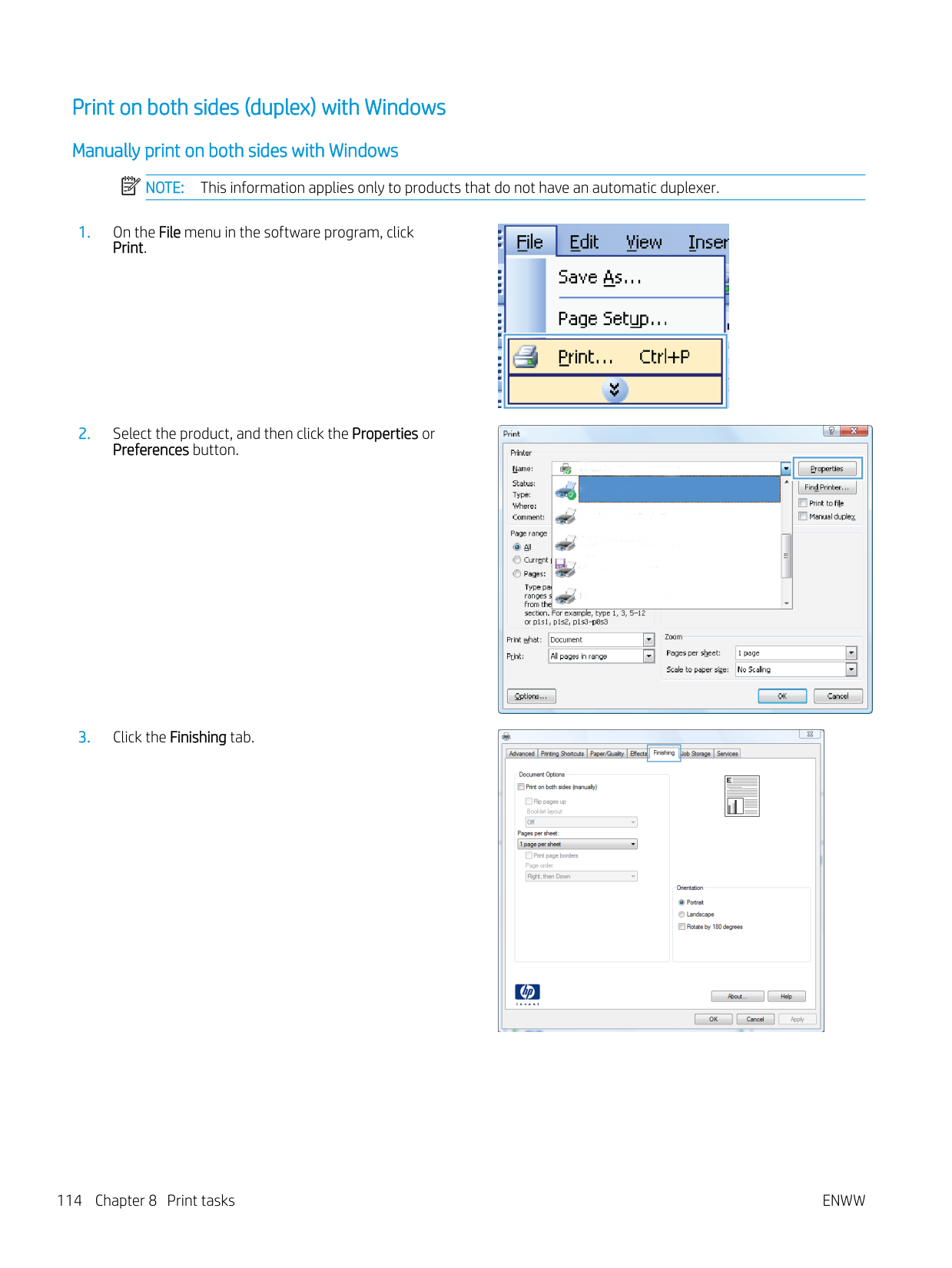

####### 4. From the Paper type drop-down list, click theMore... option.
####### 5. Expand the list of Type is: options.


#### Print on special paper, labels, or transparencies with Windows
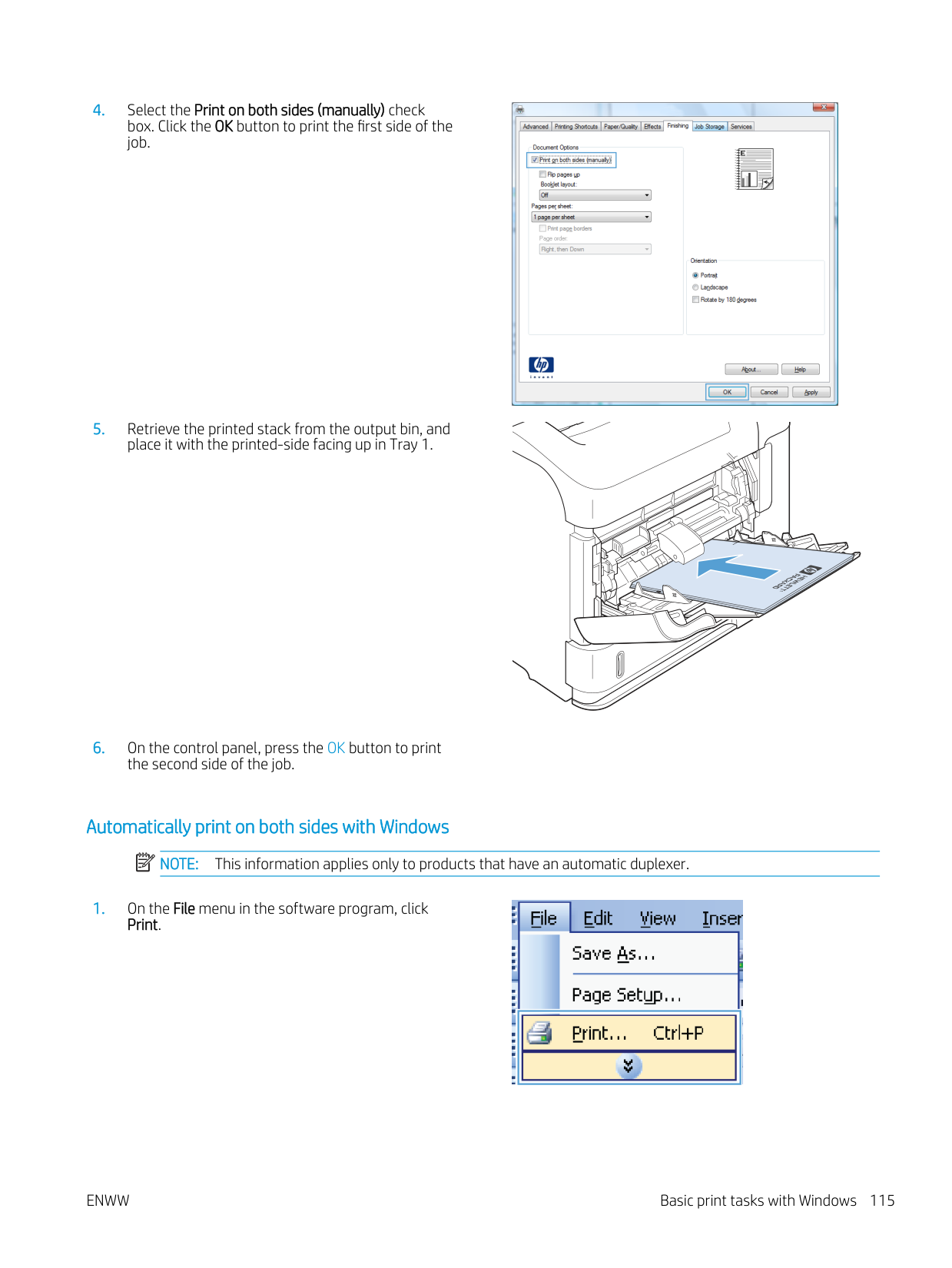

####### 2. Select the product, and then click the Properties orPreferences button.
###### 3. Click the Paper/Quality tab.
####### 4. From the Paper type drop-down list, click theMore... option.


####### 5. Expand the list of Type is: options.
####### 6. Expand the category of paper types that bestdescribes your paper.
NOTE: Labels and transparencies are in the list of Other options.
####### 7. Select the option for the type of paper you areusing, and click the OK button.

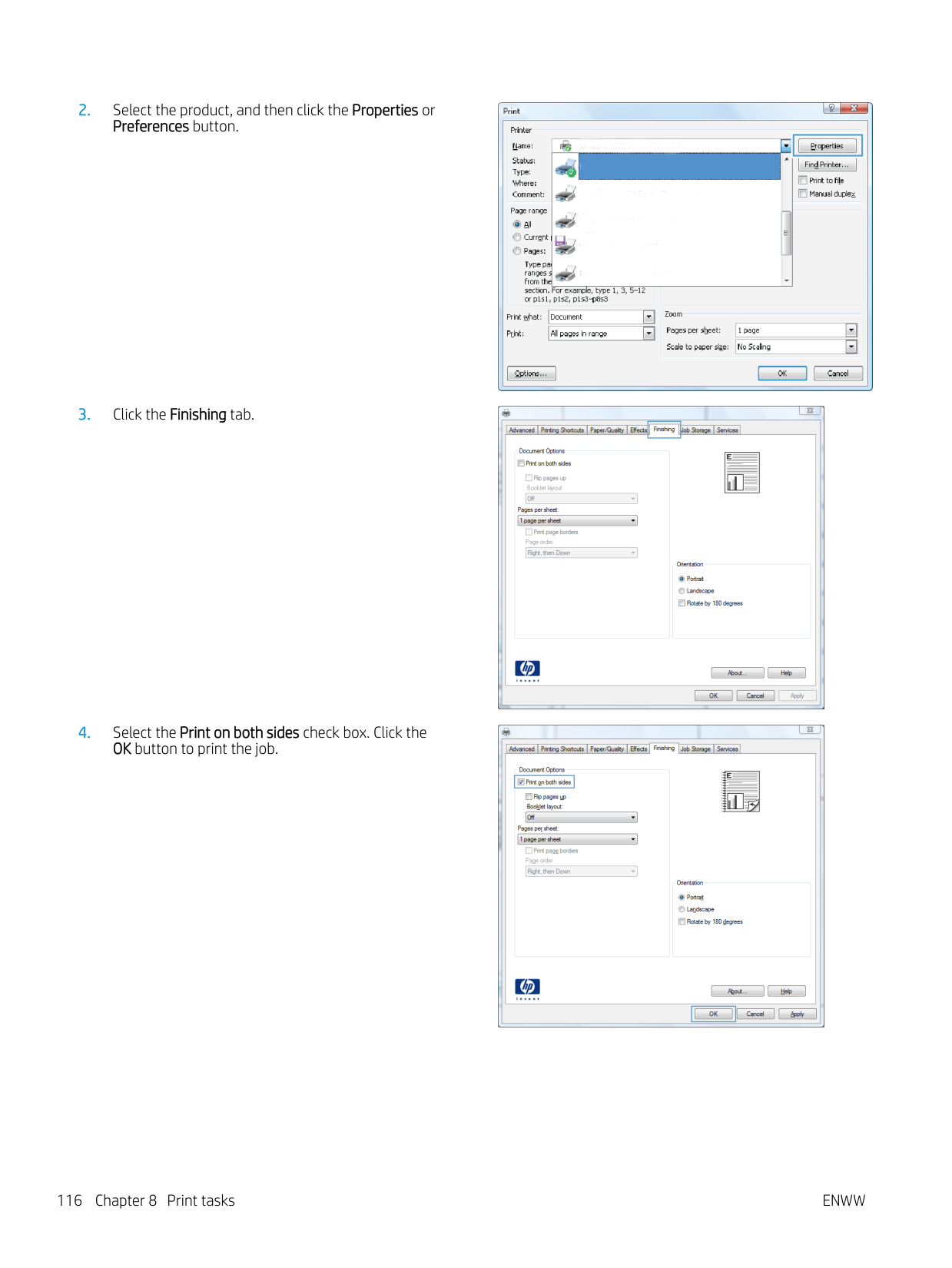


#### Print on special paper, labels, or transparencies with Windows


####### 4. From the Paper type drop-down list, click theMore... option.
####### 5. Expand the list of Type is: options.
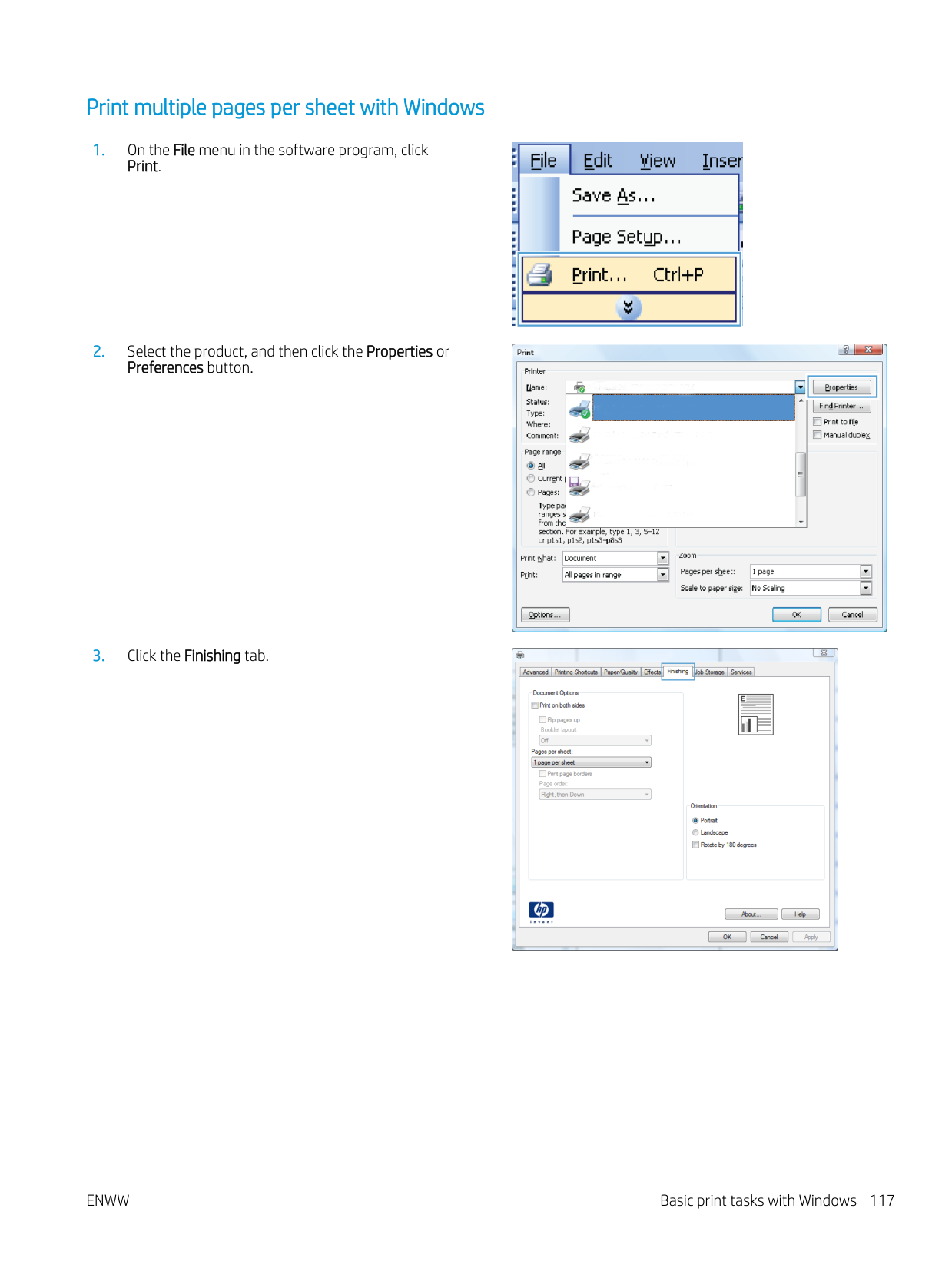


NOTE: Labels and transparencies are in the list of Other options.


#### Print the first or last page on different paper with Windows

####### 2. Select the product, and then click the Properties orPreferences button.
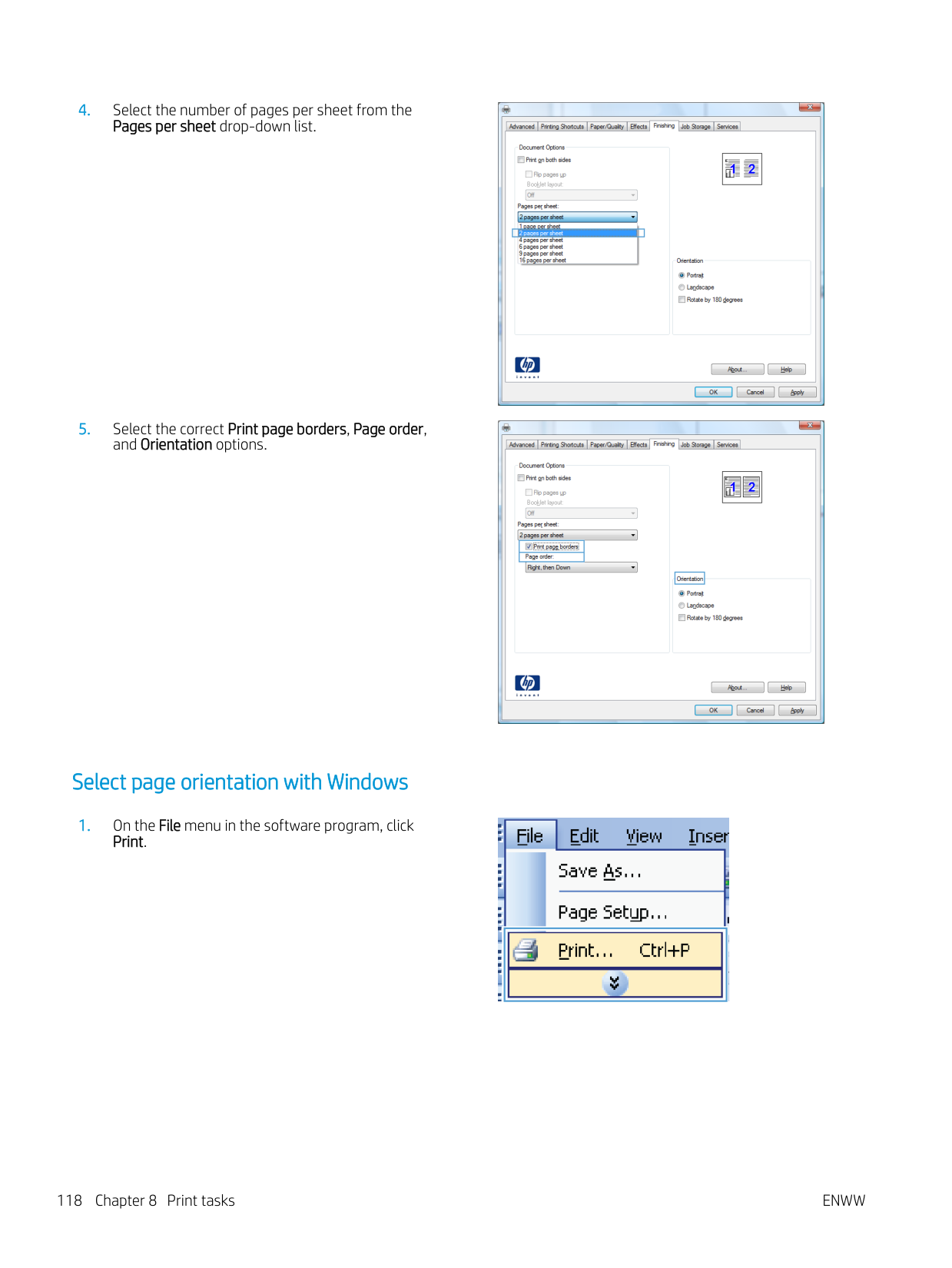
###### 3. Click the Paper/Quality tab.
###### 4. In the Special pages area, click the Print pages ondifferent paper option, and then click the Settingsbutton.


####### 5. In the Pages in document area, select either theFirst or Last option.
####### 6. Select the correct options from the Paper sourceand Paper type drop-down lists. Click the Addbutton.


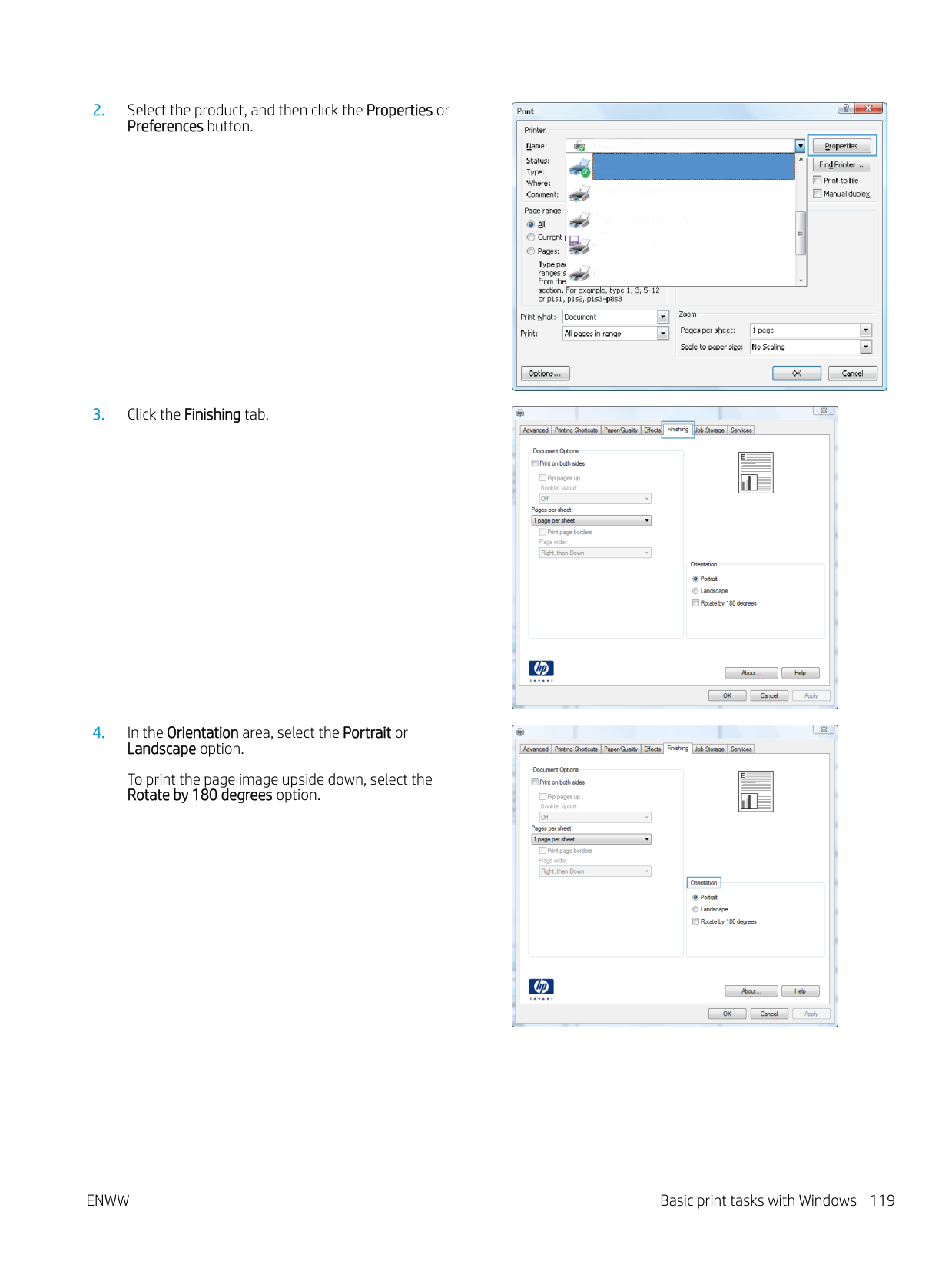

#### Scale a document to fit page size with Windows


select a size from the drop-down list.

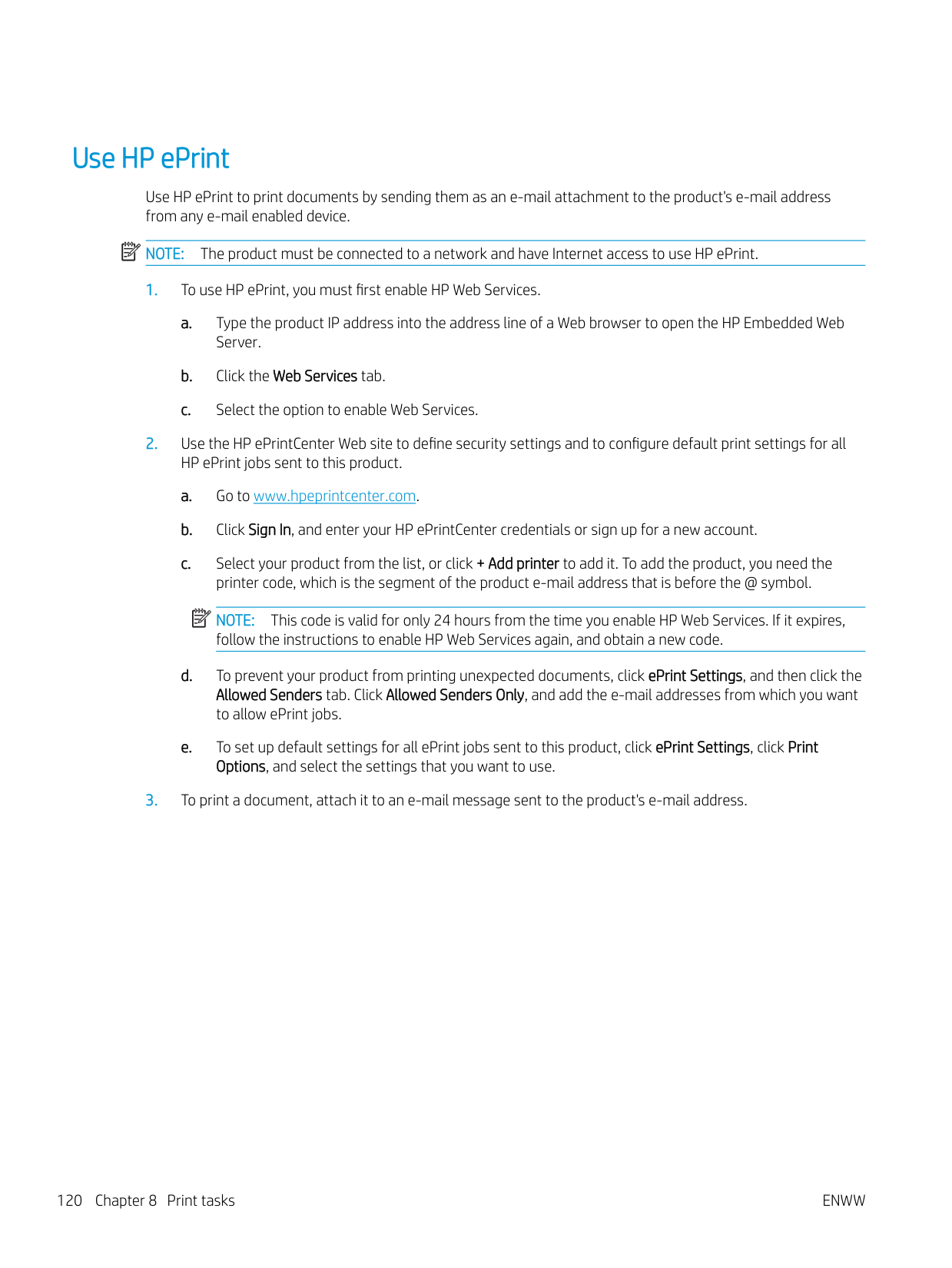
#### Add a watermark to a document with Windows
Or, to add a new watermark to the list, click the Edit button. Specify the settings for the watermark, and then click the OK button.
#### Create a booklet with Windows


####### 3. Click the Finishing tab.
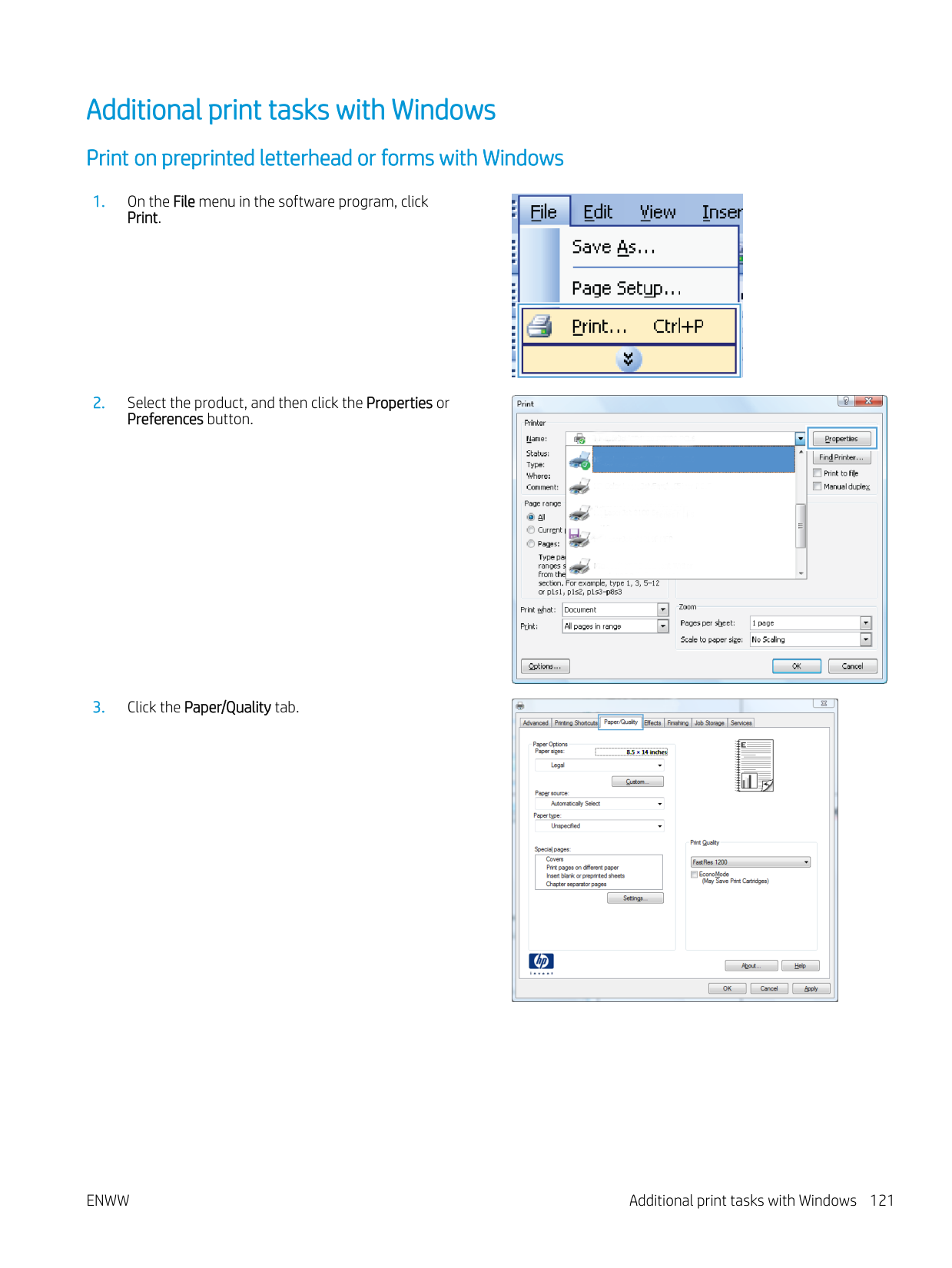
###### 4. Select the Print on both sides check box.
####### 5. In the Booklet layout drop-down list, click the Leftbinding or Right binding option. The Pages persheet option automatically changes to 2 pages persheet.


#### Select output options with Windows Select an output bin with Windows


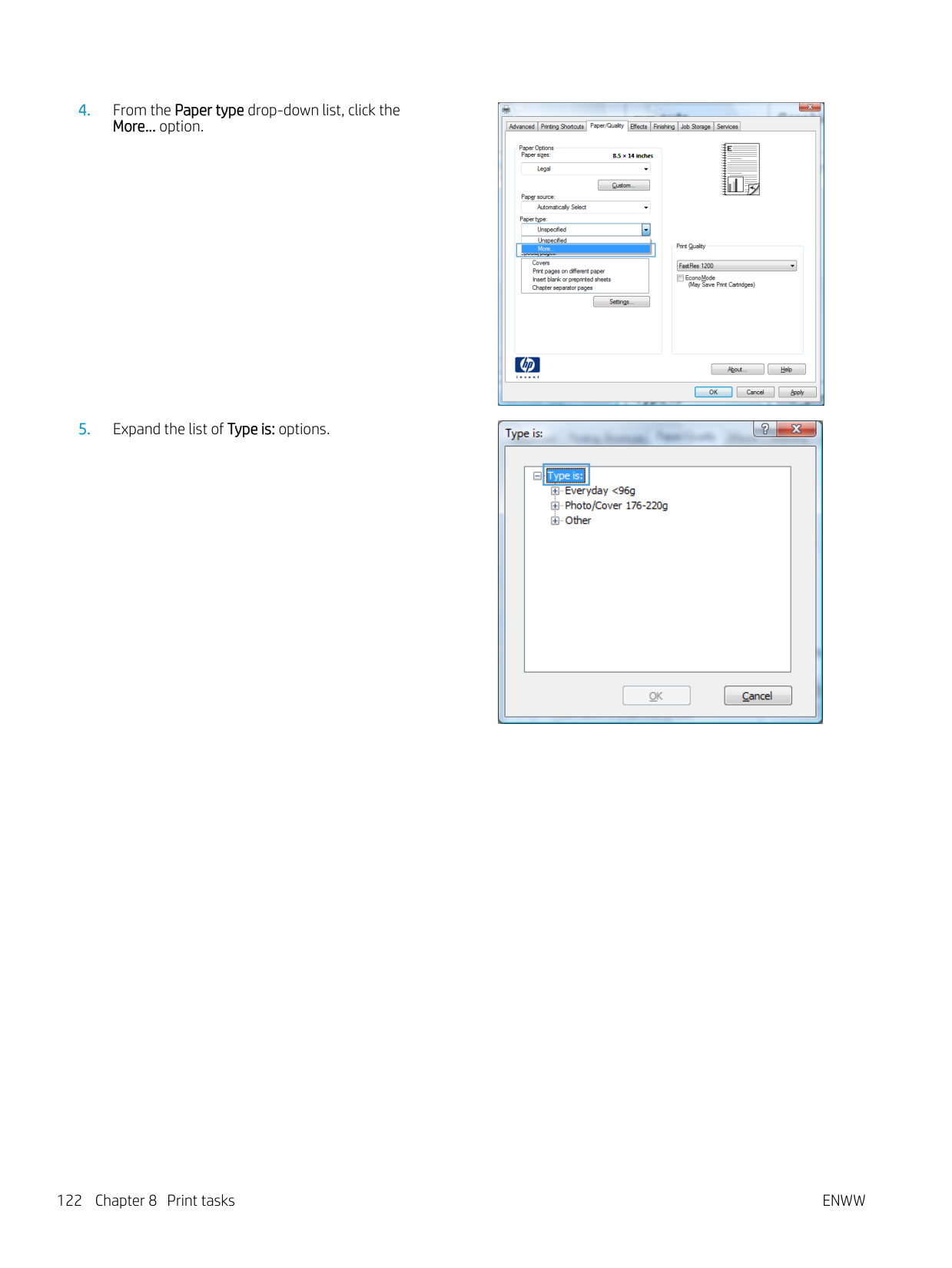

the Bin drop-down list.
##### Select staple options with Windows


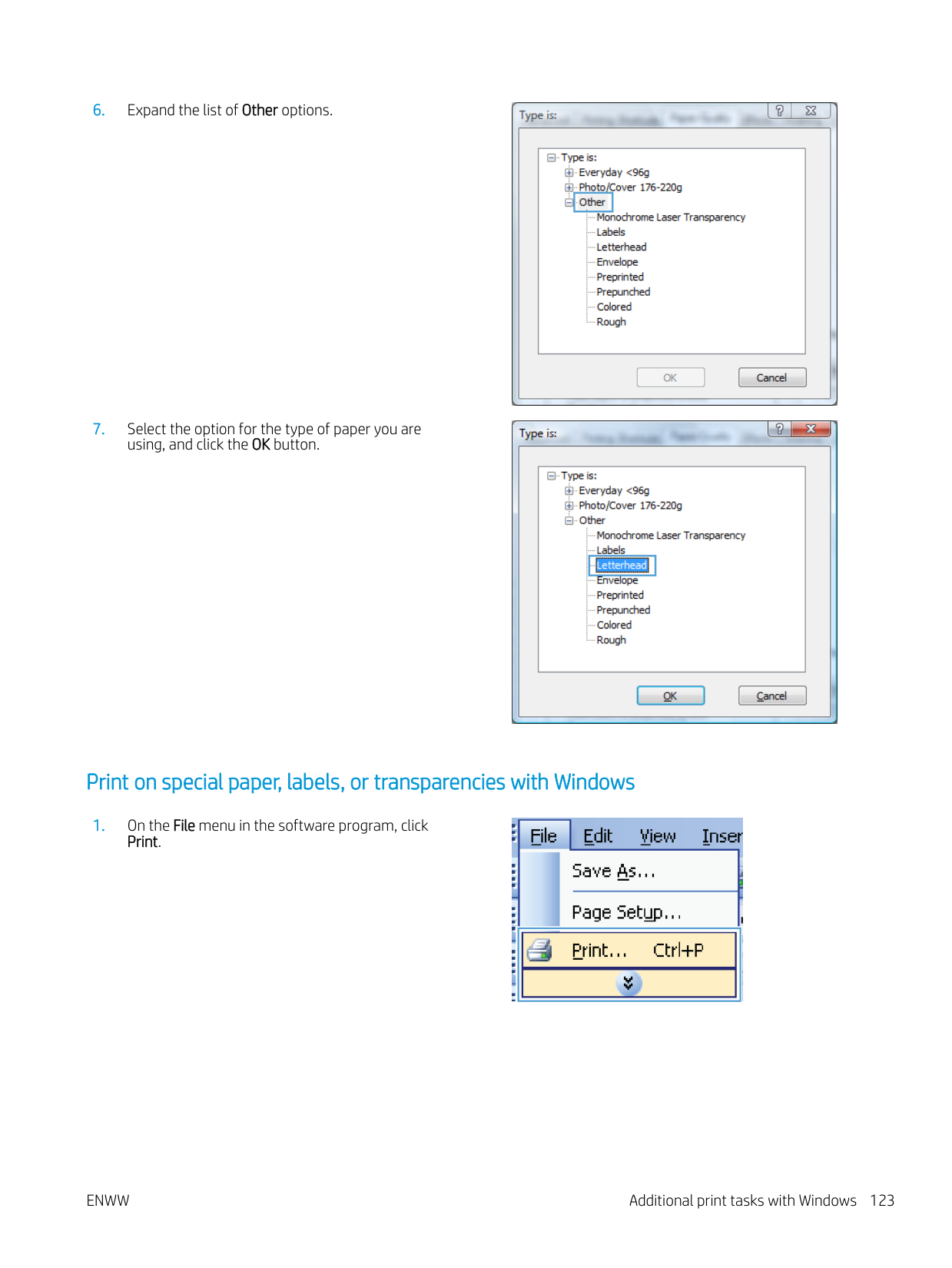

#### Use job storage features with Windows
The following job-storage modes are available for print jobs:
CAUTION: If you turn off the product, all Quick Copy, Proof and Hold, and Personal Job types of stored jobs are deleted. To permanently store the job and prevent the product from deleting it when space is needed for something else, select the Stored Job option in the driver.
##### Create a stored job with Windows

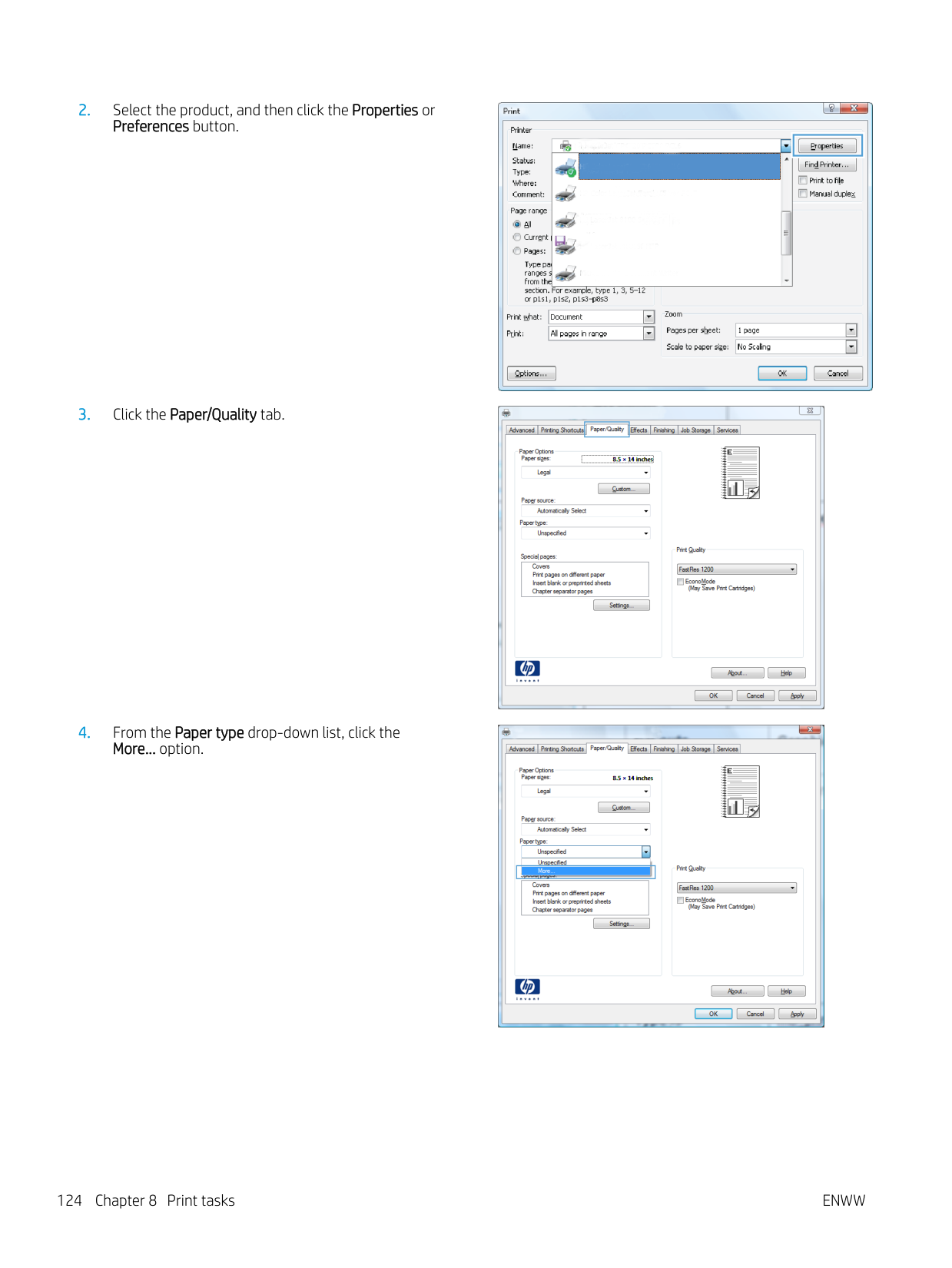


##### Print a stored job
Use the following procedure to print a job that is stored in the product memory.
##### Delete a stored job
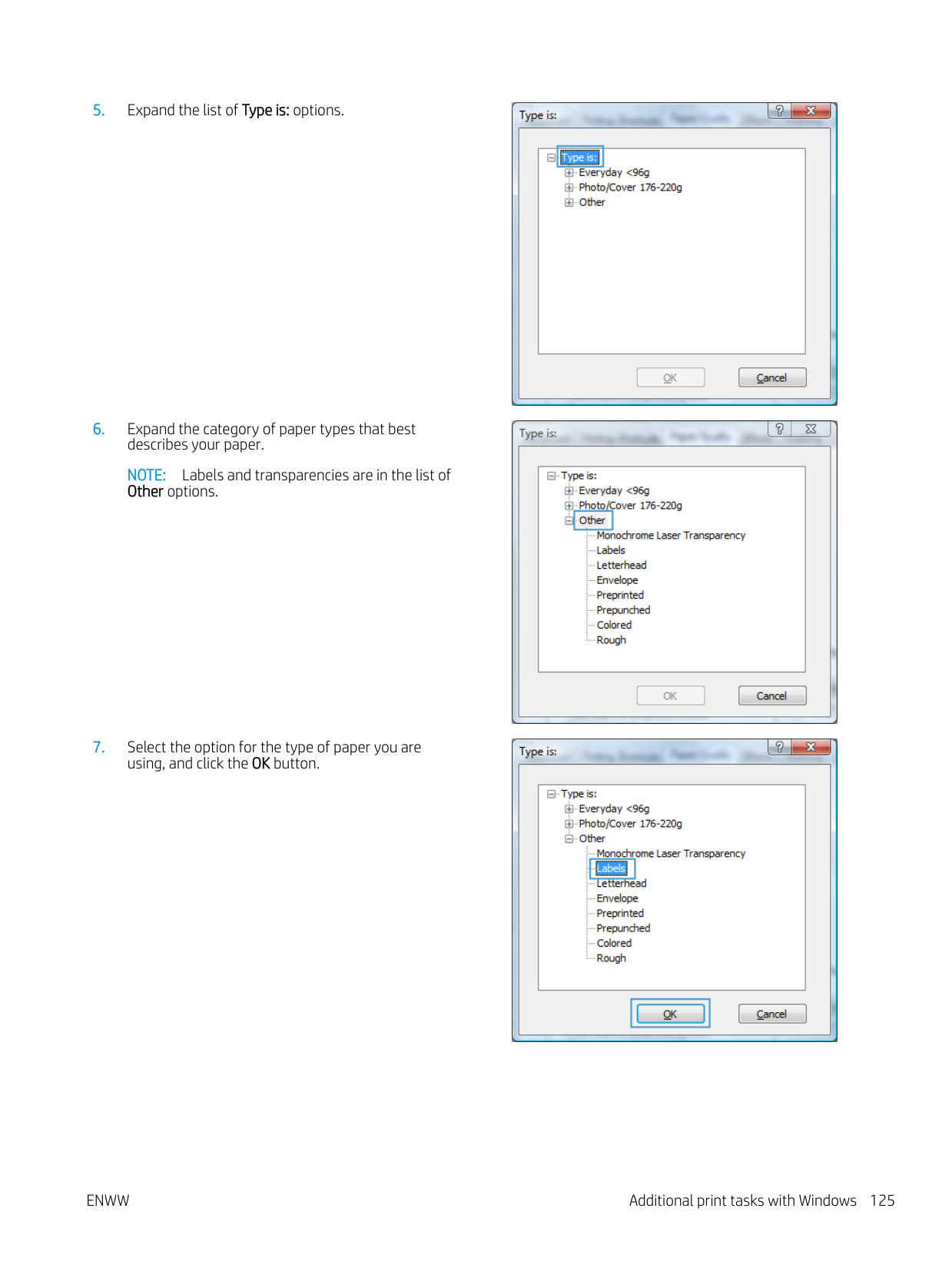
When you send a stored job to the product memory, the product overwrites any previous jobs with the same user and job name. If a job is not already stored under the same user and job name, and the product needs additional space, the product might delete other stored jobs starting with the oldest. You can change the number of jobs that can be stored from the General Settings menu on the product control panel.
Use this procedure to delete a job that is stored in the product memory.
Set job storage options with Windows Print one copy for proof before printing all the copies
Temporarily store a personal job on the product and print it later NOTE: The product deletes the job after you print it.
| | |---|
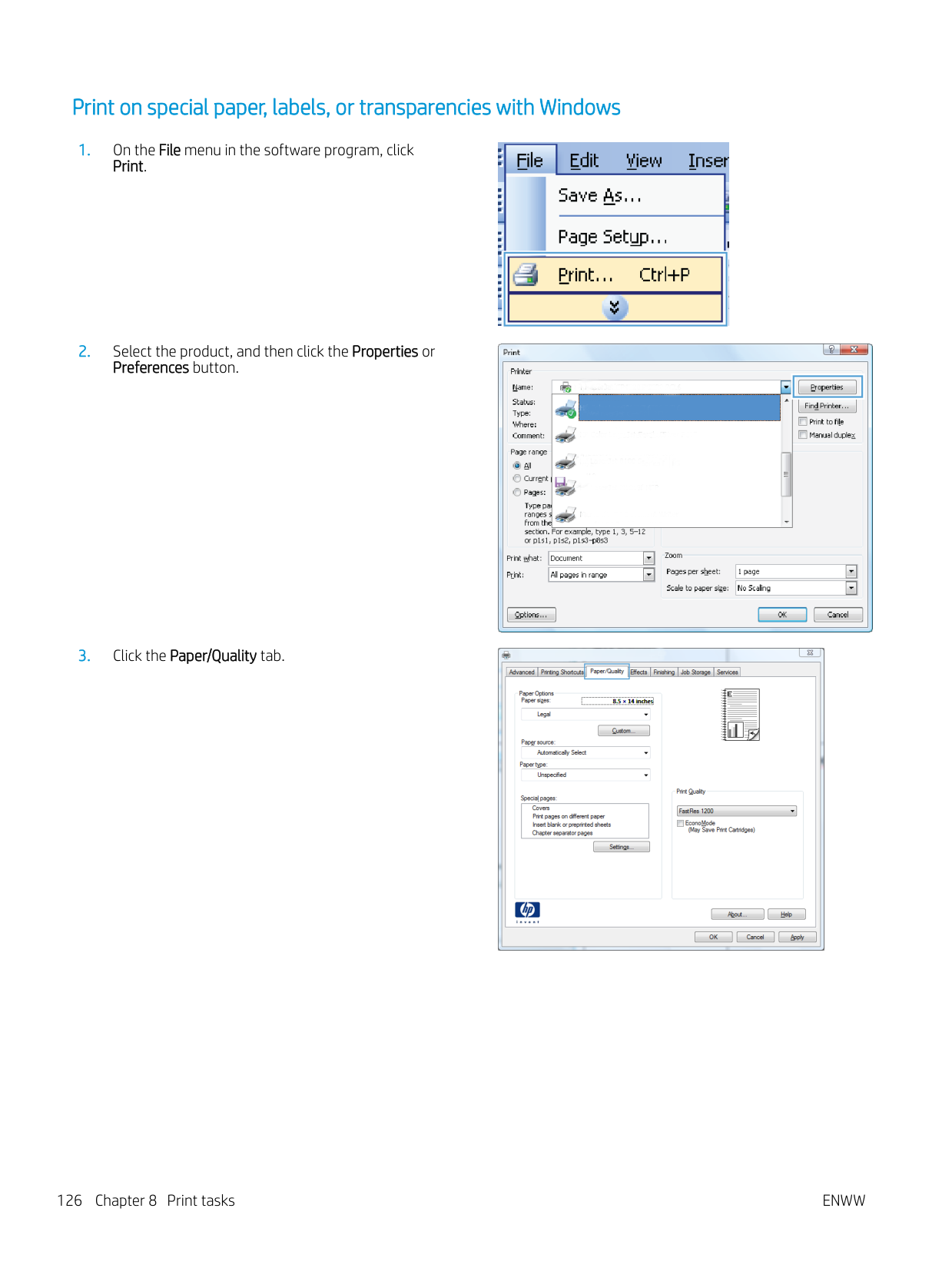
Temporarily store a job on the product NOTE: This option is available if the optional hard disk is installed in the product. NOTE: The product stores the job until you turn the product off.
| | |---|
| | |---|
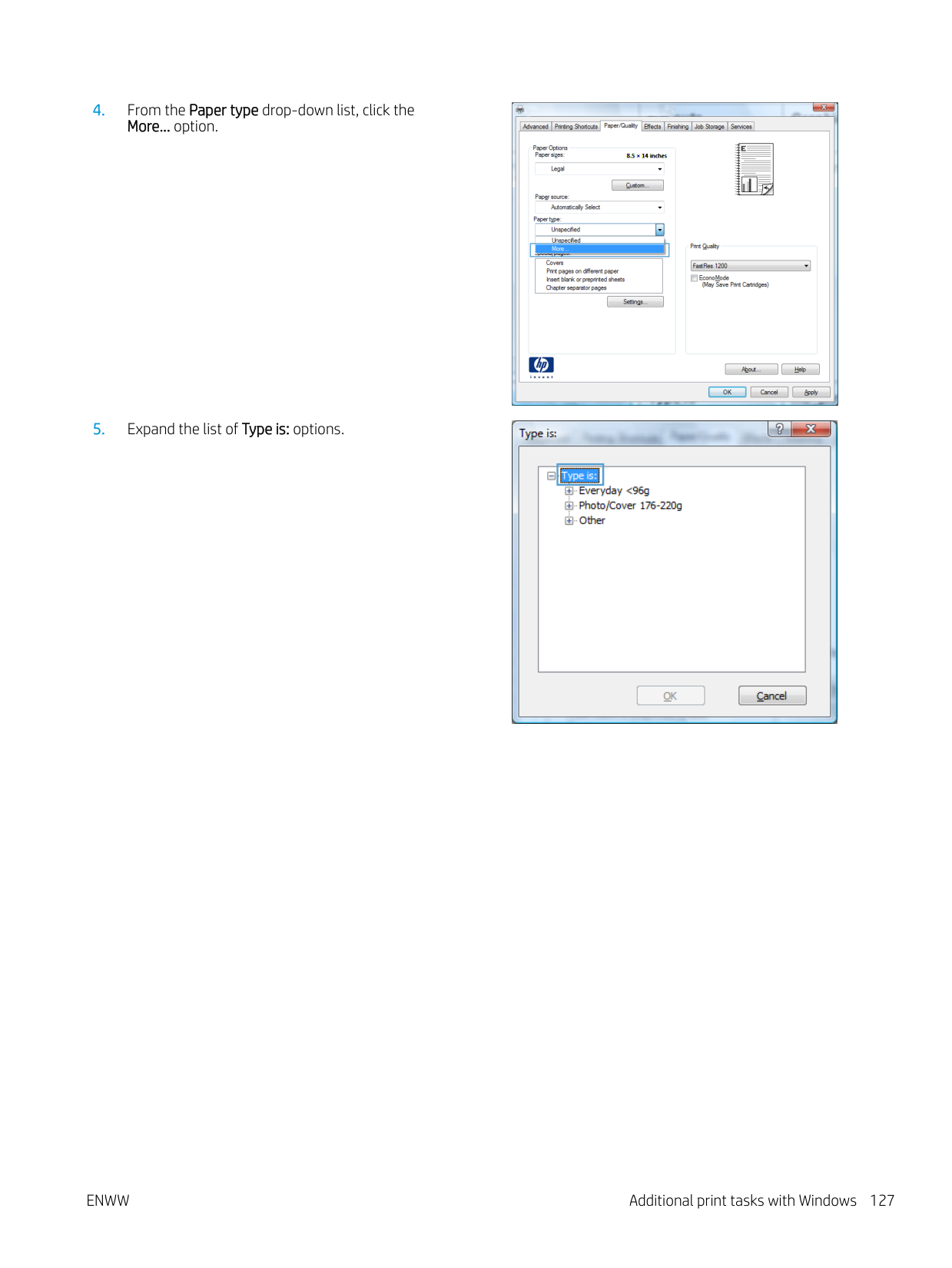
The requested number of copies are printed immediately, and you can print more copies from the product control panel.
Permanently store a job on the product NOTE: This option is available if the optional hard disk is installed in the product.
| | |---|
Make a permanently stored job private so that anyone who tries to print it must provide a PIN NOTE: This option is available if the optional hard disk is installed in the product.
| | |---|
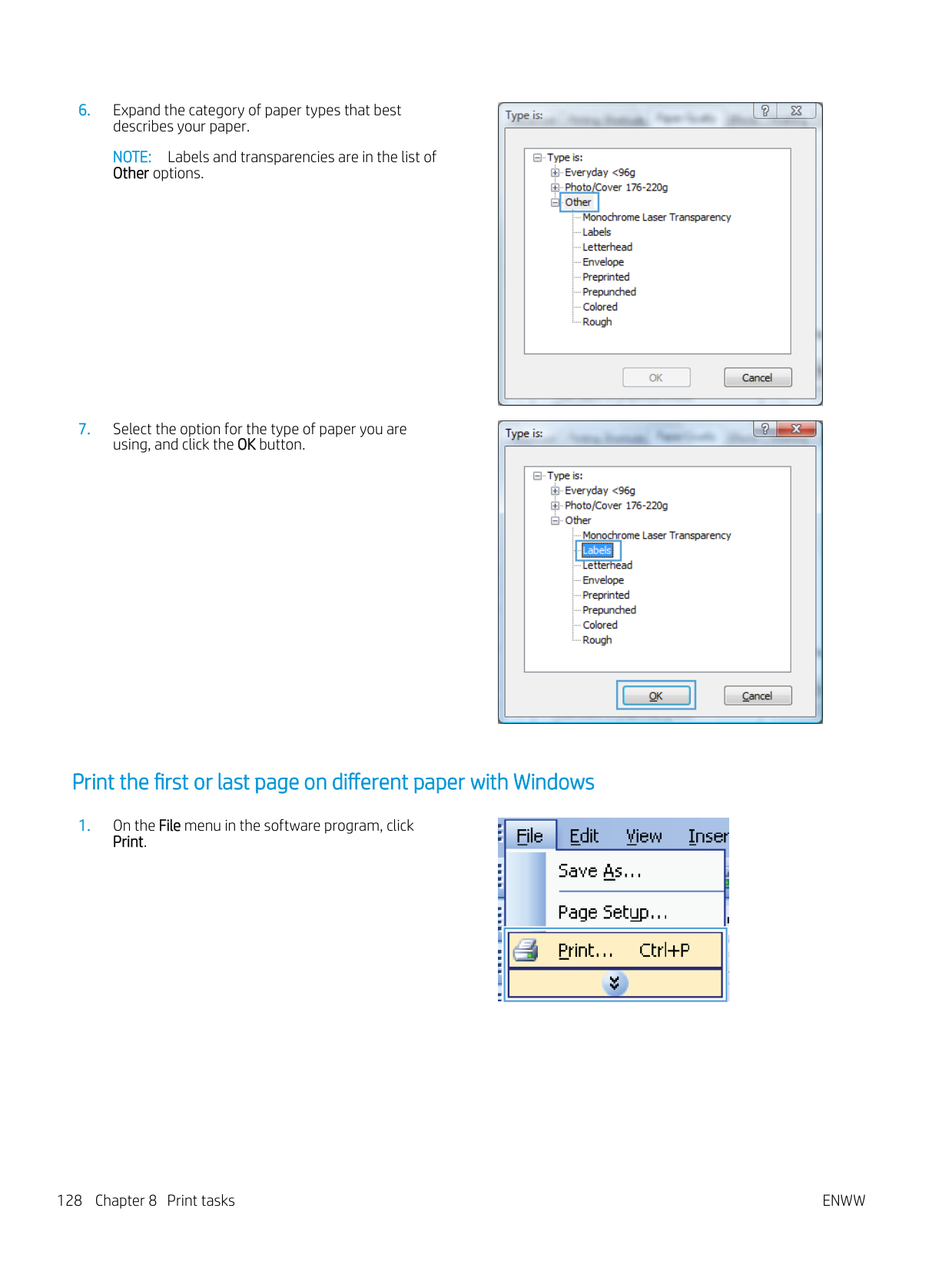
| | |---|
###### Receive notification when someone prints a stored job
| | |---|
NOTE: Only the person who created the stored job receives notification. You do not receive notification when someone prints a stored job that another person has created.
###### Set the user name for a stored job
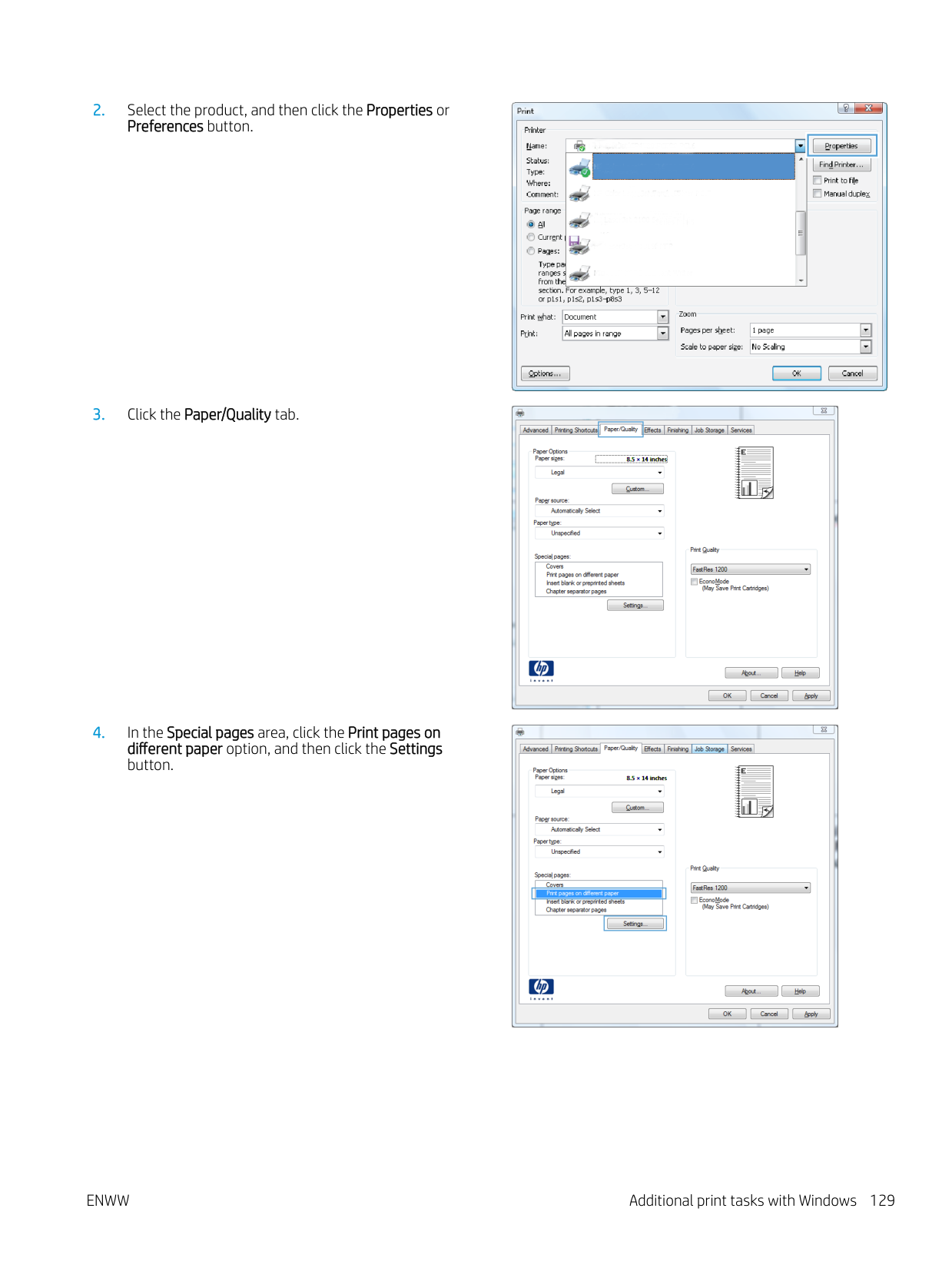
Follow this procedure to change the user name for a stored job.
###### Specify a name for the stored job
Follow this procedure to change the default name for a stored job.
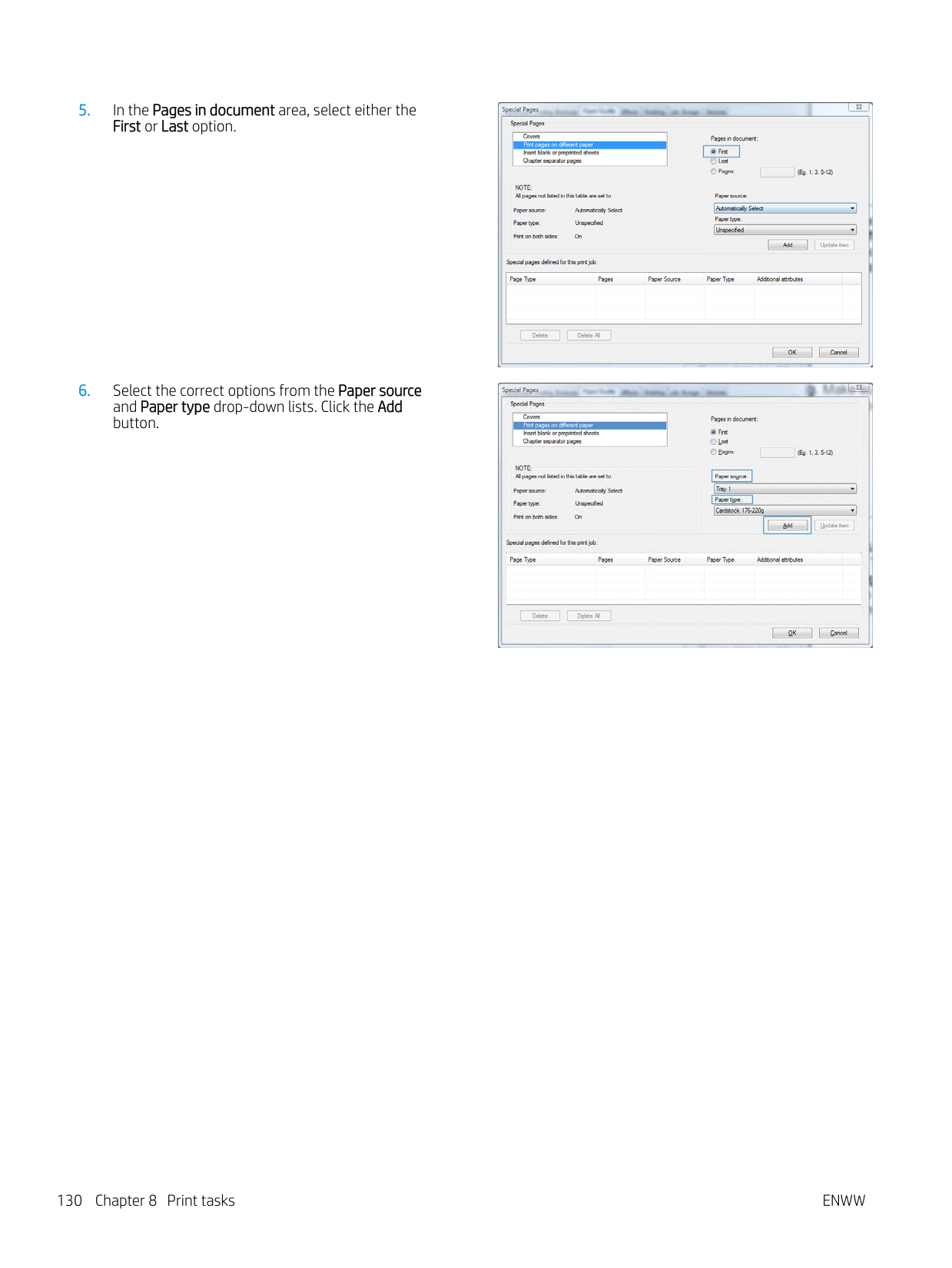
#### Print special jobs with Windows Set the duplex alignment
For documents that are printed on both sides, such as brochures, set the registration for the tray before printing to ensure that the front and back of the page are aligned.
Walk-up USB printing
This product features walk-up USB printing, so you can quickly print files without sending them from a computer. The product accepts standard USB storage accessories in the USB port on the front of the product. You can print the following types of files:
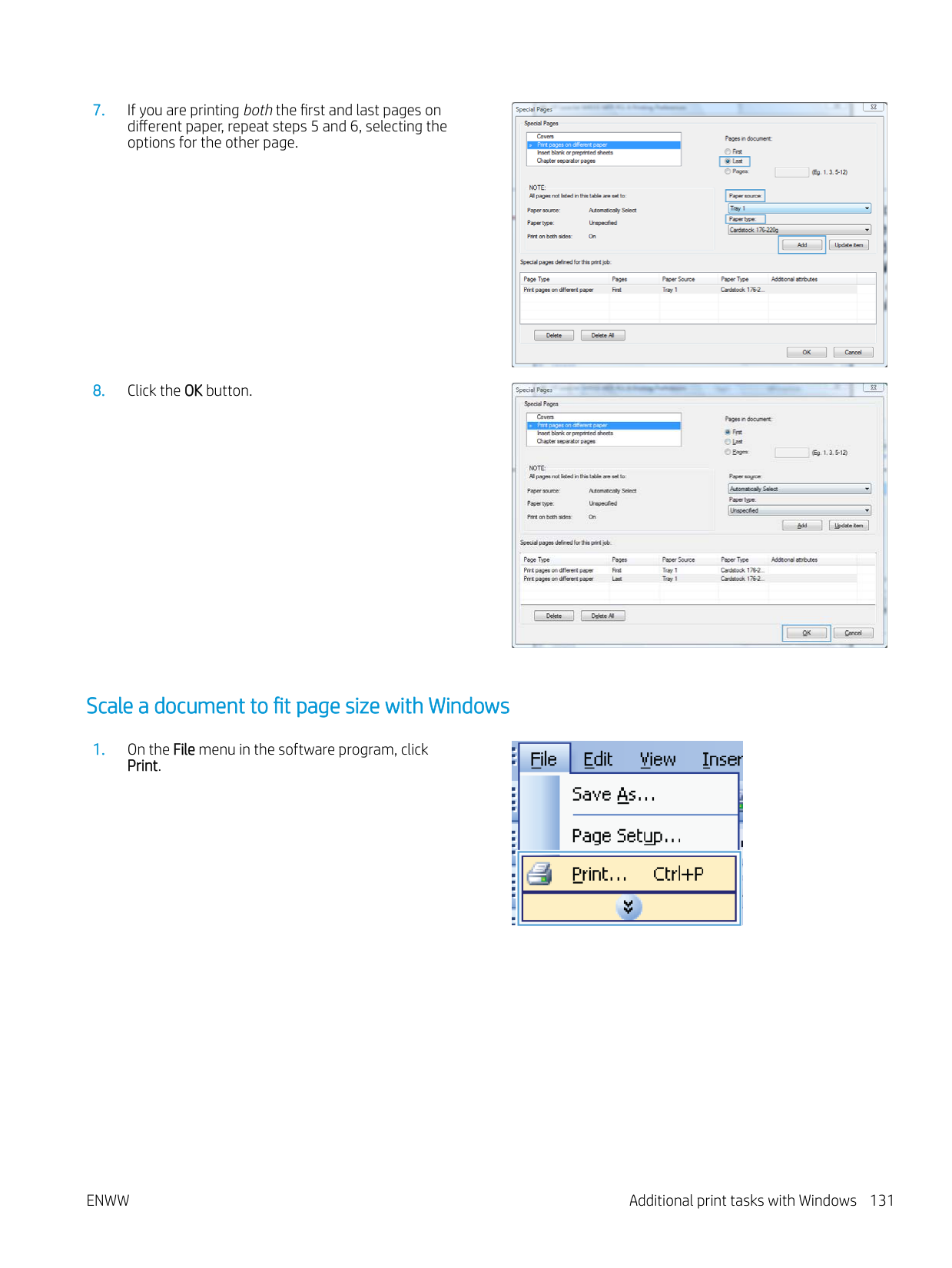
NOTE: You might need to remove the cover from the USB port.
NOTE: If the product does not recognize the USB accessory, try using another type of USB accessory. Because of differences in USB specifications, the product does not recognize all types of USB accessories.
ENWW Walk-up USB printing 143
9 Manage and maintain
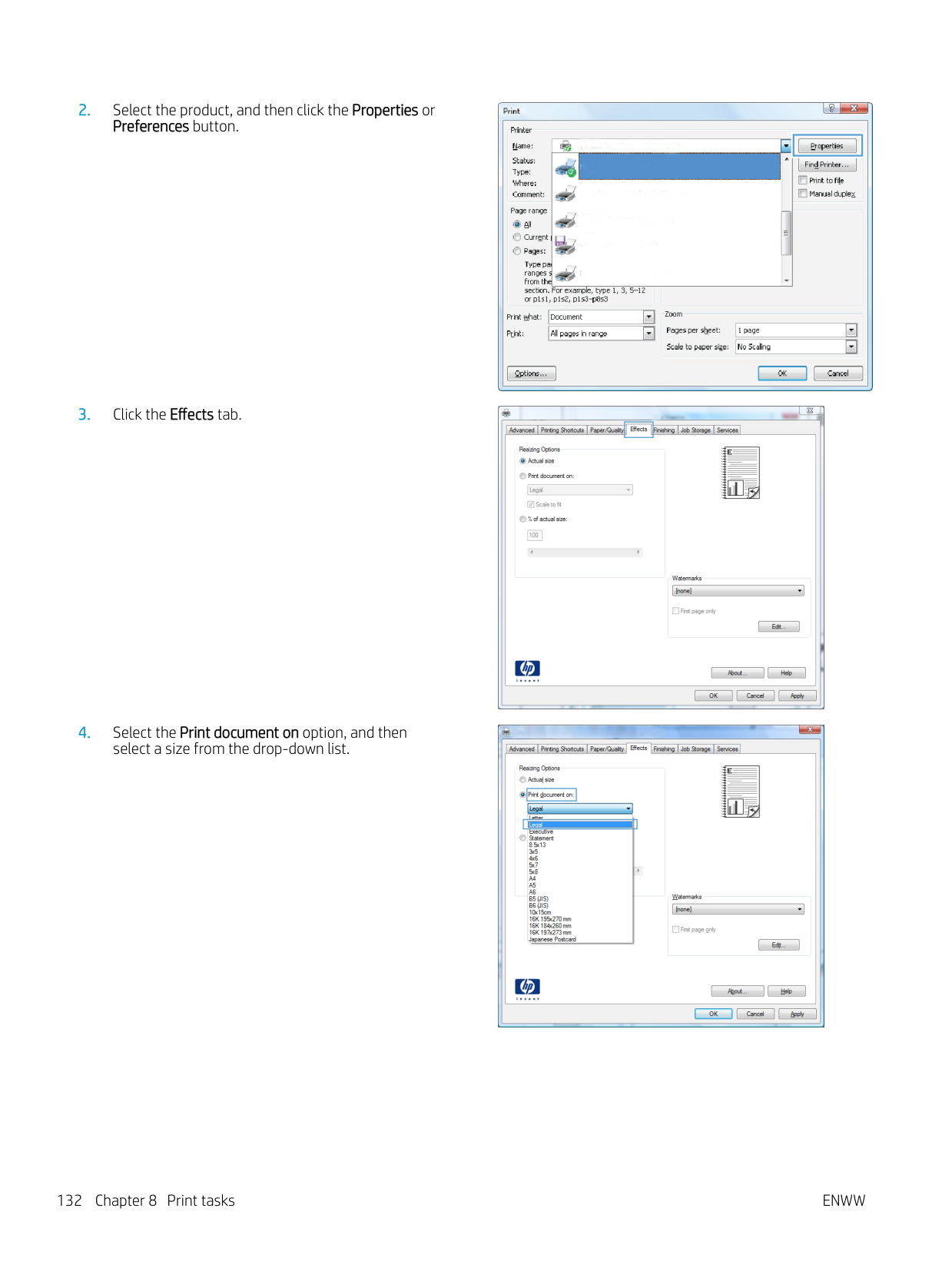
ENWW 145
Print information pages
Information pages provide details about the product and its current configuration. Use the following procedure to print or view the information pages:
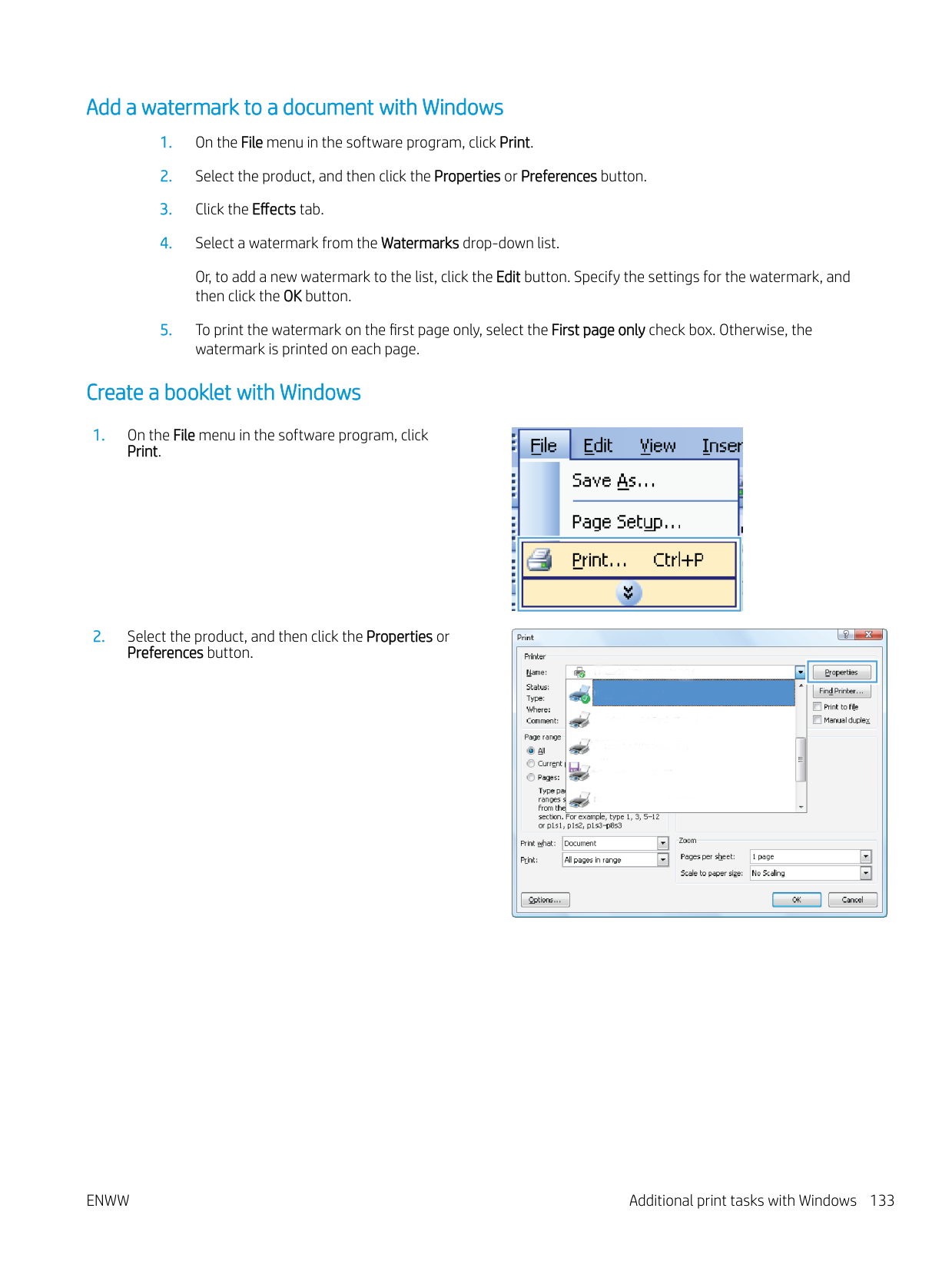
First level Second level Description Configuration/Status Pages Administration Menu Map Shows the layout and current settings of the control-panel menu
items. Configuration Page Shows the product settings and installed accessories. Supplies Status Page Shows the approximate remaining life for the supplies; reports
statistics on total number of pages and jobs processed, serial number, page counts, and maintenance information.
HP provides approximations of the remaining life for the supplies as a customer convenience. The actual remaining supply levels might be different than the approximations provided.
Usage Page Shows a count of all paper sizes that have passed through the product; lists whether they were simplex or duplex, and reports the page count.
File Directory Page Shows the file name and folder name for files that are stored in
the product memory.
Current Settings Page Shows the current settings for each option in the Administration
menu.
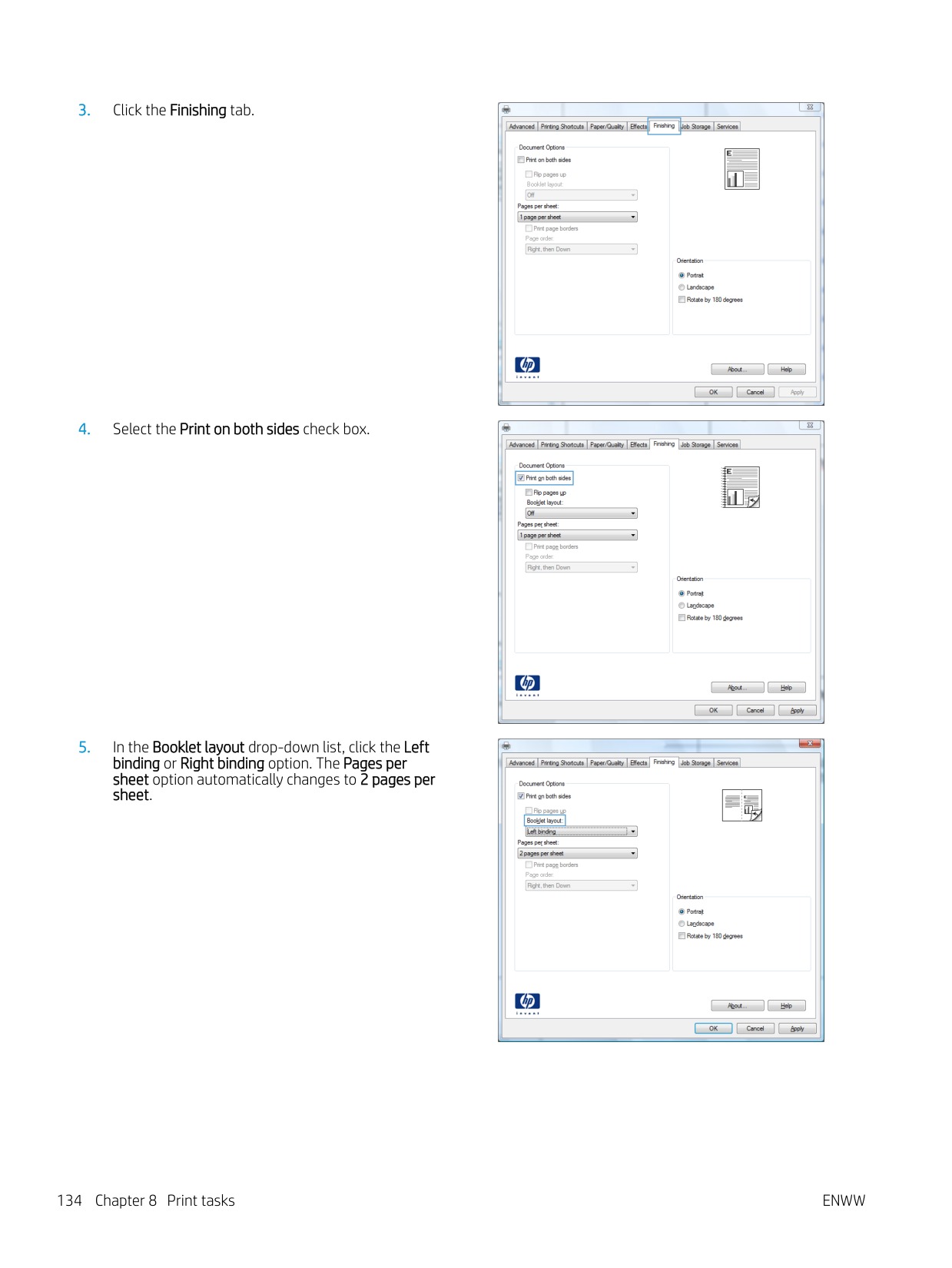
Other Pages PCL Font List Prints the available PCL fonts. PS Font List Prints the available PS fonts.
Use the HP Embedded Web Server
Use the HP Embedded Web Server to view product status, configure product network settings, and manage printing functions from your computer instead of from the product control panel. The following are examples of what you can do using the HP Embedded Web Server:
To use the HP Embedded Web Server, you must have Microsoft Internet Explorer 5.01 or later or Netscape 6.2 or later for Windows, Mac OS, and Linux (Netscape only). Netscape Navigator 4.7 is required for HP-UX 10 and HPUX 11. The HP Embedded Web Server works when the product is connected to an IP-based network. The HP Embedded Web Server does not support IPX-based product connections. You do not have to have Internet access to open and use the HP Embedded Web Server.
When the product is connected to the network, the HP Embedded Web Server is automatically available.
#### Open the HP Embedded Web Server by using a network connection
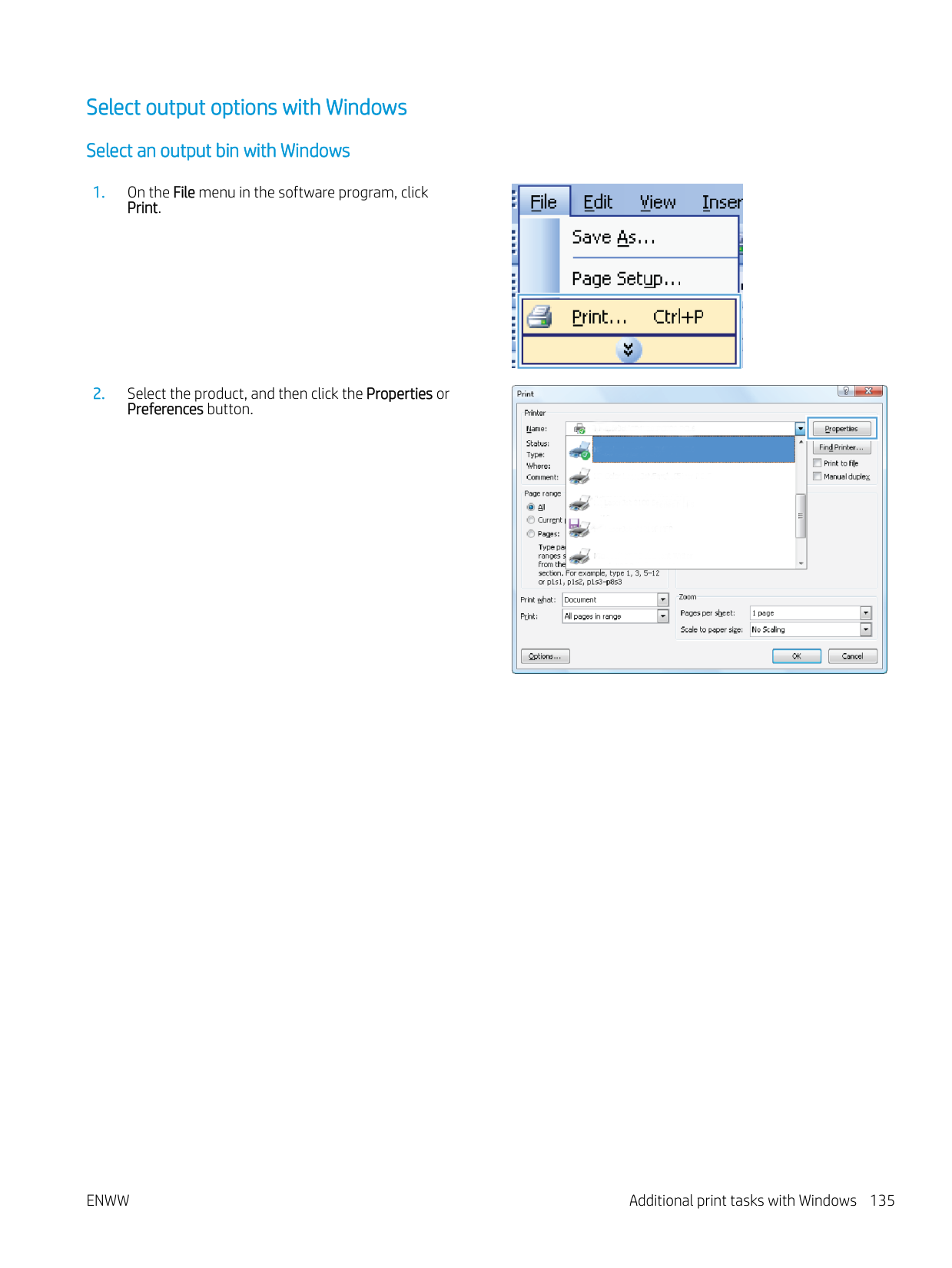
#### HP Embedded Web Server features Information tab
Table 9-1 HP Embedded Web Server Information tab Menu Description Device Status Shows the product status and shows the estimated life remaining of HP supplies. The page
also shows the type and size of paper set for each tray. To change the default settings, click the Change Settings link.
Job Log Shows a summary of all jobs the product has processed. Configuration Page Shows the information found on the configuration page. Supplies Status Page Shows the status of the supplies for the product. Event Log Page Shows a list of all product events and errors. Use the HP Instant Support link (in the Other
Links area on all HP Embedded Web Server pages) to connect to a set of dynamic Web pages that help you solve problems. These pages also show additional services available for the product.
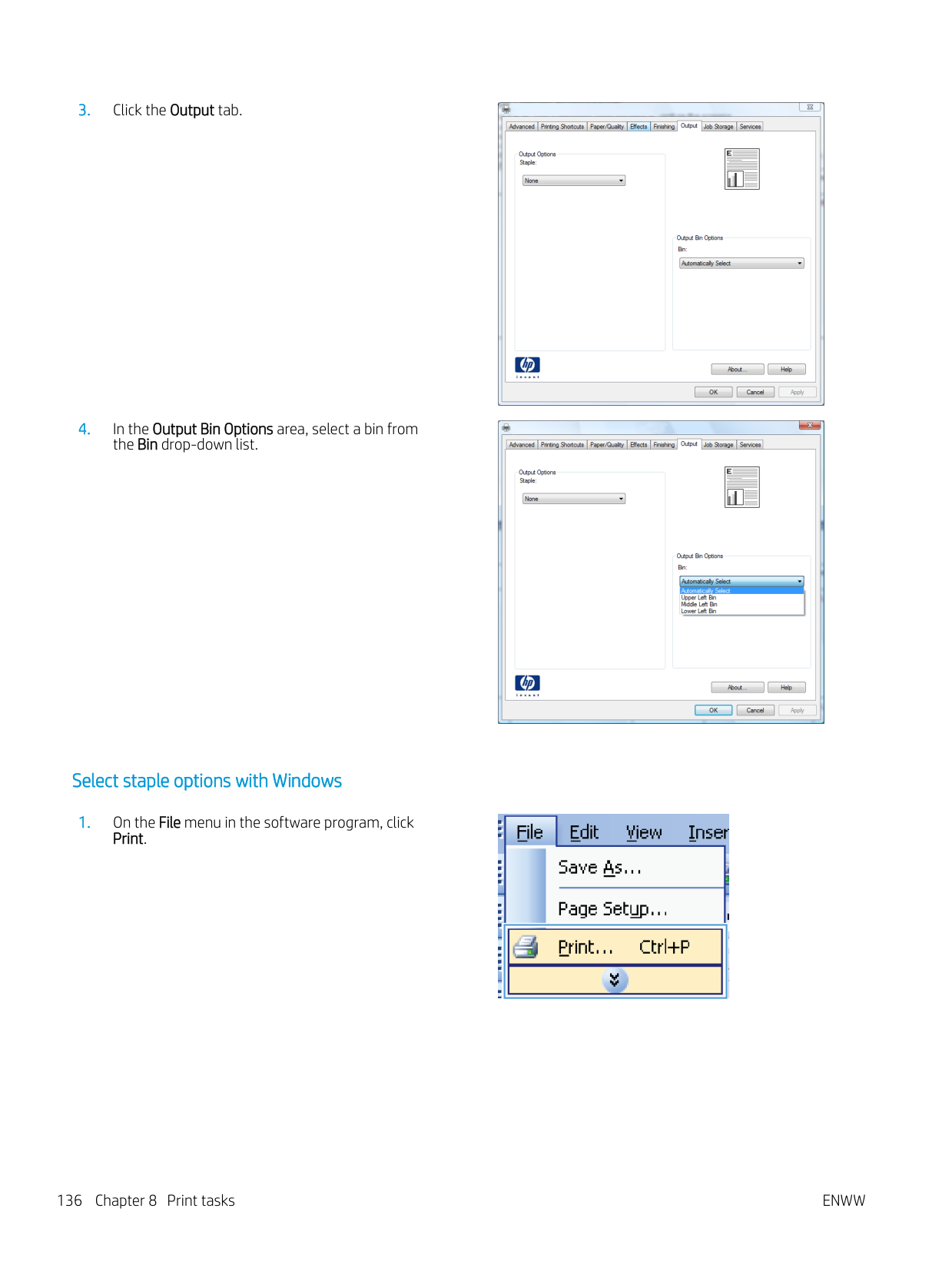
Usage Page Shows a summary of the number of pages the product has printed, grouped by size, type,
and paper print path.
Device Information Shows the product network name, address, and model information. To customize these
entries, click the Device Information menu on the General tab.
Print Upload a print-ready file from your computer to print. The product uses the default print
settings to print the file.
Printable Reports and Pages Lists the internal reports and pages for the product. Select one or more items to print or
view.
##### General tab
Table 9-2 HP Embedded Web Server General tab Menu Description Control Panel Administration Menu Shows the menu structure of the Administration menu on the control panel.
NOTE: You can configure settings on this screen, but the HP Embedded Web Server provides more advanced configuration options than are available through the Administration menu.
Alerts Set up e-mail alerts for various product and supplies events. AutoSend Configure the product to send automated e-mails regarding product configuration and
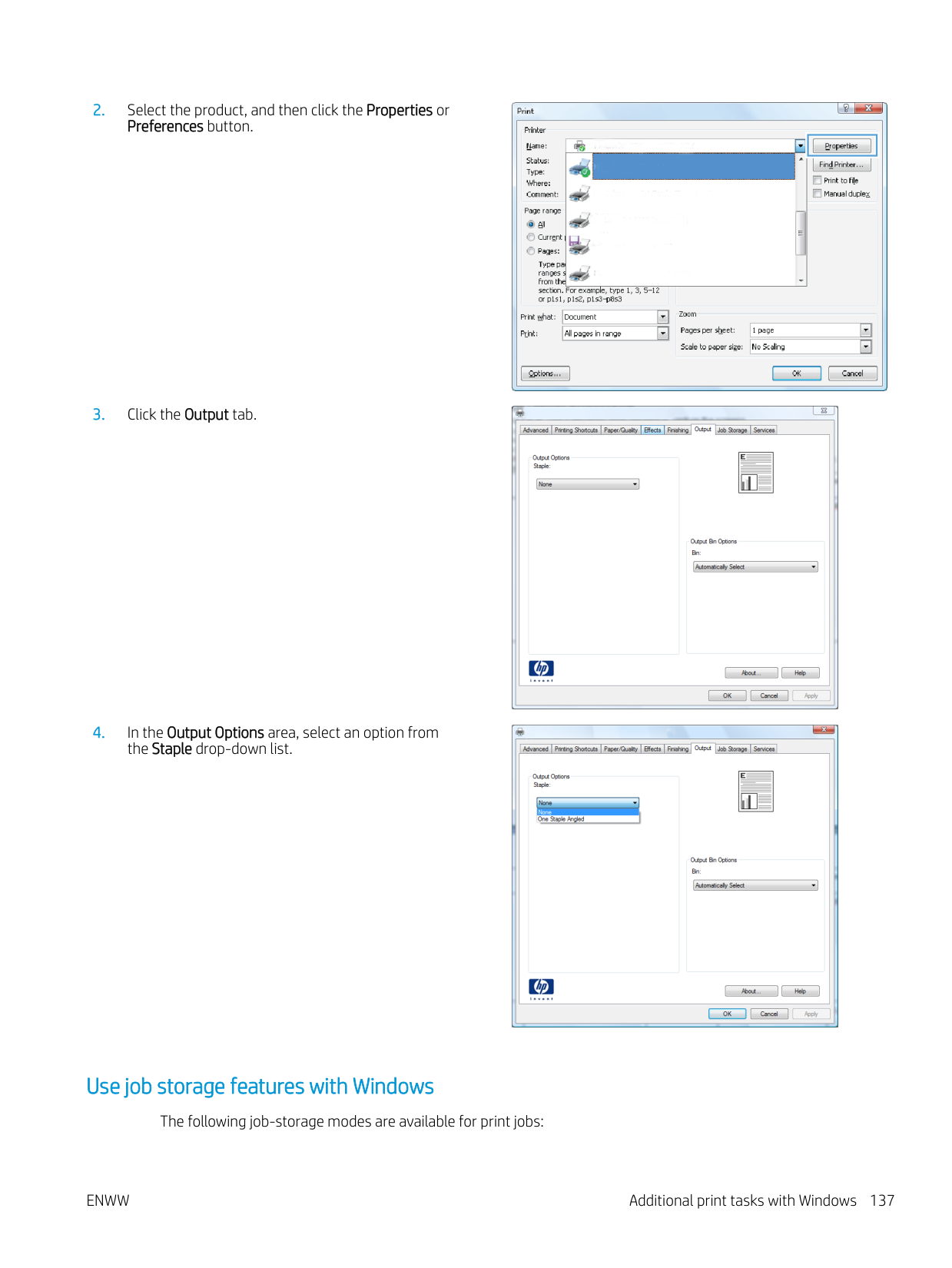
supplies to specific e-mail addresses. Control Panel Snapshot Shows an image of the current screen on the control-panel display. Edit Other Links Add or customize a link to another Web site. This link appears in the Other Links area on all
HP Embedded Web Server pages.
Ordering Information Enter information about ordering replacement print cartridges. This information appears on
the supplies status page.
Device Information Name the product and assign an asset number to it. Enter the name of the primary contact
who will receive information about the product.
Language Set the language in which to display the HP Embedded Web Server information.
Table 9-2 HP Embedded Web Server General tab (continued) Menu Description Date and Time Set the date and time or synchronize with a network time server. Sleep Schedule Set or edit a wake time, sleep time, and sleep delay for the product. You can set a different
schedule for each day of the week and for holidays.
Backup and Restore Create a backup file that contains product and user data. If necessary, you can use this file
to restore data to the product. Restore Factory Settings Restore product settings to the factory defaults. Solution Installer Install third-party software programs that can enhance the product functionality. Firmware upgrade Download and install product firmware upgrade files. Statistics Services Provides connection information about third-party job-statistics services.
##### Print tab
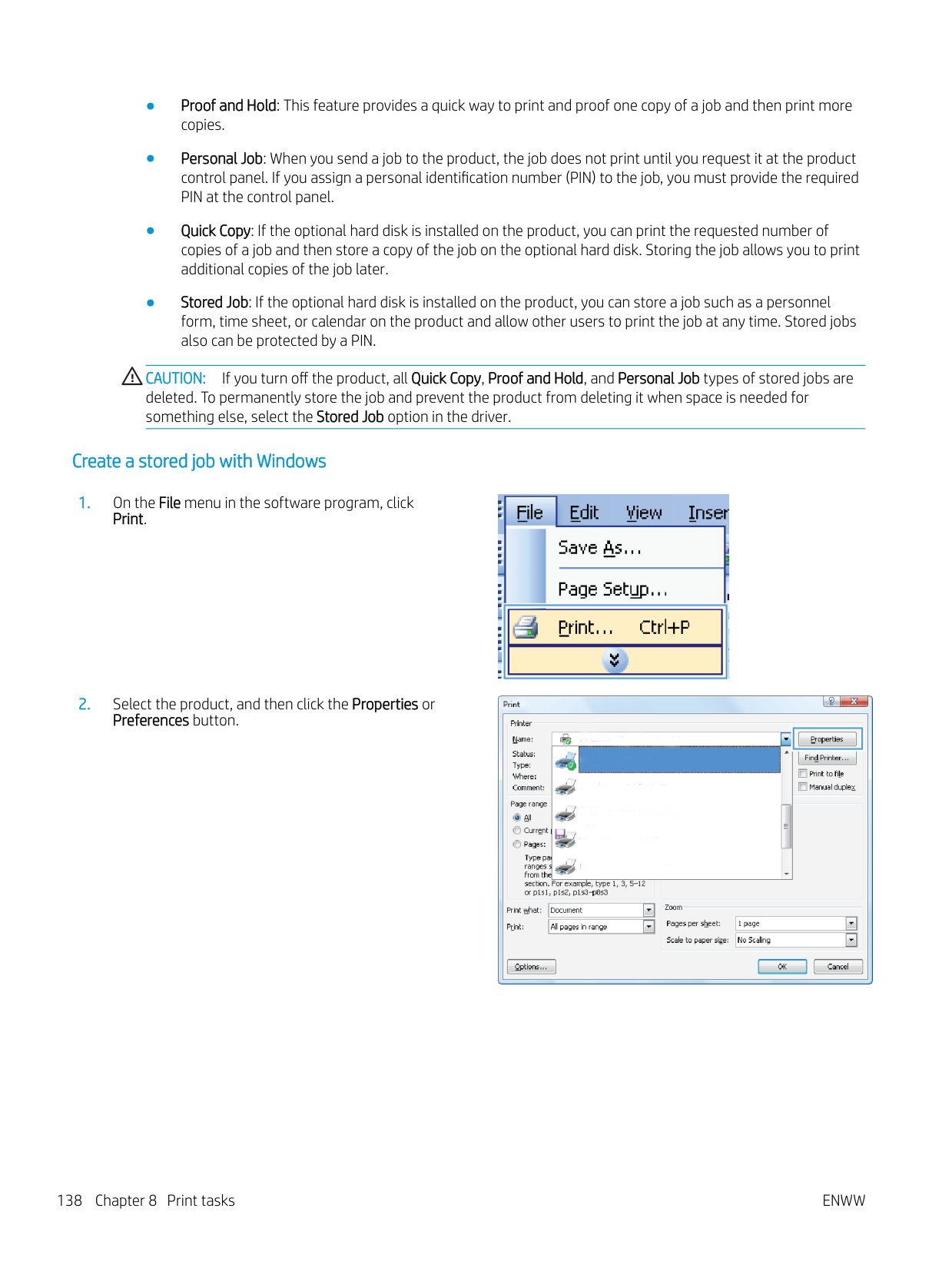
Table 9-3 Print tab Menu Description Retrieve from USB Setup Enable or disable the Retrieve Job from USB menu on the control panel. Manage Stored Jobs Enable or disable the ability to store jobs in the product memory, and configure job-storage
options. Adjust Paper Types Adjust the print mode for each type of paper that the product supports. General Print Settings Establish default settings for print jobs. Manage Trays View or change paper type and size settings for each tray, and adjust general settings for
all trays.
##### Troubleshooting tab
Table 9-4 HP Embedded Web Server Troubleshooting tab Menu Description Reports and Tests Print a variety of reports to help you solve problems with the product. Calibrations Select an option to calibrate the product immediately. Firmware upgrade Download and install product firmware upgrade files. Restore Factory Settings Restore product settings to factory defaults.
##### Security tab
Table 9-5 HP Embedded Web Server Security tab Menu Description General Security Configure an administrator password so you can restrict access to certain features on the
product. Enable or disable the walk-up USB printing port on the control panel or the USB connectivity port on the formatter for printing directly from a computer.
Access Control Configure access to product functions for specific individuals or groups. Also select the
method by which individuals sign in to the product.
Protect Stored Data Configure and manage the internal hard drive for the product. This product includes an encrypted hard drive for maximum security. Configure settings for jobs that are stored on the product hard drive.
Certificate Management Install and manage security certificates for access to the product and the network.
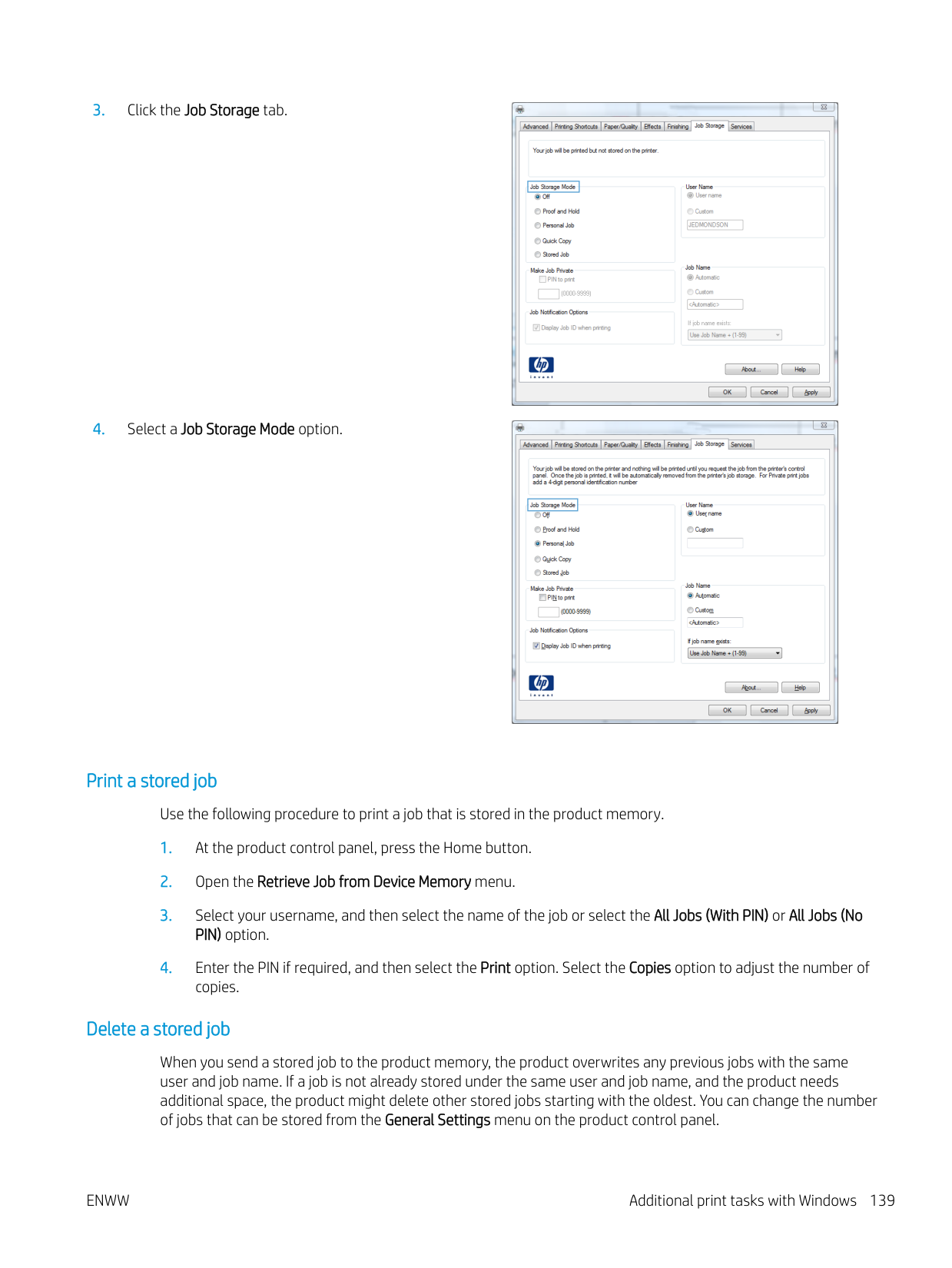
##### HP Web Services tab
Use the HP Web Services tab to configure and enable HP Web Services for this product. You must enable HP Web Services to use the HP ePrint feature.
##### Networking tab
Use the Networking tab to change network settings for the product when it is connected to an IP-based network. This tab does not appear if the product is connected to other types of networks.
##### Other Links list
| | |---|
NOTE: You can configure which items appear in the Other Links list by using the Edit Other Links menu on the General tab. The following items are the default links.
Table 9-6 HP Embedded Web Server Other Links list Menu Description Product Support Connects to the support site for the product, from which you can search for help regarding
various topics.
HP Instant Support Connects you to the HP Web site to help you find solutions to product problems.
Use HP Web Jetadmin software
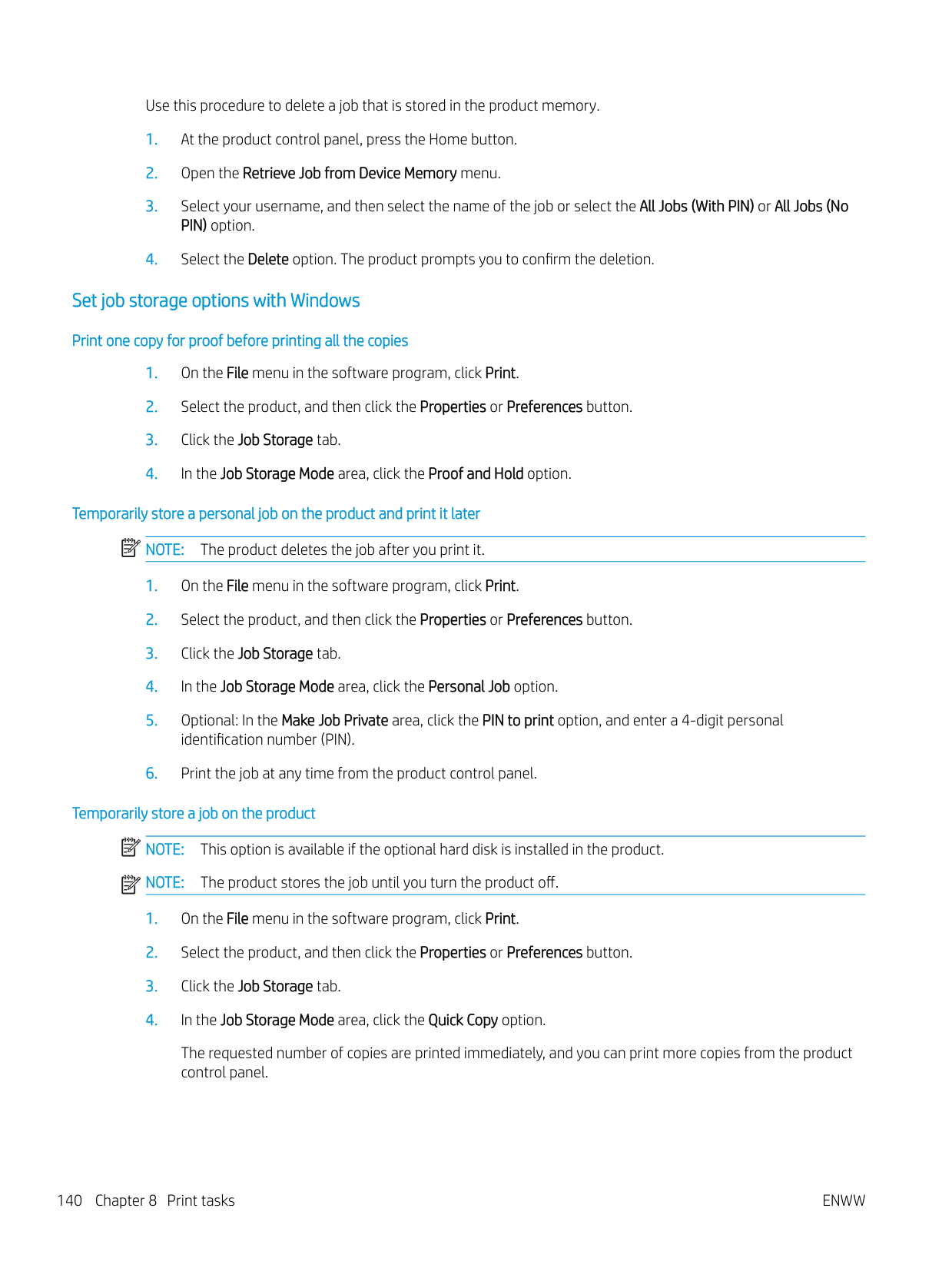
HP Web Jetadmin is an award-winning, industry-leading tool for efficiently managing a wide variety of networked HP devices, including printers, multifunction products, and digital senders. This single solution allows you to remotely install, monitor, maintain, troubleshoot, and secure your printing and imaging environment ultimately increasing business productivity by helping you save time, control costs, and protect your investment.
HP Web Jetadmin updates are periodically made available to provide support for specific product features. Visit www.hp.com/go/webjetadmin and click the Self Help and Documentation link to learn more about updates.
ENWW Use HP Web Jetadmin software 151
Product security features
#### Security statements
The product supports security standards and recommended protocols that help you keep the product secure, protect critical information on your network, and simplify the way you monitor and maintain the product.
For in-depth information about HP's secure imaging and printing solutions, visit www.hp.com/go/secureprinting. The site provides links to white papers and FAQ documents about security features.
##### IP Security
IP Security (IPsec) is a set of protocols that control IP-based network traffic to and from the product. IPsec provides host-to-host authentication, data integrity, and encryption of network communications.
For products that are connected to the network and have an HP Jetdirect print server, you can configure IPsec by using the Networking tab in the HP Embedded Web Server.
#### Secure the HP Embedded Web Server
Assign an administrator password for access to the product and the HP Embedded Web Server so that unauthorized users cannot change the product settings.
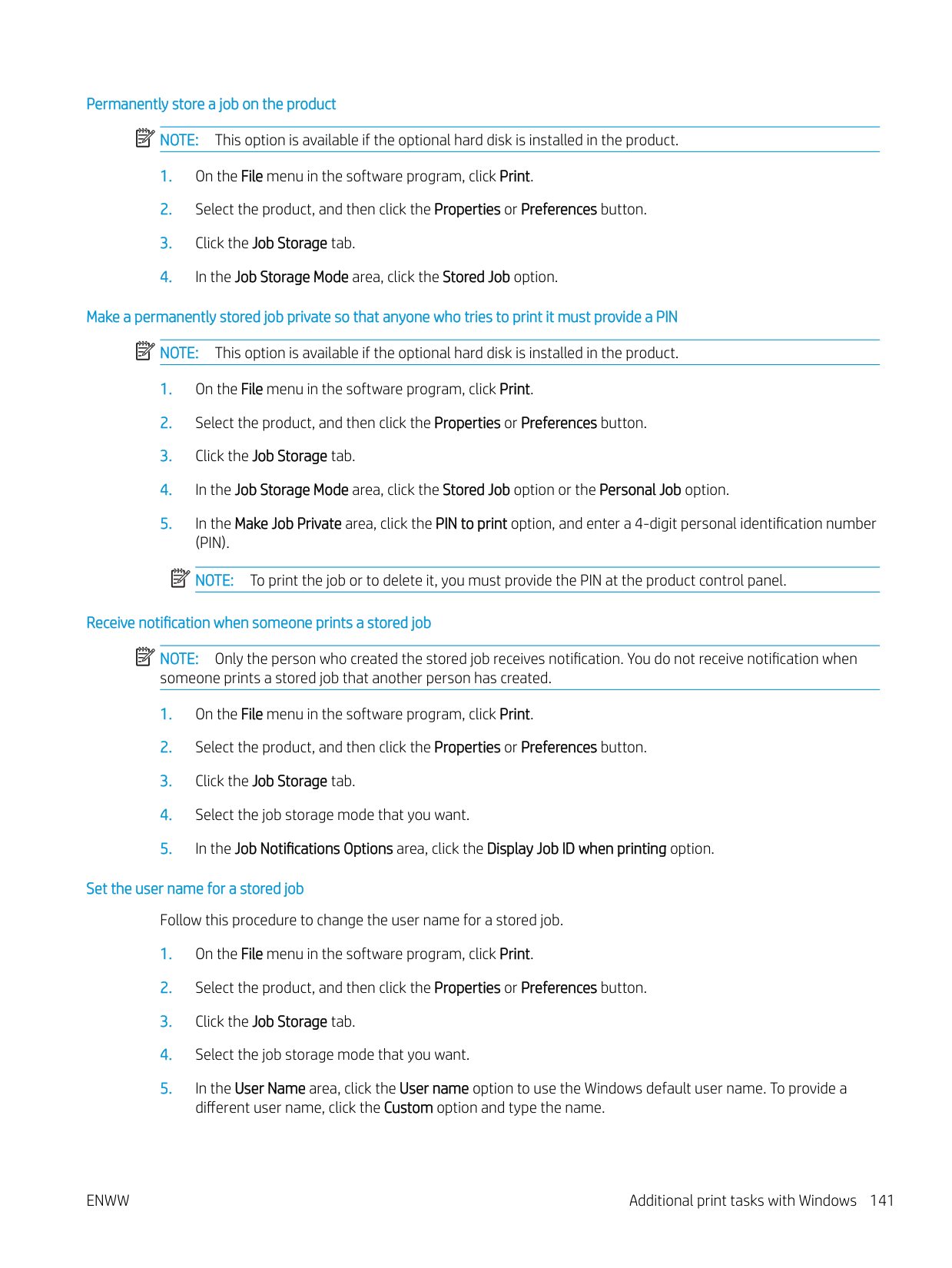
NOTE: If you are changing an existing password, you must first type the existing password in the Old Password field.
| | |---|
#### Encryption support: HP Encrypted High Performance Hard Disks (xh models only)
This product includes an encrypted hard disk. This hard disk provides hardware-based encryption so you can securely store sensitive print, copy, and scan data without impacting product performance. This hard disk uses the latest Advanced Encryption Standard (AES) and has versatile time-saving features and robust functionality.
Use the Security menu in the HP Embedded Web Server to configure the disk. For more information about the encrypted hard disk, see the HP High-Performance Secure Hard Disk Setup Guide.
#### Secure stored jobs
You can protect jobs that are stored on the product by assigning a PIN to them. Anyone who tries to print these protected jobs must first enter the PIN at the product control panel.
#### Lock the control panel menus
You can lock various features on the control panel by using the HP Embedded Web Server.
#### Lock the formatter
The formatter area, on the back of the product, has a slot that you can use to attach a security cable. Locking the formatter prevents someone from removing valuable components from it.
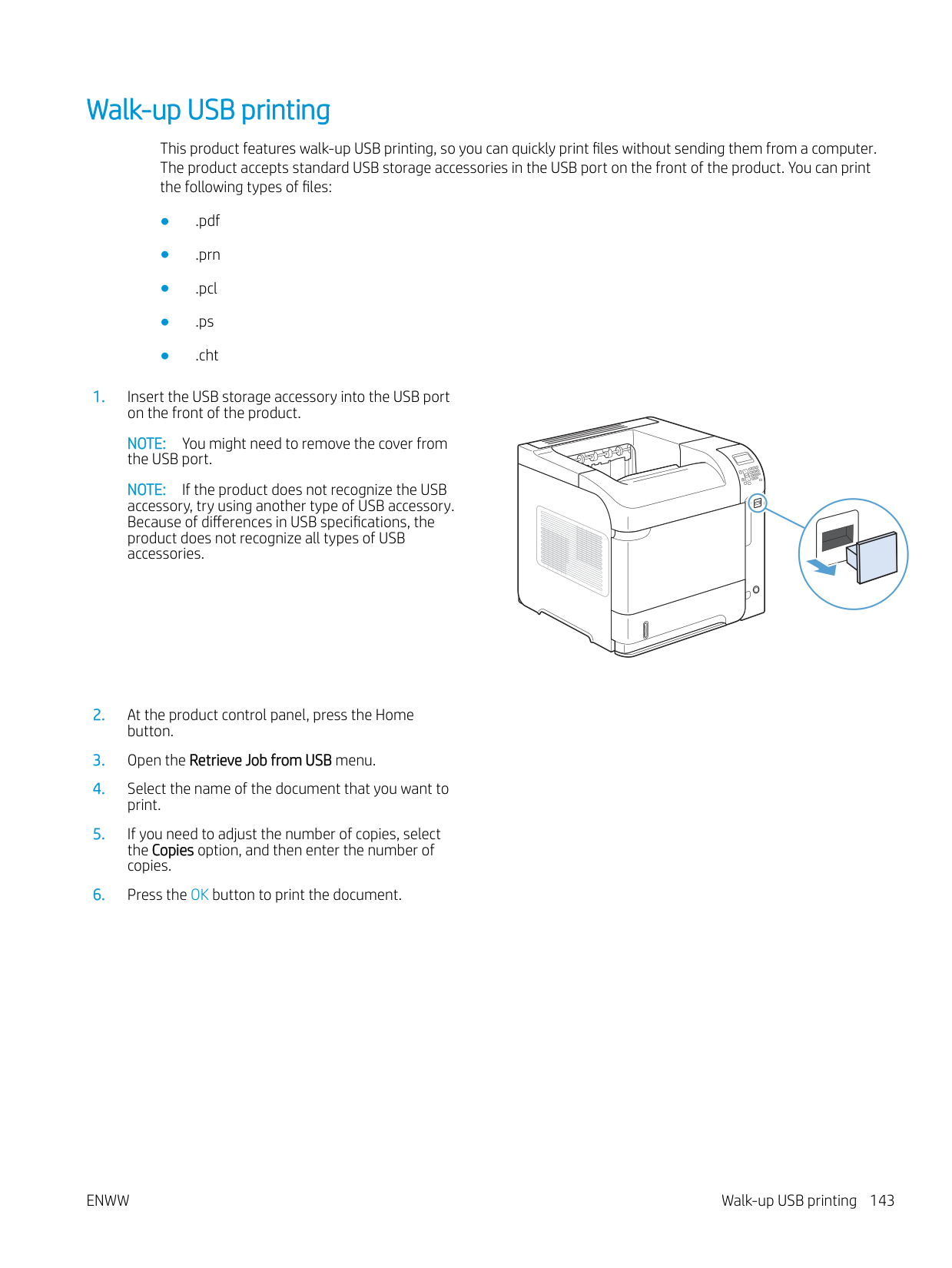
ENWW Product security features 153
Economy settings
#### Print with EconoMode
This product has an EconoMode option for printing drafts of documents. Using EconoMode can use less toner and decrease the cost per page. However, using EconoMode can also reduce print quality.
HP does not recommend the full-time use of EconoMode. If EconoMode is used full-time, the toner supply might outlast the mechanical parts in the print cartridge. If print quality begins to degrade and is no longer acceptable, consider replacing the print cartridge.
| | |---|
NOTE: This feature is available with the PCL 6 printer driver for Windows. If you are not using that driver, you can enable the feature by using the HP Embedded Web Server.

##### Set the sleep timer
Use the sleep timer feature to cause the product to enter sleep mode automatically after a predefined period of inactivity.
c. Energy Settings d. Sleep Timer Settings e. Sleep/Auto Off After
| | |---|
##### Set the sleep schedule
Use the sleep schedule feature to reduce power consumption when the product is inactive. You can schedule specific times of the day at which the product enters sleep mode or wakes from sleep mode. You can customize this schedule for each day of the week. To set up a sleep schedule, use the HP Embedded Web Server.
ENWW Economy settings 155
Install memory and internal USB devices
#### Overview
The formatter has the following open slots and ports for expanding the product's capabilities:
To find out how much memory is installed in the product or to find out what is installed in the USB ports, print a configuration page.
#### Install memory
You might want to add more memory to the product if you often print complex graphics, print PostScript (PS) documents, or use many downloaded fonts. Added memory also gives you more flexibility in supporting jobstorage features, such as quick copying.
| | |---|
NOTE: Single inline memory modules (SIMMs) used in previous HP LaserJet products are not compatible with the product.
##### Install product memory
This product has one DIMM slot.
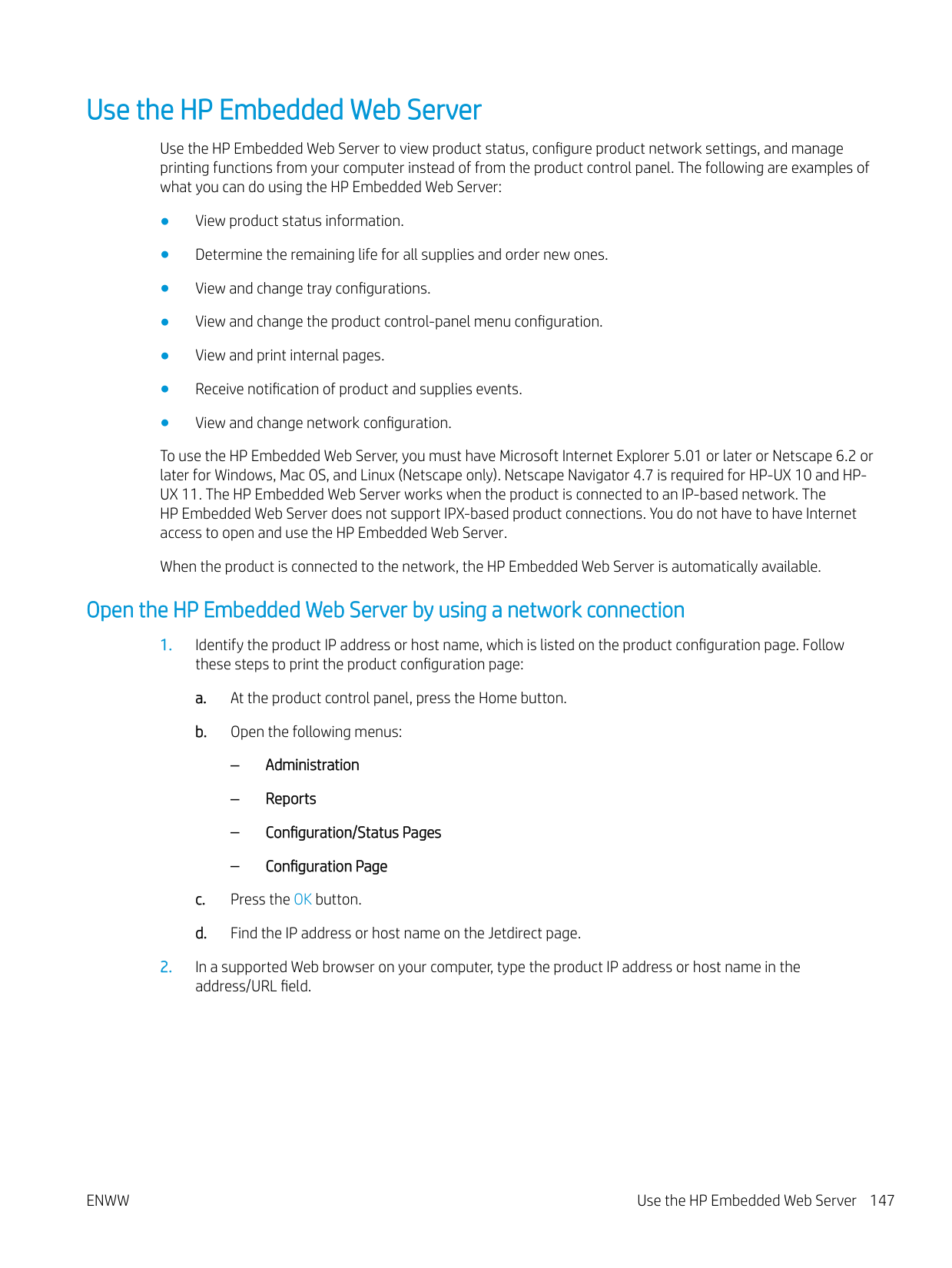
CAUTION: Static electricity can damage electronic components. When handling DIMMs, either wear an antistatic wrist strap or frequently touch the surface of the DIMM antistatic package, then touch bare metal on the product.
CAUTION: To reduce the possibility of damage caused by static electricity, always wear an electrostatic discharge (ESD) wrist strap or touch the surface of the antistatic package before handling DIMMs.
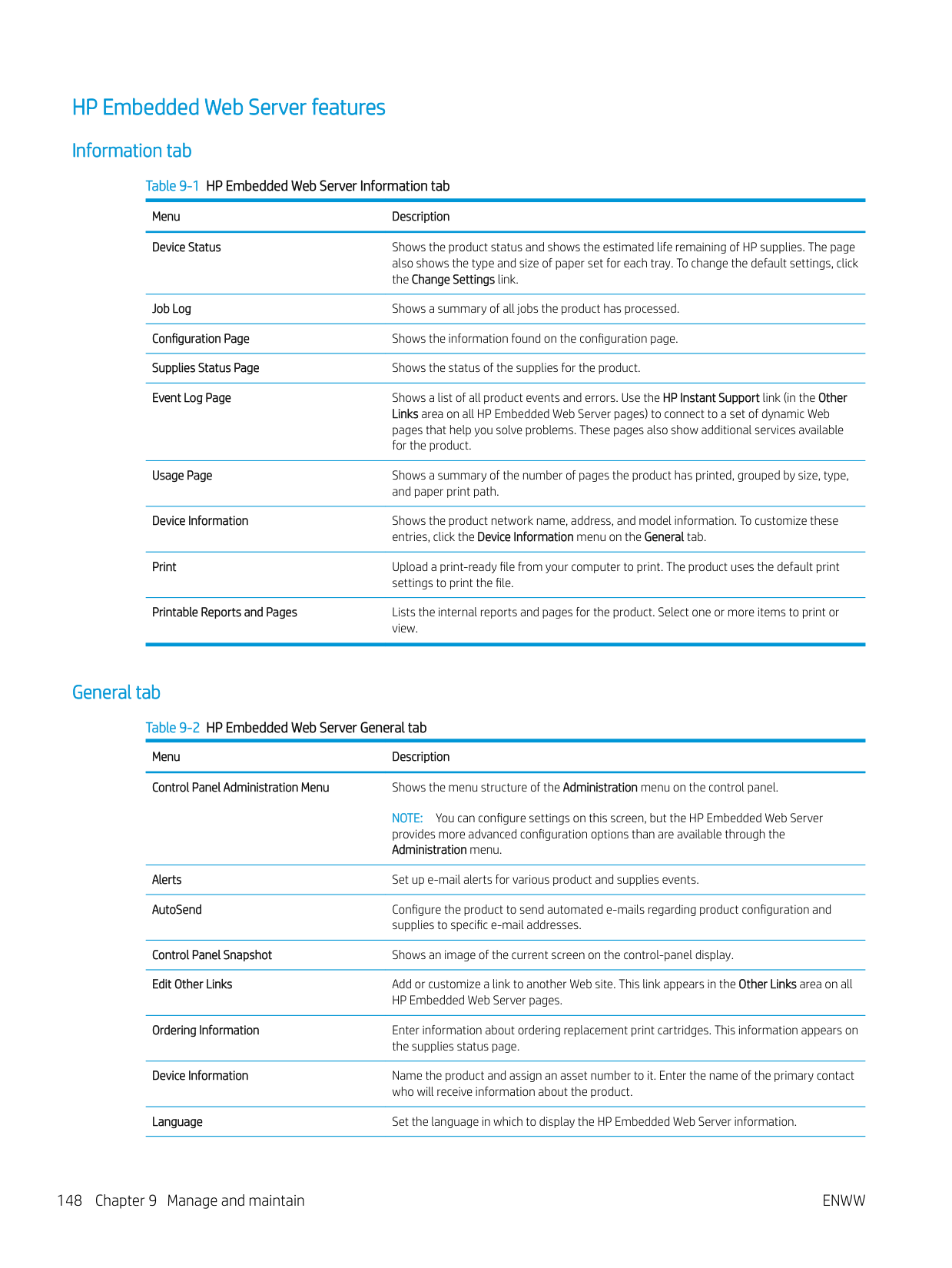
#### Enable memory
Windows XP, Windows Server 2003, Windows Server 2008, and Windows Vista
NOTE: If the memory is not updated correctly after using the Update Now option, you can manually select the total amount of memory installed in the product in the Installable Options area.
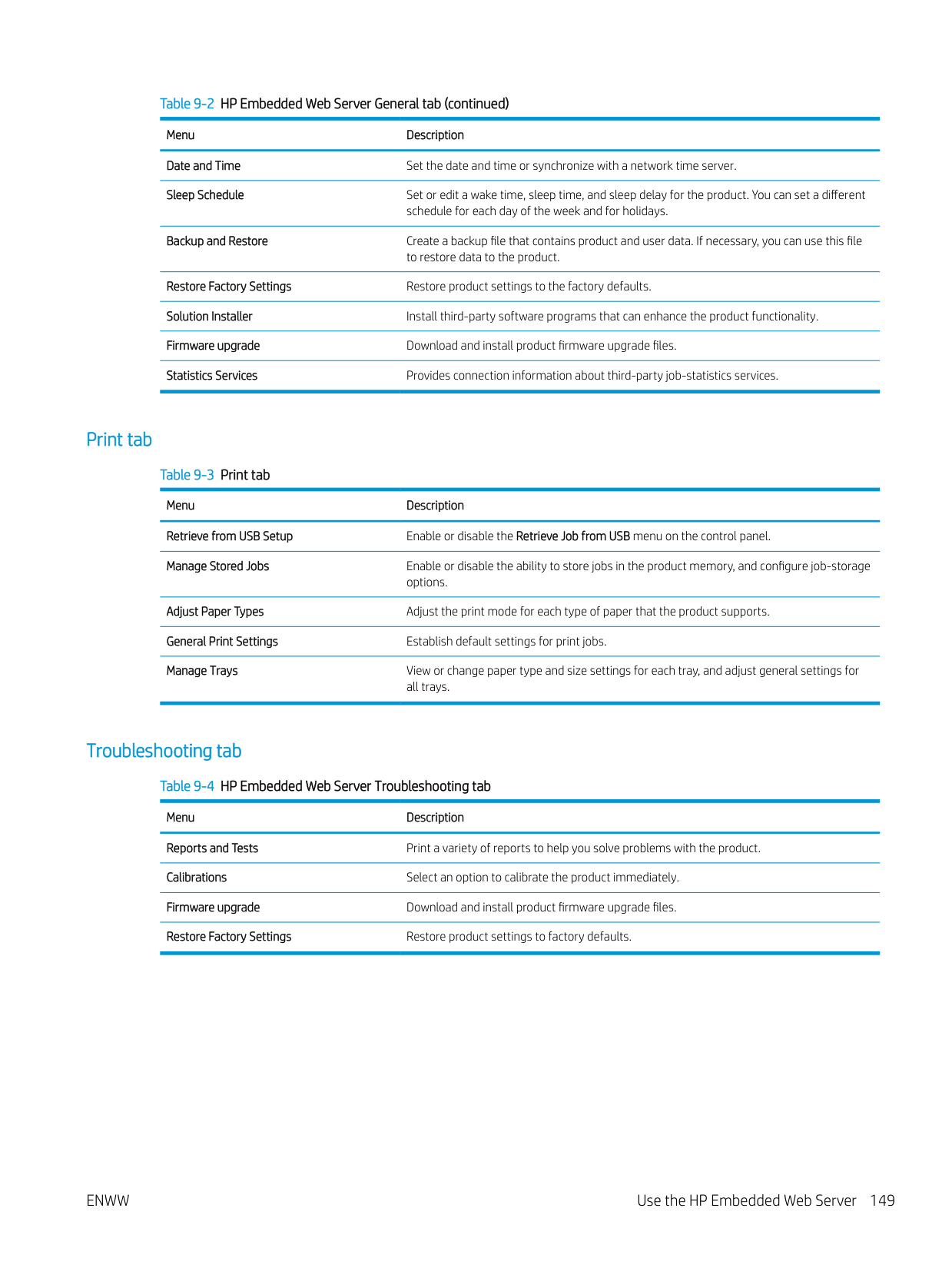
The Update Now option overwrites any existing product configuration settings.
Windows 7 1. Click Start.
NOTE: If the memory is not updated correctly after using the Update Now option, you can manually select the total amount of memory installed in the product in the Installable Options area.
The Update Now option overwrites any existing product configuration settings.
Mac OS X 10.5 and 10.6 1. From the Apple menu , click the System Preferences menu and then click the Print & Fax icon.
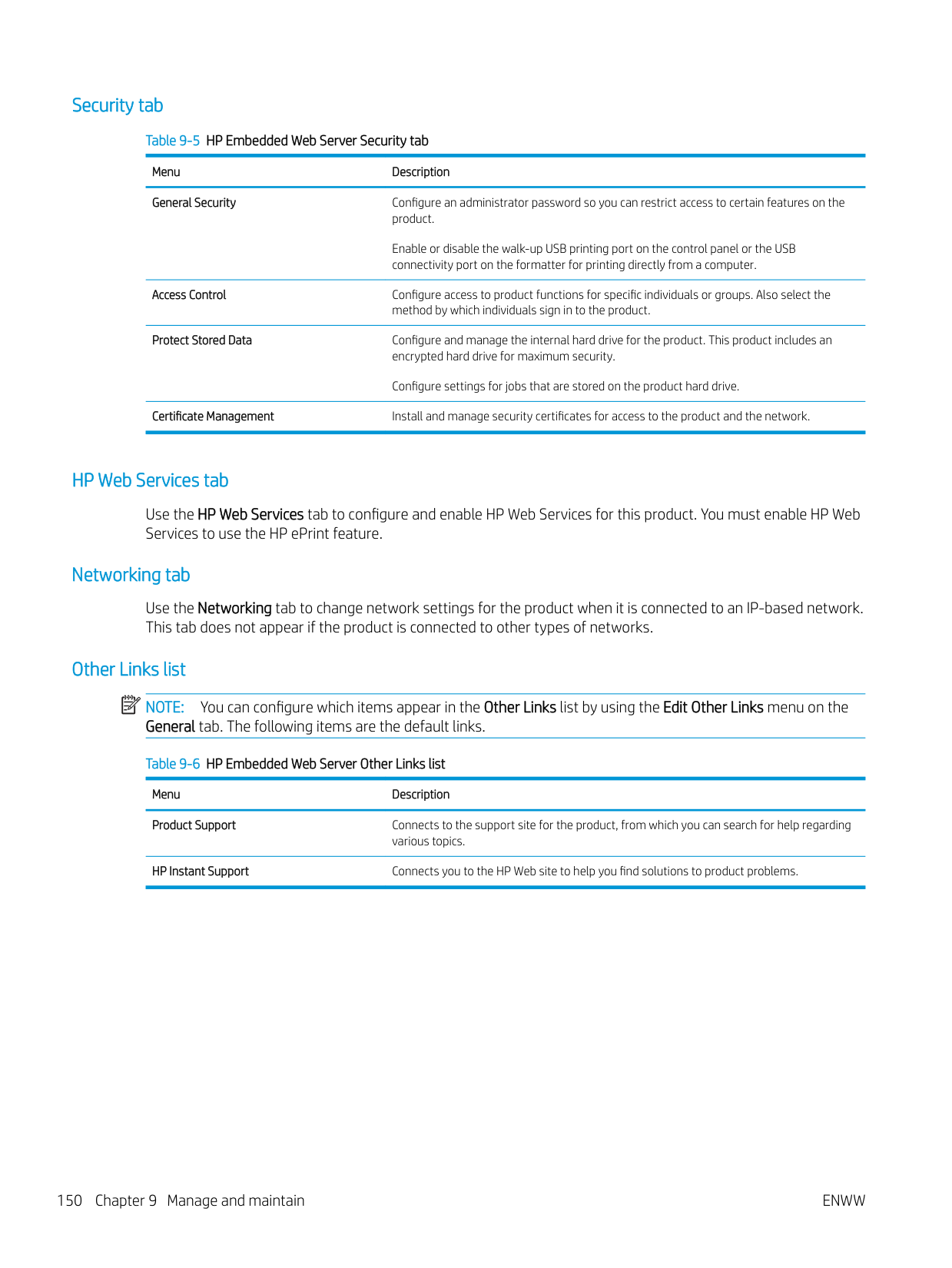
#### Check DIMM installation
After installing the DIMM, make sure that the installation was successful.
| | |---|
NOTE: If you installed a product language (personality), check the "Installed Personalities and Options" section on the configuration page. This area should list the new product language.
#### Memory allocation
Utilities or jobs that you download to the product sometimes include resources (for example, fonts, macros, or patterns). Resources that are internally marked as permanent remain in the product memory until you turn the product off.
Use the following guidelines if you use the page description language (PDL) ability to mark resources as permanent. For technical details, see an appropriate PDL reference for PCL or PS.
● Mark resources as permanent only when it is absolutely necessary that they remain in memory while the
product is turned on.
● Send permanent resources to the product only at the beginning of a print job and not while the product is
printing.
| | |---|
NOTE: Overusing permanent resources or downloading them while the product is printing might affect product performance or the ability to print complex pages.
#### Install internal USB devices
The product has two internal USB ports.
CAUTION: To prevent static electricity from damaging the formatter board, hold the metal access door with one hand while you insert the USB device with the other hand. If you move away from the product during this procedure, be sure to touch the metal access door to discharge electricity before continuing.
Clean the product
To clean the product exterior, use a soft, water-moistened cloth.
#### Clean the paper path
Product updates
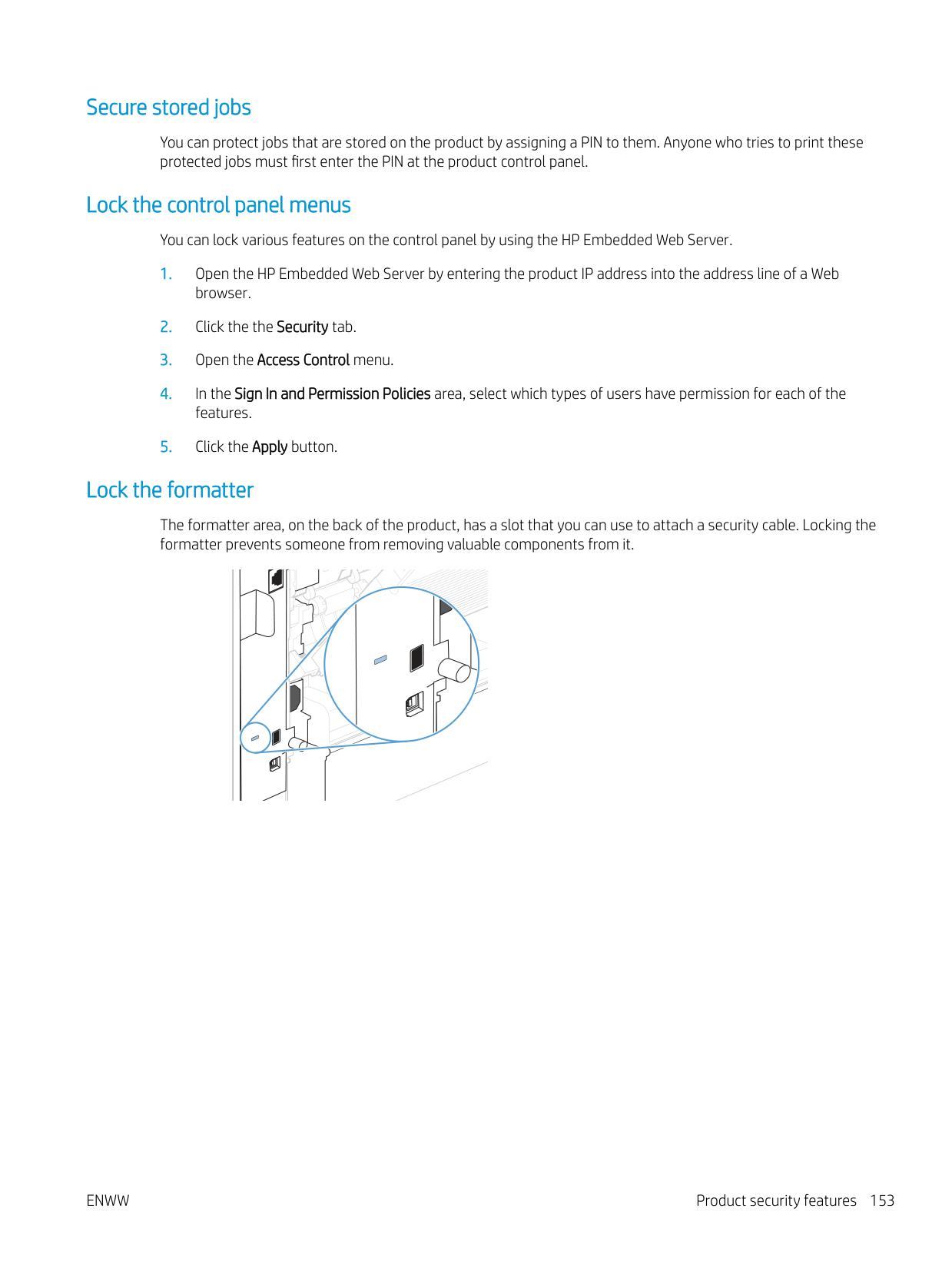
HP regularly updates features that are available in the product firmware. To take advantage of the most current features, update the product firmware. To download the most recent firmware upgrade, go to www.hp.com/go/ lj600Series_firmware.
ENWW Clean the product 161
10 Solve problems
ENWW 163
Self help
In addition to the information in this guide, other sources are available that provide helpful information.
Quick Reference Topics Several Quick Reference Topics for this product are available at this Web site: www.hp.com/ support/lj600Series
You can print these topics and keep them near the product. They are a handy reference for procedures that you perform frequently.
Control panel help The control panel has built-in help that guides you through several tasks, such as replacing print cartridges and clearing jams. To open the Help system, press the Help button .
Solve problems checklist
Follow these steps when trying to solve a problem with the product.
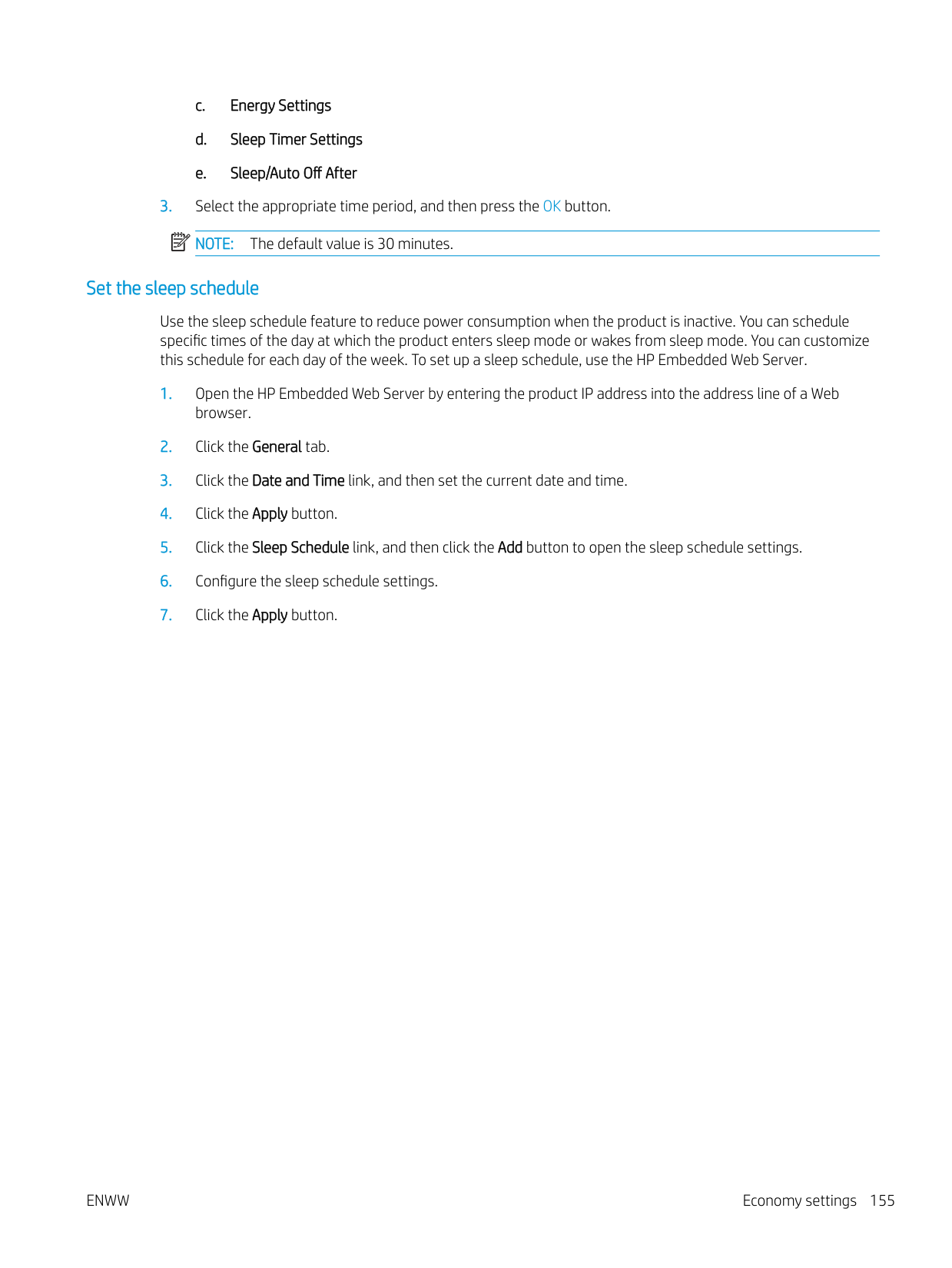
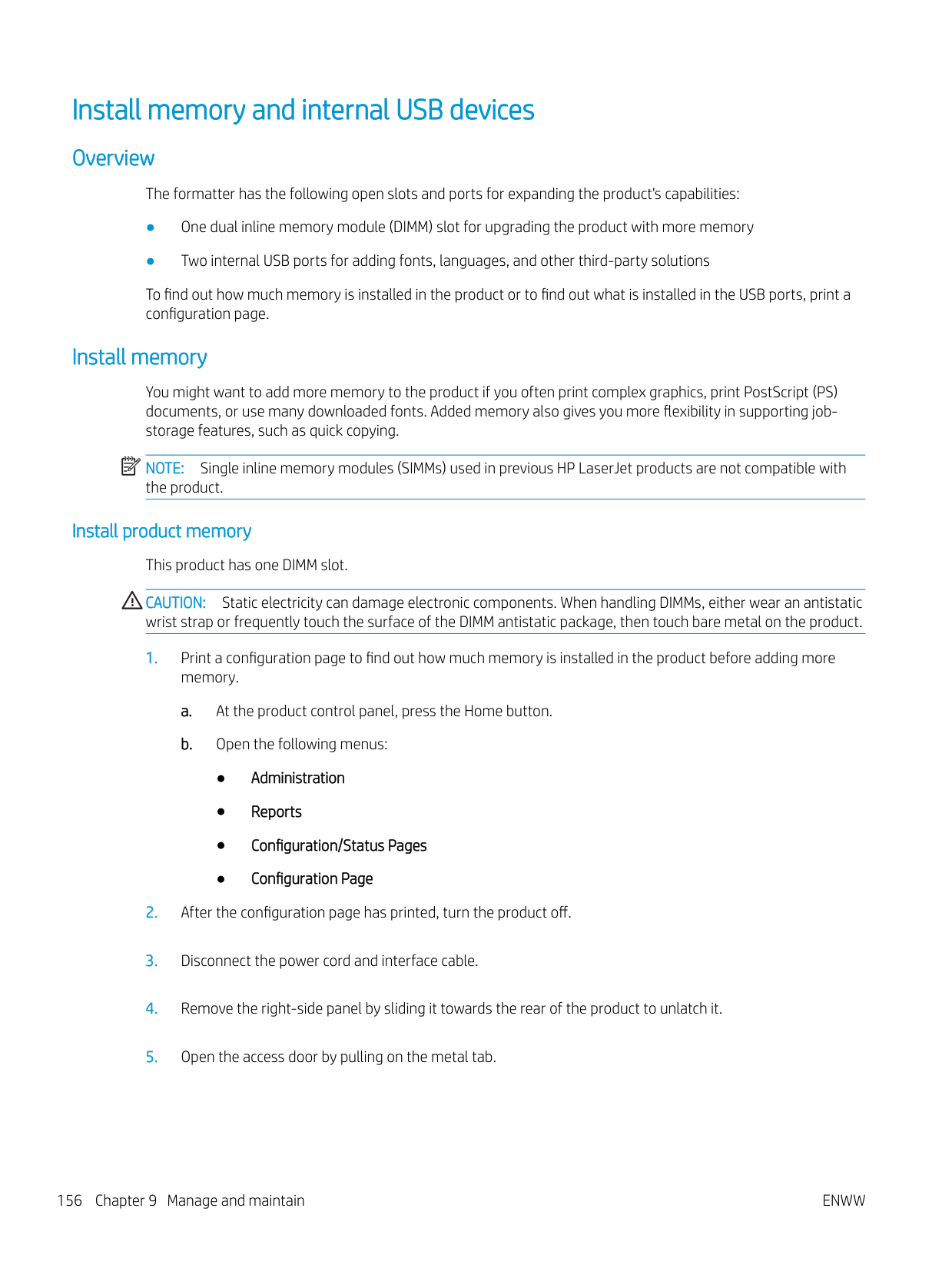
ENWW Solve problems checklist 165
Windows: Click Start, click Settings, and then click Printers or Printers and Faxes. Double-click the name of the product.
-orMac OS X: Open the Printer Setup Utility or the Print & Fax list, and double-click the line for the product.
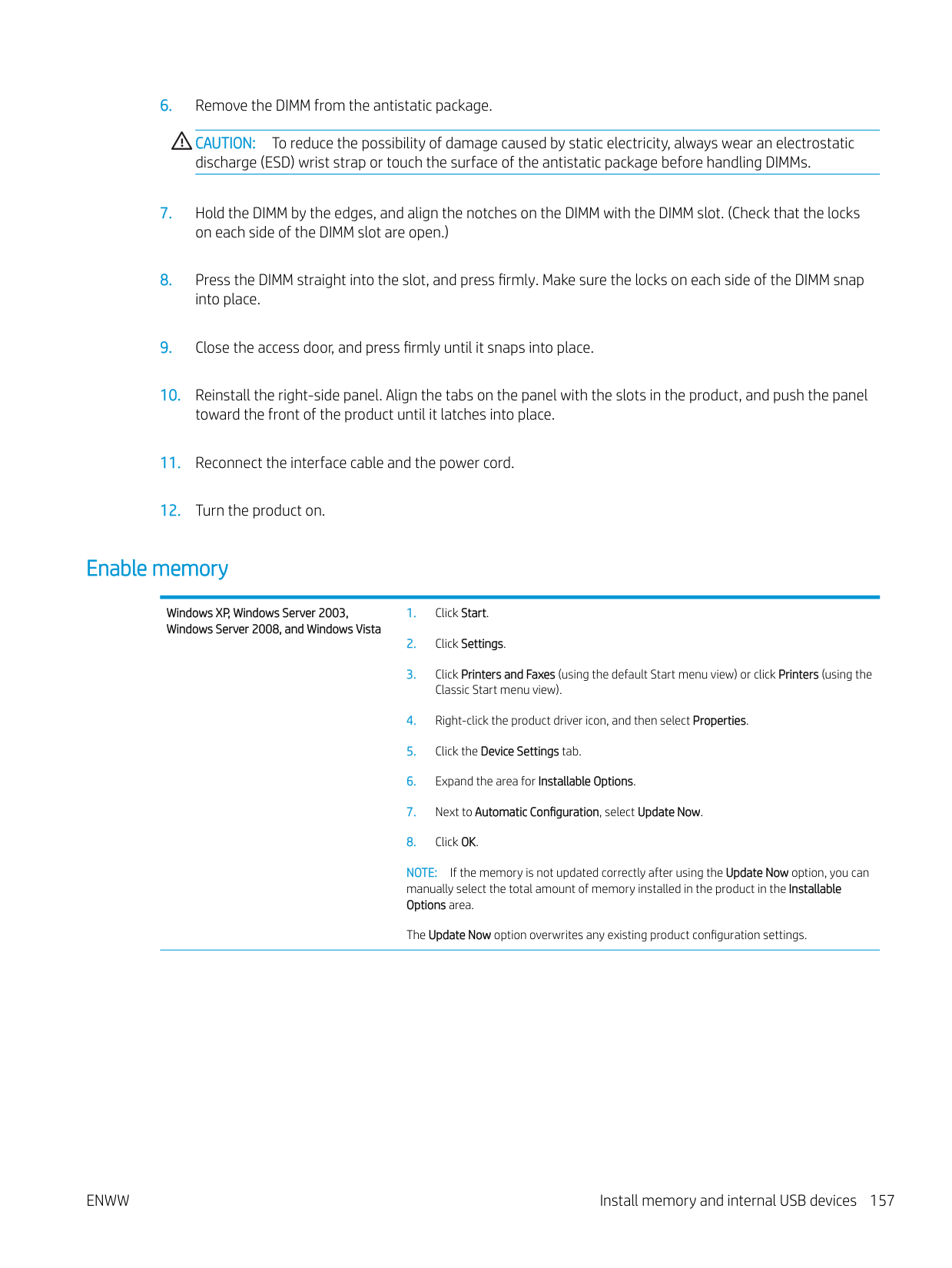
#### Factors that affect product performance
Several factors affect the time it takes to print a job:
Restore factory settings
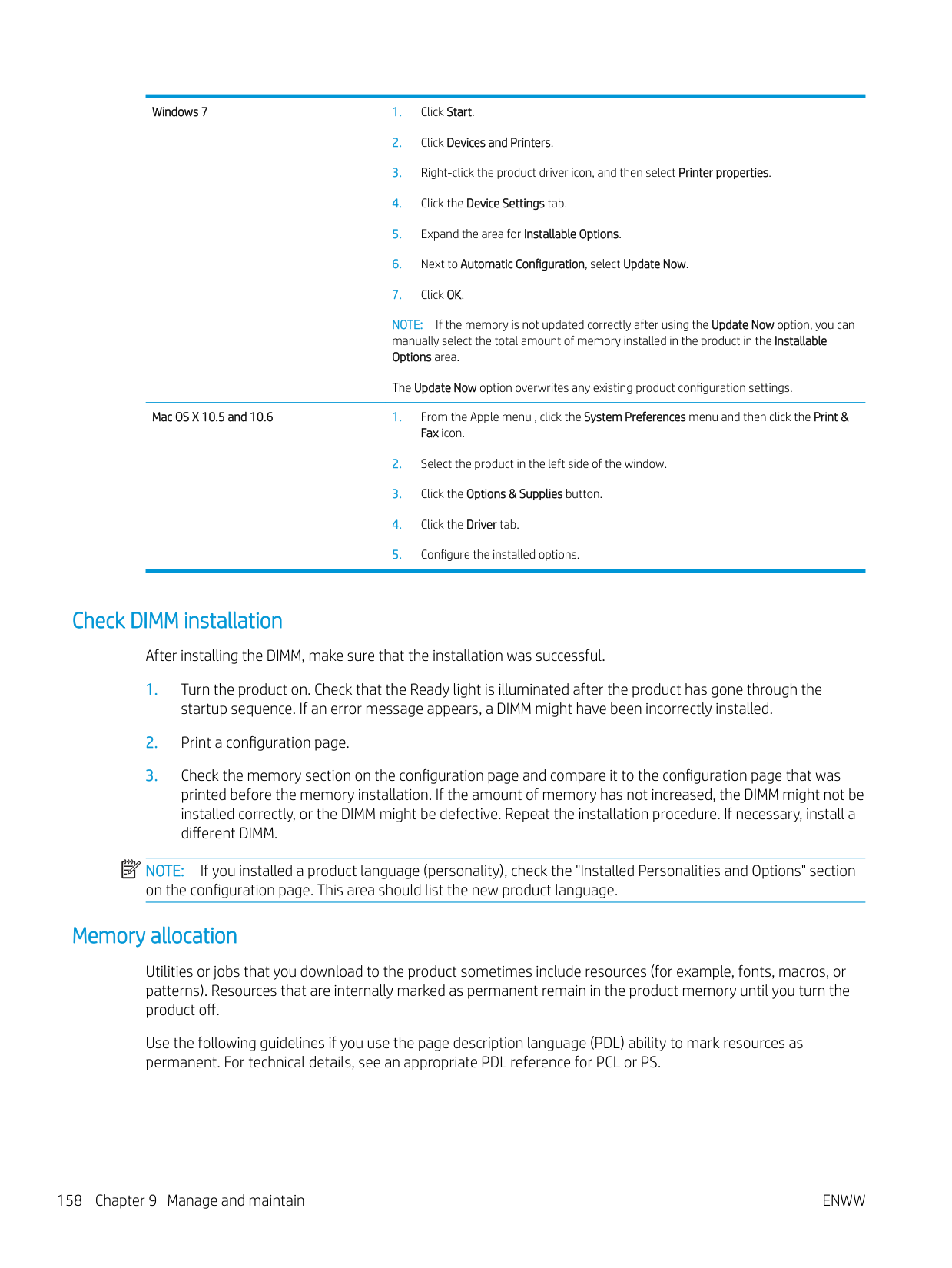
ENWW Restore factory settings 167
Interpret control-panel messages
#### Control-panel message types
Four types of control-panel messages can indicate the status of or problems with the product.
Message type Description Status messages Status messages reflect the current state of the product. They inform you of normal product operation and
require no interaction to clear them. They change as the state of the product changes. Whenever the product is ready, not busy, and has no pending warning messages, the Ready status message appears if the product is online.
Warning messages Warning messages inform you of data and print errors. These messages typically alternate with the Ready or status messages and remain until you press the OK button. Some warning messages are clearable. If the Clearable Warnings menu in the Display Settings menu is set to the Job option , the next print job clears these messages.

Error messages Error messages communicate that some action must be performed, such as adding paper or clearing a jam.
Some error messages are auto-continuable. If the Continuable Events menu in the Display Settings menu is set to the Auto-Continue option, the product continues normal operation after an auto-continuable error message appears for 10 seconds.
NOTE: Pressing any button during the 10-second auto-continuable error message overrides the autocontinue feature, and the button function takes precedence. For example, pressing the Stop button pauses printing and offers the option to cancel the print job.
Critical-error messages Critical error messages inform you of a product failure. You can clear some of these messages by turning the product off and then on. These messages are not affected by the Auto-Continue setting. If a critical error persists, service is required.
#### Control-panel messages
The product provides robust control panel messaging. When a message appears on the control panel, follow the on-screen instructions to resolve the issue. If the product displays an “Error” or “Attention” message, and no steps are shown to resolve the issue, turn the product off then on. Contact HP support if you continue to experience issues with the product.
For additional information on a variety of topics, press the Help button.
Paper feeds incorrectly or becomes jammed
#### The product does not pick up paper
If the product does not pick up paper from the tray, try these solutions.
#### The product picks up multiple sheets of paper
If the product picks up multiple sheets of paper from the tray, try these solutions.
#### Prevent paper jams
To reduce the number of paper jams, try these solutions.
ENWW Paper feeds incorrectly or becomes jammed 169
Clear jams
#### Jam locations
If a jam message appears on the control-panel display, look for jammed paper or other print media in the locations that are indicated in the following illustration. Then follow the procedure for clearing the jam. You might need to look for paper in other locations than those that are indicated in the jam message. If the location of the jam is not obvious, look first in the top-cover area underneath the print cartridge.
When clearing jams, be very careful not to tear jammed paper. If a small piece of paper is left in the product, it could cause additional jams.

| | |---|
NOTE: Loose toner might remain in the product after a jam and cause temporary print-quality problems. These problems should clear up within a few pages.
#### Clear jams from the output areas
Use these procedures to clear jams that occur in the rear output bin or in the optional stacker, stapler/stacker, or 5-bin mailbox.
##### Clear jams from the rear output bin
NOTE: If most of the paper is still inside the product, it might be easier to remove it through the top-cover area.
NOTE: If the jammed paper is difficult to remove, try opening the top cover all the way to release pressure on the paper. If the sheet has torn, or if you still cannot remove it, clear the jam from the fuser area.
##### Clear jams from the optional stacker or stapler/stacker
Paper jams can occur in the optional stacker or the optional stapler/stacker. Staple jams can occur only in the optional stapler/stacker.
###### Clear paper jams from the optional stacker or stapler/stacker
NOTE: The output bin must be pushed down into the lowest position for printing to continue.
###### Clear staple jams from the optional stapler/stacker

The stapler needs to reload after clearing a staple jam, so the first few documents might not be stapled. If a print job is sent and the stapler is jammed or is out of staples, the job will still print as long as the path to the stacker bin is not blocked.
##### Clear jams from the optional 5-bin mailbox
#### Clear jams from the fuser area
Use this procedure only in these situations:
● Paper has jammed inside the fuser and cannot be removed from the top-cover area or the rear-output
area.
● A sheet of paper has torn while you were trying to clear a jam from the fuser.
WARNING! The fuser is very hot. To avoid minor burns, allow the fuser to cool before removing it from the product.
If paper is not visible, push up on the two blue levers on the sides of the fuser, and pull the fuser straight out.
CAUTION: Do not use a sharp or metal object to clear paper from the fuser area. You might damage the fuser.
#### Clear jams from the optional duplexer
#### Clear jams from the trays
Use these procedures to clear jams from the trays.
##### Clear jams from Tray 1
| | | |---|---| | | |
##### Clear jams from Tray 2 or an optional 500-sheet tray
##### Clear jams from the optional 1,500-sheet tray
#### Clear jams from the optional envelope feeder
This procedure applies only to jams that occur when you are using an optional envelope feeder.
#### Clear jams from the top-cover and print-cartridge areas
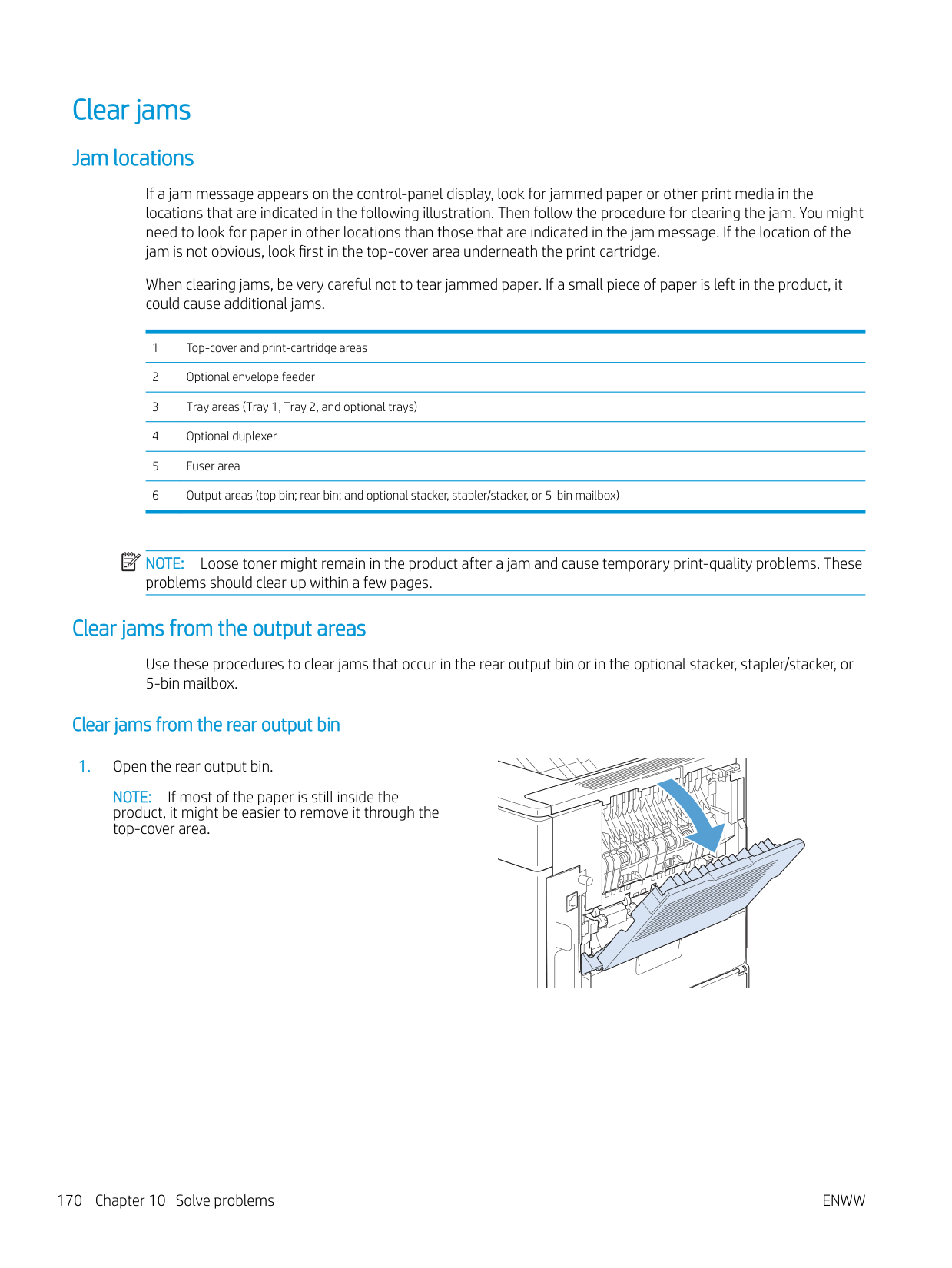
CAUTION: To prevent damage to the print cartridge, do not expose it to light for more than a few minutes. Cover the print cartridge with a sheet of paper while it is outside of the product.
#### Change jam recovery
This product provides a jam recovery feature that reprints jammed pages. The following options are available:
NOTE: When using this option, if the product runs out of paper and the job is being printed on both sides, some pages can be lost.
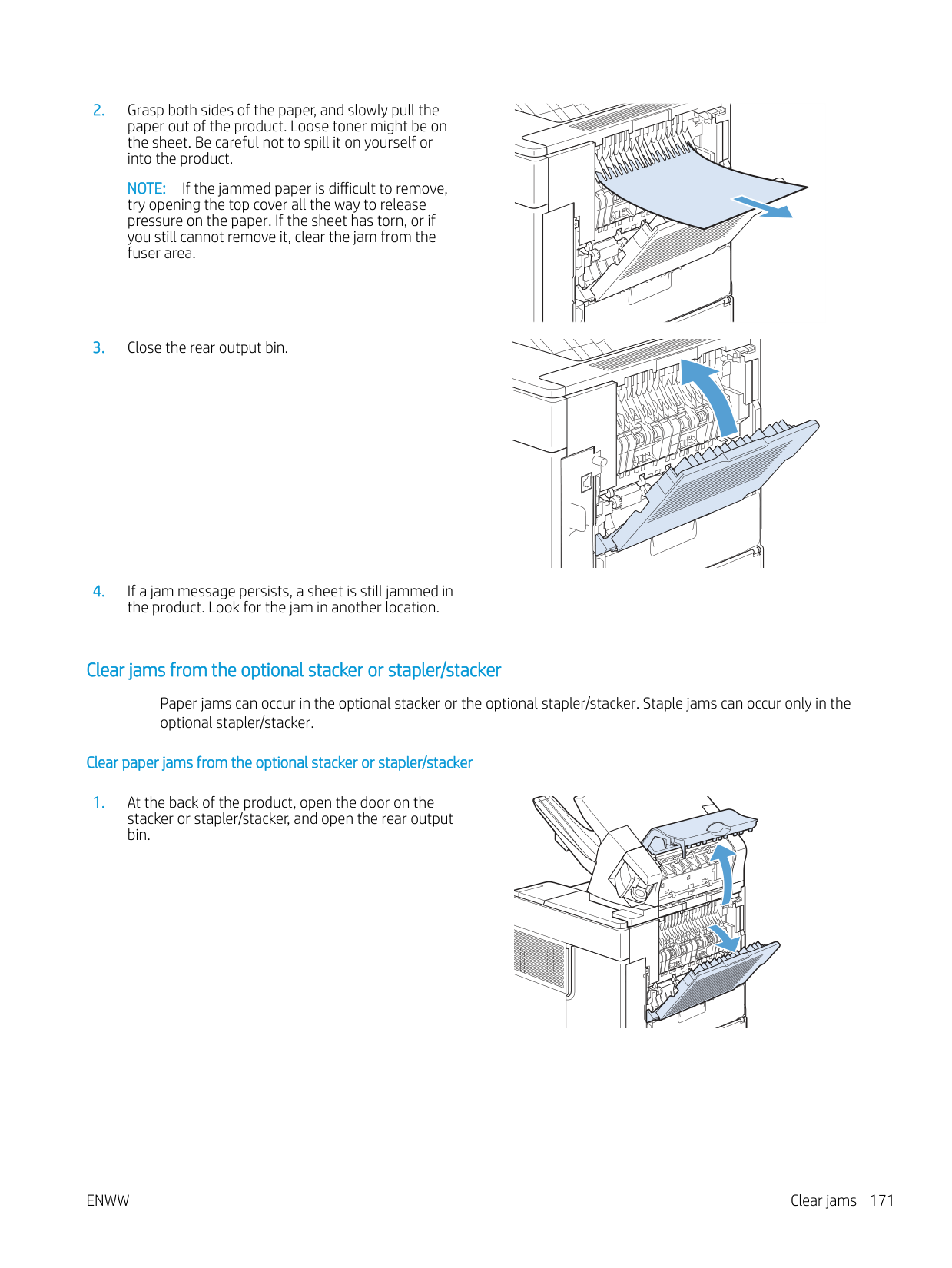
| | |---|
Improve print quality
You can prevent most print-quality problems by following these guidelines.
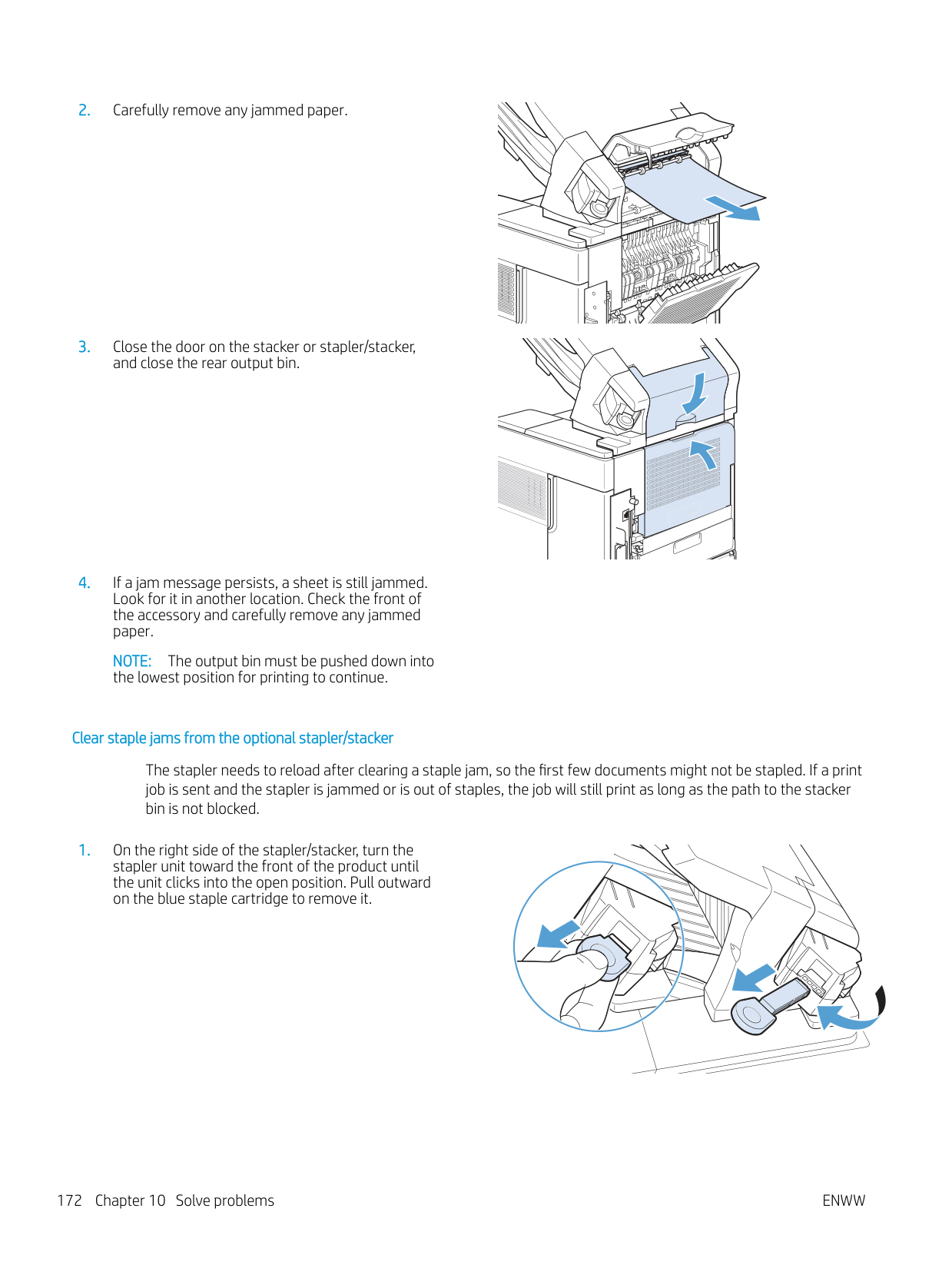
#### Select a paper type
#### Use paper that meets HP specifications
Use different paper if you are having any of the following problems:
Always use a paper type and weight that this product supports. In addition, follow these guidelines when selecting paper:
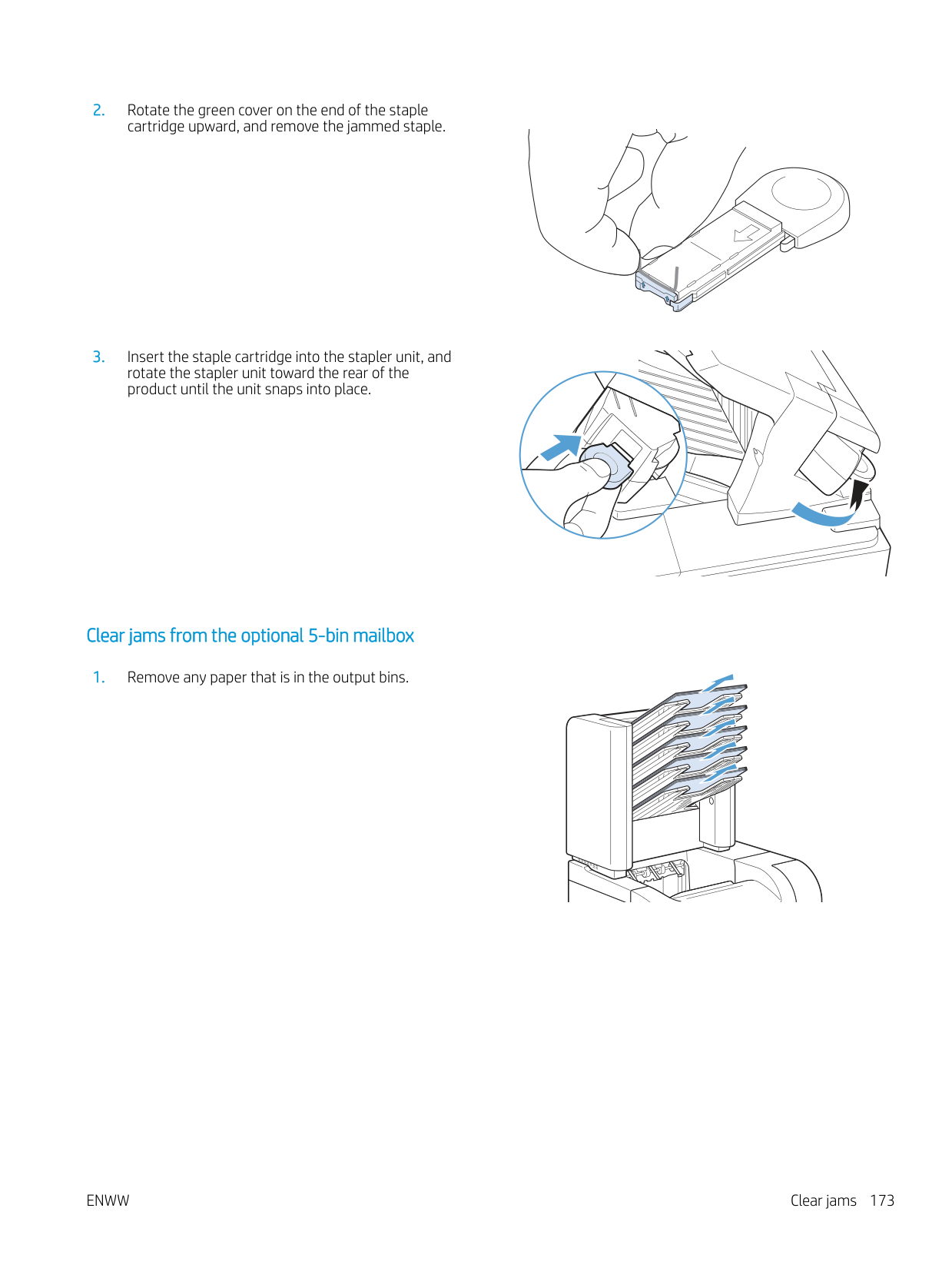
#### Print a cleaning page
Print a cleaning page to remove dust and excess toner from the paper path if you are having any of the following problems:
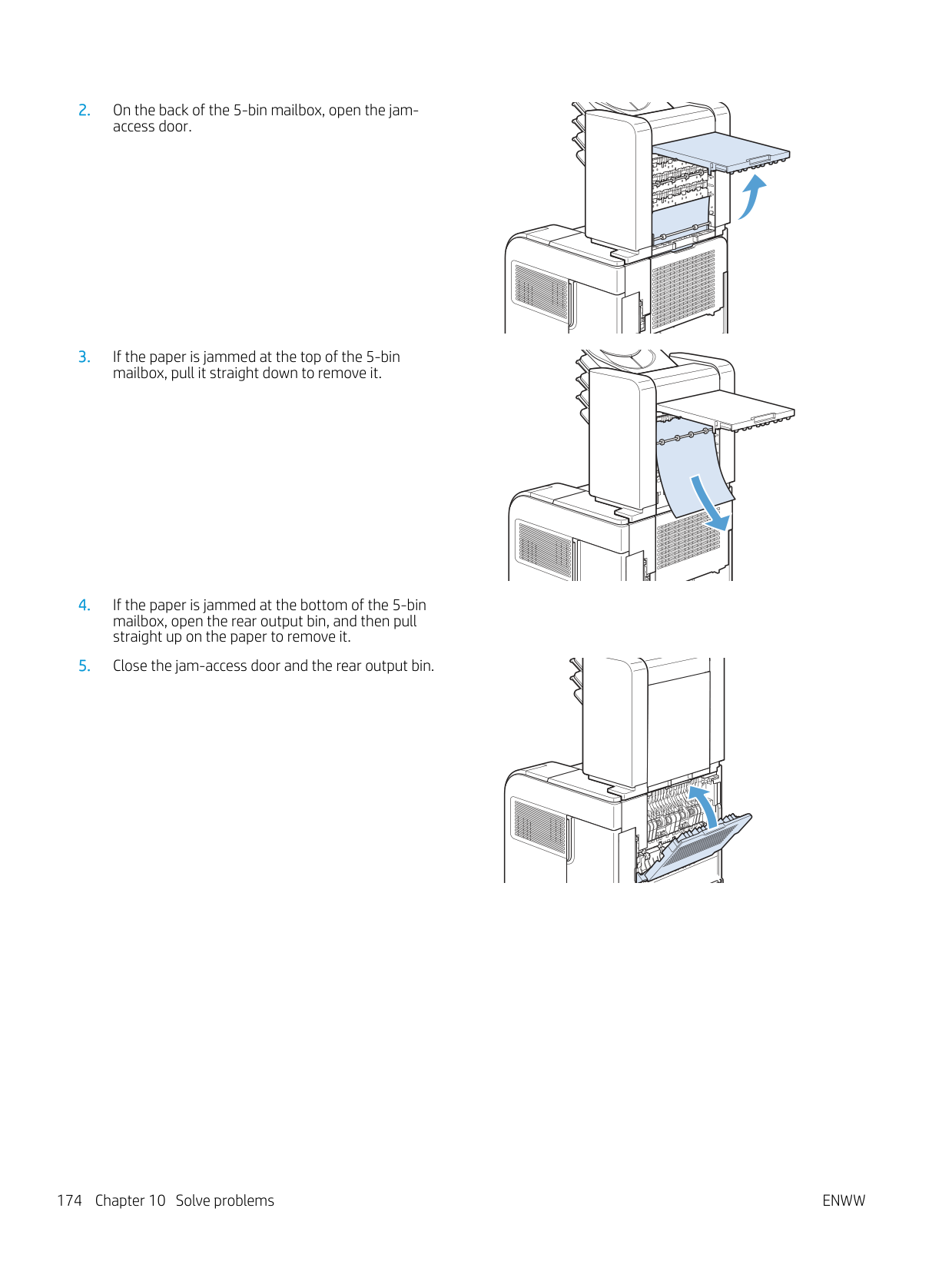
#### Check the print cartridge
Check the print cartridge, and replace it if necessary, if you are having any of the following problems:
| | |---|
If you determine that you need to replace a print cartridge, print the supplies status page to find the part number for the correct genuine HP print cartridge.
Type of print cartridge Steps to resolve the problem
Refilled or remanufactured print cartridge HP cannot recommend the use of non-HP supplies, either new or remanufactured. Because they are not HP products, HP cannot influence their design or control their quality. If you are using a refilled or remanufactured print cartridge and are not satisfied with the print quality, replace the cartridge with a genuine HP cartridge.
Genuine HP print cartridge 1. The product control panel or the supplies status page indicates Very Low status when the cartridge has reached the end of its designated life. Replace the print cartridge if print quality is no longer acceptable.
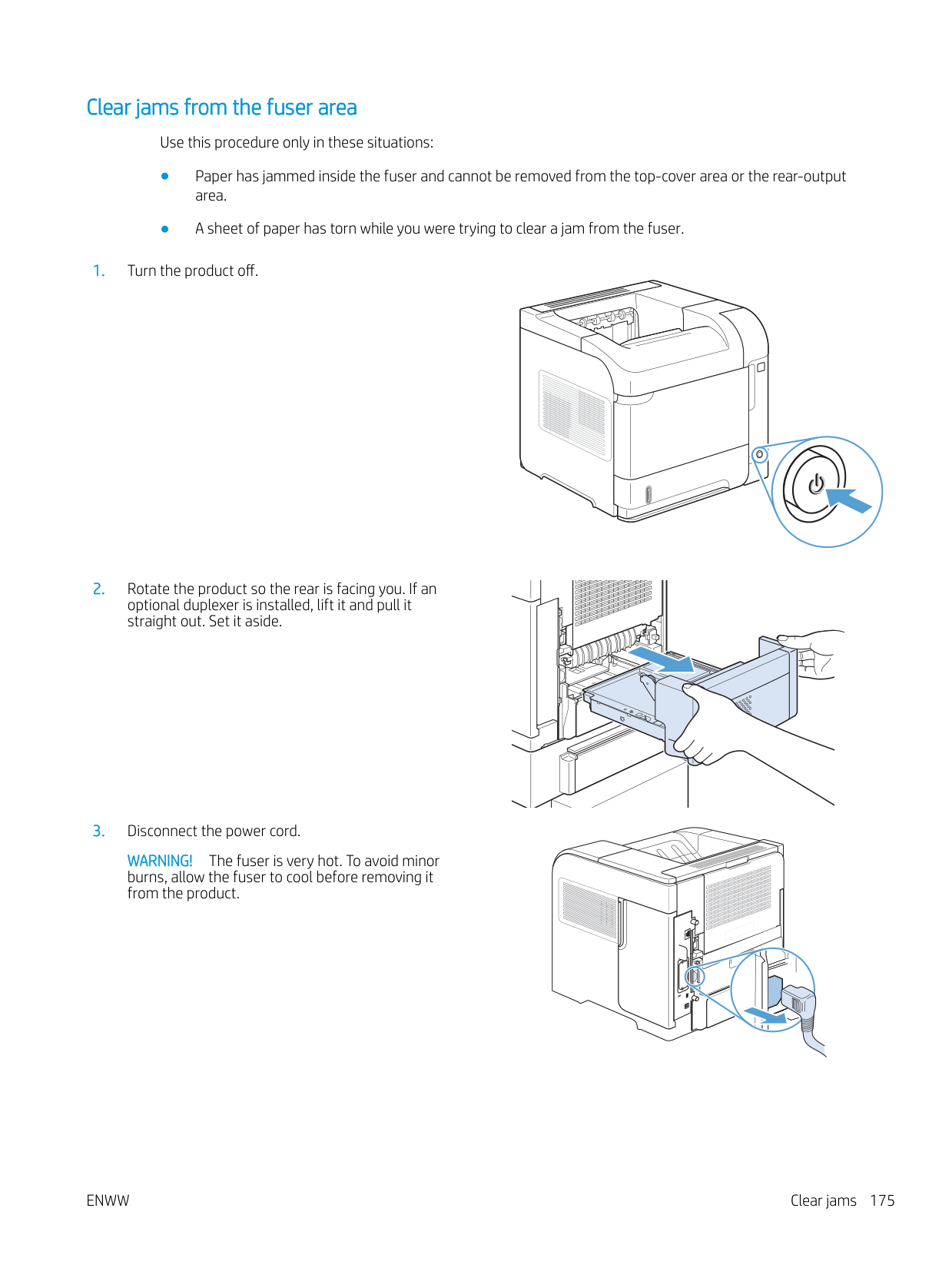
#### Use the printer driver that best meets your printing needs
You might need to use a different printer driver if the printed page has unexpected lines in graphics, missing text, missing graphics, incorrect formatting, or substituted fonts.
HP PCL 6 driver ● Provided as the default driver. This driver is automatically installed unless you select a
different one.
HP UPD PS driver ● Recommended for printing with Adobe® software programs or with other highly
graphics-intensive software programs
● Provides support for printing from postscript emulation needs, or for postscript flash
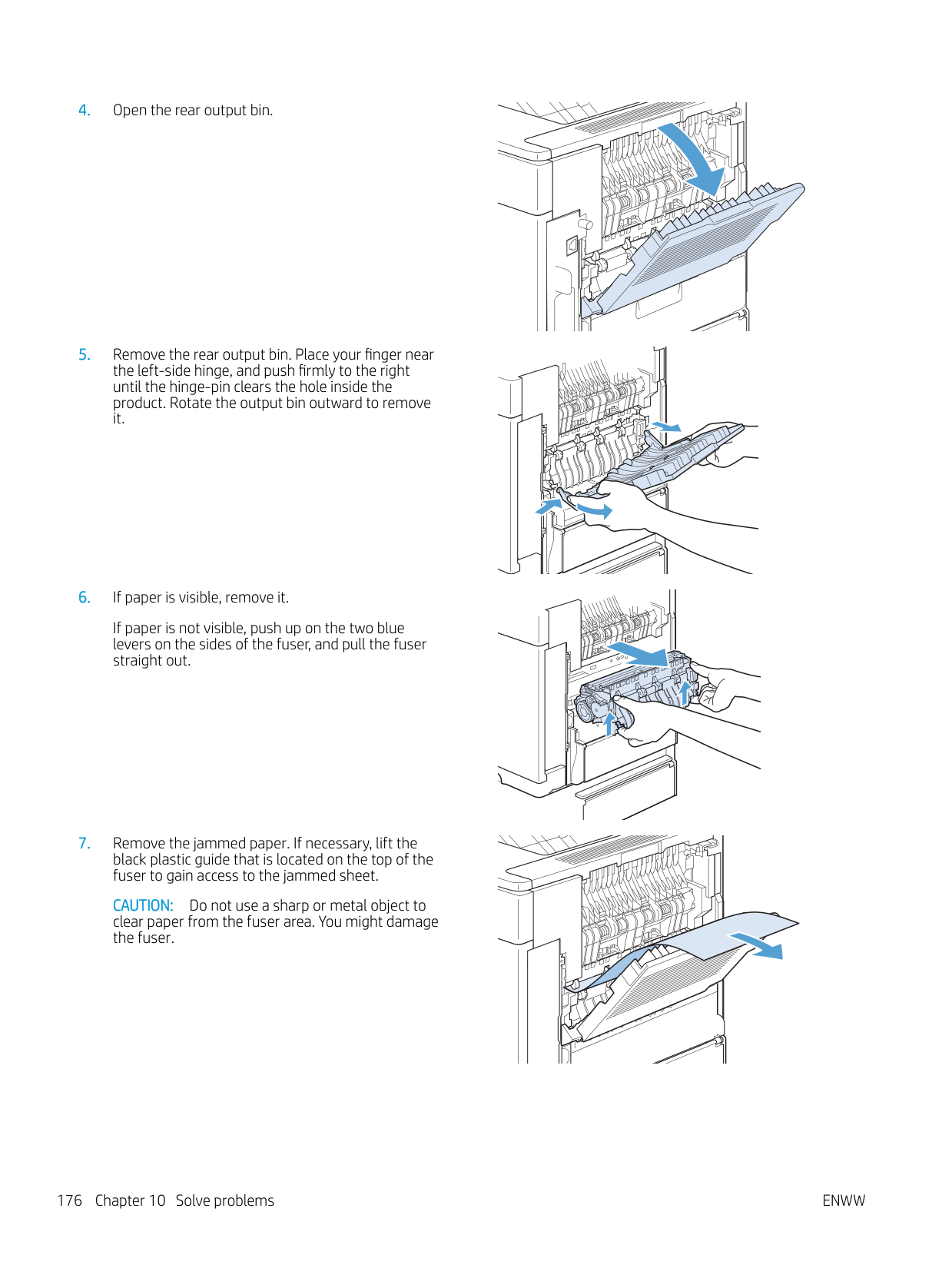
font support
Download additional printer drivers from this Web site: www.hp.com/go/lj600Series_software.
The product does not print or it prints slowly
#### The product does not print
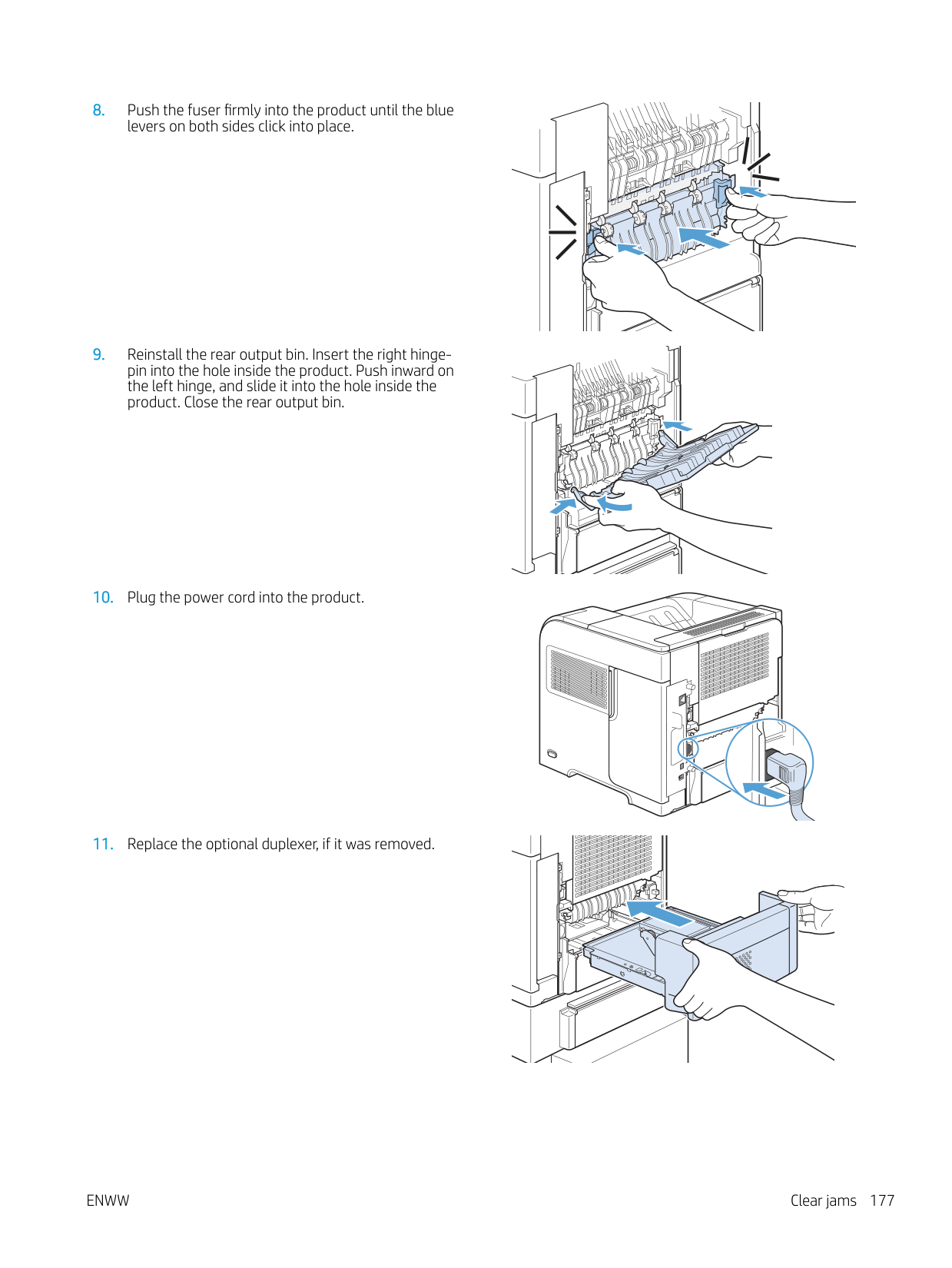
If the product does not print at all, try the following solutions.
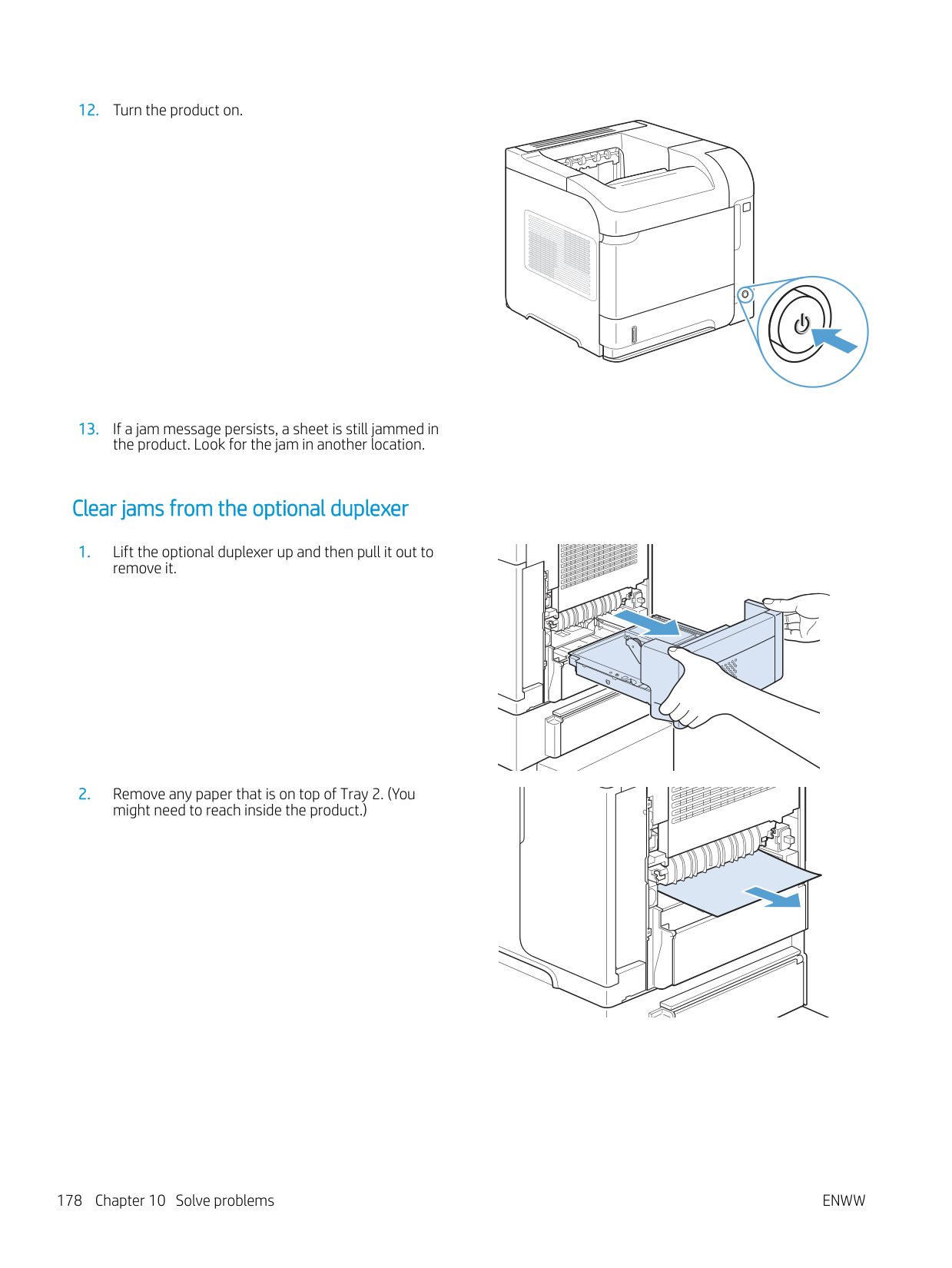
#### The product prints slowly
If the product prints, but it seems slow, try the following solutions.
Solve walk-up USB printing problems
#### The Retrieve From USB menu does not open when you insert the USB accessory
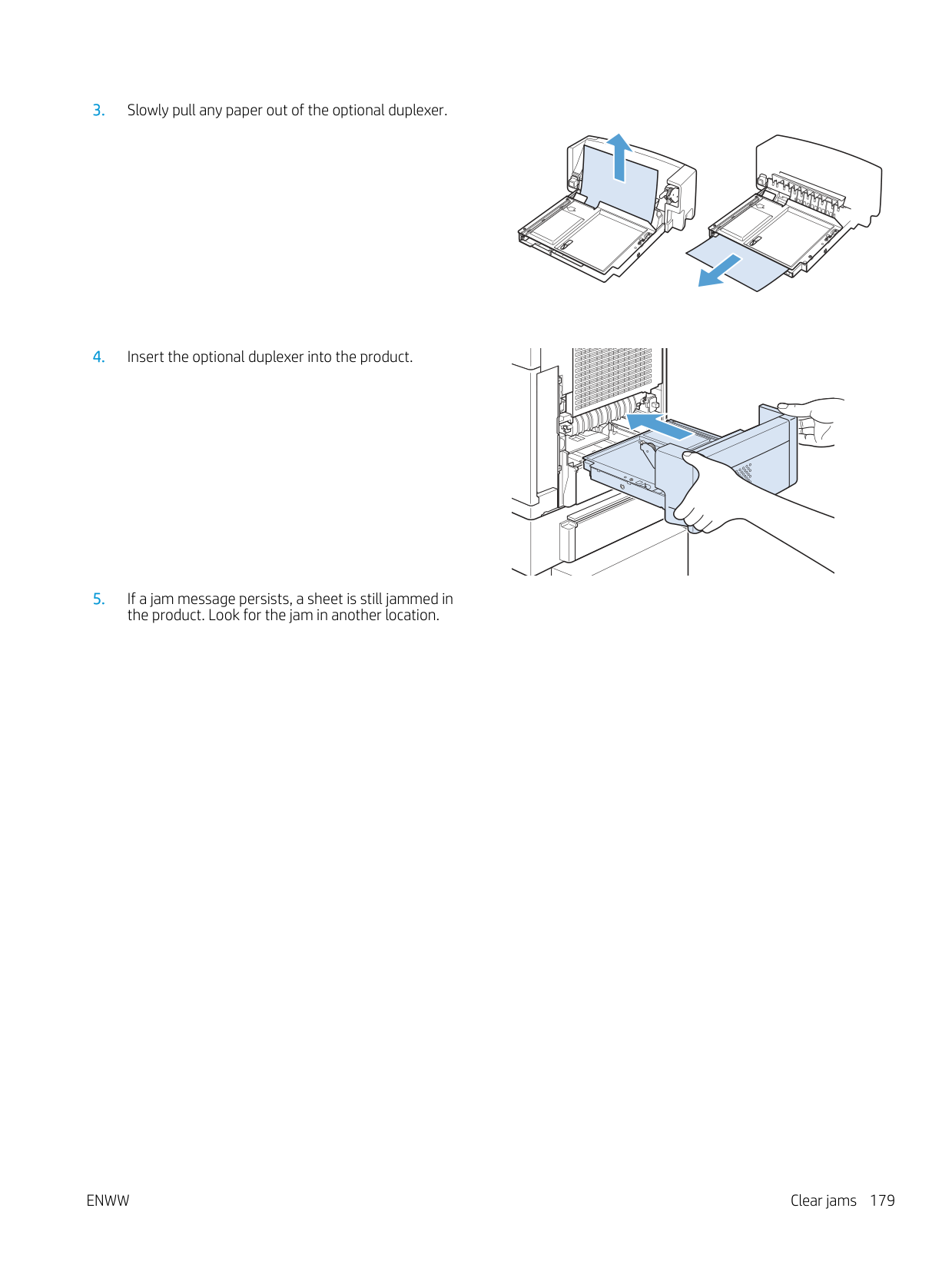
#### The file does not print from the USB storage accessory
#### The file that you want to print is not listed in the Retrieve From USB menu
ENWW Solve walk-up USB printing problems 191
Solve connectivity problems
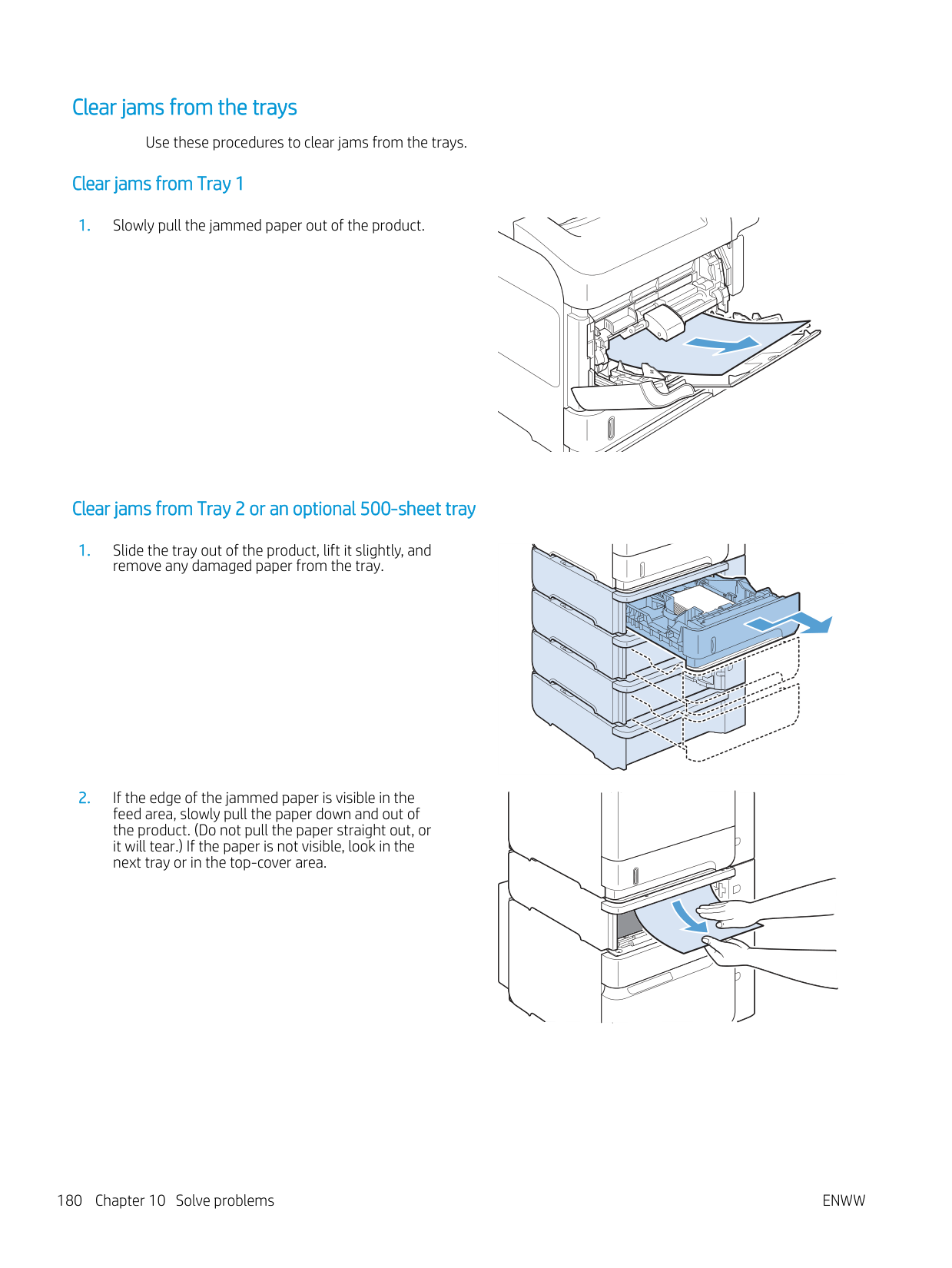
#### Solve direct-connect problems
If you have connected the product directly to a computer, check the cable.
#### Solve network problems
Check the following items to verify that the product is communicating with the network. Before beginning, print a configuration page from the product control panel and locate the product IP address that is listed on this page.
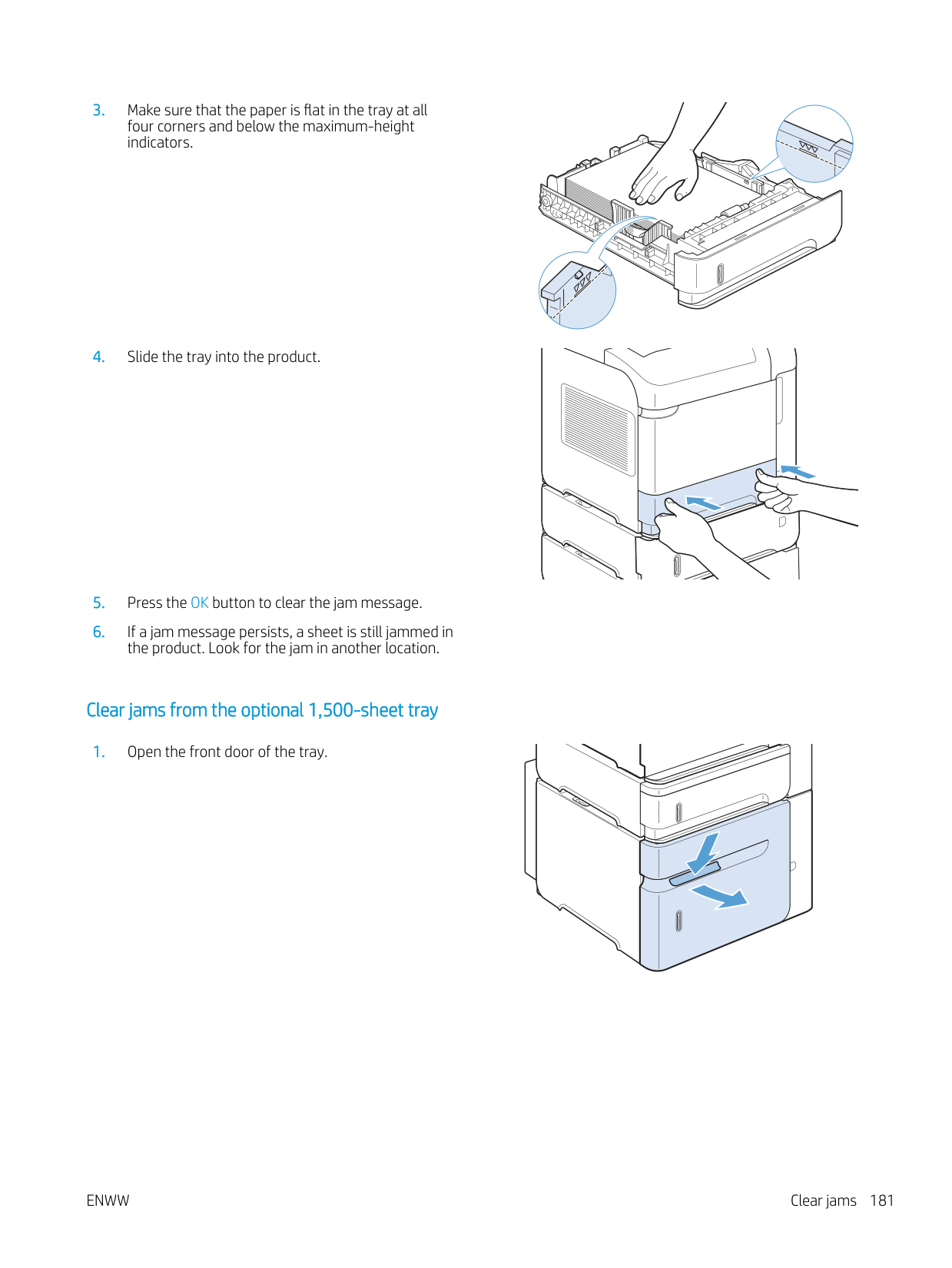
##### Poor physical connection
##### The computer is using the incorrect IP address for the product
##### The computer is unable to communicate with the product
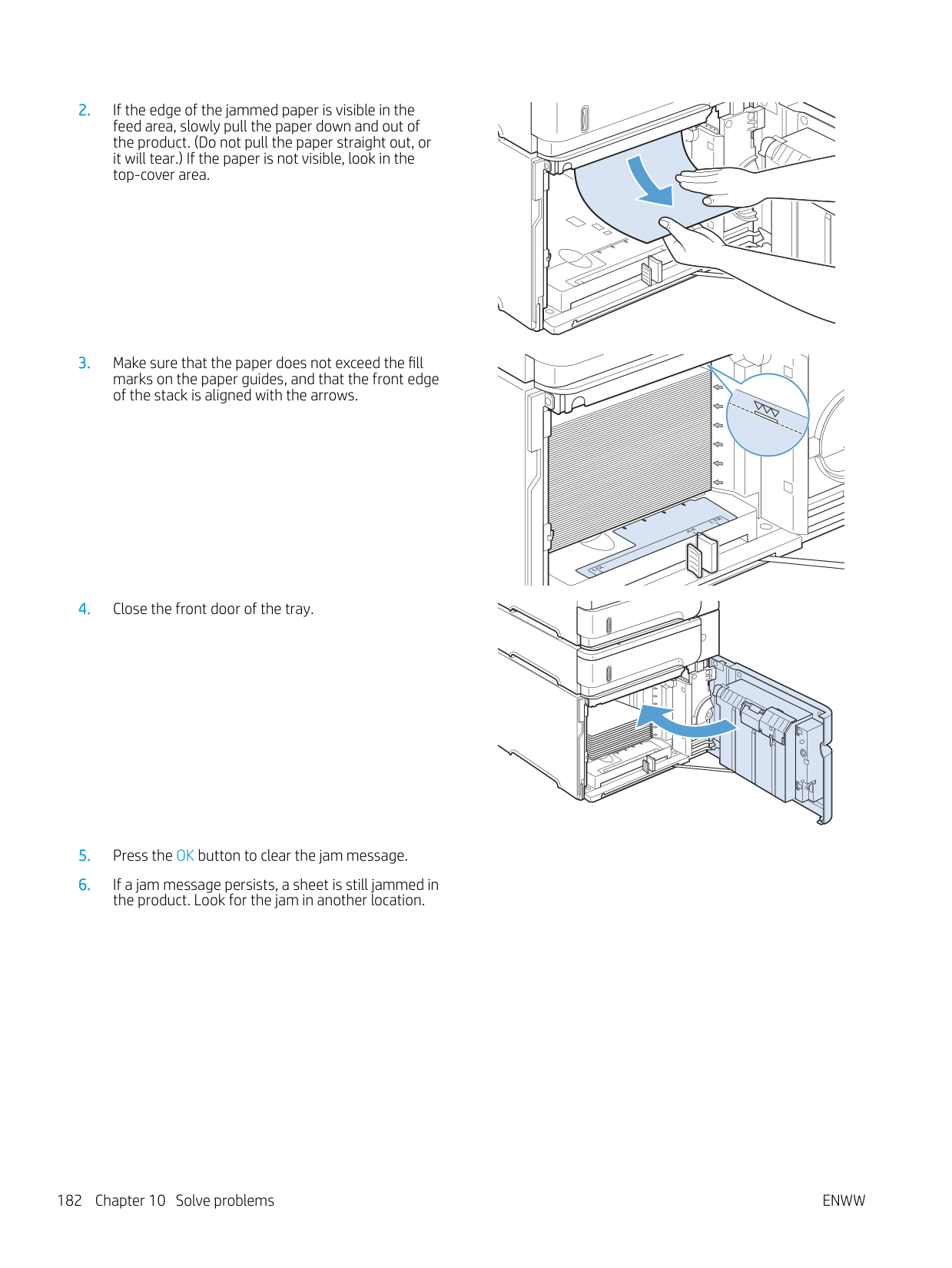
For Mac OS X, open the Network Utility, and then supply the IP address in the correct field in the Ping pane.
##### The product is using incorrect link and duplex settings for the network
HP recommends leaving this setting in automatic mode (the default setting). If you change these settings, you must also change them for your network.
##### New software programs might be causing compatibility problems
Verify that any new software programs are correctly installed and that they use the correct printer driver. The computer or workstation might be set up incorrectly
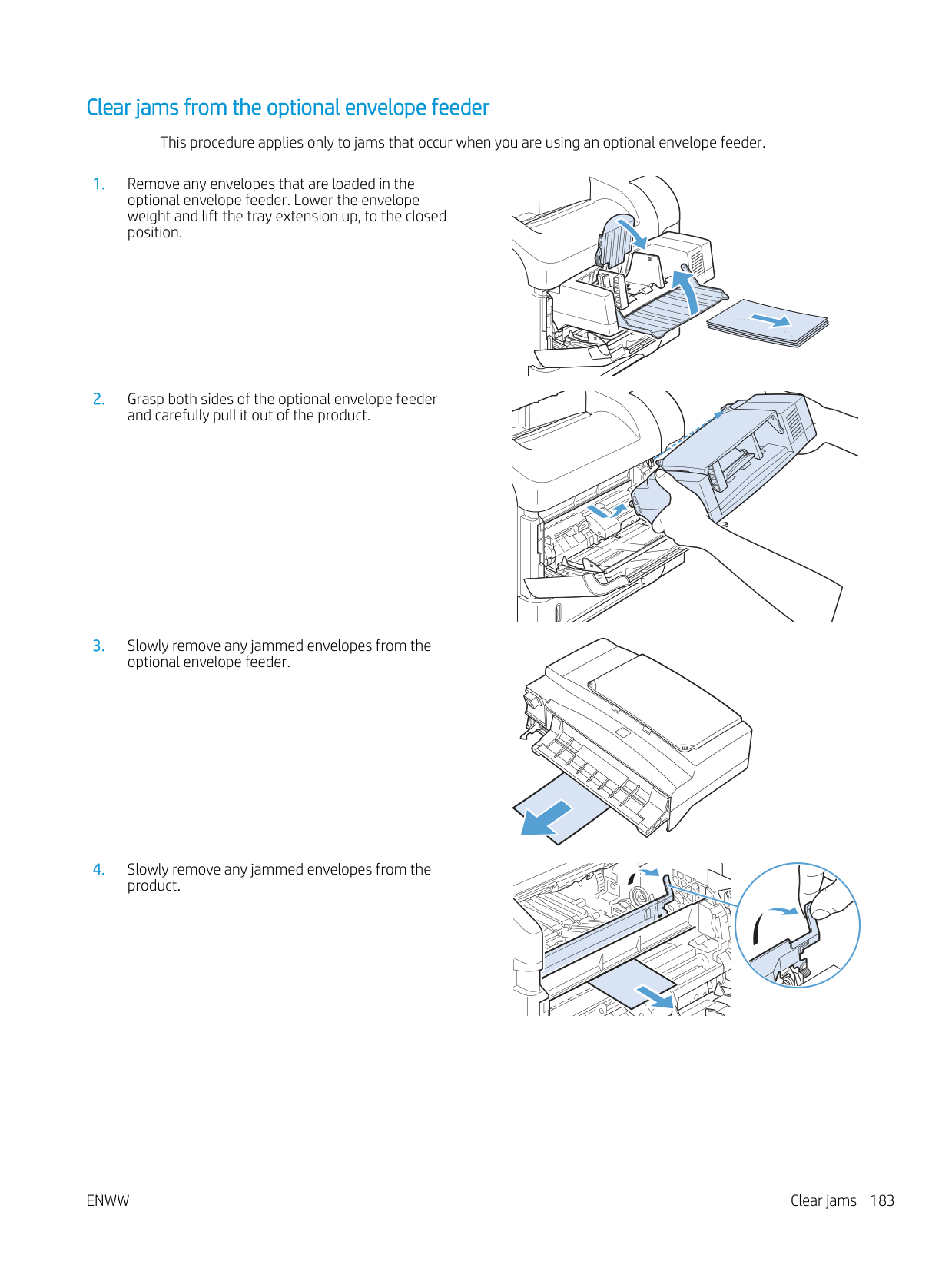
##### The product is disabled, or other network settings are incorrect
ENWW Solve connectivity problems 193
Solve product software problems with Windows
#### A printer driver for the product is not visible in the Printer folder
| | |---|
NOTE: Close any applications that are running. To close an application that has an icon in the system tray, right-click the icon, and select Close or Disable.
#### An error message was displayed during the software installation
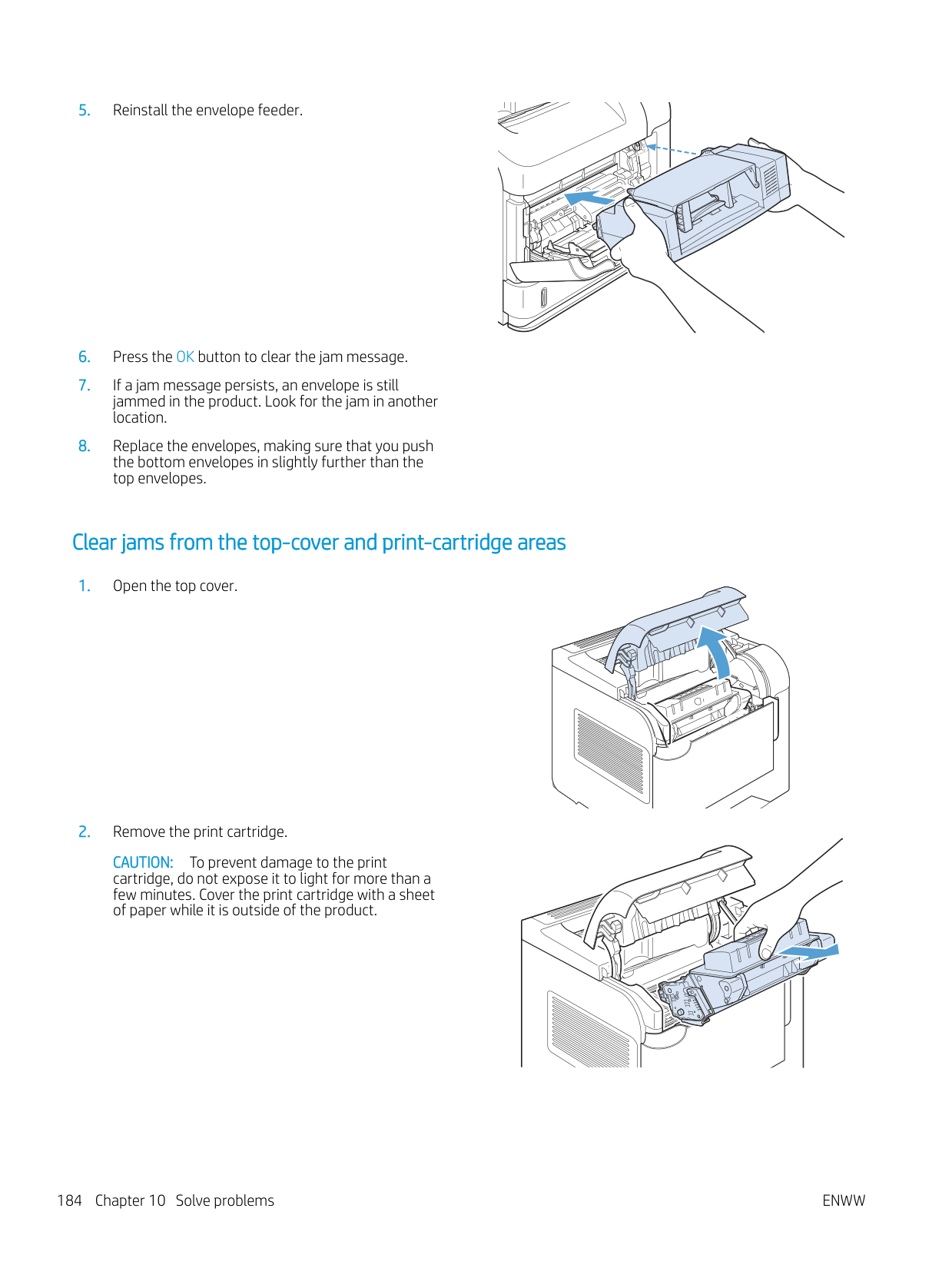
NOTE: Close any applications that are running. To close an application that has an icon in the system tray, right-click the icon, and select Close or Disable.
| | |---|
#### The product is in Ready mode, but nothing prints
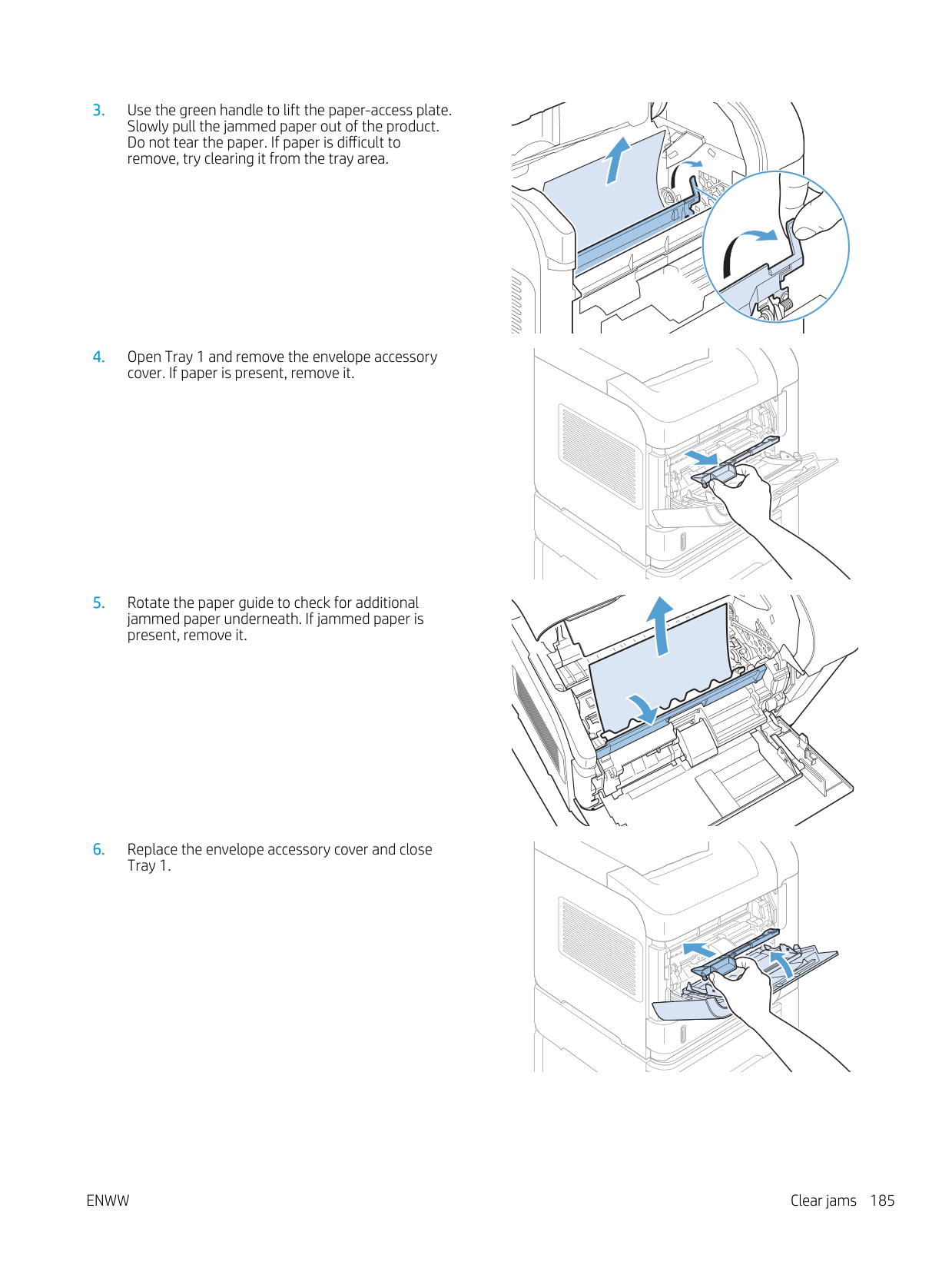
Windows 7
ENWW Solve product software problems with Windows 195
Solve product software problems with Mac
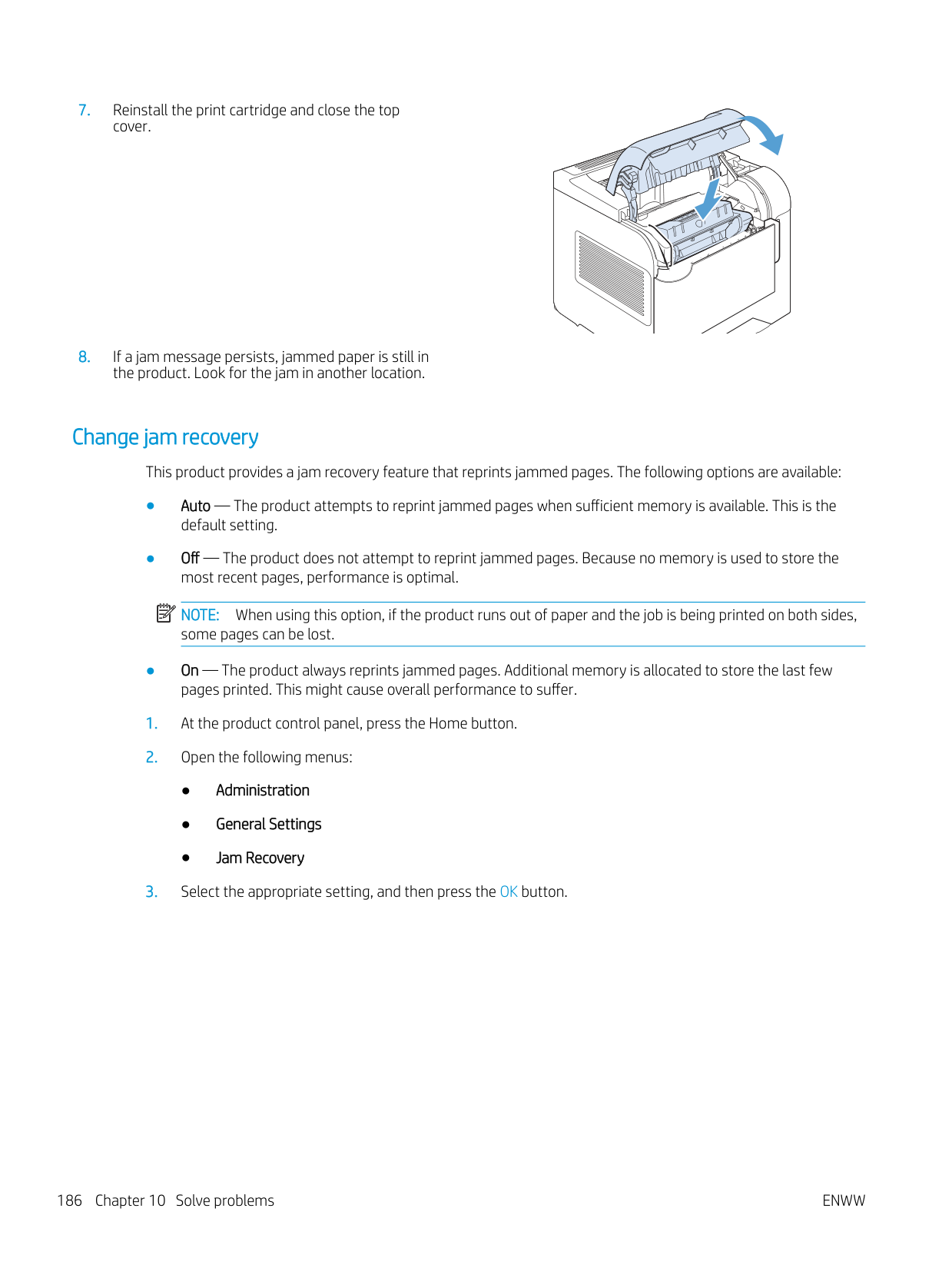
#### The printer driver is not listed in the Print & Fax list
#### The product name does not appear in the product list in the Print & Fax list
#### The printer driver does not automatically set up the selected product in the Print & Fax list
#### A print job was not sent to the product that you wanted
#### When connected with a USB cable, the product does not appear in the Print & Fax list after the driver is selected.
Software troubleshooting
▲ Make sure that your Mac operating system is Mac OS X 10.5 or later.
###### Hardware troubleshooting
| | |---|
#### You are using a generic printer driver when using a USB connection
If you connected the USB cable before you installed the software, you might be using a generic printer driver instead of the driver for this product.
ENWW Solve product software problems with Mac 197
A Product supplies and accessories
ENWW 199
Order parts, accessories, and supplies
Order supplies and paper www.hp.com/go/suresupply Order genuine HP parts or accessories www.hp.com/buy/parts Order through service or support providers Contact an HP-authorized service or support provider. Order using HP software Use the HP Embedded Web Server on page 147
Part numbers
The following list of accessories was current at the time of printing. Ordering information and availability of the accessories might change during the life of the product
#### Paper-handling accessories
Item Description Part number Optional 500-sheet tray and feeder unit Optional tray to increase paper capacity.
CE998A
Holds Letter, A4, Legal, A5, B5 (JIS), Executive, and 8.5 x 13 inch paper sizes.
The product can accommodate up to four optional 500-sheet feeders.
Optional 1,500-sheet tray and feeder unit Optional tray to increase paper capacity. Holds Letter, Legal, and A4 paper sizes.
Custom media cassette Enables the product to print A6-size paper from Tray 2.
CE398A
CB527A
Envelope feeder Holds up to 75 envelopes. CE399A Duplexer (duplex printing accessory) Allows automatic printing on both sides of
CF062A
the paper.
500-sheet stacker Provides an additional output bin that holds 500 sheets.
500-sheet stapler/stacker Allows for high-volume output with automatic job finishing. Staples up to 15 sheets of paper.
HP 5-bin mailbox Provides five output bins that you can use to sort jobs.
Printer stand Provides stability when multiple optional trays are installed. The stand has casters so you can easily move the product.
CE404A
CE405A
CE997A
CF063A
#### Customer self-repair parts
The following Customer Self-Repair parts are available for your product.
Item Description1 Self-replacement options Part number HP LaserJet black print cartridge Standard black cartridge Mandatory CE390A HP LaserJet black print cartridge High-capacity black cartridge
Mandatory CE390X
NOTE: M602 and M603 models only
ENWW Part numbers 201
Item Description1 Self-replacement options Part number 1,000-staple cartridge Provides three staple cartridges. Mandatory Q3216A Preventive maintenance kit Includes a replacement fuser, a
Mandatory 110-volt product maintenance
transfer roller, a transfer-roller tool, a Tray 1 roller, eight feed rollers, and one pair of disposable gloves. Includes instructions for installing each component.
44 x 32-pin DDR2 memory DIMM, 512 MB
Boosts the ability of the product to handle large or complex print jobs.
1 For more information, go to www.hp.com/go/learnaboutsupplies.
Mandatory CE483A
#### Cables and interfaces
Item Description Part number
HP Jetdirect print server devices HP Jetdirect 2700w USB Wireless device J8026A USB cable 2-meter (6-ft) A-to-B cable C6518A
B Service and support
ENWW 203
HP limited warranty statement
HP PRODUCT DURATION OF LIMITED WARRANTY HP LaserJet 600 M601n, M601dn, M602n, M602dn, M602x, M603n, M603dn, M603xh
One-year return-to-bench repair warranty
HP warrants to you, the end-user customer, that HP hardware and accessories will be free from defects in materials and workmanship after the date of purchase, for the period specified above. If HP receives notice of such defects during the warranty period, HP will, at its option, either repair or replace products which prove to be defective. Replacement products may be either new or equivalent in performance to new.
HP warrants to you that HP software will not fail to execute its programming instructions after the date of purchase, for the period specified above, due to defects in material and workmanship when properly installed and used. If HP receives notice of such defects during the warranty period, HP will replace software which does not execute its programming instructions due to such defects.
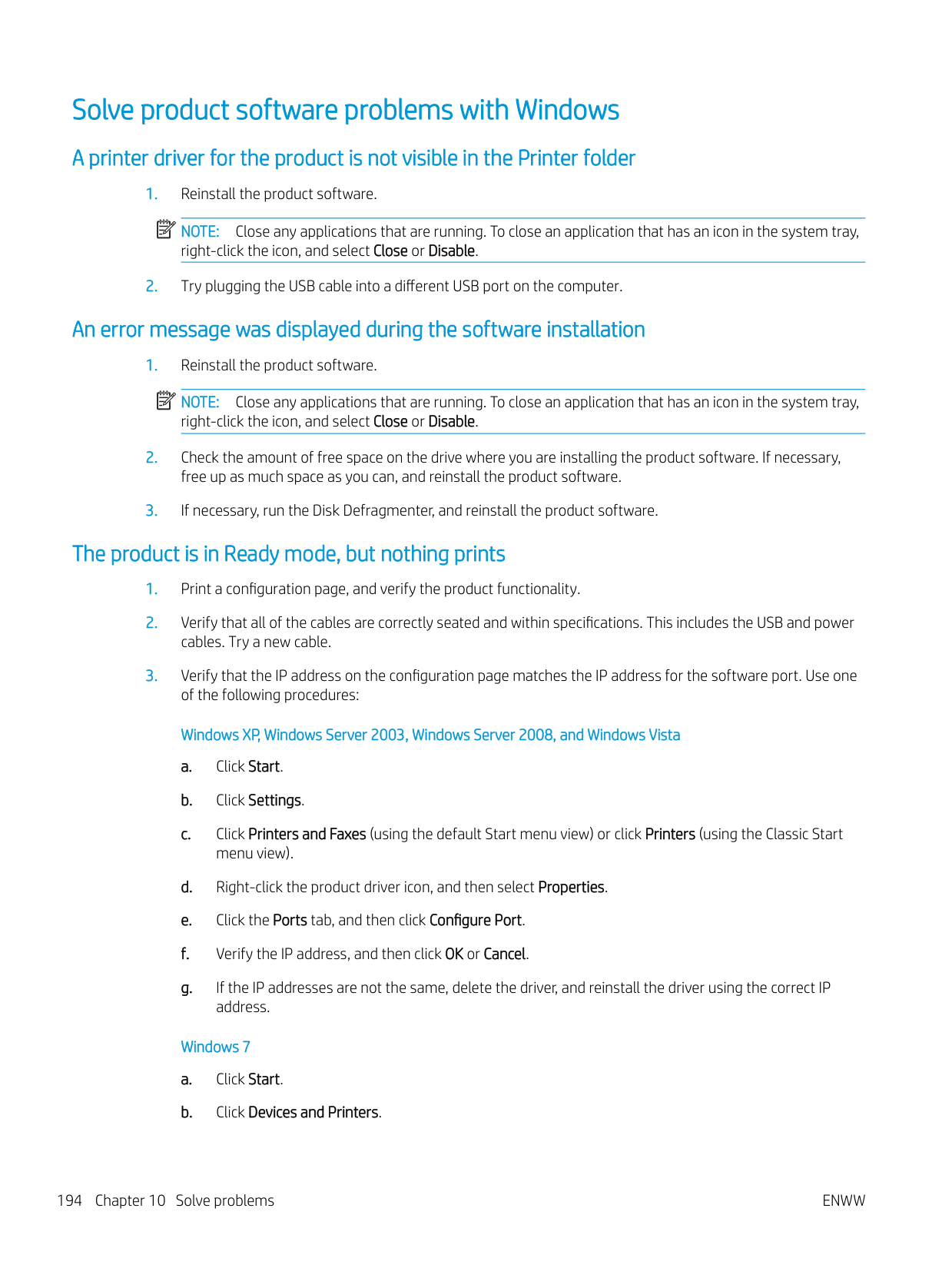
HP does not warrant that the operation of HP products will be uninterrupted or error free. If HP is unable, within a reasonable time, to repair or replace any product to a condition as warranted, you will be entitled to a refund of the purchase price upon prompt return of the product.
HP products may contain remanufactured parts equivalent to new in performance or may have been subject to incidental use.
Warranty does not apply to defects resulting from (a) improper or inadequate maintenance or calibration, (b) software, interfacing, parts or supplies not supplied by HP, (c) unauthorized modification or misuse, (d) operation outside of the published environmental specifications for the product, or (e) improper site preparation or maintenance.
TO THE EXTENT ALLOWED BY LOCAL LAW, THE ABOVE WARRANTIES ARE EXCLUSIVE AND NO OTHER WARRANTY OR CONDITION, WHETHER WRITTEN OR ORAL, IS EXPRESSED OR IMPLIED AND HP SPECIFICALLY DISCLAIMS ANY IMPLIED WARRANTIES OR CONDITIONS OF MERCHANTABILITY, SATISFACTORY QUALITY, AND FITNESS FOR A PARTICULAR PURPOSE. Some countries/regions, states or provinces do not allow limitations on the duration of an implied warranty, so the above limitation or exclusion might not apply to you. This warranty gives you specific legal rights and you might also have other rights that vary from country/region to country/region, state to state, or province to province.
HP's limited warranty is valid in any country/region or locality where HP has a support presence for this product and where HP has marketed this product. The level of warranty service you receive may vary according to local standards. HP will not alter form, fit or function of the product to make it operate in a country/region for which it was never intended to function for legal or regulatory reasons.
TO THE EXTENT ALLOWED BY LOCAL LAW, THE REMEDIES IN THIS WARRANTY STATEMENT ARE YOUR SOLE AND EXCLUSIVE REMEDIES. EXCEPT AS INDICATED ABOVE, IN NO EVENT WILL HP OR ITS SUPPLIERS BE LIABLE FOR LOSS OF DATA OR FOR DIRECT, SPECIAL, INCIDENTAL, CONSEQUENTIAL (INCLUDING LOST PROFIT OR DATA), OR OTHER DAMAGE, WHETHER BASED IN CONTRACT, TORT, OR OTHERWISE. Some countries/regions, states or provinces do not allow the exclusion or limitation of incidental or consequential damages, so the above limitation or exclusion may not apply to you.
THE WARRANTY TERMS CONTAINED IN THIS STATEMENT, EXCEPT TO THE EXTENT LAWFULLY PERMITTED, DO NOT EXCLUDE, RESTRICT OR MODIFY AND ARE IN ADDITION TO THE MANDATORY STATUTORY RIGHTS APPLICABLE TO THE SALE OF THIS PRODUCT TO YOU.
HP's Premium Protection Warranty: LaserJet print cartridge limited warranty statement
This HP product is warranted to be free from defects in materials and workmanship. This warranty does not apply to products that (a) have been refilled, refurbished, remanufactured or tampered with in any way, (b) experience problems resulting from misuse, improper storage, or operation outside of the published environmental specifications for the printer product or (c) exhibit wear from ordinary use. To obtain warranty service, please return the product to place of purchase (with a written description of the problem and print samples) or contact HP customer support. At HP's option, HP will either replace products that prove to be defective or refund your purchase price. TO THE EXTENT ALLOWED BY LOCAL LAW, THE ABOVE WARRANTY IS EXCLUSIVE AND NO OTHER WARRANTY OR CONDITION, WHETHER WRITTEN OR ORAL, IS EXPRESSED OR IMPLIED AND HP SPECIFICALLY DISCLAIMS ANY IMPLIED WARRANTIES OR CONDITIONS OF MERCHANTABILITY, SATISFACTORY QUALITY, AND FITNESS FOR A PARTICULAR PURPOSE. TO THE EXTENT ALLOWED BY LOCAL LAW, IN NO EVENT WILL HP OR ITS SUPPLIERS BE LIABLE FOR DIRECT, SPECIAL, INCIDENTAL, CONSEQUENTIAL (INCLUDING LOST PROFIT OR DATA), OR OTHER DAMAGE, WHETHER BASED IN CONTRACT, TORT, OR OTHERWISE. THE WARRANTY TERMS CONTAINED IN THIS STATEMENT, EXCEPT TO THE EXTENT LAWFULLY PERMITTED, DO NOT EXCLUDE, RESTRICT OR MODIFY AND ARE IN ADDITION TO THE MANDATORY STATUTORY RIGHTS APPLICABLE TO THE SALE OF THIS PRODUCT TO YOU.
ENWW HP's Premium Protection Warranty: LaserJet print cartridge limited warranty statement 205
Data stored on the print cartridge The HP print cartridges used with this product contain a memory chip that assists in the operation of the product. In addition, this memory chip collects a limited set of information about the usage of the product, which might include the following: the date when the print cartridge was first installed, the date when the print cartridge was last used, the number of pages printed using the print cartridge, the page coverage, the printing modes used, any printing errors that might have occurred, and the product model. This information helps HP design future products to meet our customers' printing needs. The data collected from the print cartridge memory chip does not contain information that can be used to identify a customer or user of the print cartridge or their product. HP collects a sampling of the memory chips from print cartridges returned to HP's free return and recycling program (HP Planet Partners: www.hp.com/recycle). The memory chips from this sampling are read and studied in order to improve future HP products. HP partners who assist in recycling this print cartridge might have access to this data, as well.
Any third party possessing the print cartridge might have access to the anonymous information on the memory chip. If you prefer to not allow access to this information, you can render the chip inoperable. However, after you render the memory chip inoperable, the memory chip cannot be used in an HP product.

End User License Agreement
PLEASE READ CAREFULLY BEFORE USING THIS SOFTWARE PRODUCT: This End-User License Agreement (“EULA”) is a contract between (a) you (either an individual or the entity you represent) and (b) HP that governs your use of the software product (“Software”). This EULA does not apply if there is a separate license agreement between you and HP or its suppliers for the Software, including a license agreement in online documentation. The term “Software” may include (i) associated media, (ii) a user guide and other printed materials, and (iii) “online” or electronic documentation (collectively “User Documentation”).
RIGHTS IN THE SOFTWARE ARE OFFERED ONLY ON THE CONDITION THAT YOU AGREE TO ALL TERMS AND CONDITIONS OF THIS EULA. BY INSTALLING, COPYING, DOWNLOADING, OR OTHERWISE USING THE SOFTWARE, YOU AGREE TO BE BOUND BY THIS EULA. IF YOU DO NOT ACCEPT THIS EULA, DO NOT INSTALL, DOWNLOAD, OR OTHERWISE USE THE SOFTWARE. IF YOU PURCHASED THE SOFTWARE BUT DO NOT AGREE TO THIS EULA, PLEASE RETURN THE SOFTWARE TO YOUR PLACE OF PURCHASE WITHIN FOURTEEN DAYS FOR A REFUND OF THE PURCHASE PRICE; IF THE SOFTWARE IS INSTALLED ON OR MADE AVAILABLE WITH ANOTHER HP PRODUCT, YOU MAY RETURN THE ENTIRE UNUSED PRODUCT.
ENWW End User License Agreement 207
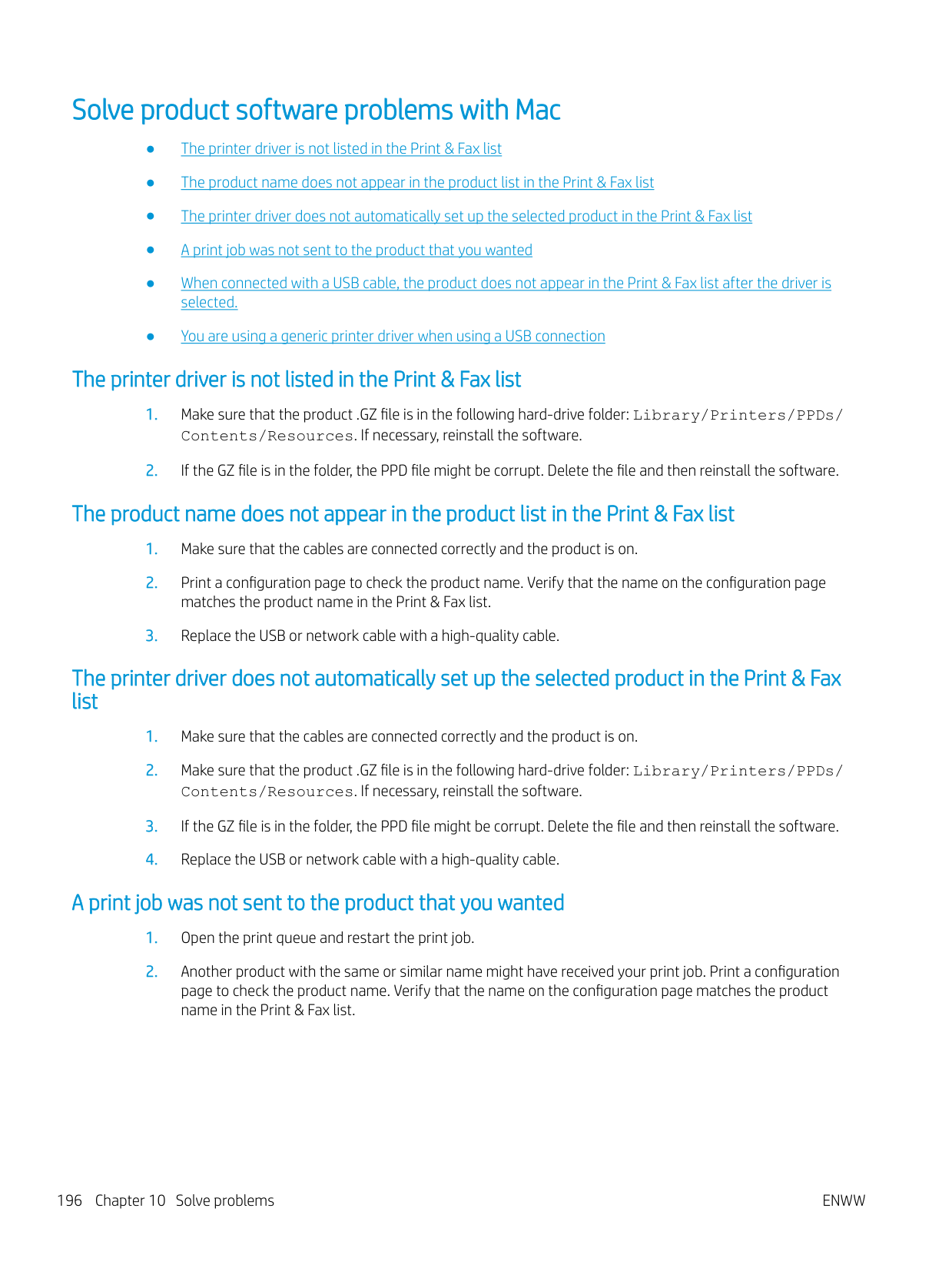
Customer self-repair warranty service
HP products are designed with many Customer Self Repair (CSR) parts to minimize repair time and allow for greater flexibility in performing defective parts replacement. If during the diagnosis period, HP identifies that the repair can be accomplished by the use of a CSR part, HP will ship that part directly to you for replacement. There are two categories of CSR parts: 1) Parts for which customer self repair is mandatory. If you request HP to replace these parts, you will be charged for the travel and labor costs of this service. 2) Parts for which customer self repair is optional. These parts are also designed for Customer Self Repair. If, however, you require that HP replace them for you, this may be done at no additional charge under the type of warranty service designated for your product.
Based on availability and where geography permits, CSR parts will be shipped for next business day delivery. Same-day or four-hour delivery may be offered at an additional charge where geography permits. If assistance is required, you can call the HP Technical Support Center and a technician will help you over the phone. HP specifies in the materials shipped with a replacement CSR part whether a defective part must be returned to HP. In cases where it is required to return the defective part to HP, you must ship the defective part back to HP within a defined period of time, normally five (5) business days. The defective part must be returned with the associated documentation in the provided shipping material. Failure to return the defective part may result in HP billing you for the replacement. With a customer self repair, HP will pay all shipping and part return costs and determine the courier/carrier to be used.
ENWW Customer self-repair warranty service 209
Customer support
Get telephone support for your country/region Have the product name, serial number, date of purchase, and problem description ready.
Country/region phone numbers are on the flyer that was in the box with your product or at www.hp.com/support/.
Get 24-hour Internet support www.hp.com/support/lj600Series Get support for products used with a Macintosh computer www.hp.com/go/macosx Download software utilities, drivers, and electronic information www.hp.com/go/lj600Series_software Order additional HP service or maintenance agreements www.hp.com/go/carepack Register your product www.register.hp.com
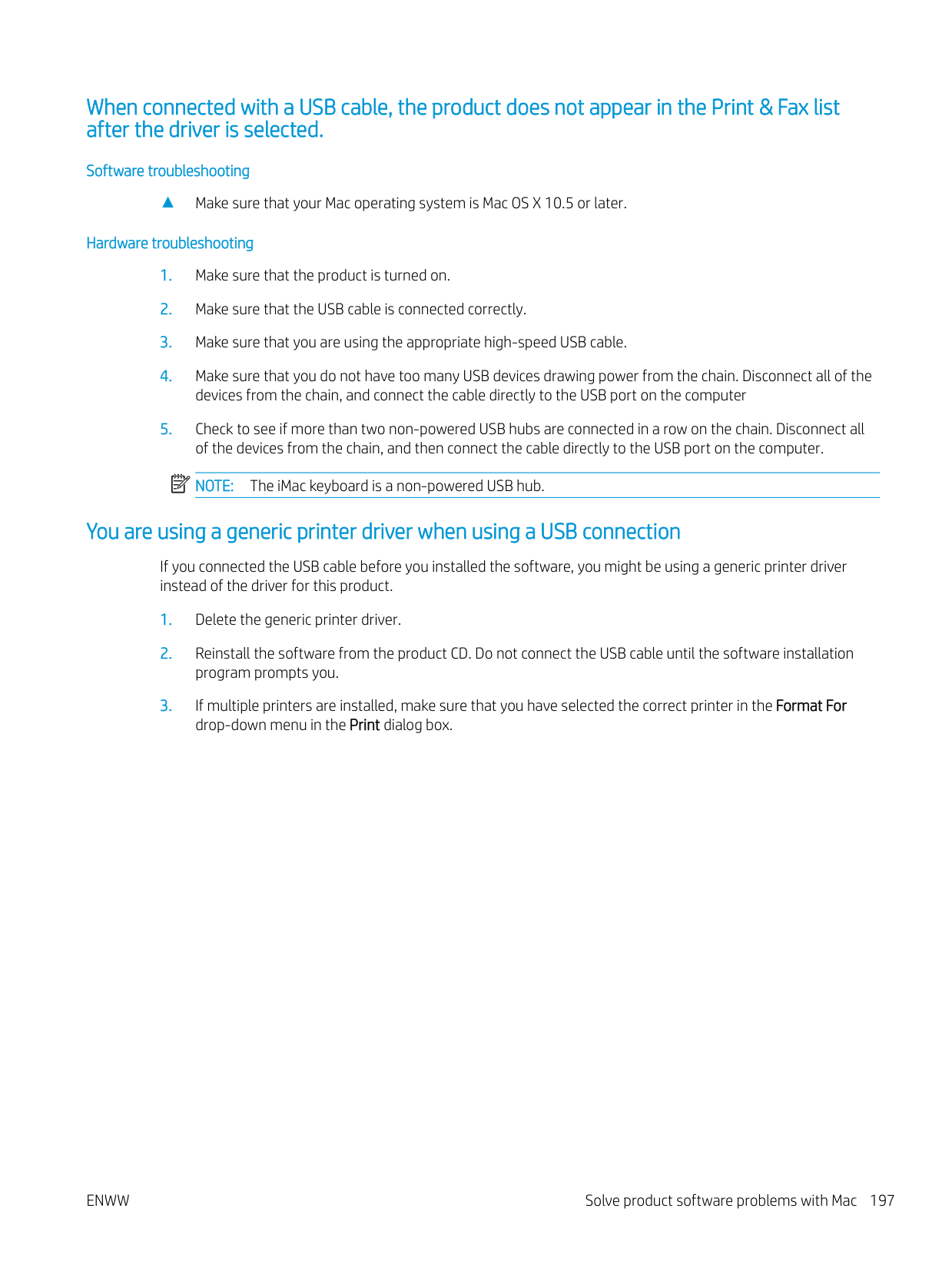
Repack the product
If HP Customer Care determines that your product needs to be returned to HP for repair, follow these steps to repack the product before shipping it.
CAUTION: Shipping damage as a result of inadequate packing is the customer’s responsibility.
CAUTION: Static electricity can damage electronic parts. When handling DIMMs, either wear an antistatic wrist strap, or frequently touch the surface of the DIMM antistatic package and then touch bare metal on the product.
CAUTION: It is extremely important to remove the print cartridge before shipping the product. A print cartridge that remains in the product during shipping can leak and cover the product engine and other parts with toner.
To prevent damage to the print cartridge, avoid touching the roller on it, and store the print cartridge in its original packing material or so that it is not exposed to light.
ENWW Repack the product 211

C Product specifications
Physical specifications
Power consumption, electrical specifications, and acoustic emissions See www.hp.com/go/lj600Series_regulatory for current information. CAUTION: Power requirements are based on the country/region where the product is sold. Do not convert operating voltages. This will damage the product and void the product warranty.
Operating environment
Table C-3 Necessary conditions Environmental condition Printing Storage/standby Temperature (product and print cartridge) 7.5° to 32.5°C (45.5° to 90.5°F) 0° to 35°C (32° to 95°F) Relative humidity 5% to 90% 35% to 85%
214 Appendix C Product specifications ENWW
D Regulatory information

FCC regulations
This equipment has been tested and found to comply with the limits for a Class B digital device, pursuant to Part 15 of the FCC rules. These limits are designed to provide reasonable protection against harmful interference in a residential installation. This equipment generates, uses, and can radiate radio frequency energy. If this equipment is not installed and used in accordance with the instructions, it may cause harmful interference to radio communications. However, there is no guarantee that interference will not occur in a particular installation. If this equipment does cause harmful interference to radio or television reception, which can be determined by turning the equipment off and on, the user is encouraged to try to correct the interference by one or more of the following measures:
| | |---|

Environmental product stewardship program
#### Protecting the environment
Hewlett-Packard Company is committed to providing quality products in an environmentally sound manner. This product has been designed with several attributes to minimize impacts on our environment.
#### Ozone production
This product generates no appreciable ozone gas (O3).
#### Power consumption
Power usage drops significantly while in Sleep mode, which saves natural resources and saves money without affecting the high performance of this product. Hewlett-Packard printing and imaging equipment marked with the ENERGY STAR® logo is qualified to the U.S. Environmental Protection Agency's ENERGY STAR specifications for imaging equipment. The following mark will appear on ENERGY STAR qualified imaging products:
Additional ENERGY STAR qualified imaging product model information is listed at: www.hp.com/go/energystar
#### Toner consumption
EconoMode uses less toner, which might extend the life of the print cartridge. HP does not recommend the fulltime use of EconoMode. If EconoMode is used full-time, the toner supply might outlast the mechanical parts in the print cartridge. If print quality begins to degrade and is no longer acceptable, consider replacing the print cartridge.
#### Paper use
This product’s optional automatic duplex feature (two-sided printing) and N-up printing (multiple pages printed on one page) capability can reduce paper usage and the resulting demands on natural resources.
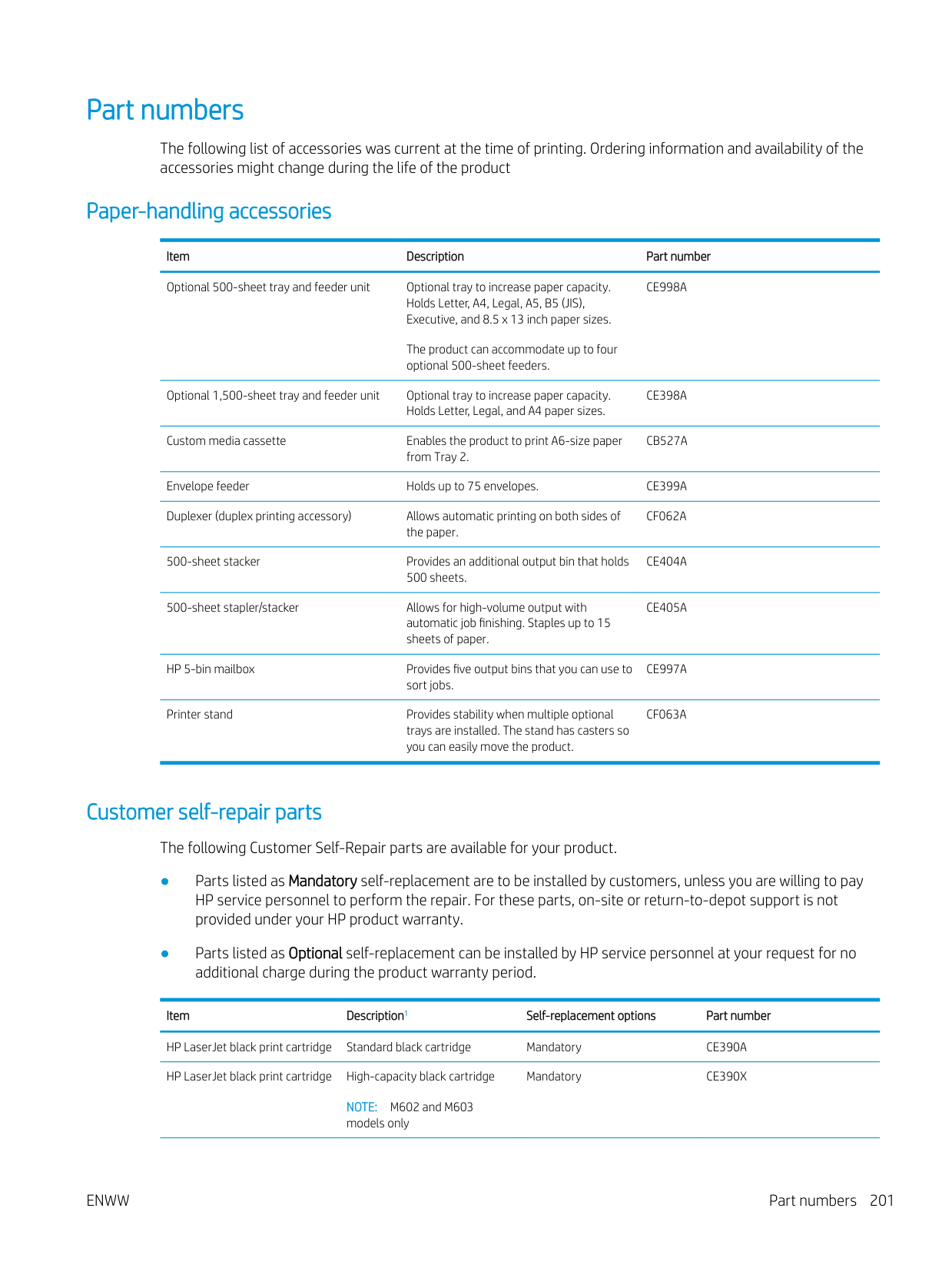
#### Plastics
Plastic parts over 25 grams are marked according to international standards that enhance the ability to identify plastics for recycling purposes at the end of the product’s life.
#### HP LaserJet print supplies
It’s easy to return and recycle your HP LaserJet print cartridges after use—free of charge—with HP Planet Partners. Multilingual program information and instructions are included in every new HP LaserJet print cartridge and supplies package. You help reduce the toll on the environment further when you return multiple cartridges together rather than separately.
HP is committed to providing inventive, high-quality products and services that are environmentally sound, from product design and manufacturing to distribution, customer use and recycling. When you participate in the
HP Planet Partners program, we ensure your HP LaserJet print cartridges are recycled properly, processing them to recover plastics and metals for new products and diverting millions of tons of waste from landfills. Since this cartridge is being recycled and used in new materials, it will not be returned to you. Thank you for being environmentally responsible!
| | |---|
NOTE: Use the return label to return original HP LaserJet print cartridges only. Please do not use this label for HP inkjet cartridges, non-HP cartridges, refilled or remanufactured cartridges or warranty returns. For information about recycling your HP inkjet cartridges please go to http://www.hp.com/recycle.
#### Return and recycling instructions United States and Puerto Rico
The enclosed label in the HP LaserJet toner cartridge box is for the return and recycling of one or more HP LaserJet print cartridges after use. Please follow the applicable instructions below.
###### Multiple returns (more than one cartridge)
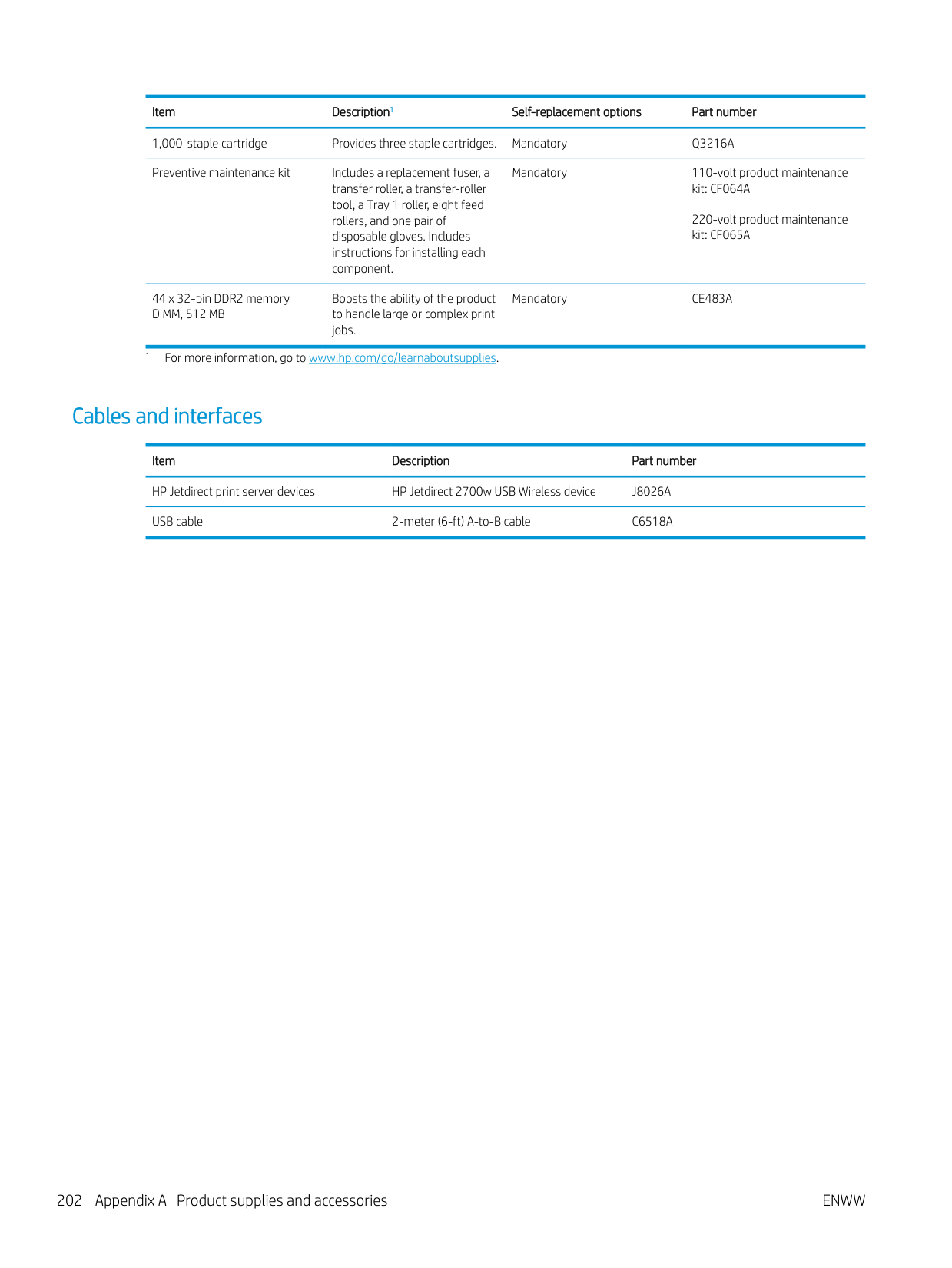
###### Single returns
###### Shipping
For US and Puerto Rico HP LaserJet print cartridge recycling returns, use the pre-paid, pre-addressed shipping label contained in the box. To use the UPS label, give the package to the UPS driver during your next delivery or pick-up, or take it to an authorized UPS drop-off center. (Requested UPS Ground pickup will be charged normal pick-up rates) For the location of your local UPS drop-off center, call 1-800-PICKUPS or visit www.ups.com.
If you are returning the package with the FedEx label, give the package to either the U.S. Postal Service carrier or FedEx driver during your next pick-up or delivery. (Requested FedEx Ground pickup will be charged normal pickup rates). Or, you can drop off your packaged print cartridge(s) at any U.S. Post Office or any FedEx shipping center or store. For the location of your nearest U.S. Post Office, please call 1-800-ASK-USPS or visit www.usps.com. For the location of your nearest FedEx shipping center/store, please call 1-800-GOFEDEX or visit www.fedex.com.
For more information, or to order additional labels or boxes for bulk returns, visit www.hp.com/recycle or call 1-800-340-2445. Information subject to change without notice.
###### Residents of Alaska and Hawaii
Do not use the UPS label. Call 1-800-340-2445 for information and instructions. The U.S. Postal Service provides no-cost cartridge return transportation services under an arrangement with HP for Alaska and Hawaii.
##### Non-U.S. returns
To participate in HP Planet Partners return and recycling program, just follow the simple directions in the recycling guide (found inside the packaging of your new product supply item) or visit www.hp.com/recycle. Select your country/region for information on how to return your HP LaserJet printing supplies.
#### Paper
This product is capable of using recycled papers when the paper meets the guidelines outlined in the HP LaserJet Printer Family Print Media Guide. This product is suitable for the use of recycled paper according to EN12281:2002.
Material restrictions This HP product does not contain added mercury. This HP product contains a battery that might require special handling at end-of-life. The batteries contained in or supplied by Hewlett-Packard for this product include the following:
|HP LaserJet Enterprise 600 M601, M602, and M603 Series Printer|HP LaserJet Enterprise 600 M601, M602, and M603 Series Printer| |---|---| |Type|Carbon monofluoride lithium| |Weight|1.5 g| |Location|On formatter board| |User-removable|No|
For recycling information, you can go to www.hp.com/recycle, or contact your local authorities or the Electronics Industries Alliance: www.eiae.org.
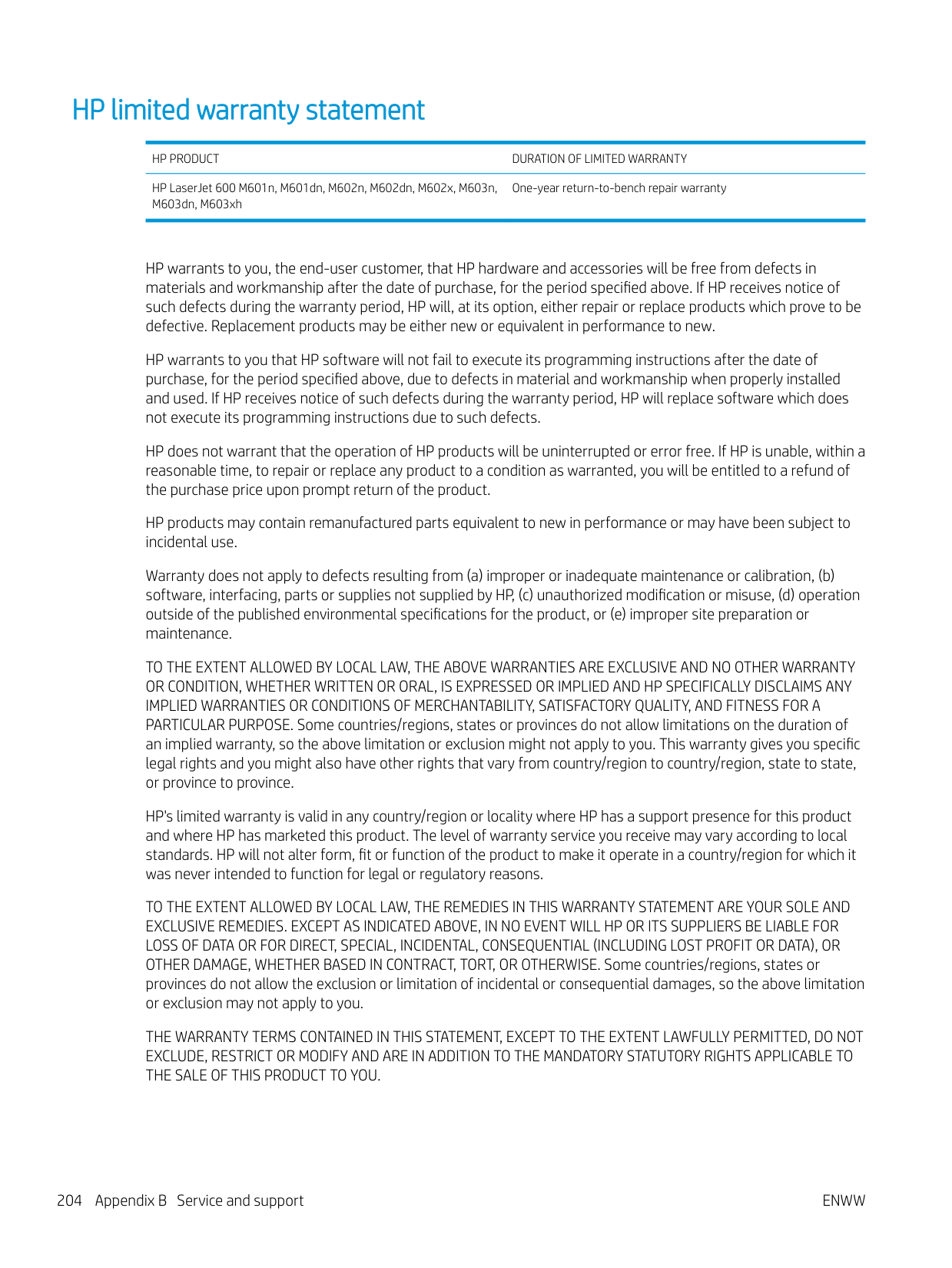
#### Disposal of waste equipment by users in private households in the European Union
This symbol on the product or on its packaging indicates that this product must not be disposed of with your other household waste. Instead, it is your responsibility to dispose of your waste equipment by handing it over to a designated collection point for the recycling of waste electrical and electronic equipment. The separate collection and recycling of your waste equipment at the time of disposal will help to conserve natural resources and ensure that it is recycled in a manner that protects human health and the environment. For more information about where you can drop off your waste equipment for recycling, please contact your local city office, your household waste disposal service or the shop where you purchased the product.
#### Chemical substances
HP is committed to providing our customers with information about the chemical substances in our products as needed to comply with legal requirements such as REACH (Regulation EC No 1907/2006 of the European Parliament and the Council). A chemical information report for this product can be found at: www.hp.com/go/ reach.
#### Material Safety Data Sheet (MSDS)
Material Safety Data Sheets (MSDS) for supplies containing chemical substances (for example, toner) can be obtained by accessing the HP Web site at www.hp.com/go/msds or www.hp.com/hpinfo/community/ environment/productinfo/safety.
#### For more information
To obtain information about these environmental topics:
Declaration of Conformity
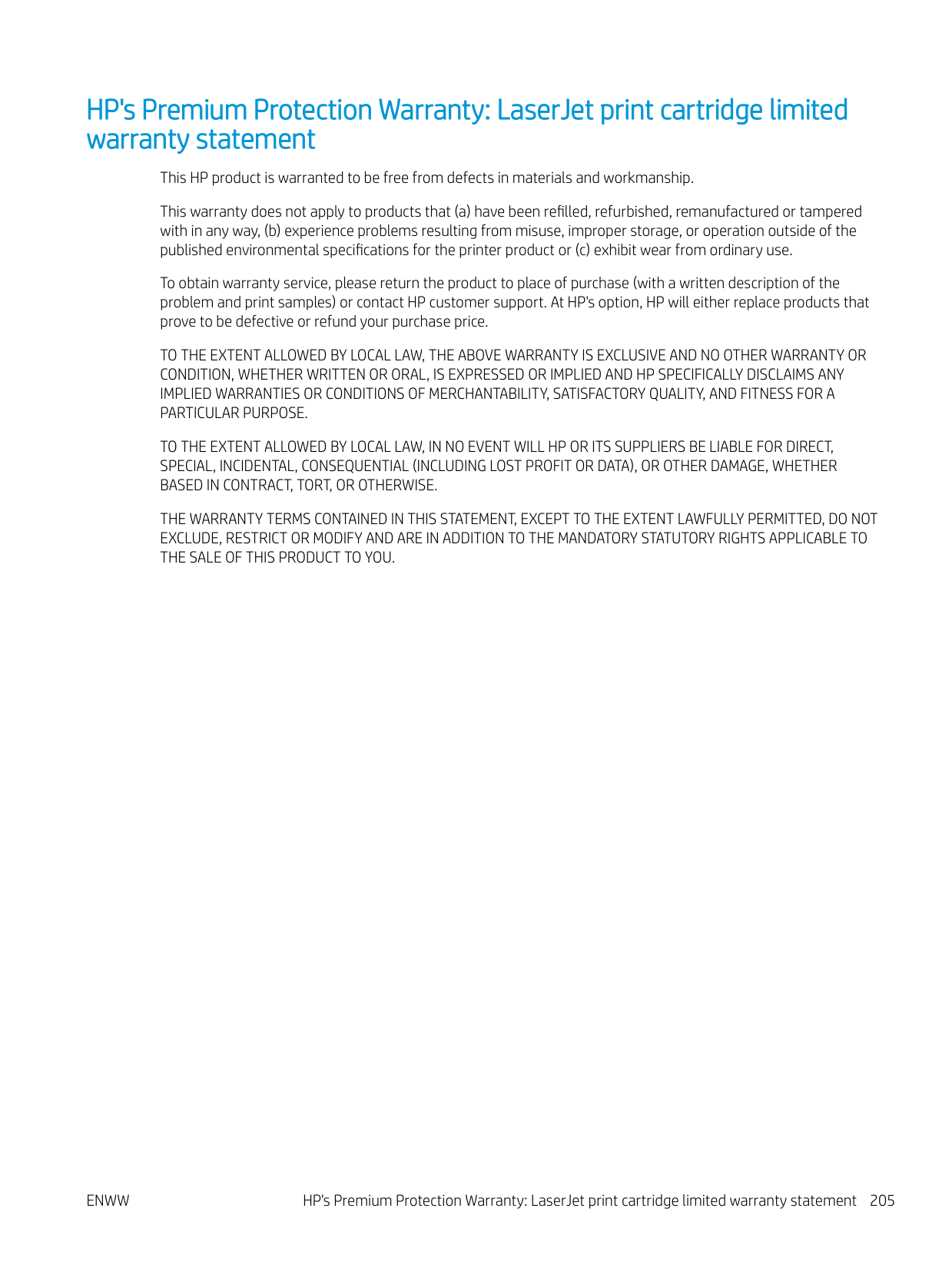
Declaration of Conformity according to ISO/IEC 17050-1 and EN 17050-1 Manufacturer's Name: Hewlett-Packard Company DoC#: BOISB-1101-00-rel.1.0 Manufacturer's Address: 11311 Chinden Boulevard
Boise, Idaho 83714-1021, USA
declares, that the product Product Name: HP LaserJet Enterprise 600 M601, M602, and M603 Including: CE998A – 500-sheet paper tray CF062A – Duplexer
Regulatory Model Number2) BOISB-1101-00 Product Options: ALL Print Cartridges: CE390A, CE390X conforms to the following Product Specifications: SAFETY: IEC 60950-1:2005 / EN60950-1: 2006 +A11
IEC 60825-1:2007 / EN 60825-1:2007 (Class 1 Laser/LED Product) IEC 62311:2007 / EN62311:2008 GB4943-2001
EMC: CISPR22:2005 +A1/ EN55022:2006 +A1 - Class B1)
ENERGY USE: Regulation (EC) No. 1275/2008
ENERGY STAR® Qualified Imaging Equipment Typical Electricity Consumption (TEC) Test Procedure Supplementary Information:
The product herewith complies with the requirements of the EMC Directive 2004/108/EC and the Low Voltage Directive 2006/95/EC, the EuP Directive 2005/32/EC and carries the CE-Marking accordingly.
This Device complies with Part 15 of the FCC Rules. Operation is subject to the following two Conditions: (1) this device may not cause harmful interference, and (2) this device must accept any interference received, including interference that may cause undesired operation.

product number(s).
ENWW Declaration of Conformity 221
Boise, Idaho USA September 2011
For regulatory topics only: European Contact: Your Local Hewlett-Packard Sales and Service Office or Hewlett-Packard GmbH, Department HQ-TRE /
Standards Europe, Herrenberger Straße 140, D-71034, Böblingen (FAX: +49-7031-14-3143) www.hp.eu/ certificates
USA Contact: Product Regulations Manager, Hewlett-Packard Company, PO Box 15, Mail Stop 160, Boise, Idaho 83707-0015 (Phone: 208-396-6000)
Safety statements
#### Laser safety
The Center for Devices and Radiological Health (CDRH) of the U.S. Food and Drug Administration has implemented regulations for laser products manufactured since August 1, 1976. Compliance is mandatory for products marketed in the United States. The device is certified as a “Class 1” laser product under the U.S. Department of Health and Human Services (DHHS) Radiation Performance Standard according to the Radiation Control for Health and Safety Act of 1968. Since radiation emitted inside the device is completely confined within protective housings and external covers, the laser beam cannot escape during any phase of normal user operation.
WARNING! Using controls, making adjustments, or performing procedures other than those specified in this user guide may result in exposure to hazardous radiation.
Canadian DOC regulations Complies with Canadian EMC Class B requirements. « Conforme à la classe B des normes canadiennes de compatibilité électromagnétiques. « CEM ». »
VCCI statement (Japan)
| | |---|
Power cord instructions
Make sure your power source is adequate for the product voltage rating. The voltage rating is on the product label. The product uses either 100-127 Vac or 220-240 Vac and 50/60 Hz.
Connect the power cord between the product and a grounded AC outlet. CAUTION: To prevent damage to the product, use only the power cord that is provided with the product.
Power cord statement (Japan)
| | |---|
EMC statement (Korea)
| | |
|---|---|
#### Product Stability
Do not extend more than one paper tray at a time.
Laser statement for Finland Luokan 1 laserlaite Klass 1 Laser Apparat HP LaserJet 600 M601n, M601dn, M602n, M602dn, M602x, M603n, M603dn, M603xh, laserkirjoitin on käyttäjän kannalta turvallinen luokan 1 laserlaite. Normaalissa käytössä kirjoittimen suojakotelointi estää lasersäteen pääsyn laitteen ulkopuolelle. Laitteen turvallisuusluokka on määritetty standardin EN 60825-1 (2007) mukaisesti. VAROITUS ! Laitteen käyttäminen muulla kuin käyttöohjeessa mainitulla tavalla saattaa altistaa käyttäjän turvallisuusluokan 1 ylittävälle näkymättömälle lasersäteilylle. VARNING !
Om apparaten används på annat sätt än i bruksanvisning specificerats, kan användaren utsättas för osynlig laserstrålning, som överskrider gränsen för laserklass 1.
###### HUOLTO
HP LaserJet 600 M601n, M601dn, M602n, M602dn, M602x, M603n, M603dn, M603xh - kirjoittimen sisällä ei ole käyttäjän huollettavissa olevia kohteita. Laitteen saa avata ja huoltaa ainoastaan sen huoltamiseen koulutettu henkilö. Tällaiseksi huoltotoimenpiteeksi ei katsota väriainekasetin vaihtamista, paperiradan puhdistusta tai muita käyttäjän käsikirjassa lueteltuja, käyttäjän tehtäväksi tarkoitettuja ylläpitotoimia, jotka voidaan suorittaa ilman erikoistyökaluja.
###### VARO !
Mikäli kirjoittimen suojakotelo avataan, olet alttiina näkymättömällelasersäteilylle laitteen ollessa toiminnassa. Älä katso säteeseen.
###### VARNING !
Om laserprinterns skyddshölje öppnas då apparaten är i funktion, utsättas användaren för osynlig laserstrålning. Betrakta ej strålen.
Tiedot laitteessa käytettävän laserdiodin säteilyominaisuuksista: Aallonpituus 775-795 nm Teho 5 m W Luokan 3B laser.
#### GS statement (Germany)
Das Gerät ist nicht für die Benutzung im unmittelbaren Gesichtsfeld am Bildschirmarbeitsplatz vorgesehen. Um störende Reflexionen am Bildschirmarbeitsplatz zu vermeiden, darf dieses Produkt nicht im unmittelbaren Gesichtsfeld platziert warden.
Substances Table (China)
| | | | | | | | |---|---|---|---|---|---|---| | | | | | | | | | | | | | | | | | | | | | | | | | | | | | | | | | | | | | | | | | | | | | | | | | | | | | | | |
Restriction on Hazardous Substances statement (Turkey)
Türkiye Cumhuriyeti: EEE Yönetmeliğine Uygundur
Index
Symbols/Numerics 1,500-sheet tray
loading 79 paper jams 181
500-sheet tray loading 77 paper jams 180
ordering 200 part numbers 201
acoustic specifications 214 Administration menu, control panel
18 AirPrint 50 alerts, e-mail 49 anticounterfeit supplies 93
31 batteries included 219 bins, output
jams, clearing 170 selecting 85
booklets
creating (Windows) 133 both sides, printing on
turning on (Mac) 49 browser requirements
HP Embedded Web Server 147 buttons, control panel 12
panel 31 Canadian DOC regulations 223
canceling print job 51 canceling a print request (Windows) 106 card stock output bin, selecting 85
cartridges non-HP 93 recycling 93, 217 replacing 95 status messages 12 storage 93 warranty 205
cartridges, staple
loading 97 cautions iii cleaning
paper path 161, 187 product 161
clearing jams 1,500-sheet tray 181 500-sheet tray 180 duplexer 178 envelope feeder 183 fuser area 175 locations 170 output area 170 staple 172 top-cover 184 Tray 1 180 Configuration Pages
description 146 configuring
IP address 60

connection USB with Mac 44 USB with Windows 58
connectivity solving problems 192
control panel Administration menu 18 Backup/Restore menu 31 buttons 12 Calibrate/Cleaning menu 31 cleaning page, printing 161 display 12 Display Settings menu 23 General Settings menu 18 lights 12 Manage Supplies menu 24 Manage Trays menu 25 messages, numerical list 102 messages, types of 168 Multi-Bin Mailbox Settings menu
26 Network Settings menu 27 Print Settings menu 21 Reports menu 18 security 153 Service menu 32 settings 37, 40, 48 Stapler/Stacker Settings menu
26 Troubleshooting menu 30 USB Firmware Upgrade menu 32
control panel menus
retrieve job 14, 15 conventions, document iii copies
changing number of (Windows)
108 counterfeit supplies 93 cover pages
printing (Mac) 52 printing on different paper
(Windows) 128 Current Settings Page
description 146
custom print settings (Windows) 109 custom-size paper settings
Macintosh 51
customer support online 210 repacking product 211
stored jobs 139 dimensions, product 214 DIMMs
installing 156 part numbers 202 verifying installation 158
Display Settings menu, control panel 23
disposal, end-of-life 219 document conventions iii double-sided printing (duplexing)
turning on (Mac) 49 drivers
changing paper types and sizes
70 changing settings (Mac) 48 changing settings (Windows) 37 paper types 73 presets (Mac) 51 settings 37, 40 settings (Mac) 51 settings (Windows) 107 supported (Windows) 34 universal 35
duplex alignment setting 142
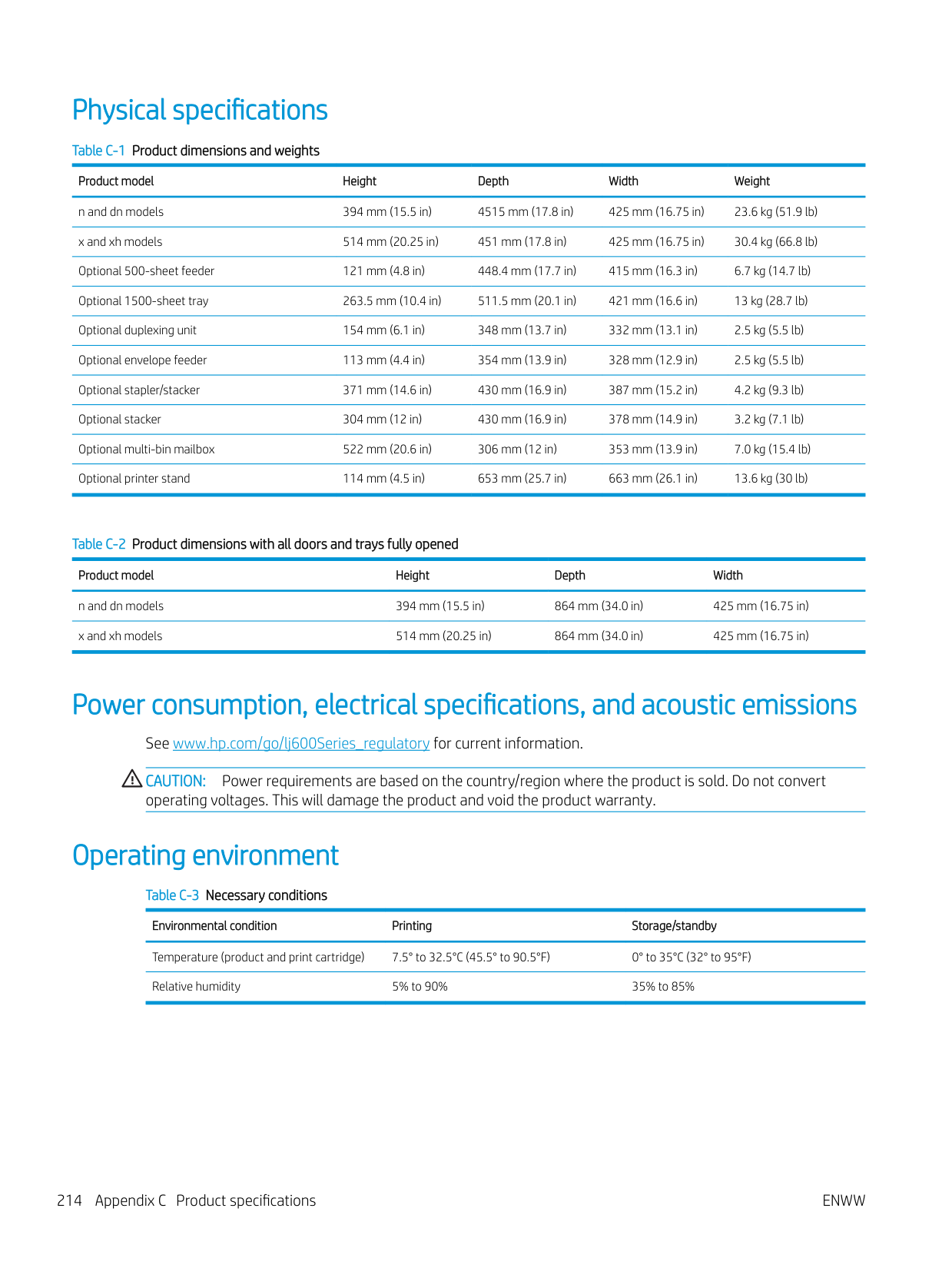
duplex printing (double-sided) settings (Windows) 114 turning on (Mac) 49
duplex printing accessory jams 178 part number 201
duplex settings, changing 66
EIO cards
installing 156 electrical specifications 214 Embedded Web Server features 147
Embedded Web Server (EWS)
assigning passwords 152 end-of-life disposal 219 envelope feeder
paper jams 183 part number 201
envelopes loading 82 output bin, selecting 85
environment for product

specifications 214 environmental features 5 Environmental Product Stewardship
Program 217
error messages control panel 168 e-mail alerts 49 lights, control panel 12 numerical list 102 types of 168
errors
software 194 European Union, waste disposal 220 Explorer, versions supported
HP Embedded Web Server 147
F features 2 feed rollers, replacing 98 File Directory Page
description 146 file upload, Mac 49 Finnish laser safety statement 224 firmware
update, Mac 49 firmware, downloading new 161 first page
printing on different paper (Windows) 128 use different paper 52
fonts permanent resources 158 upload, Mac 49
formatter security 153
forms
printing (Windows) 121 fraud Web site 93 fuser
paper jams 175 replacing 98
HP Embedded Web Server 148 General Settings menu, control
panel 18
encrypted 152 heavy paper
output bin, selecting 85 help
printing options (Windows) 108 Help button, control panel 12 HP Customer Care 210 HP Embedded Web Server 40
features 147 general configuration 148 HP Web Services 150 information pages 148 network settings 150 other links list 150 print settings 149 security settings 150 troubleshooting tools 149
HP ePrint
description 40, 50 HP ePrint, using 120 HP fraud Web site 93 HP Printer Utility 49 HP Universal Print Driver 35 HP Utility 49 HP Utility, Mac 49 HP Web Jetadmin 151 HP Web Services
enabling 150 HP Web Services, enabling 120 HP-UX software 41 humidity
specifications 214
HP Embedded Web Server 148 printing 146
installing memory (DIMMs) 156 product on wired networks, Mac
45 product on wired networks,
Windows 60 software, USB connections 58 software, wired networks 62 USB devices 160
Internet Explorer, versions supported
HP Embedded Web Server 147 IP address
configuring 60 IP Security (IPsec) 152 IPv4 address 64 IPv6 address 65
1,500-sheet tray 181 500-sheet tray 180 causes of 169 duplexer 178 envelope feeder 183 fuser area 175 locations 170 output bin 170 recovery 186 staple 172 top-cover 184 Tray 1 180
Japanese VCCI statement 223 Jetadmin, HP Web 151 job retention
setting options (Windows) 140
job storage Macintosh settings 53 modes available 137 setting options (Windows) 140
jobs
Macintosh settings 49 jobs, print
storing permanent copies (Windows) 141 storing permanent private copies (Windows) 141
storing temporarily (Windows) 140 storing temporary copies (Windows) 140
jobs, stored creating (Windows) 138 deleting 139 printing 139 receiving notification when printed
(Windows) 141 setting user names (Windows) 141 specifying names (Windows) 142
using 98 Korean EMC statement 223
output bin, selecting 85 printing (Windows) 123, 126
landscape orientation
selecting, Windows 118 laser safety statements 223, 224 last page
printing on different paper
(Windows) 128 letterhead
printing (Windows) 121 license, software 207 lights, control panel 12 link speed settings 66 Linux software 41 loading
1,500-sheet tray 79 500-sheet tray 77 staples 97 Tray 1 76 loading paper 76
changing paper types and sizes
51 driver settings 48, 51 problems, troubleshooting 196 removing software 46 software 49 supported operating systems 44
Macintosh HP Printer Utility 49 resize documents 51 support 210
Macintosh driver settings custom-size paper 51 Job Storage 53 watermarks 52
maintenance kit
using 98 maintenance kits
part numbers 201 Manage Supplies menu, control panel 24 Manage Trays menu, control panel
25 managing network 63 material restrictions 219 Material Safety Data Sheet (MSDS)
220 media 67 custom-size, Macintosh settings
51 first page 52 pages per sheet 53 supported sizes 71
memory included 49 installing DIMMs 156 part numbers 202 permanent resources 158 supply errors 102 upgrading 156 verifying installation 158
memory chip, print cartridge description 206 location 91
memory DIMMs
security 153 menus, control panel accessing 12 Administration 18 Backup/Restore 31 Calibrate/Cleaning 31 Display Settings 23 General Settings 18 Manage Supplies 24 Manage Trays 25 Multi-Bin Mailbox Settings 26 Network Settings 27
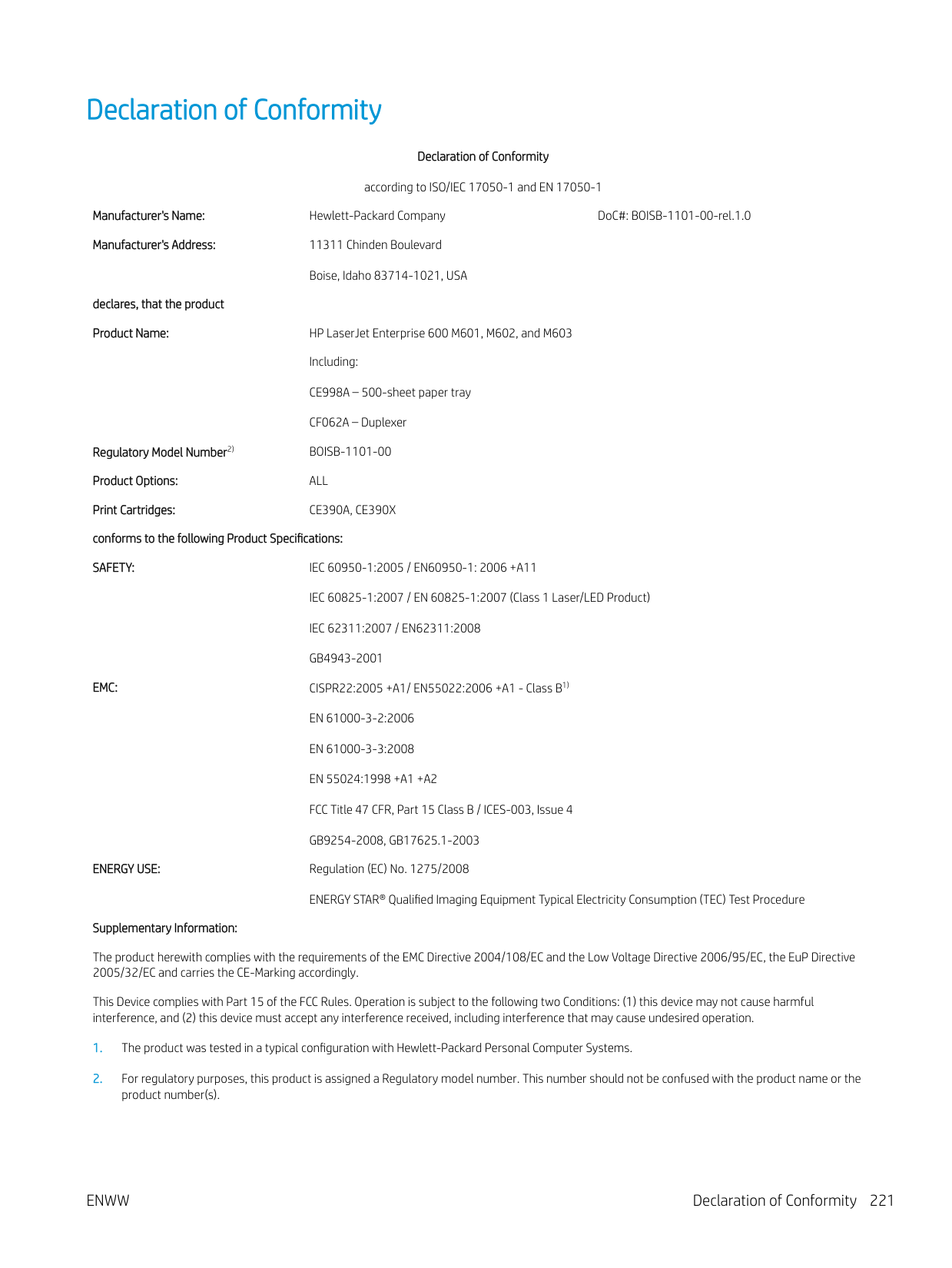
Print Settings 21 Reports 18 Service 32 Stapler/Stacker Settings 26 Troubleshooting 30 USB Firmware Upgrade 32
menus, control-panel
retrieve job 14, 15 mercury-free product 219 messages
e-mail alerts 49 lights, control panel 12 numerical list 102 types of 168
models, feature comparison 2 Multi-Bin Mailbox Settings menu,
control panel 26 multiple pages per sheet 53 printing (Windows) 117
N n-up printing 53
selecting (Windows) 117 names, job
specifying (Windows) 142 Netscape Navigator, versions
supported HP Embedded Web Server 147
network password, changing 63 password, setting 63 settings, changing 63 settings, viewing 63
network settings

HP Embedded Web Server 150 Network Settings menu, control
panel 27
networks configuring 59 default gateway 64 HP Web Jetadmin 151 IPv4 address 64 IPv6 address 65 protocols supported 59 security 60 subnet mask 64
networks, wired installing product, Mac 45 installing product, Windows 60
non-HP supplies 93
notes iii
107 operating environment
specifications 214 operating systems supported 34, 44 ordering
part numbers for 201 supplies and accessories 200
orientation
selecting, Windows 118 other links list
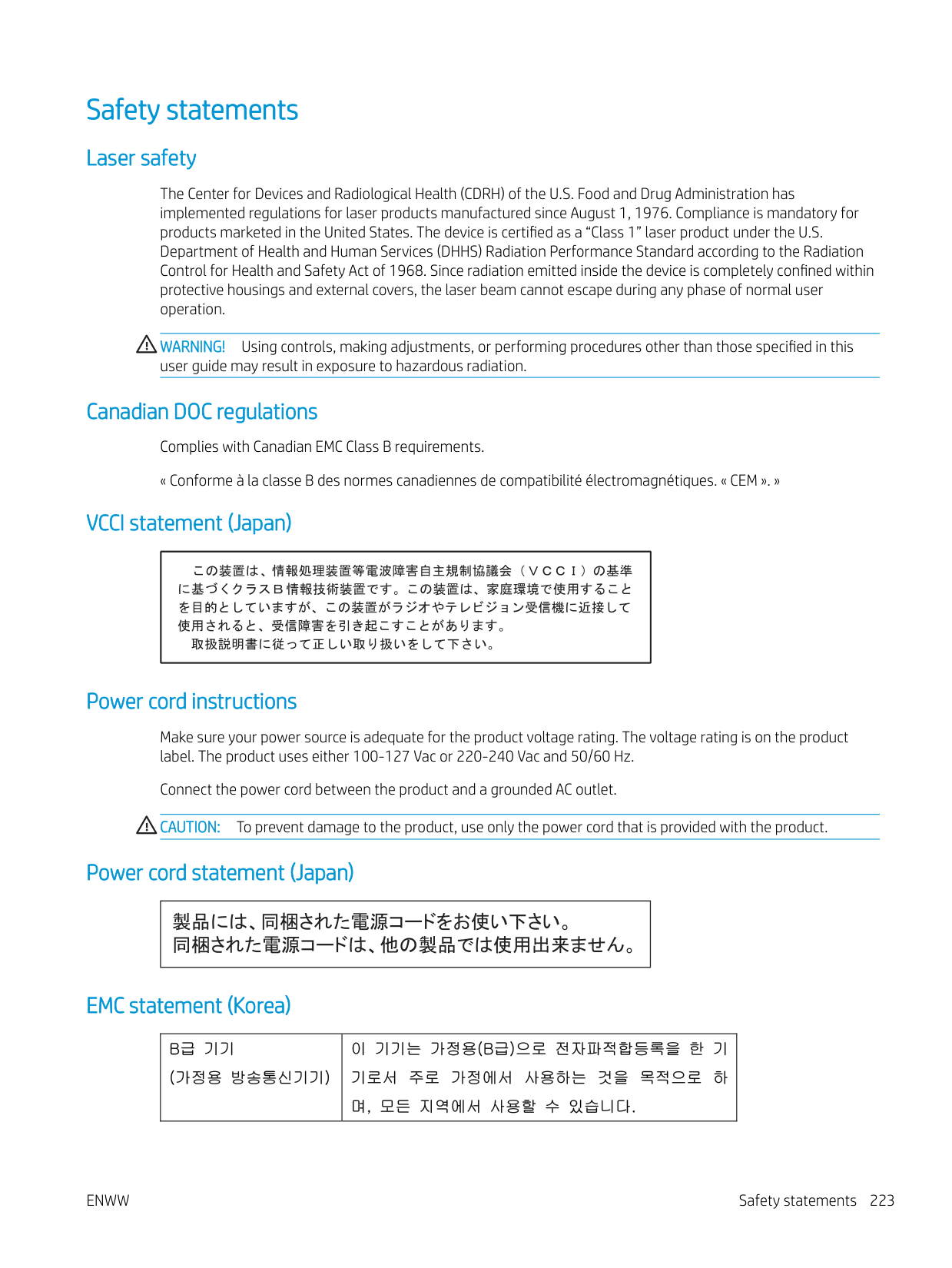
HP Embedded Web Server 150
output bins paper jams 170 selecting (Windows) 135
scaling documents to fit
(Windows) 131 pages per sheet 53
selecting (Windows) 117
paper covers, using different paper 128 custom-size, Macintosh settings
51 first and last pages, using different
paper 128 first page 52 jams 169 loading 1,500-sheet tray 79 loading 500-sheet tray 77 loading Tray 1 76 pages per sheet 53 printing on preprinted letterhead or
forms (Windows) 121 selecting 187 supported sizes 71 supported types 73
paper jams 1,500-sheet tray 181 500-sheet tray 180 duplexer 178 envelope feeder 183 fuser area 175
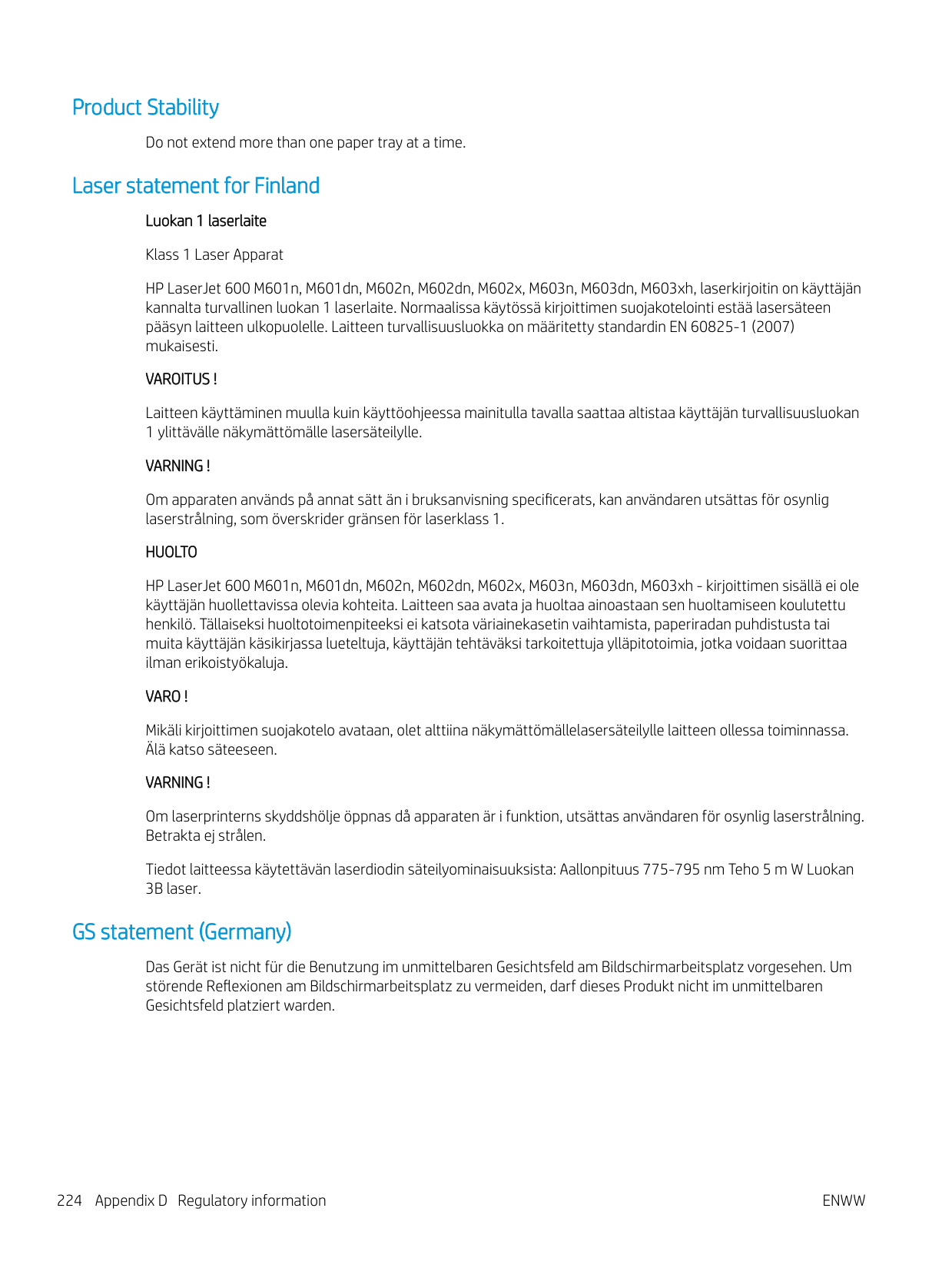
locations 170 output bin 170 top-cover 184 Tray 1 180
paper pickup problems
solving 169 paper size
changing 70
paper sizes selecting 113 selecting custom 113 supported 71
paper types changing 70 selecting 113 paper, ordering 200 paper, special
printing (Windows) 123, 126
part numbers maintenance kits 201 memory 202 print cartridges 201 supplies 201 trays 201
PCL drivers 34
universal 35 PCL Font List
description 146 perform printer maintenance
message 98 permanent resources 158 personal jobs
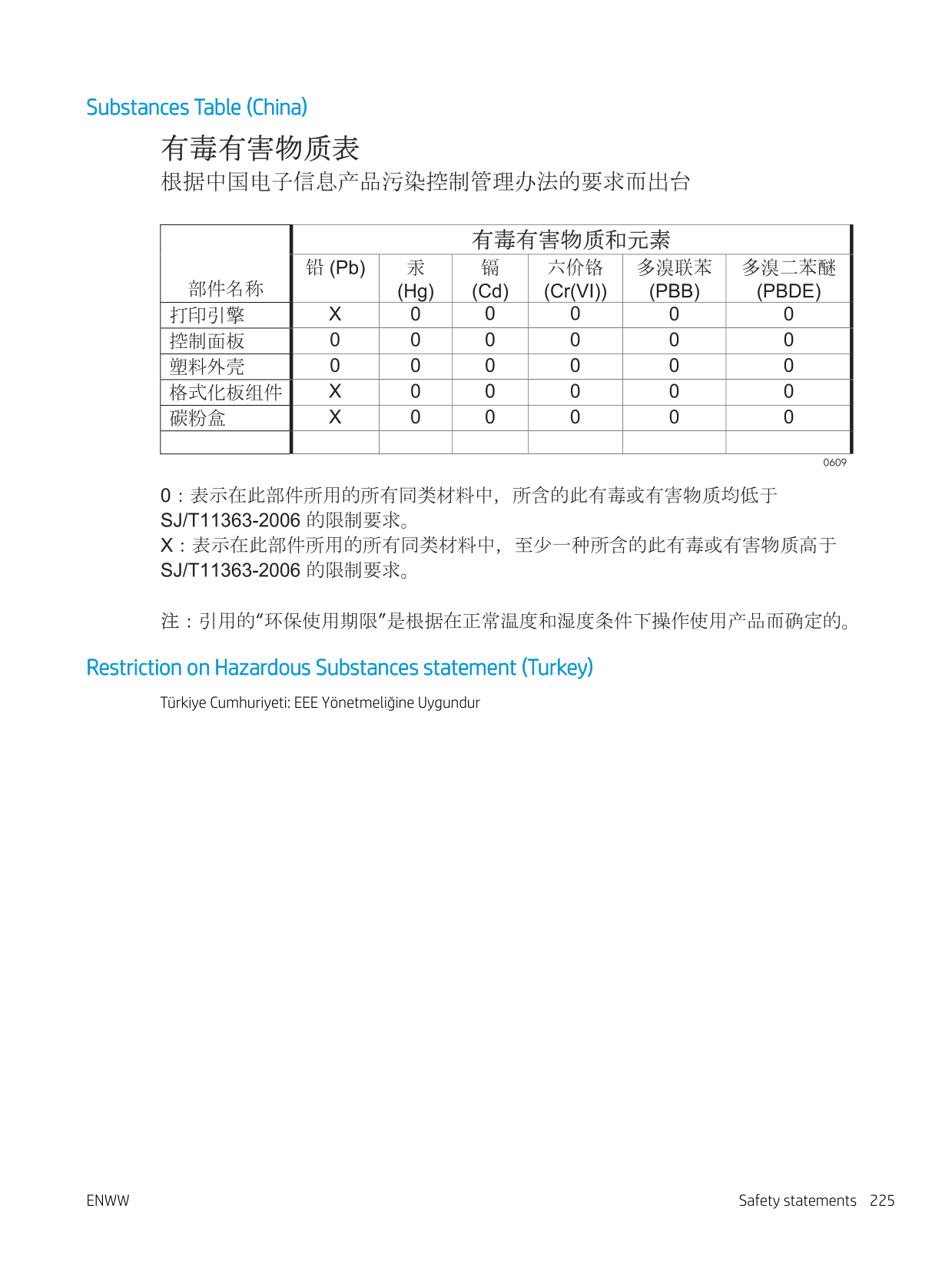
storing temporarily (Windows)
140 physical specifications 214 pickup rollers
ordering 202 replacing 98
portrait orientation
selecting, Windows 118 postcards
output bin, selecting 85 PostScript Printer Description (PPD) files
included 49 power
consumption 214 PPDs
included 49
preprinted paper
printing (Windows) 121 presets (Mac) 51 print cartridge
paper jams 184

print cartridges checking for damage 100 memory chips 206 non-HP 93 part numbers 201 recycling 93, 217 replacing 95 status messages 12 storage 93 warranty 205
print jobs canceling (Mac) 51 storing permanent copies
(Windows) 141 storing permanent private copies (Windows) 141 storing temporarily (Windows) 140 storing temporary copies (Windows) 140
print quality improving 187 improving (Windows) 113
print settings
HP Embedded Web Server 149 Print Settings menu, control panel
21 print tasks 105 printer drivers
choosing 189
printer drivers (Mac) changing settings 48 settings 51
printer drivers (Windows) changing settings 37 settings 107 supported 34 printer maintenance kit
using 98 printer stand
part number 201 printing
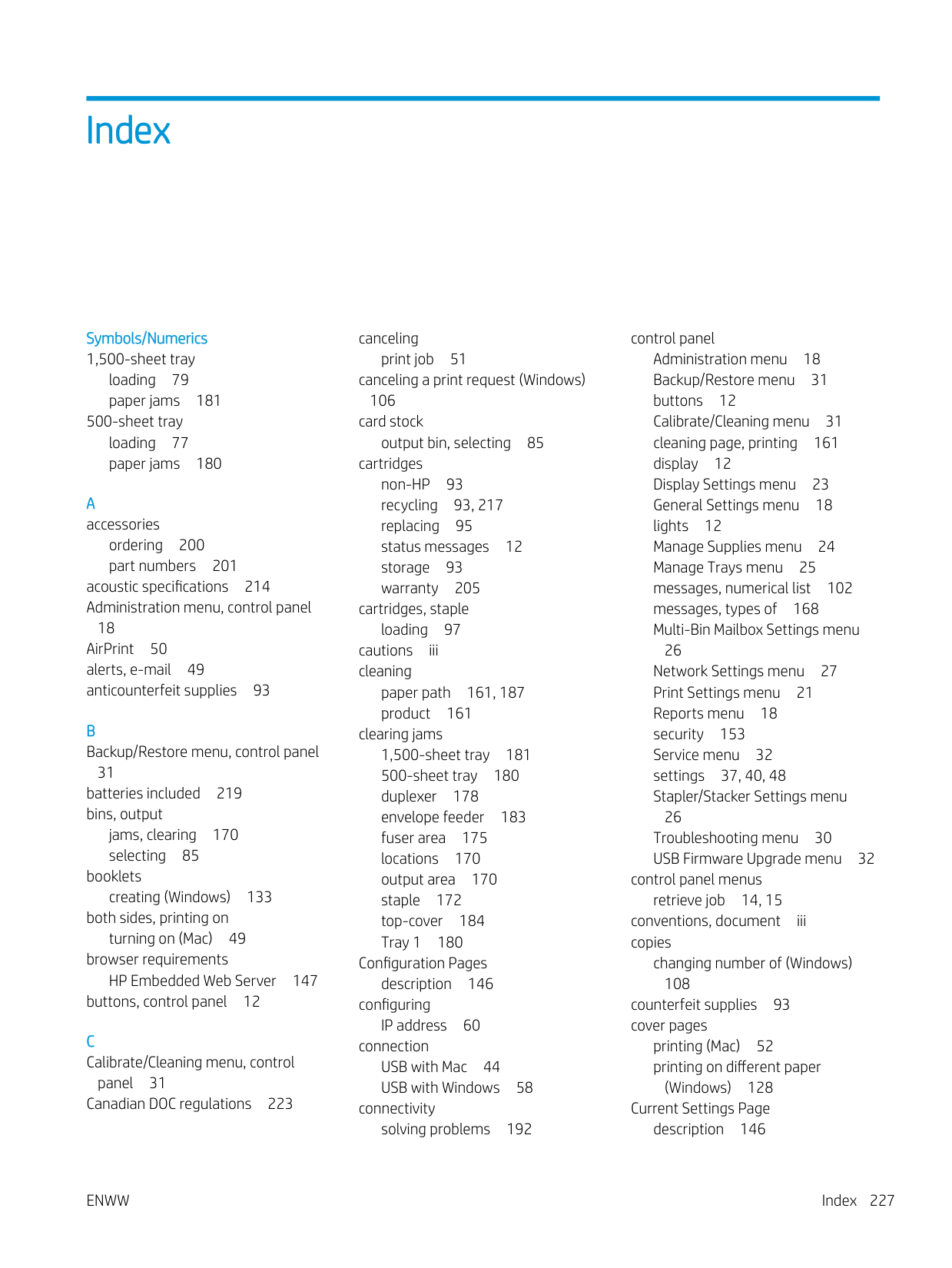
from USB storage accessories 143 settings (Mac) 51
settings (Windows) 107 stored jobs 139
printing on both sides settings (Mac) 53 settings (Windows) 114
priority, settings 37, 40, 48 private jobs
storing permanently (Windows) 141
problem-solving e-mail alerts 49 messages, types of 168 no response 190 slow response 190
product comparison 2 proof and hold
selecting (Windows) 140 protocols, network 59 PS Emulation drivers 34 PS Font List
description 146
storing (Windows) 140
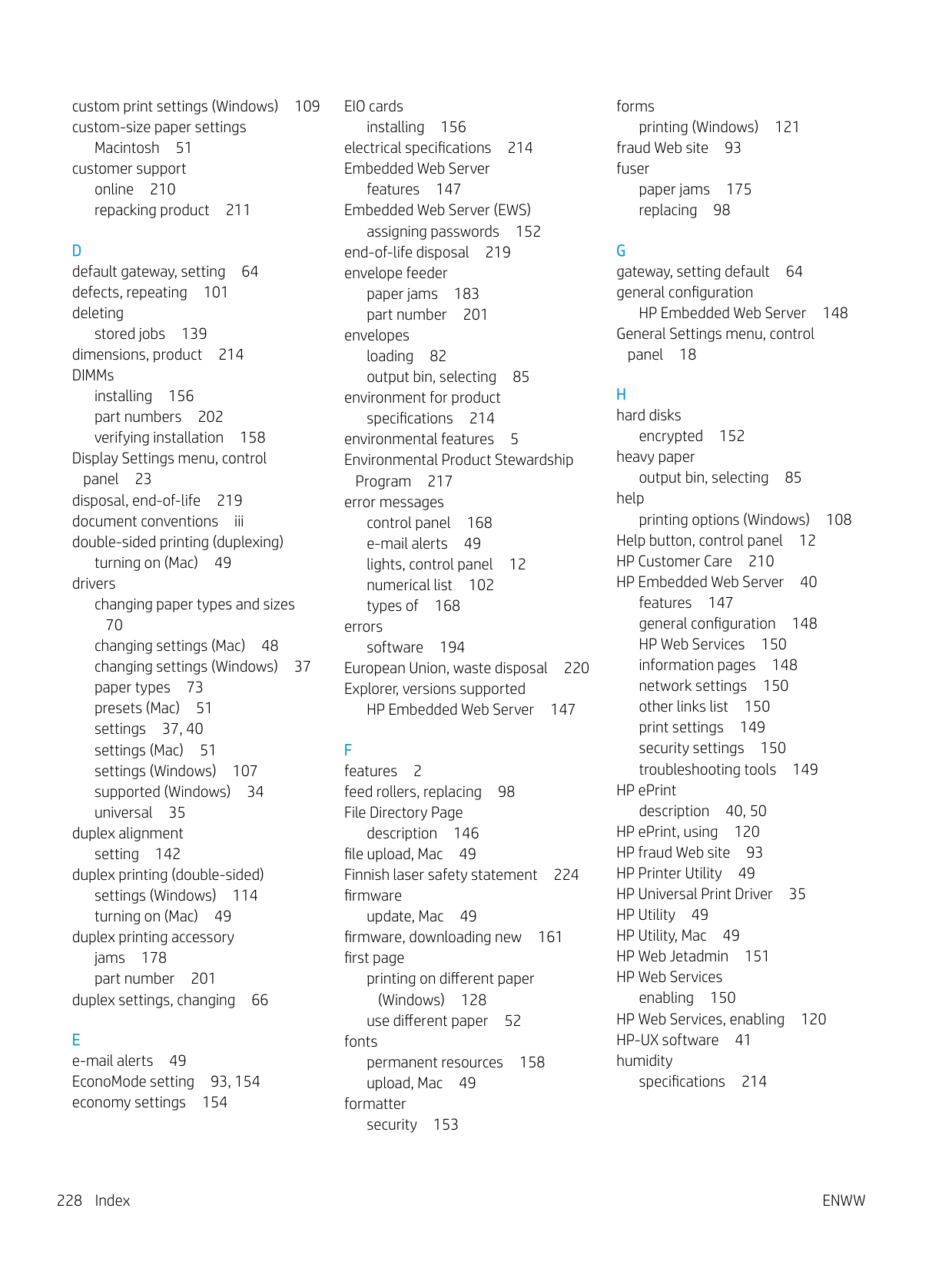
paper jams 170 printing to 85
recycling 5, 217
HP printing supplies returns and environmental program 218
recycling supplies 93 regulatory statements
environmental product
stewardship program 217 removing Mac software 46 removing Windows software 39 repacking product 211 repeating defects, troubleshooting
101
replacing printing cartridges 95 Reports menu, control panel 18 resize documents
Macintosh 51 Windows 131 resource saving 158 restore factory settings 167
retention, job modes available 137 setting options (Windows) 140
retrieve job menu 14, 15 rollers
ordering 202 replacing 98
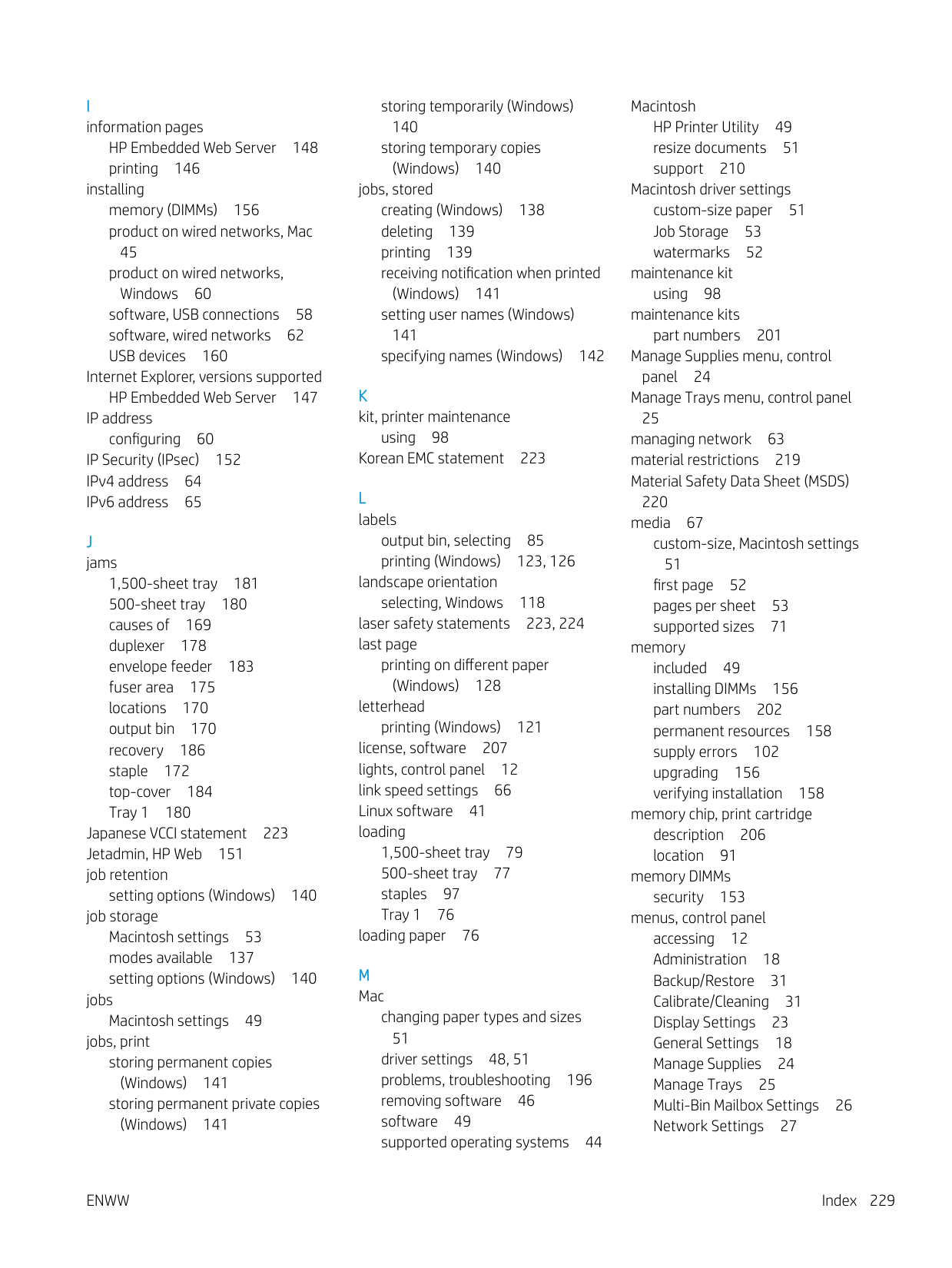
rough paper output bin, selecting 85
S safety statements 223, 224 SAP software 41 saving resources, memory 158 scale documents
Macintosh 51 Windows 131
security
encrypted hard disk 152 security features 60 security settings
HP Embedded Web Server 150 service
repacking product 211 Service menu, control panel 32 settings
driver presets (Mac) 51 drivers 37 drivers (Mac) 48 priority 37, 40, 48 restore factory 167
shipping product 211 shortcuts (Windows)
creating 110 using 109
SIMMs, incompatibility 156 sleep delay
disabling 154 enabling 154
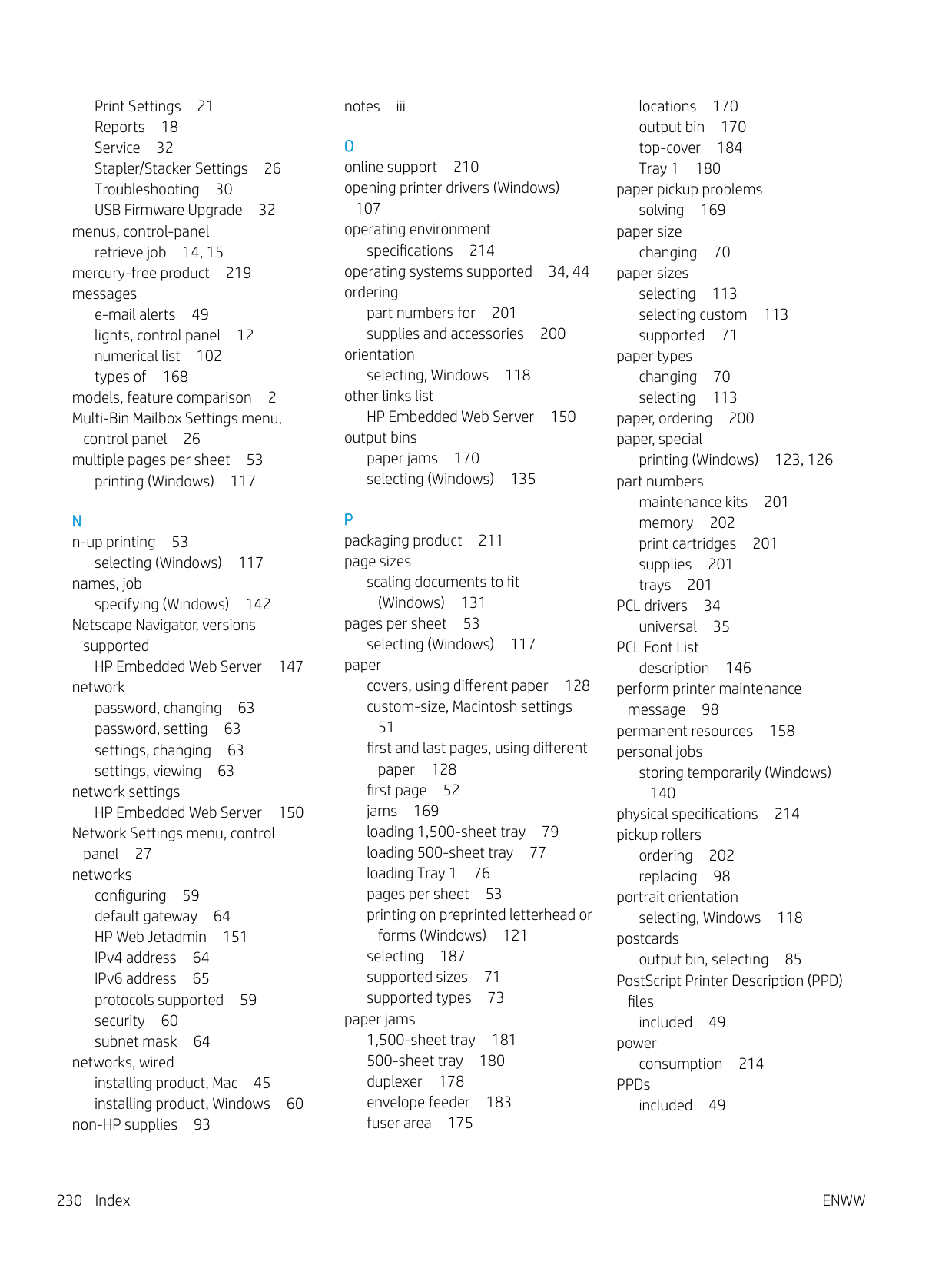
sleep mode
disabling 154 enabling 154
Sleep Schedule
setting 155 sleep schedule
disabling 155 enabling 155
small paper, printing on 85 software
embedded Web server 40
HP Printer Utility 49 installing, USB connections 58 installing, wired networks 62 Mac 49 problems 194 settings 37, 40, 48 software license agreement 207 supported operating systems 34,
44 uninstalling for Windows 39 uninstalling Mac 46
Solaris software 41 solving
direct-connect problems 192 network problems 192 walk-up USB printing problems
191 special media
guidelines 68
special paper guidelines 68 printing (Windows) 123, 126
specifications electrical and acoustic 214 operating environment 214 physical 214
stacker part number 201 printing to 86
staple cartridges loading 97 part numbers 202
staple jams 172 staple options
selecting (Windows) 136
stapler/stacker jams, staple 172 loading staples 97 part number 201 printing to 86
Stapler/Stacker Settings menu, control panel 26
status HP Utility, Mac 49 messages, types of 168
status, supplies control panel messages 12 stopping a print request (Windows) 106
storage, job Macintosh settings 49, 53 modes available 137 setting options (Windows) 140
stored jobs creating (Windows) 138 deleting 139 printing 139 receiving notification when printed
(Windows) 141 security 153 setting user names (Windows)
141
specifying names (Windows) 142 storing
print cartridges 93 storing jobs
permanent copies (Windows) 141 permanent private copies
(Windows) 141 proof and hold (Windows) 140 setting options (Windows) 140 temporary copies (Windows) 140 temporary personal jobs
(Windows) 140 with Windows 138 straight-through paper path 85 subnet mask 64 supplies
counterfeit 93 memory errors 102 non-HP 93 ordering 200 part numbers 201, 202 recycling 93, 217 replacing print cartridges 95 status, viewing with HP Utility 49
supplies status page description 146 printing 101
supplies, status control panel messages 12
support online 210 repacking product 211
supported paper 71 system requirements
HP Embedded Web Server 147
T TCP/IP
manually configuring IPv4
manually configuring IPv6
technical support online 210 repacking product 211
temperature specifications 214 tips iii toner cartridges. See print cartridges top cover
paper jams, clearing 184
top output bin paper jams 170 printing to 85

transfer rollers, replacing 98 transparencies
output bin 85 printing (Windows) 123, 126
trays configure 83 load 76 loading 1,500-sheet tray 79 loading 500-sheet tray 77 loading Tray 1 76 Macintosh settings 49 paper jams 170, 180, 181 paper orientation 81 part numbers 201 selecting (Windows) 113
troubleshooting 1,500-sheet tray paper jams 181 500-sheet tray paper jams 180 direct-connect problems 192 duplexer jams 178 envelope feeder jams 183 error messages, numerical list
102
fuser-area paper jams 175 jams 169 Mac problems 196 network problems 192 output bin jams 170 paper feed problems 169 paper jams 170 repeating defects 101 staple jams 172 top-cover paper jams 184 Tray 1 paper jams 180 walk-up USB printing problems
191 Windows problems 194 Troubleshooting menu, control panel 30
troubleshooting tools cleaning page 161 control-panel messages 102,
168 HP Embedded Web Server 149 solve problems checklist 165
two-sided printing settings (Windows) 114 turning on (Mac) 49
U uninstalling Mac software 46 uninstalling Windows software 39 universal print driver 35 UNIX software 41 updates, downloading product 161 upgrading memory 156 Usage Page
description 146 USB cable, part number 202 USB configuration, Mac 44 USB configuration, Windows 58 USB devices
installing 160 USB Firmware Upgrade menu, control panel 32 USB storage accessories
printing from 143 user names
setting for stored jobs (Windows) 141
W walk-up USB printing 143
warnings iii warranty
customer self repair 209 license 207 print cartridges 205 product 204
watermarks 52
adding (Windows) 133 Web browser requirements
HP Embedded Web Server 147 Web printing
HP ePrint 40, 50
Web sites customer support 210 fraud reports 93 HP Web Jetadmin, downloading
151 Macintosh customer support 210 Material Safety Data Sheet
(MSDS) 220
universal print driver 35 weight, product 214 Windows
driver settings 37 drivers supported 34 supported operating systems 34 universal print driver 35