
Ask AI
— answers from the official manualAnswers from the official manual.
Common questions
Common Questions
48 totalHow do I sew in reverse on the XH2135-001?
Push the reverse sewing lever in as far as possible and hold it in that position while lightly pressing the foot controller to sew in reverse. To return to forward sewing, simply release the reverse sewing lever. Note that the length of reverse stitches is fixed at 2 mm (1/16 inch). (Page 1)
How do I control the sewing speed on the XH2135-001?
Press the foot controller down to start sewing and take your foot off the foot controller to stop sewing. Pressing harder on the foot controller increases speed, while releasing pressure slows the machine down. Do not turn on the machine while pressing the foot controller down, as this may cause unexpected movement and injury. (Page 1)
Can I oil the XH2135-001 sewing machine myself?
No, this machine must not be oiled by the user. It was manufactured with the necessary amount of oil already applied to ensure correct operation, making periodic oiling unnecessary. If you experience difficulty turning the handwheel or hear unusual noises, stop using the machine immediately and contact your authorized Brother Service Center. (Page 2)
What should I do if the upper thread tension is too tight or too loose?
If the upper tension is too tight, loops will appear on the surface of the fabric — reduce the tension by turning the upper tension control dial to a lower number. If the upper tension is too loose, loops will appear on the back of the fabric — increase the tension by turning the dial to a higher number. Also check that the bobbin and upper thread are correctly threaded, as incorrect threading can cause tension issues. (Page 1)
How do I sew in reverse on this machine?
To sew in reverse, push the reverse sewing lever in as far as possible and hold it in that position while lightly pressing the foot controller. To return to forward sewing, simply release the reverse sewing lever. Note that the length of reverse stitches is fixed at 2 mm (1/16 inch). (Page 1)
How do I clean the sewing machine safely?
Always unplug the machine before cleaning to avoid the risk of electric shock or injury. You should clean the bobbin race as part of regular maintenance. Use only neutral soaps or detergents to clean the case, as benzene, thinner, and scouring powders can damage the case and machine. (Page 2)
Show 42 more questions
How do I sew thin or stretch fabrics on the XH2135-001?
How do I sew a buttonhole on this sewing machine?
What power source should I use, and are extension cords allowed?
How do I thread the bobbin on the Brother XH2135-001?
Can I oil the Brother XH2135-001 sewing machine myself?
What safety precautions should I follow when replacing the needle?
Where should I avoid storing the XH2135-001 sewing machine?
How do I sew thin fabrics that are not feeding correctly?
What are the safe storage conditions for the Brother XH2135-001?
How do I change the sewing direction mid-project?
How do I sew a buttonhole on the XH2135-001?
What should I do if the machine is not working properly or makes an unusual noise?
How do I replace the needle on the XH2135-001?
What should I do if my upper thread tension is too tight and loops appear on the fabric surface?
Can I use extension cords with my sewing machine?
What is the reverse stitch length on this machine?
How do I sew buttonholes on the XH2135-001?
Where should I not store this sewing machine?
Can the user oil this machine for maintenance?
What should I do before changing the presser foot?
How thick can fabric be for sewing on this machine?
What should I do if the stitches are bunched together?
How do I safely replace the needle on this sewing machine?
How do I properly insert a needle into my sewing machine?
How do I use the reverse sewing feature on my machine?
Is it safe to use extension cords with my sewing machine?
Can I sew with a bent needle?
What should I do if my fabric doesn't fit easily under the presser foot?
What should I do if my stitches are bunched together?
What type of power source should I use for my Brother XH2135-001?
How do I sew thin fabrics without problems?
When should I unplug my sewing machine?
What precautions should I take with the power cord?
What should I do if stitches become bunched together while sewing?
What should I do if the fabric does not fit easily under the presser foot?
How do I remove the flat bed attachment to sew cylindrical pieces?
What should I do before changing the needle on my sewing machine?
How do I perform reverse sewing on my machine?
How do I properly insert a needle into the Brother XH2135-001?
How thick can the fabric be before I risk damaging the needle?
How can I sew cylindrical pieces like pant legs?
What should I do before changing the needle on my Brother XH2135-001?
Full Manual
2 pages
4 5 2 3 1 4 Using Your Sewing Machine
Warning
● ●Use only regular household electricity for the power source. Using other power sources may result in fire, electric shock, or damage to the machine. ● ●Make sure that the plugs on the power cord are firmly inserted into the electrical outlet and the power supply jack on the machine. Otherwise, a fire or electric shock may result. ● ●Do not insert the plug on the power cord into an electrical outlet that is in poor condition. ● ●Turn off the main power and remove the plug in the following circumstances:Caution
● ●Use only the power cord included with this machine. ● ●Do not use extension cords or multi-plug adapters with many other appliances plugged in to them. Fire or electric shock may result. ● ●Do not touch the plug with wet hands. Electric shock may result. ● ●When unplugging the machine, always turn off the main power first. Always grasp the plug to remove it from the outlet. Pulling on the cord may damage the cord, or lead to fire or electric shock. ● ●Do not allow the power cord to be cut, damaged, modified, forcefully bent, pulled, twisted, or bundled. Do not place heavy objects on the cord. Do not subject the cord to heat. These things may damage the cord and cause fire or electric shock. If the cord or plug is damaged, take the machine to your authorized Brother Service Center for repairs before continuing use. ● ●Unplug the power cord if the machine is not to be used for a long period of time. Otherwise a fire may result.Caution
● ●Always turn off the machine before you change the needle. Otherwise, injuries may occur if the foot controller is accidentally pressed and the machine starts sewing. ● ●Only use sewing machine needles for home use. Other needles may bend or break and cause injury. ● ●Never sew with a bent needle. A bent needle will easily break and cause injury. Replacing the needle Note ● ●If a power outage occurs while the sewing machine is being operated, turn off the main power and unplug the power supply cord. When restarting the sewing machine, follow the necessary procedure to correctly operate the machine. (For U.S.A. only)● ●This appliance has a polarized plug (one blade wider than the other). To reduce the risk of electric shock, this plug is intended to fit in a polarized outlet only one way. If the plug does not fit fully in the outlet, reverse the plug. If it still does not fit, contact a qualified electrician to install the proper outlet. Do not modify the plug in any way.■ ■Connecting plugs■ ■Main power and sewing light switch■ ■Foot controller■ ■Checking the needle Press the power switch toward the “I” mark to turn the main power and sewing light on. Press toward the “O” mark to turn off. Press the foot controller down to start sewing. Take your foot off the foot controller to stop sewing.Caution
● ●Do not allow pieces of cloth and dust to build up on the foot controller. Doing so could cause a fire or an electric shock. Slower Faster 1 2 3Caution●
●Make sure you insert the needle until it touches the stopper, and securely tighten the needle clamp screw with a screwdriver, otherwise the needle may break or the machine may be damaged.Caution
● ●Before replacing the needle, place fabric or paper under the presser foot to prevent the needle from falling into the hole in the needle plate. Parallel space Level surface Turn the screw counterclockwise. With the flat side of the needle toward the back of the machine, insert the needle until touching this stopper. Tighten the needle clamp screw. Note ● ●Do not use excessive force when loosening or tightening the needle clamp screw.Xh2135-001
Caution
● ●Always turn off the machine before you change the presser foot. If you leave the power on and step on the controller, the machine will start and you may be injured. ● ●Always use the correct presser foot for the stitch pattern you have chosen. If you use the wrong presser foot, the needle may strike the presser foot and bend or break, and may cause injury. ● ●Only use presser feet that have been designed to be used with this machine. Using any other presser foot may cause accident or injury. If the fabric does not fit easily under the presser foot, raise the presser foot lever even higher to bring the presser foot to its highest position. Sewing thick fabricsCaution
If fabric more than 6 mm (15/64 inch) thick is sewn or if the fabric is pushed with too much force, the needle may bend or break. Mark on the wheel points up to raise the needle.■ ■Presser foot installation orientationCaution
● ●If the presser foot is not installed with the correct orientation, the needle may strike the presser foot, which may bend or break the needle and cause injury.Caution●
●If the stitches are bunched together, lengthen the stitch length and continue sewing. Do not continue sewing without lengthening the stitch length, otherwise the needle may break and cause injury.Caution
● ●After adjusting the stitch width, slowly turn the handwheel toward you (counterclockwise) and check that the needle does not touch the presser foot. If the needle hits the presser foot, the needle may bend or break. ● ●If the stitches are bunched together, increase the stitch length. Continuing to sew with the stitches bunched together may result in the needle bending or breaking. Stabilizer material or paper The main parts a Bobbin winder This winds the thread onto the bobbin for use as the lower thread. b Stitch length dial Rotate the dial to control the stitch length. c Spool pin This holds the spool of thread. d Stitch width dial Rotate the dial to control the stitch width. e Upper tension-control dial This controls the tension of the upper thread. f Thread guide This is used when winding the thread onto the bobbin and then threading the machine. g Thread take-up lever h Thread cutter Pass the threads through the thread cutter to cut them. i Needle threader j Quick-set bobbin k Flat bed attachment with accessory compartment l Presser foot m Reverse sewing lever Push this lever to stitch in the reverse direction. n Pattern selection dial Rotate the dial in either direction to choose the stitch you want. o Handwheel Used to manually raise and lower the needle. p Buttonhole fine-adjustment screw q Air vent The air vent allows the air surrounding the motor to circulate. Do not cover the air vent while the machine is being used. r Main power and sewing light switch You can turn the main power and sewing light switch on and off. s Foot controller jack / socket Plug in the foot controller plug and connect the machine to the power supply. t Presser foot lever Used to raise and lower the presser foot. u Handle Carry the machine by its handle when transporting. v Buttonhole lever (1-Step automatic buttonhole) Lower the buttonhole lever when sewing buttonholes. w Foot controller You can use this to control the sewing speed, and to start and stop sewing.■ ■Flat bed attachment The accessories can be stored in a compartment inside the flat bed attachment. Slide the attachment to the left to open. Storage compartment Thread tension Stitch length dial Stitch width dial■ ■Correct tension Correct tension is important as too much or too little tension will weaken your seams or cause puckers on your fabric. Lower thread Upper thread Upper tension-control dial Surface of fabric Back of fabric■ ■Upper tension is too tight Loops will appear on the surface of the fabric. Note● ●If the bobbin thread was incorrectly threaded, the upper thread may be too tight. In this case, refer to “1 Lower threading” on the back side to rethread the bobbin thread. Solution: Reduce the tension by turning the upper tension control dial to a lower number. Upper thread Lower thread Loops appear on surface of fabric Back of fabric Surface of fabric Solution: Increase the tension by turning the upper tension control dial to a higher number. Upper thread Lower thread Back of fabric Note ● ●If the upper thread was incorrectly threaded, the upper thread may be too loose. In this case, refer to “2 Upper threading” on the back side and rethread the upper thread. Note (For U.S.A. only)● ●Foot Controller: Model KD-1902 This foot controller can be used on the machine with product code 888-X06, 888-X08, 888-X16, 888-X18, 888-X26 and 888-X28. The product code is mentioned on the machine rating plate. Surface of fabric■ ■Upper tension is too loose Loops appear on the back of the fabric. Loops appear on back of fabric The tension of the thread will affect the quality of your stitches. You may need to adjust it when you change fabric or thread. We recommend that you do a test sample on scrap of a fabric before you start to sew. Depending on the selected stitch, you may need to adjust the stitch length for best results. The numbers marked on the stitch length dial represent the stitch length in millimeters (mm) (1/25 inch). THE HIGHER THE NUMBER, THE LONGER THE STITCH. With the “0” setting, material is not fed. This is used when sewing a button. The “F”-“1” range is for making a satin stitch (closed zigzag stitch), which is used for making buttonholes and decorative stitches. The position needed for making the satin stitch varies according to the material and thread being used. To determine the exact dial position, first test the stitch and length settings on a scrap piece of fabric to observe the feeding of the material. Raise the needle by turning the handwheel toward you (counterclockwise) so that the mark on the wheel points up. The numbers marked on the dial represent the stitch width. When the Straight or Triple Stretch Stitch is selected, the needle position can be changed from left to right by adjusting the stitch width dial. This snaps in to the shank. Press the black button at the back of the presser foot holder to release the presser foot. 9 For repair or adjustment:Save These Instructions
This machine is intended for household use.For Users In Countries Except
Cenelec Countries
This appliance is not intended for use by persons (including children) with reduced physical, sensory or mental capabilities, or lack of experience and knowledge, unless they have been given supervision or instruction concerning use of the appliance by a person responsible for their safety. Children should be supervised to ensure that they do not play with the appliance.For Users In Cenelec Countries
This appliance can be used by children aged from 8 years and above and persons with reduced physical, sensory or mental capabilities or lack of experience and knowledge if they have been given supervision or instruction concerning use of the appliance in a safe way and understand the hazards involved. Children shall not play with the appliance. Cleaning and user maintenance shall not be made by children without supervision.For Users In The Uk, Eire, Malta And Cyprus
Only
Important
Danger
Warning
Important Safety
Instructions
Shank Black button Presser foot holder Stitch length dial Stitch width dial Stitch length dial Shorter Longer Product Code:888-X06/X08/X16/X18/X26/X28
Install the twin needle in the same way. 1 3 2 4 5 6 7 8 9 0A
B
C
D
L
K
E
I
H
G
J
M
F
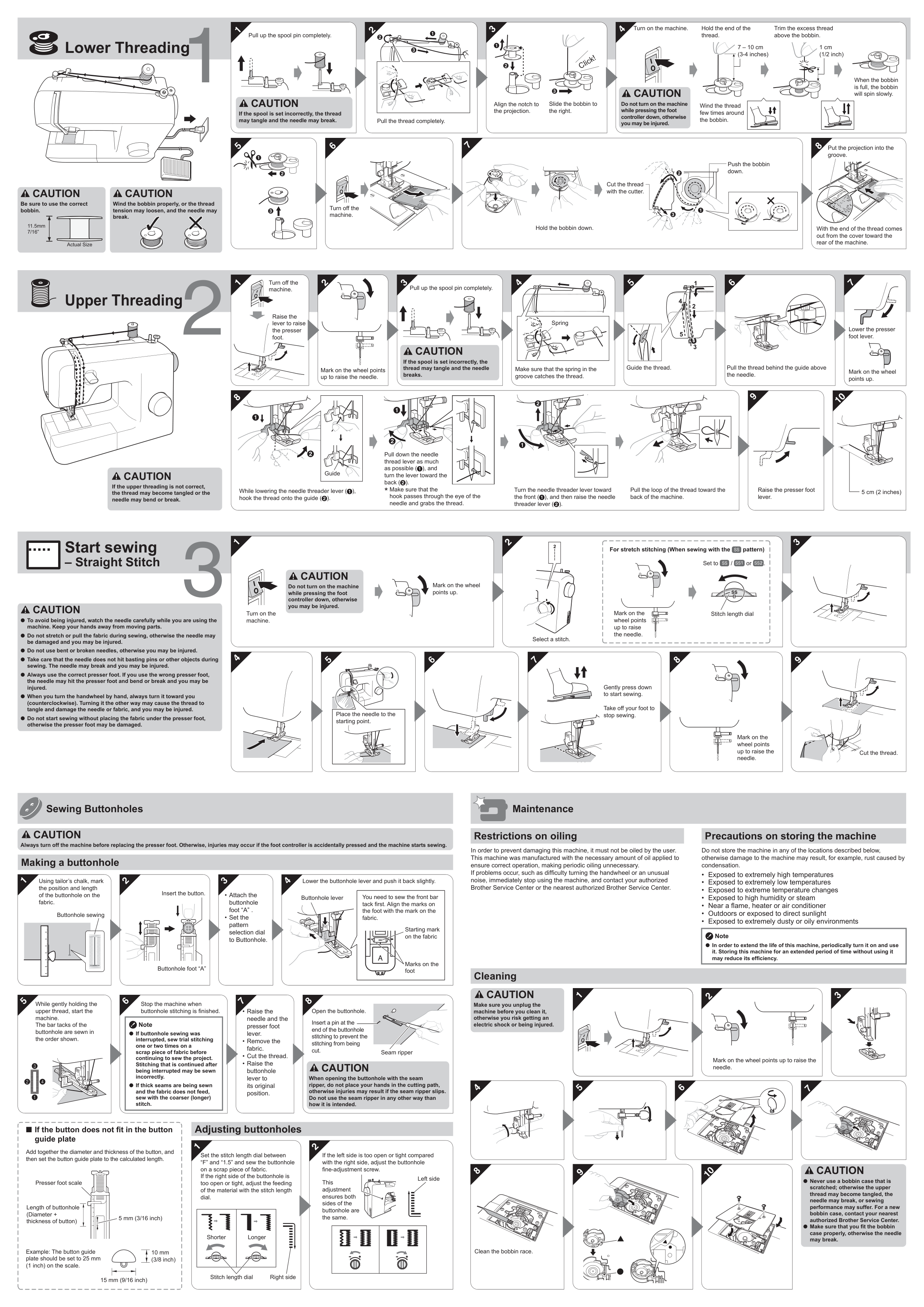
2 8 1 1 2 3 4 5 7 6 9 10 1 2 3 4 7 8 5 6 1 2 3 4 5 6 7 8 9 10 3 Turn the needle threader lever toward the front ( ), and then raise the needle threader lever ( ). Pull the loop of the thread toward the back of the machine. 1 2 3 7 8 8 9 4 5 6 5