
Finlux FR Fs1001fmi1w Refrigerator
Ask AI
— answers from the official manualAnswers from the official manual.
Common questions
Common Questions
10 totalWhat should I do if my freezer has frost build-up?
For frost buildup, remove more than 5mm of frost with a plastic scraper provided not sharp metal objects. Place containers of warm water inside to aid the defrosting process and manually drain any collected water before restarting your appliance. (Page 14)
What is the acceptable ambient temperature range for my refrigerator to function optimally?
This appliance is designed to operate within an ambient temperature range of 16°C - 32°C, and should not be used in environments colder than 10°C. (Page 16)
How do I adjust the thermostat after new food is stored or frequent door openings?
You can modify the temperature setting gradually and wait at least 12 hours before a new check to stabilize internal temperatures. If there is excessive ice formation in cold areas or during initial cooling period, lower the thermostat until compressor off cycles resume normally. (Page 10)
What precautions should I take when disposing of an old fridge?
Old fridges with locks must have them removed to avoid children becoming trapped inside, which could cause injury or death. Ensure proper disposal by contacting local authority. Refrigerators containing R600a refrigerant require careful handling to prevent damage and potential explosion risks. (Page 3)
How do I properly level my refrigerator?
Adjust the front adjustable legs to ensure your appliance is stable and level before placing any food inside. You can adjust the legs by turning them clockwise (or in the opposite direction). This should be done before placing food in the fridge. (Page 6)
What should I do if my refrigerator has a strange smell when first turned on?
This is normal and will disappear once your appliance starts to cool down after its initial operation. Ensure it's kept upright for at least 3 hours before plugging in for efficient performance. (Pages 6, 16)
Full Manual
56 pages
EN BUILT IN REFRIGERATOR Fridge - Freezer User manual
IT FRIGORIFERO INTEGRATO Frigorifero - Congelatore Manuale per l’utente
FR ENCASTRABLE Réfrigérateur - Congélateur Guide d’utilisation
FBGN.3200A+ FBGN.3200AP
Index
INSTRUCTIONS PREALABLES ............................................................... 3 General warnings ........................................................................................3 Old and out-of-order fridges ........................................................................5 Safety warnings ...........................................................................................5 Installing and operating your fridge .............................................................6 Before Using your Fridge .............................................................................7
HOW TO OPERATE THE APPLIANCE ..................................................... 8 Thermostat Setting ......................................................................................8 Super Freeze and low ambient switch .........................................................9 Warnings about Temperature Adjustments ..................................................9 Temperature indicator ................................................................................10 Accessories ...............................................................................................12
Ice tray .....................................................................................................................12 Bottle holder .............................................................................................................12
FOOD STORAGE IN THE APPLIANCE .................................................. 13 Refrigerator Compartment .........................................................................13 Freezer Compartment ...............................................................................13
CLEANING AND MAINTENANCE .......................................................... 14 Defrosting the Refrigerator Compartment .................................................14 Defrosting the Freezer Compartment ........................................................15 Replacing the Refrigerator Light Bulb ........................................................16 Replacing LED Lighting .............................................................................16
####### SHIPMENT AND REPOSITIONING ......................................................... 16 BEFORE CALLING YOUR AFTER SALES SERVICE ............................ 16

####### Tips for saving energy ...............................................................................17 PARTS OF THE APPLIANCE AND THE COMPARTMENTS ................. 18
The operating instructions apply to several models. Differences may therefore occur.
###### INSTRUCTIONS PREALABLESPART - 1.
General warnings WARNING: Keep ventilation openings, in the appliance enclosure or in the built-in structure, clear of obstruction.
WARNING: Do not use mechanical devices or other means to accelerate the defrosting process, other than those recommended by the manufacturer.
WARNING: Do not use electrical appliances inside the food storage compartments of the appliance, unless they are of the type recommended by the manufacturer. WARNING: Do not damage the refrigerant circuit. WARNING: To avoid a hazard due to the instability of the appliance, it must be fixed in accordance with the instructions.
######## Old and out-of-order fridges
Please ask your municipal authority about the disposal of the WEEE for the reuse, recycle and recovery purposes.
########## Notes:
######## Safety warnings
Installing and operating your fridge Before starting to use your fridge, you should pay attention to the following points:
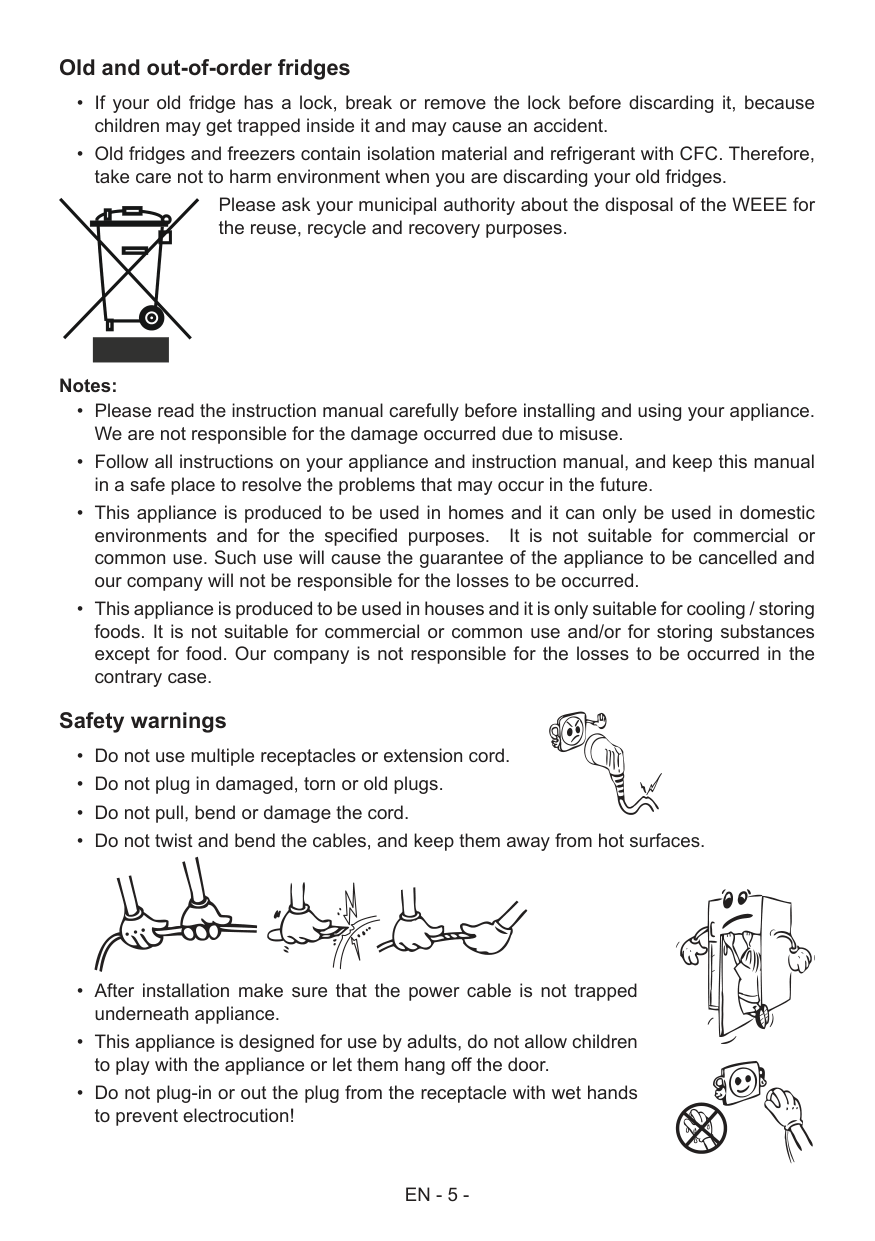
######## Before Using your Fridge
###### HOW TO OPERATE THE APPLIANCEPART - 2.
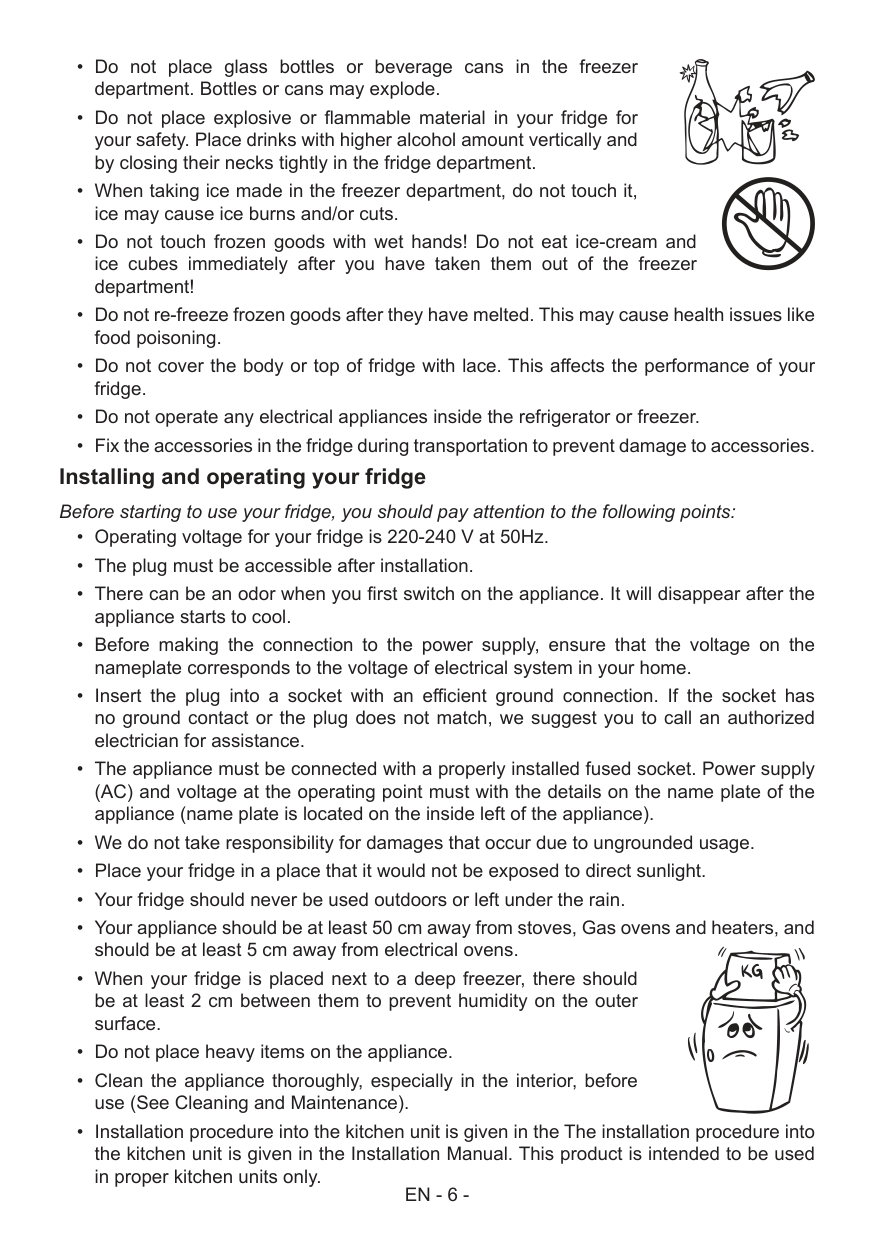
Thermostat Setting
Thermostat knob
| | | |---|---| | | |
| | | |---|---| | | |
Freezer thermostat automatically regulates the inside temperature of the compartments. By rotating the knob from position 1 to 5, colder temperatures can be obtained.
Important note: Do not try to rotate knob beyond 1 position it will stop your appliance. Freezer & Refrigerator Thermostat Setting; 1 - 2 : For short-term storage of food in the freezer compartment, you can set the knob
between minimum and medium position.
3 - 4 : For long-term storage of food in the freezer compartment, you can set knob to
medium position.
5 : For freezing the fresh food. The appliance will run for colder temperatures.
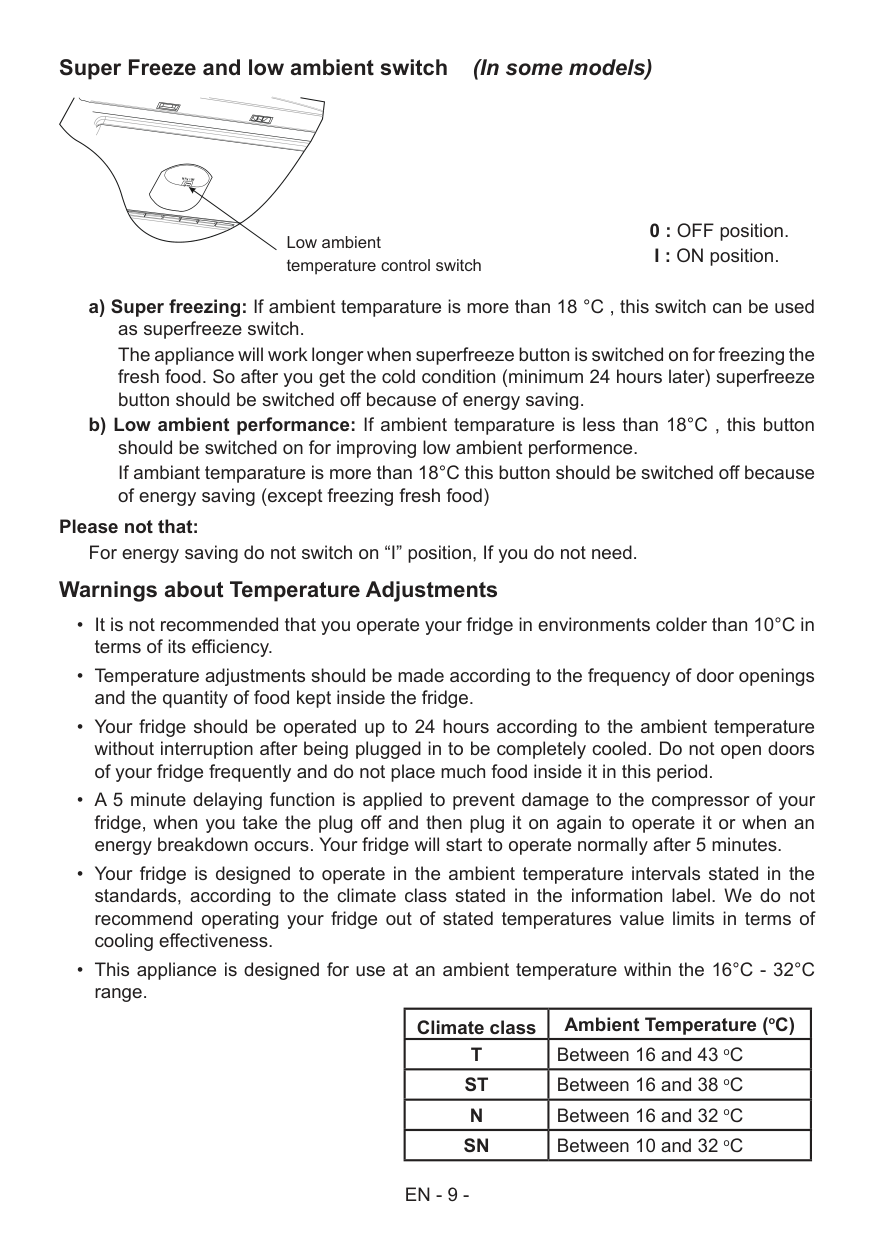
######## Super Freeze and low ambient switch
######## (In some models)
MAX 15
Low ambient temperature control switch
0 : OFF position. I : ON position.
########## Please not that:
For energy saving do not switch on “I” position, If you do not need.
######## Warnings about Temperature Adjustments
|Climate class|Ambient Temperature (oC)| |---|---| |T|Between 16 and 43 oC| |ST|Between 16 and 38 oC| |N|Between 16 and 32 oC| |SN|Between 10 and 32 oC|
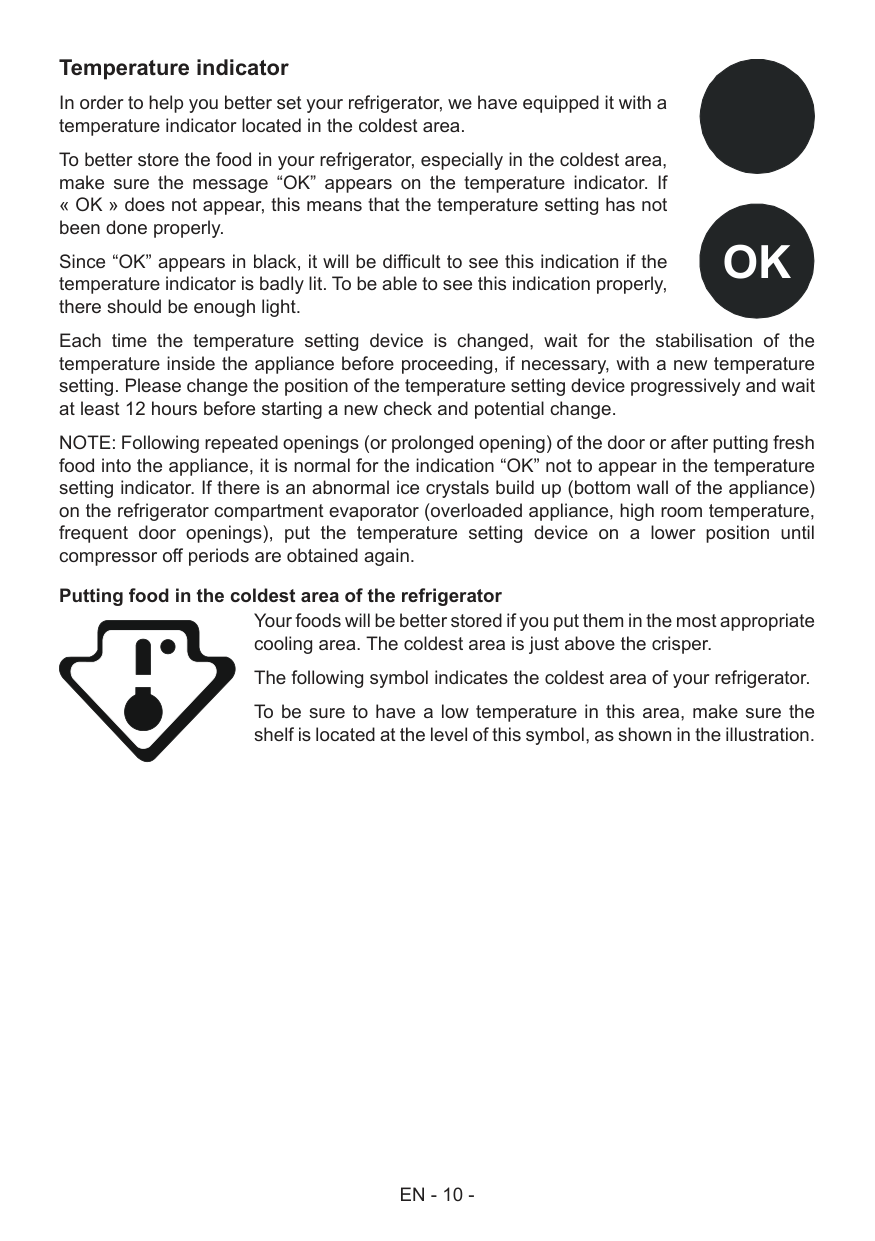
######## Temperature indicator
In order to help you better set your refrigerator, we have equipped it with a temperature indicator located in the coldest area.
To better store the food in your refrigerator, especially in the coldest area, make sure the message “OK” appears on the temperature indicator. If « OK » does not appear, this means that the temperature setting has not been done properly.
Since “OK” appears in black, it will be difficult to see this indication if the temperature indicator is badly lit. To be able to see this indication properly, there should be enough light.
OK
Each time the temperature setting device is changed, wait for the stabilisation of the temperature inside the appliance before proceeding, if necessary, with a new temperature setting. Please change the position of the temperature setting device progressively and wait at least 12 hours before starting a new check and potential change.
NOTE: Following repeated openings (or prolonged opening) of the door or after putting fresh food into the appliance, it is normal for the indication “OK” not to appear in the temperature setting indicator. If there is an abnormal ice crystals build up (bottom wall of the appliance) on the refrigerator compartment evaporator (overloaded appliance, high room temperature, frequent door openings), put the temperature setting device on a lower position until compressor off periods are obtained again.
Putting food in the coldest area of the refrigerator Your foods will be better stored if you put them in the most appropriate cooling area. The coldest area is just above the crisper.
The following symbol indicates the coldest area of your refrigerator.
To be sure to have a low temperature in this area, make sure the shelf is located at the level of this symbol, as shown in the illustration.
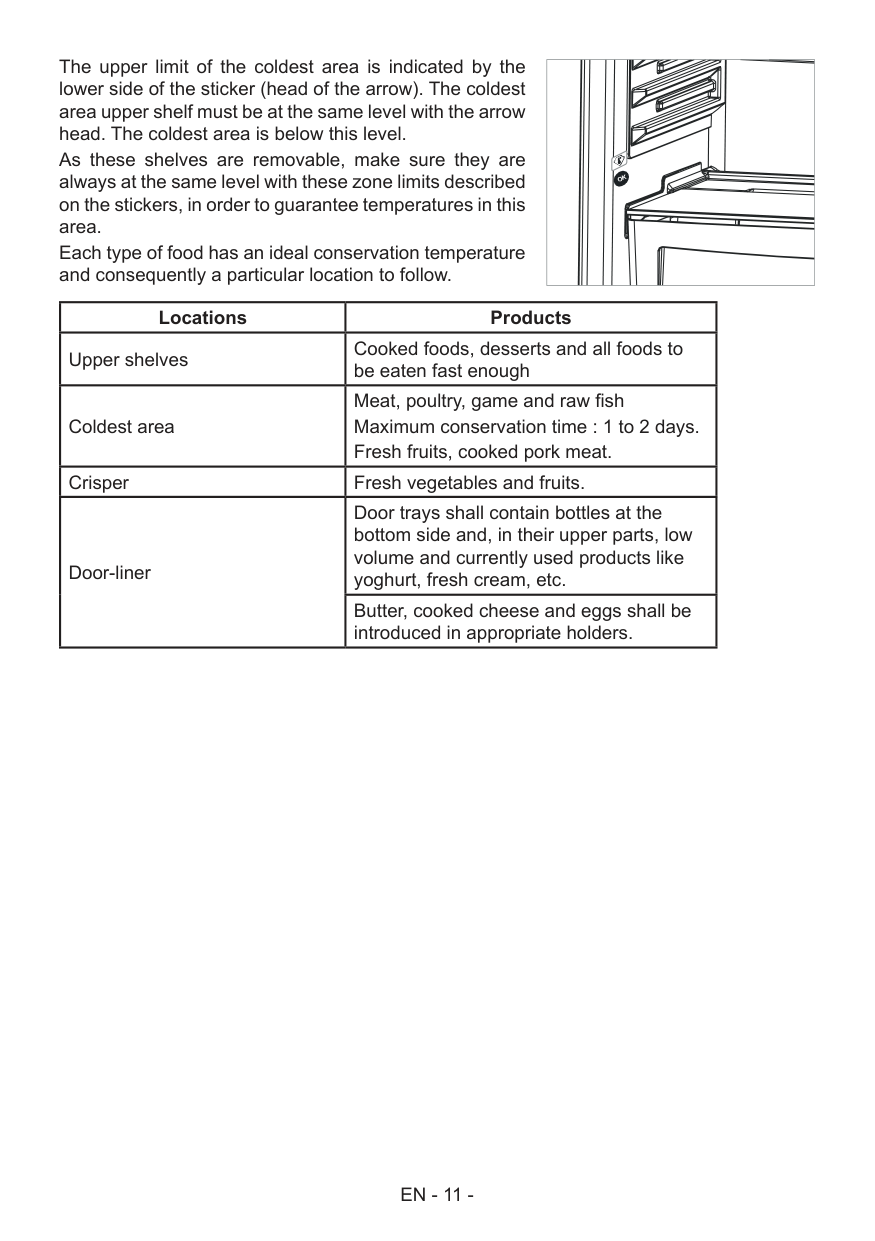
The upper limit of the coldest area is indicated by the lower side of the sticker (head of the arrow). The coldest area upper shelf must be at the same level with the arrow head. The coldest area is below this level.
As these shelves are removable, make sure they are always at the same level with these zone limits described on the stickers, in order to guarantee temperatures in this area.
Each type of food has an ideal conservation temperature and consequently a particular location to follow.
|Locations|Products| |---|---| |Upper shelves|Cooked foods, desserts and all foods to be eaten fast enough| |Coldest area|Meat, poultry, game and raw fish Maximum conservation time : 1 to 2 days. Fresh fruits, cooked pork meat.| |Crisper|Fresh vegetables and fruits.| |Door-liner|Door trays shall contain bottles at the bottom side and, in their upper parts, low volume and currently used products like yoghurt, fresh cream, etc.| |Door-liner|Butter, cooked cheese and eggs shall be introduced in appropriate holders.|
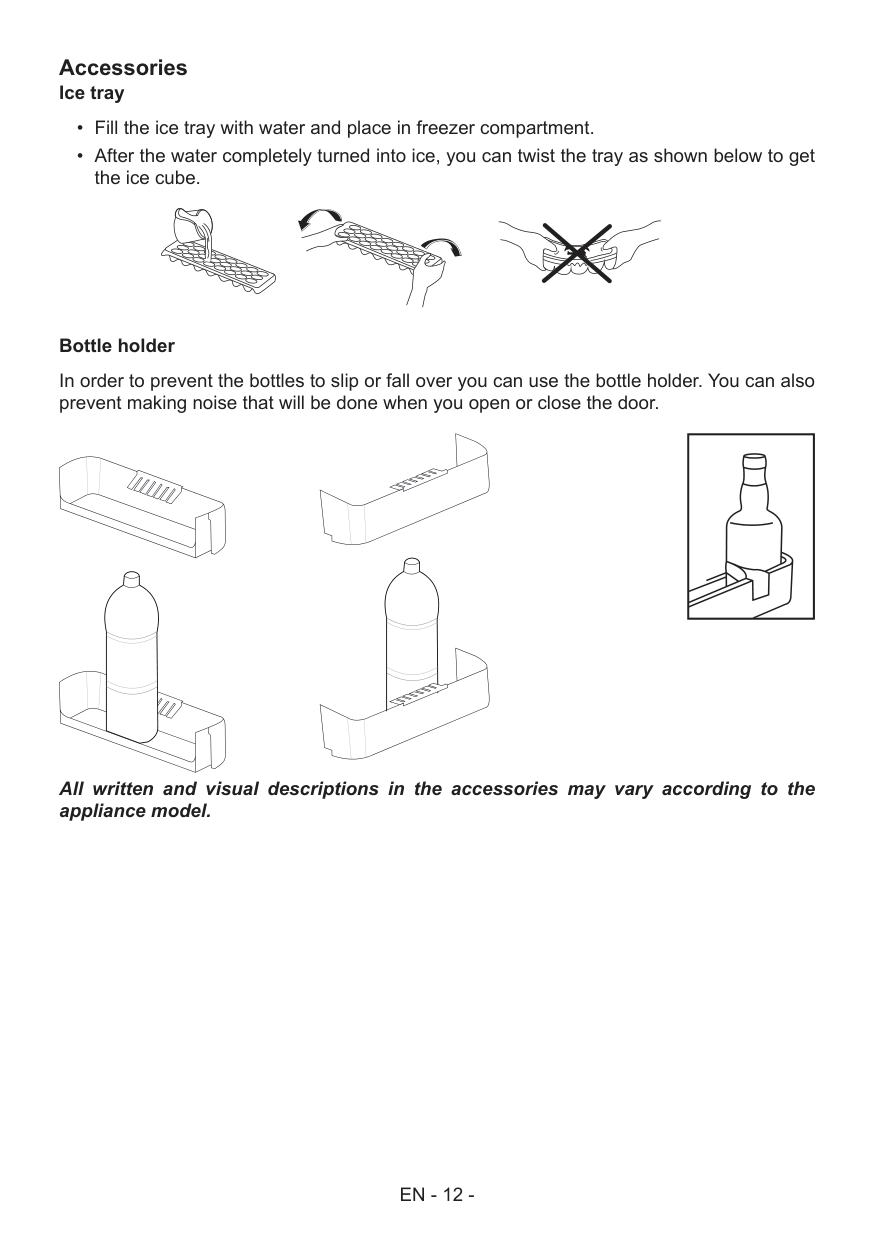
######## Accessories Ice tray
########## Bottle holder
In order to prevent the bottles to slip or fall over you can use the bottle holder. You can also prevent making noise that will be done when you open or close the door.
########## All written and visual descriptions in the accessories may vary according to the appliance model.
###### FOOD STORAGE IN THE APPLIANCEPART - 3.
Refrigerator Compartment Refrigerator compartment is used for storing fresh food for few days.
######## Freezer Compartment
Freezer compartment is used for freezing fresh foods and for storing frozen foods for the period of time indicated on packaging, and for making ice cubes.
###### CLEANING AND MAINTENANCEPART - 4.
######## Defrosting the Refrigerator Compartment
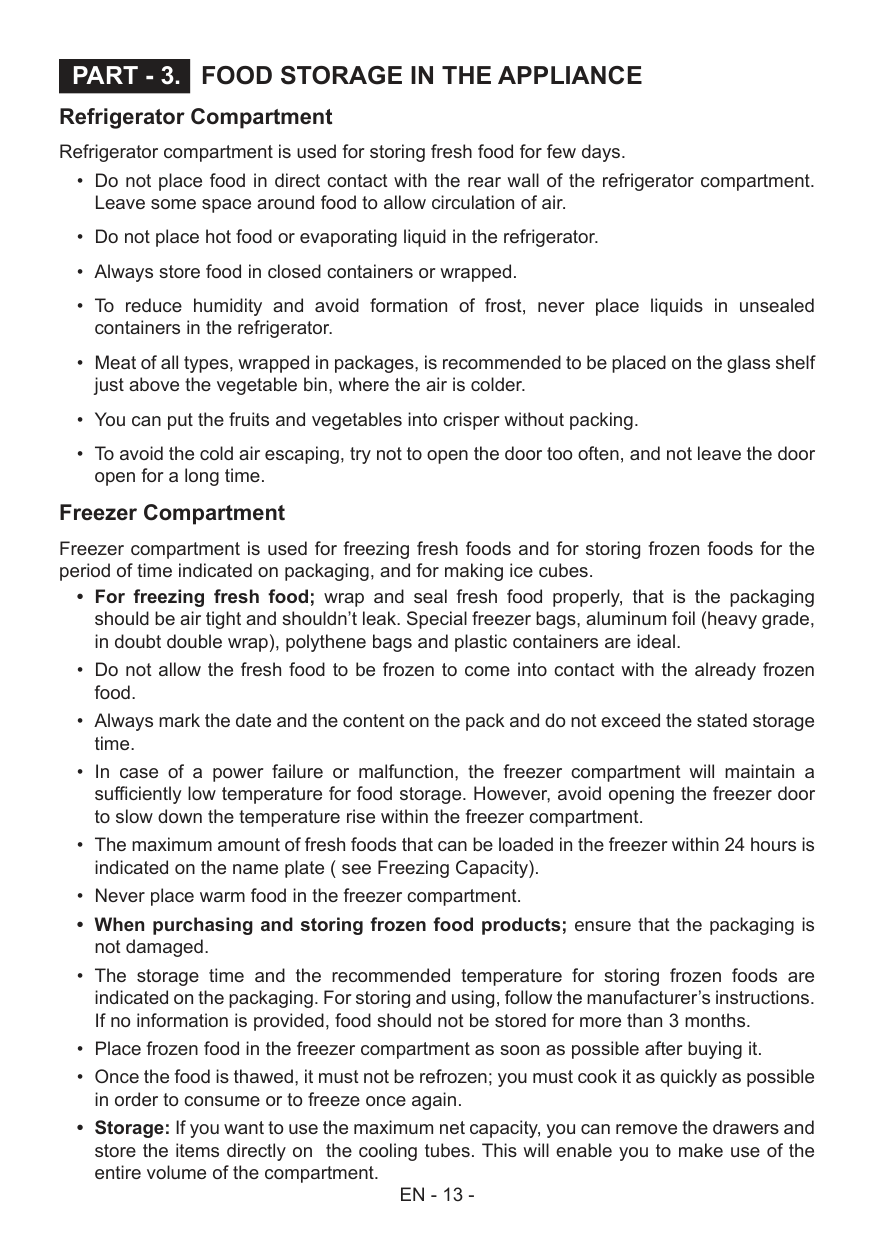
######## Defrosting the Freezer Compartment

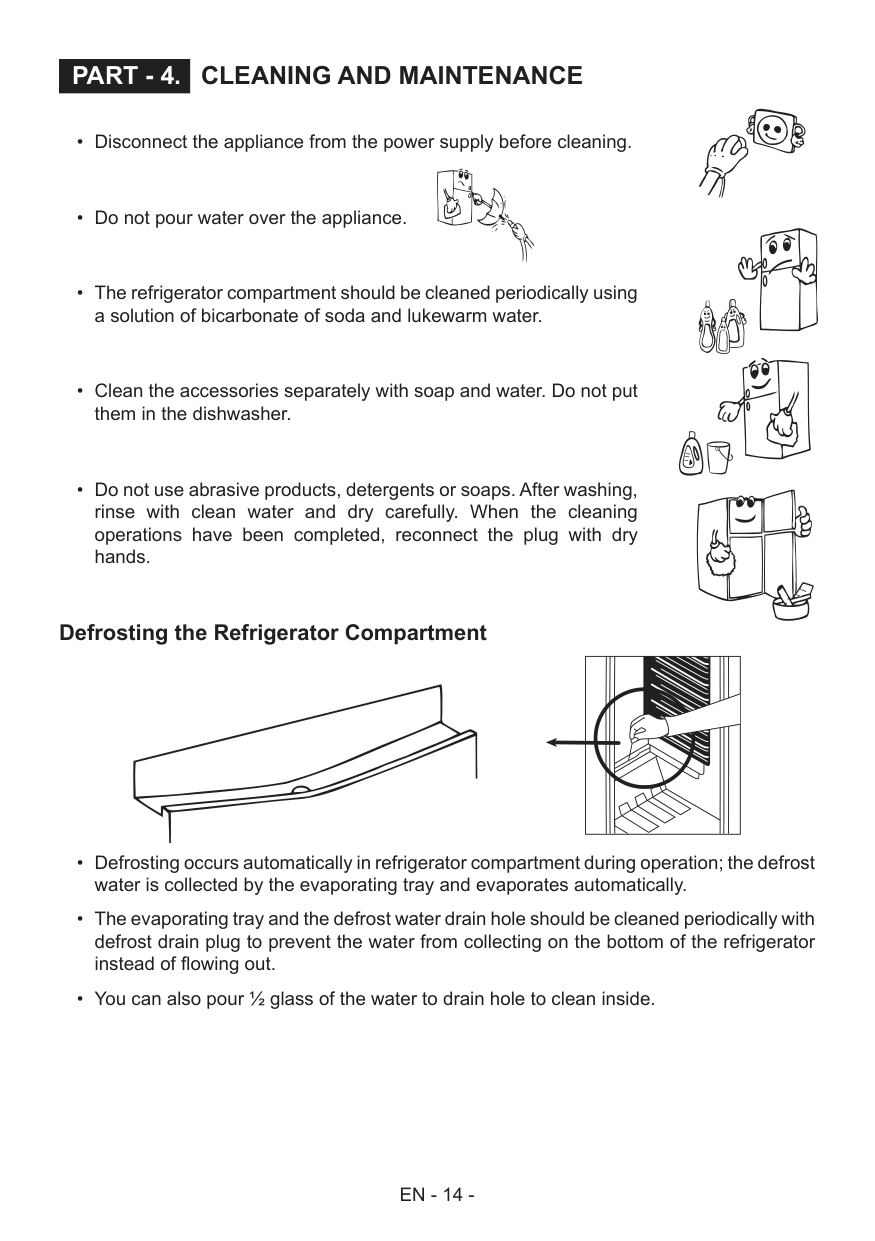
######## Replacing the Refrigerator Light Bulb
|B
A| |---|
######## Replacing LED Lighting
If your refrigerator has LED lighting contact the help desk as this should be changed by authorized personnel only.
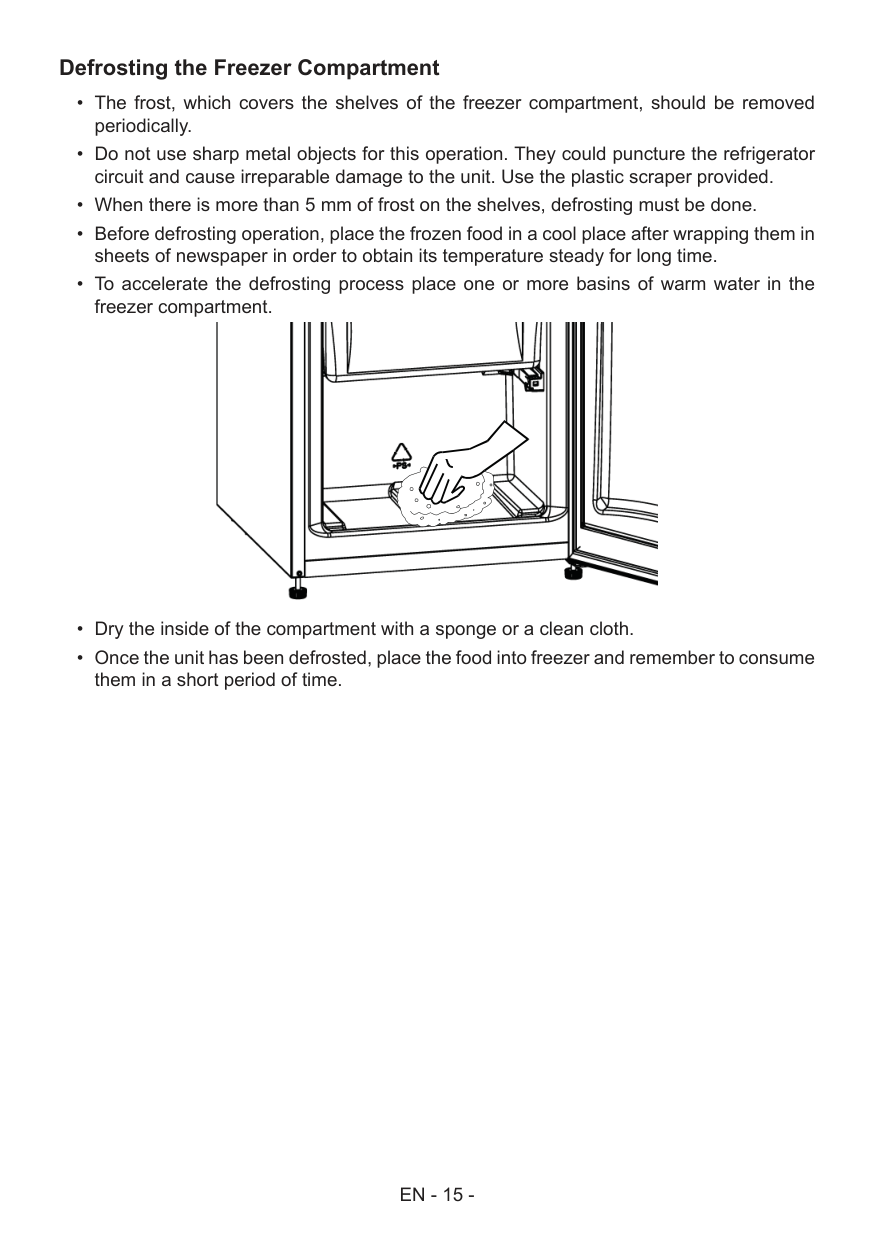
###### SHIPMENT AND REPOSITIONINGPART - 5.
###### BEFORE CALLING YOUR AFTER SALES SERVICEPART - 6.
If your refrigerator is not working properly, it may be a minor problem, therefore check the following.
The appliance does not operate, Check if;
The appliance performs poorly; Check if;
########## If there is noise;
The cooling gas which circulates in the refrigerator circuit may make a slight noise (bubbling sound) even when the compressor is not running. Do not worry, this is quite normal. If these sounds are different check if;
If there is water in the lower part of the refrigerator; Check if; The drain hole for defrost water is not clogged (use defrost drain plug to clean the drain hole). IMPORTANT NOTES:
######## Tips for saving energy
PART - 7.
PARTS OF THE APPLIANCE AND THE COMPARTMENTS
| | | |---|---|
| | |
| | | | |---|---|---| | | | |
| | | |---|---| | | |
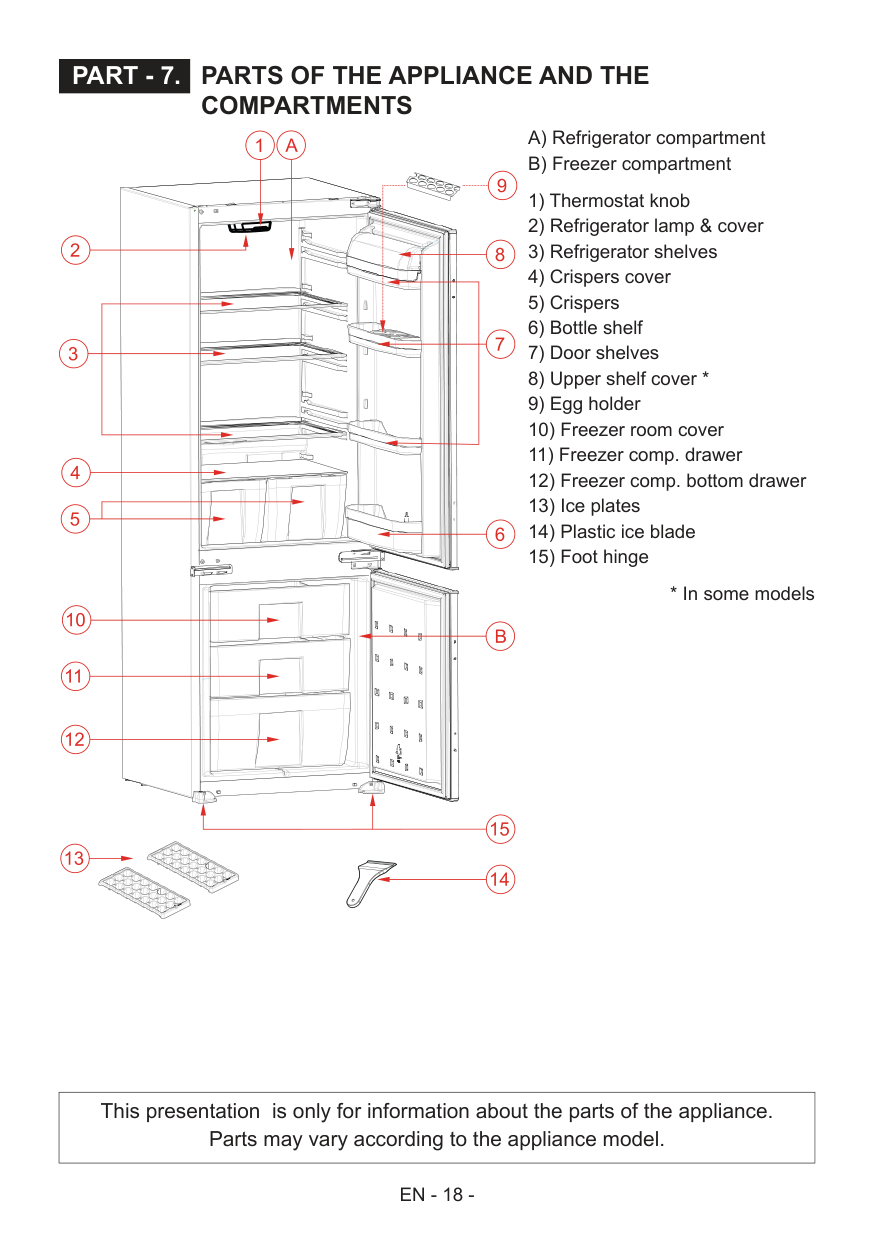
|This presentation is only for information about the parts of the appliance. Parts may vary according to the appliance model.| |---|
Indice
PRIMA DI USARE L’APPARECCHIO ............................................20 Avvertenze generali ....................................................................20 Istruzioni per la sicurezza ...........................................................22 Avvertenze .................................................................................22 Installazione ed accensione dell’apparecchio ............................23 Prima di accendere ....................................................................23
FUNZIONI .......................................................................................24 Imposazione termostato .............................................................24 Interruttore di su per congelamento e bassa temperatura ambiente ................................................................25 Advertencias sobre el Ajuste de la Temperatura ........................25 Spia della temperatura ...............................................................26 Accessori ....................................................................................27
Vassoio ghiaccio .................................................................................................... 27 Ferma bottiglie ....................................................................................................... 28
DISPOSIZIONE DEL CIBO NELL’ELETTRODOMESTICO ..........28 Reparto frigorifero ......................................................................28 Reparto freezer ..........................................................................29
PULIZIA E MANUTENZIONE ........................................................30 Sbrinamento dello Scomparto frigo ............................................31 Sbrinamento dello scomparto freezer ........................................31 Sostituzione della lampadina del frigorifero ...............................32 Sostituzione delle luci LED .........................................................32
TRASPORTO E SPOSTAMENTO DELL’APPARECCHIO ............32 PRIMA DI CHIAMARE L’ASSISTENZA ........................................32
Suggerimenti per risparmiare energia ........................................34 COMPONENTI DELL’ELETTRODOMESTICO E SCOMPARTI ....35
###### PRIMA DI USARE L’APPARECCHIOPARTE 1.
Avvertenze generali ATTENZIONE:Non coprire od ostruire le aperture di ventilazione del frigorifero.
ATTENZIONE: Non utilizzare dispositivi meccanici o altri mezzi per accelerare lo sbrinamento, se non esplicitamente consigliato dal costruttore.
ATTENZIONE: Non usare apparecchiature elettriche all'interno degli scomparti per la conservazione del cibo, a meno che non siano del tipo consigliato dal produttore.
ATTENZIONE: Non danneggiare il circuito refrigerante.
ATTENZIONE: Per evitare l'instabilità dell'elettrodomestico, esso deve essere fissato seguendo le indicazioni del presente manuale di istruzioni.
lavoro,
######## Istruzioni per la sicurezza
Questo apparecchio dispone di contrassegno ai sensi della direttiva europea 2002/96/CE in materia di apparecchi elettrici ed elettronici (strumentazione elettrica ed elettronica di scarto - RAEE).
Questa direttiva definisce le norme per la raccolta e il riciclaggio degli apparecchi dismessi valide su tutto il territorio dell'Unione Europea.
########## IMPORTANTE:
Vi preghiamo di leggere questo manuale prima di installare ed accendere l’apparecchio. Il produttore non si assume alcuna responsabilità se l’installazione e l’utilizzo dell’apparecchio non sono conformi a quanto descritto in questo manuale.
######## Avvertenze
######## Installazione ed accensione dell’apparecchio
######## Prima di accendere
###### FUNZIONIPARTE 2. Imposazione termostato
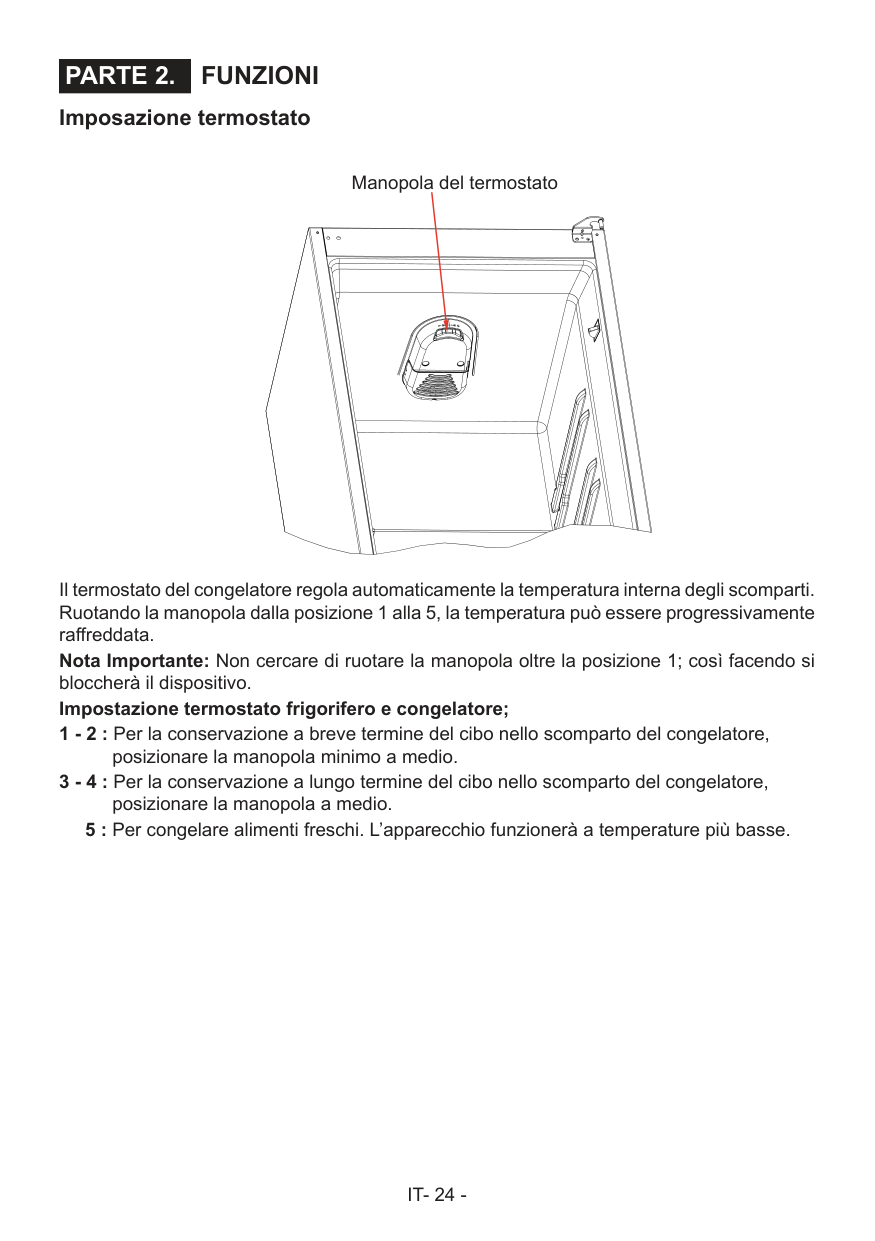
Manopola del termostato
| | | |---|---| | | |
| | | |---|---|
| | |
Il termostato del congelatore regola automaticamente la temperatura interna degli scomparti. Ruotando la manopola dalla posizione 1 alla 5, la temperatura può essere progressivamente raffreddata.
Nota Importante: Non cercare di ruotare la manopola oltre la posizione 1; così facendo si bloccherà il dispositivo.
Impostazione termostato frigorifero e congelatore; 1 - 2 : Per la conservazione a breve termine del cibo nello scomparto del congelatore,
posizionare la manopola minimo a medio.
3 - 4 : Per la conservazione a lungo termine del cibo nello scomparto del congelatore,
posizionare la manopola a medio.
5 : Per congelare alimenti freschi. L’apparecchio funzionerà a temperature più basse.
######## Interruttore di su per congelamento e bassa temperatura ambiente
MAX W
Bassa temperatura ambiente interruttore di controllo della temperatura
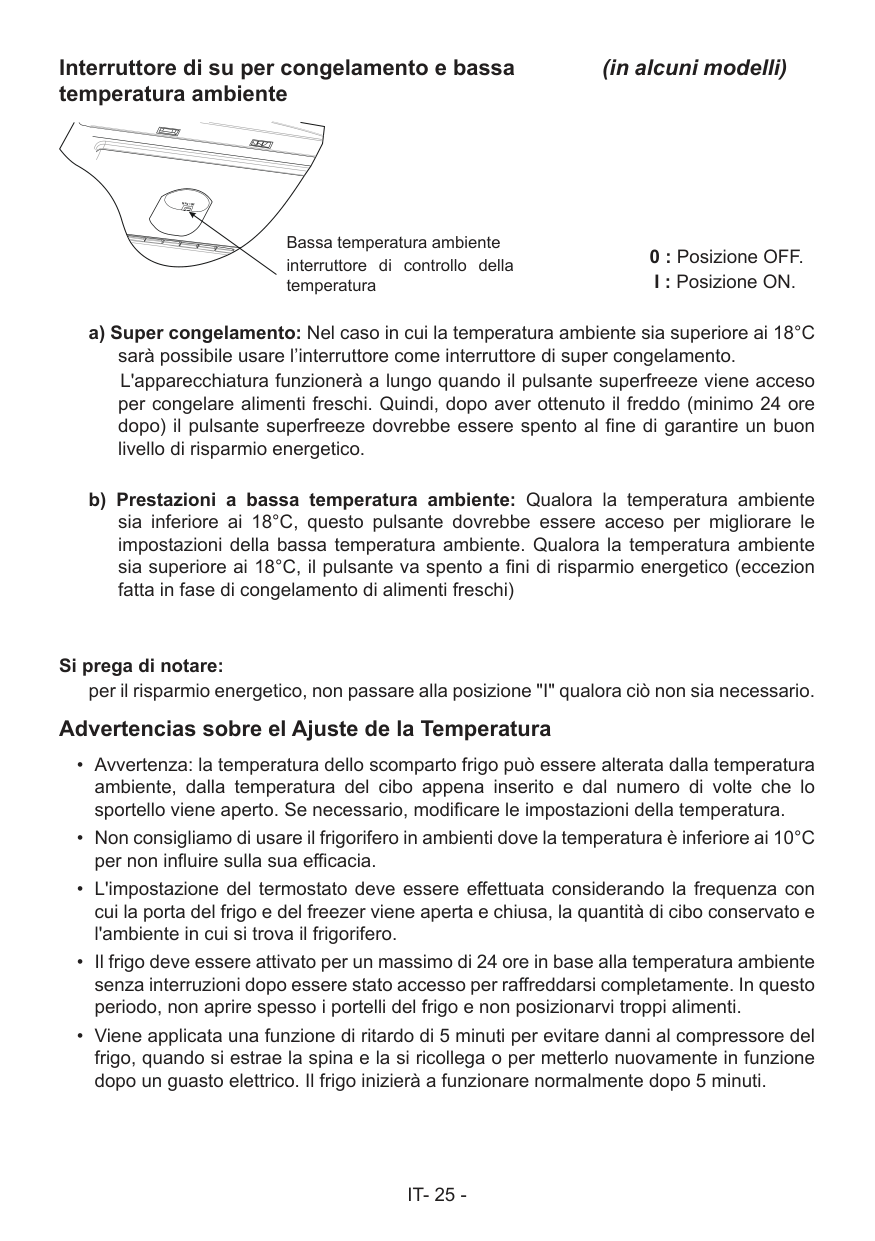
######## (in alcuni modelli)
0 : Posizione OFF. I : Posizione ON.
########## Si prega di notare:
per il risparmio energetico, non passare alla posizione "I" qualora ciò non sia necessario.
######## Advertencias sobre el Ajuste de la Temperatura
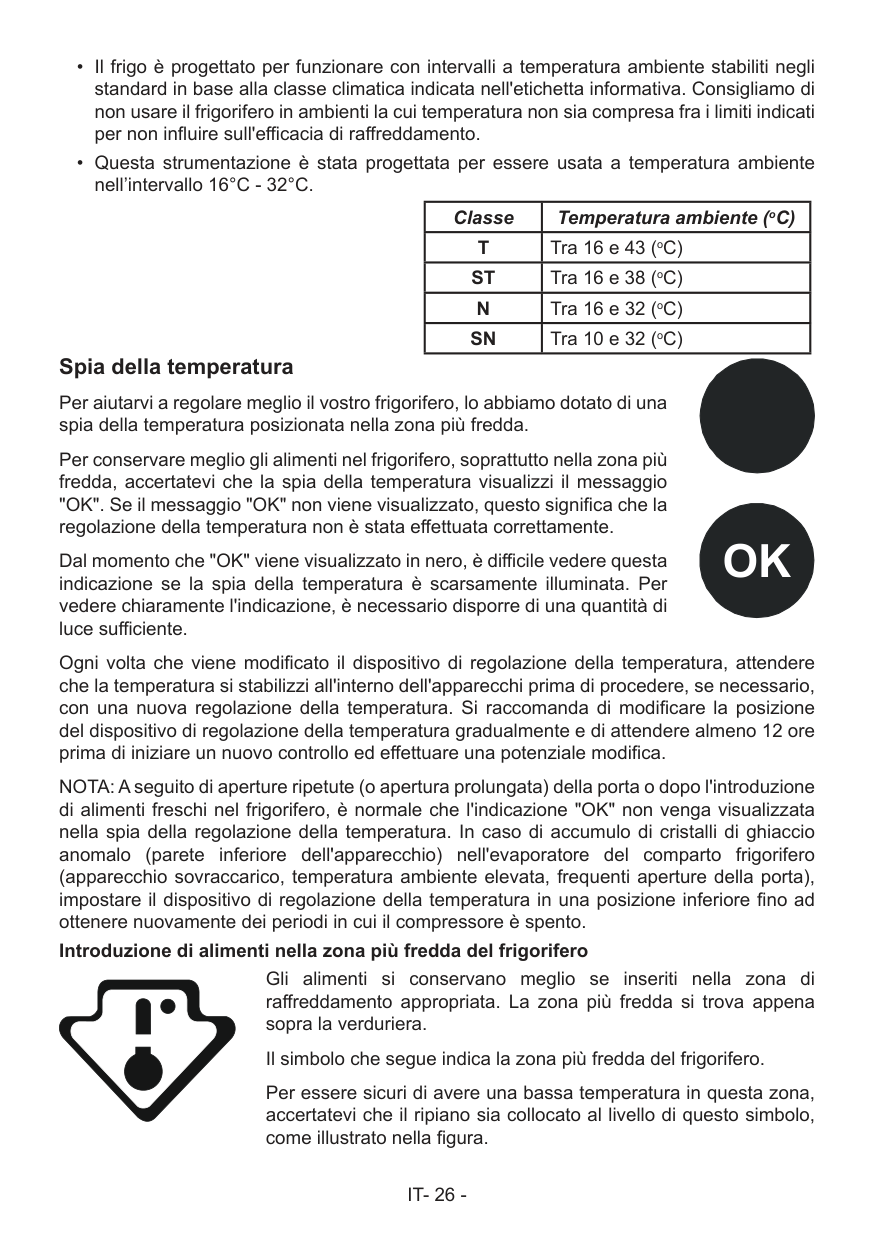
|Classe|Temperatura ambiente (oC)| |---|---| |T|Tra 16 e 43 (oC)| |ST|Tra 16 e 38 (oC)| |N|Tra 16 e 32 (oC)| |SN|Tra 10 e 32 (oC)|
######## Spia della temperatura
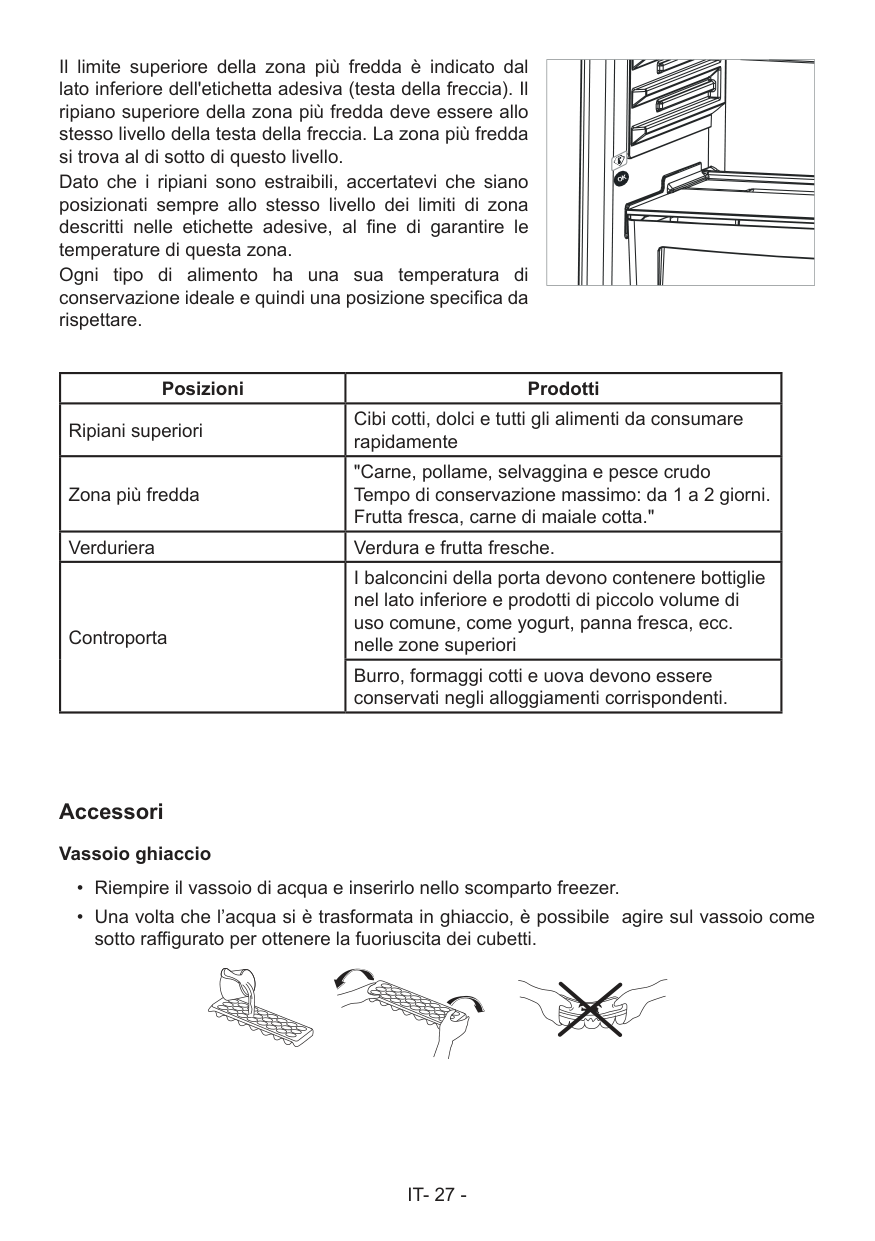
Per aiutarvi a regolare meglio il vostro frigorifero, lo abbiamo dotato di una spia della temperatura posizionata nella zona più fredda.
Per conservare meglio gli alimenti nel frigorifero, soprattutto nella zona più fredda, accertatevi che la spia della temperatura visualizzi il messaggio "OK". Se il messaggio "OK" non viene visualizzato, questo significa che la regolazione della temperatura non è stata effettuata correttamente.
OK
Dal momento che "OK" viene visualizzato in nero, è difficile vedere questa indicazione se la spia della temperatura è scarsamente illuminata. Per vedere chiaramente l'indicazione, è necessario disporre di una quantità di luce sufficiente.
Ogni volta che viene modificato il dispositivo di regolazione della temperatura, attendere che la temperatura si stabilizzi all'interno dell'apparecchi prima di procedere, se necessario, con una nuova regolazione della temperatura. Si raccomanda di modificare la posizione del dispositivo di regolazione della temperatura gradualmente e di attendere almeno 12 ore prima di iniziare un nuovo controllo ed effettuare una potenziale modifica.
NOTA: A seguito di aperture ripetute (o apertura prolungata) della porta o dopo l'introduzione di alimenti freschi nel frigorifero, è normale che l'indicazione "OK" non venga visualizzata nella spia della regolazione della temperatura. In caso di accumulo di cristalli di ghiaccio anomalo (parete inferiore dell'apparecchio) nell'evaporatore del comparto frigorifero (apparecchio sovraccarico, temperatura ambiente elevata, frequenti aperture della porta), impostare il dispositivo di regolazione della temperatura in una posizione inferiore fino ad ottenere nuovamente dei periodi in cui il compressore è spento.
########## Introduzione di alimenti nella zona più fredda del frigorifero
Gli alimenti si conservano meglio se inseriti nella zona di raffreddamento appropriata. La zona più fredda si trova appena sopra la verduriera.
Il simbolo che segue indica la zona più fredda del frigorifero.
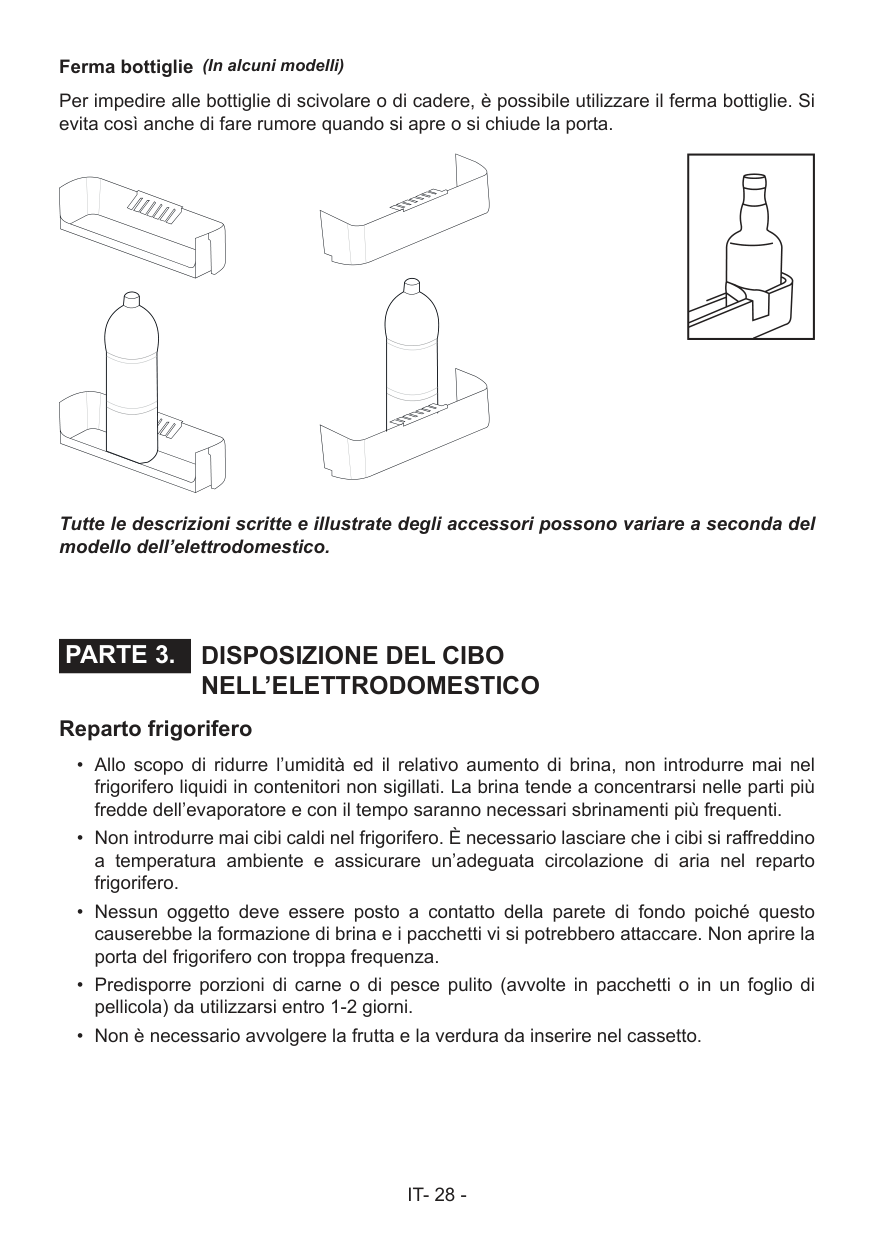
Per essere sicuri di avere una bassa temperatura in questa zona, accertatevi che il ripiano sia collocato al livello di questo simbolo, come illustrato nella figura.
Il limite superiore della zona più fredda è indicato dal lato inferiore dell'etichetta adesiva (testa della freccia). Il ripiano superiore della zona più fredda deve essere allo stesso livello della testa della freccia. La zona più fredda si trova al di sotto di questo livello.
Dato che i ripiani sono estraibili, accertatevi che siano posizionati sempre allo stesso livello dei limiti di zona descritti nelle etichette adesive, al fine di garantire le temperature di questa zona.
Ogni tipo di alimento ha una sua temperatura di conservazione ideale e quindi una posizione specifica da rispettare.
|Posizioni|Prodotti| |---|---| |Ripiani superiori|Cibi cotti, dolci e tutti gli alimenti da consumare rapidamente| |Zona più fredda|"Carne, pollame, selvaggina e pesce crudo Tempo di conservazione massimo: da 1 a 2 giorni. Frutta fresca, carne di maiale cotta."|
|Verduriera|Verdura e frutta fresche.| |Controporta|I balconcini della porta devono contenere bottiglie nel lato inferiore e prodotti di piccolo volume di uso comune, come yogurt, panna fresca, ecc. nelle zone superiori| |Controporta|Burro, formaggi cotti e uova devono essere conservati negli alloggiamenti corrispondenti.|
Accessori Vassoio ghiaccio
########## Ferma bottiglie
(In alcuni modelli)
Per impedire alle bottiglie di scivolare o di cadere, è possibile utilizzare il ferma bottiglie. Si evita così anche di fare rumore quando si apre o si chiude la porta.
Tutte le descrizioni scritte e illustrate degli accessori possono variare a seconda del modello dell’elettrodomestico.
PARTE 3.
DISPOSIZIONE DEL CIBO NELL’ELETTRODOMESTICO
Reparto frigorifero
######## Reparto freezer
###### PULIZIA E MANUTENZIONEPARTE 4.
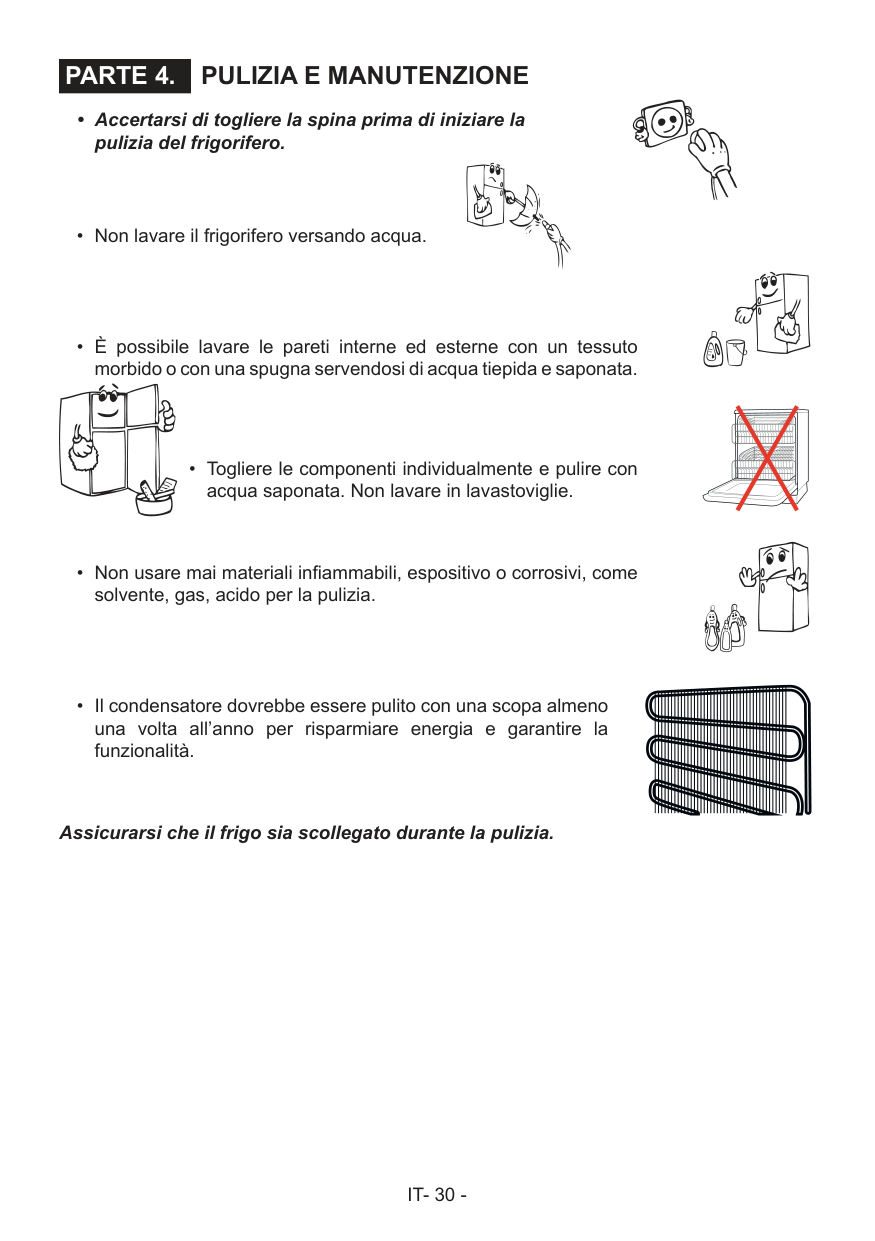
• Togliere le componenti individualmente e pulire con acqua saponata. Non lavare in lavastoviglie.
Assicurarsi che il frigo sia scollegato durante la pulizia.
######## Sbrinamento dello Scomparto frigo
######## Sbrinamento dello scomparto freezer

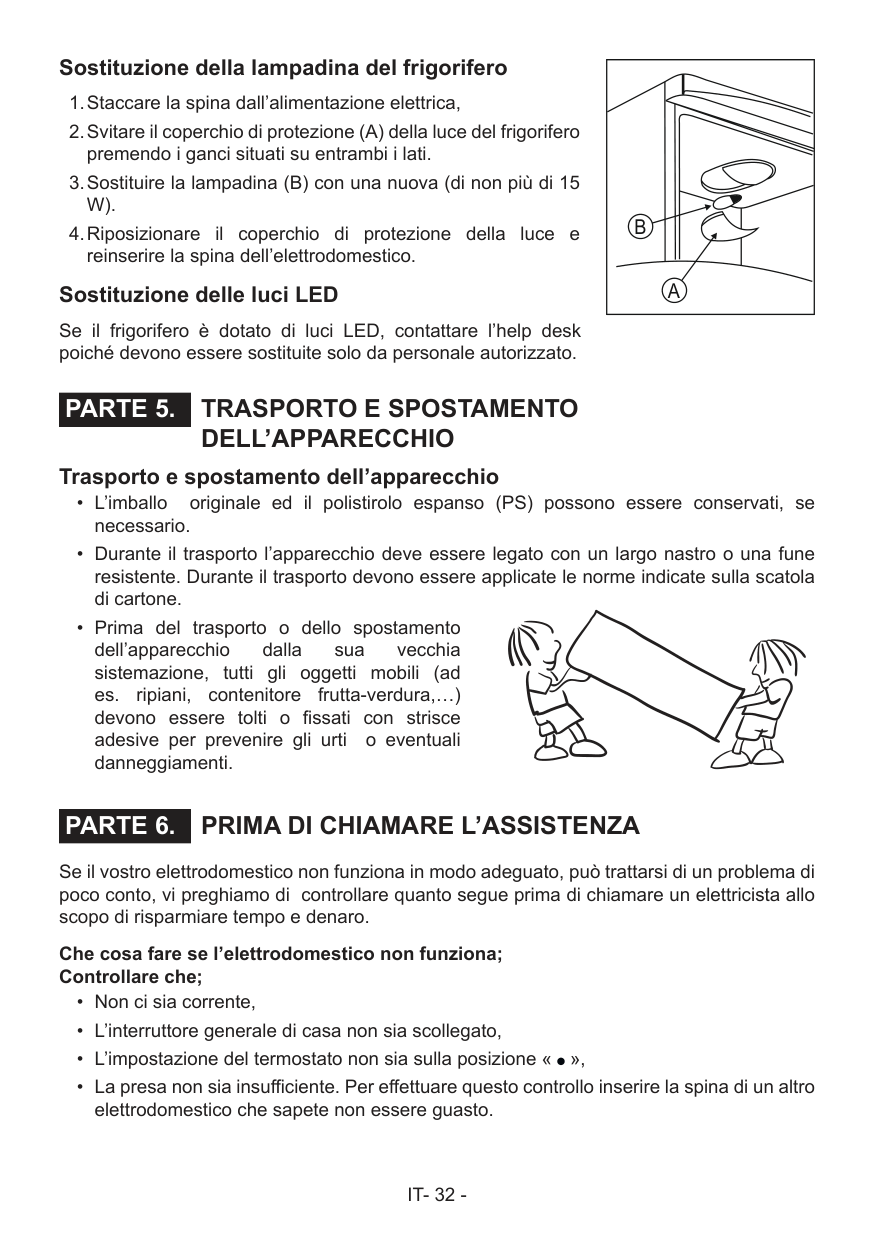
Sostituzione della lampadina del frigorifero 1.Staccare la spina dall’alimentazione elettrica, 2.Svitare il coperchio di protezione (A) della luce del frigorifero
premendo i ganci situati su entrambi i lati. 3.Sostituire la lampadina (B) con una nuova (di non più di 15 W). 4.Riposizionare il coperchio di protezione della luce e reinserire la spina dell’elettrodomestico.
######## Sostituzione delle luci LED
Se il frigorifero è dotato di luci LED, contattare l’help desk poiché devono essere sostituite solo da personale autorizzato.
|B
A| |---|
PARTE 5.
TRASPORTO E SPOSTAMENTO DELL’APPARECCHIO
Trasporto e spostamento dell’apparecchio
###### PRIMA DI CHIAMARE L’ASSISTENZAPARTE 6.
Se il vostro elettrodomestico non funziona in modo adeguato, può trattarsi di un problema di poco conto, vi preghiamo di controllare quanto segue prima di chiamare un elettricista allo scopo di risparmiare tempo e denaro.
Che cosa fare se l’elettrodomestico non funziona; Controllare che;
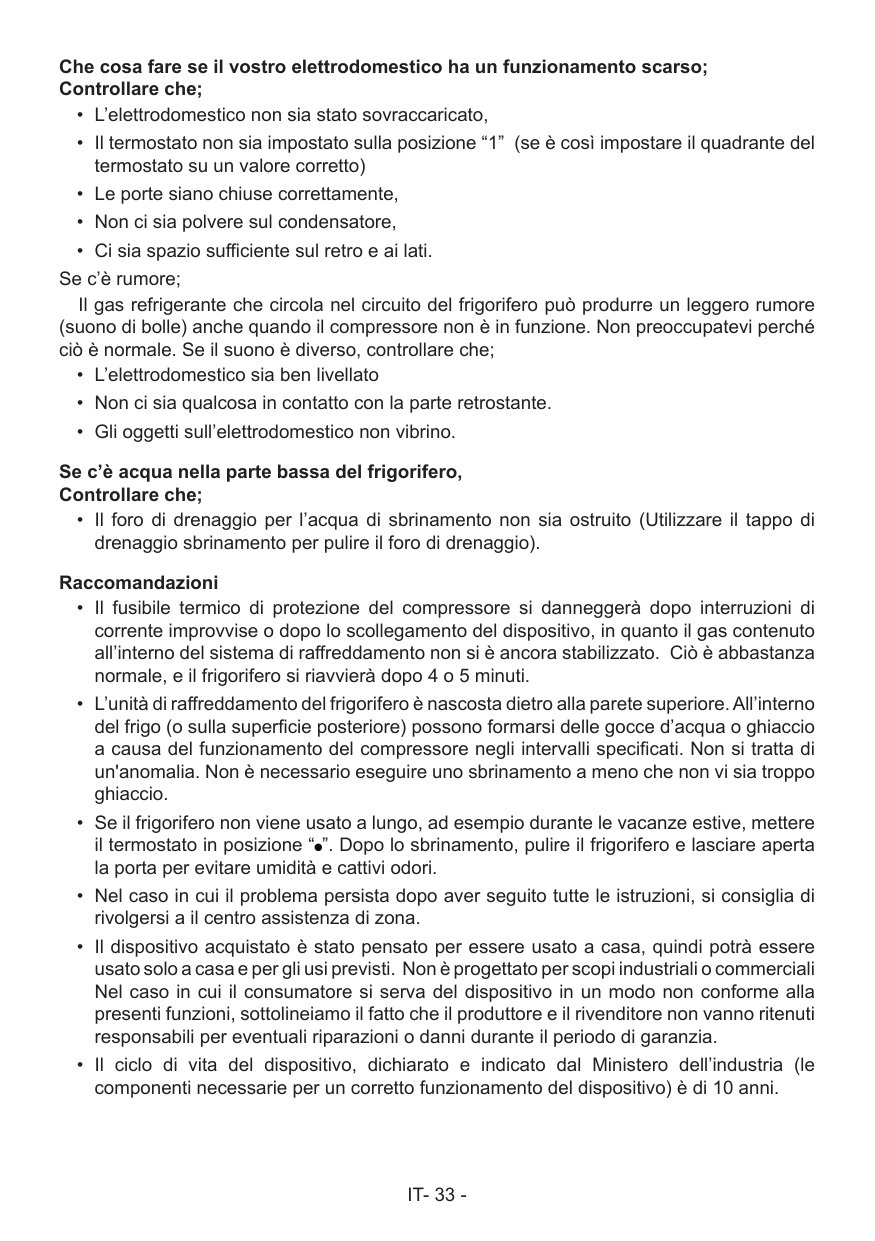
Che cosa fare se il vostro elettrodomestico ha un funzionamento scarso; Controllare che;
Se c’è rumore;
Il gas refrigerante che circola nel circuito del frigorifero può produrre un leggero rumore (suono di bolle) anche quando il compressore non è in funzione. Non preoccupatevi perché ciò è normale. Se il suono è diverso, controllare che;
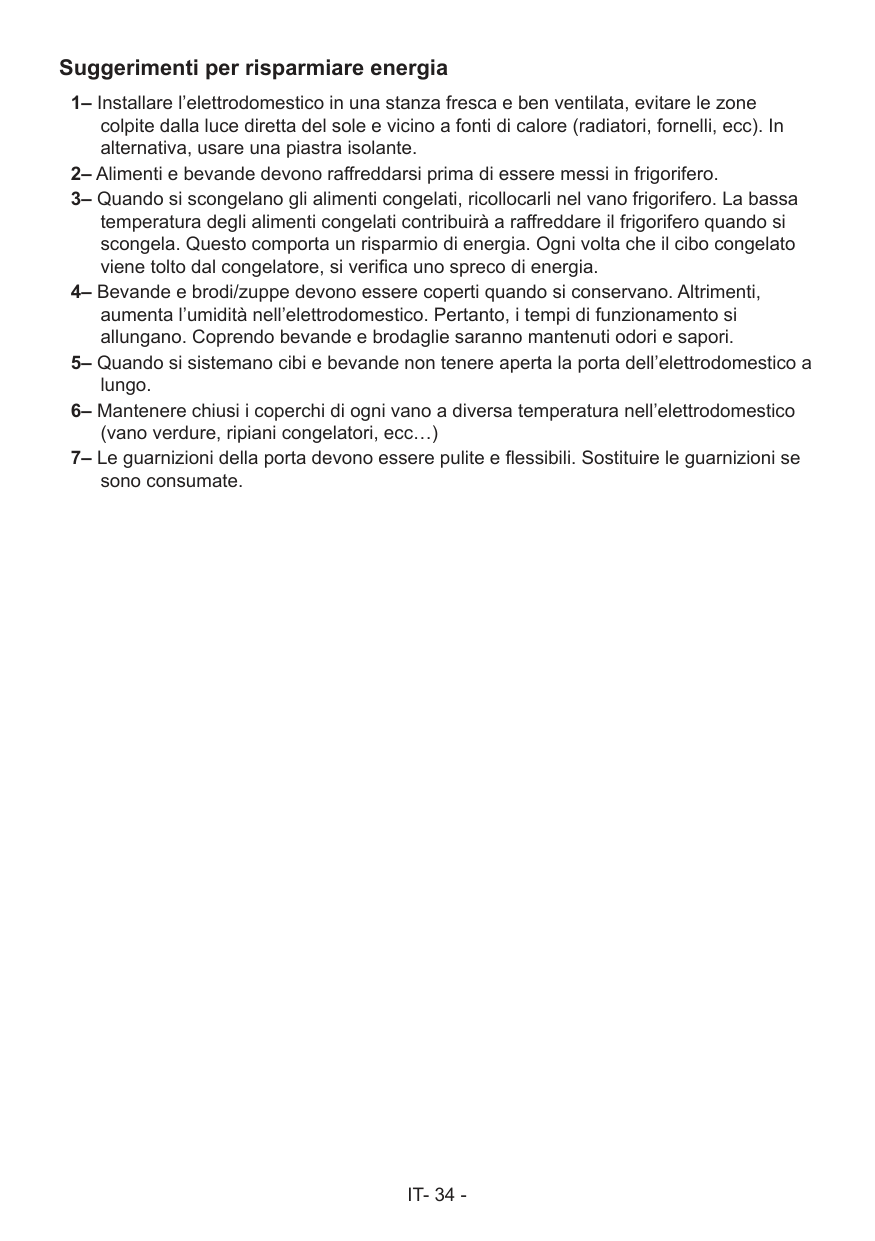
Se c’è acqua nella parte bassa del frigorifero, Controllare che;
• Il foro di drenaggio per l’acqua di sbrinamento non sia ostruito (Utilizzare il tappo di
drenaggio sbrinamento per pulire il foro di drenaggio). Raccomandazioni
######## Suggerimenti per risparmiare energia
PARTE 7.
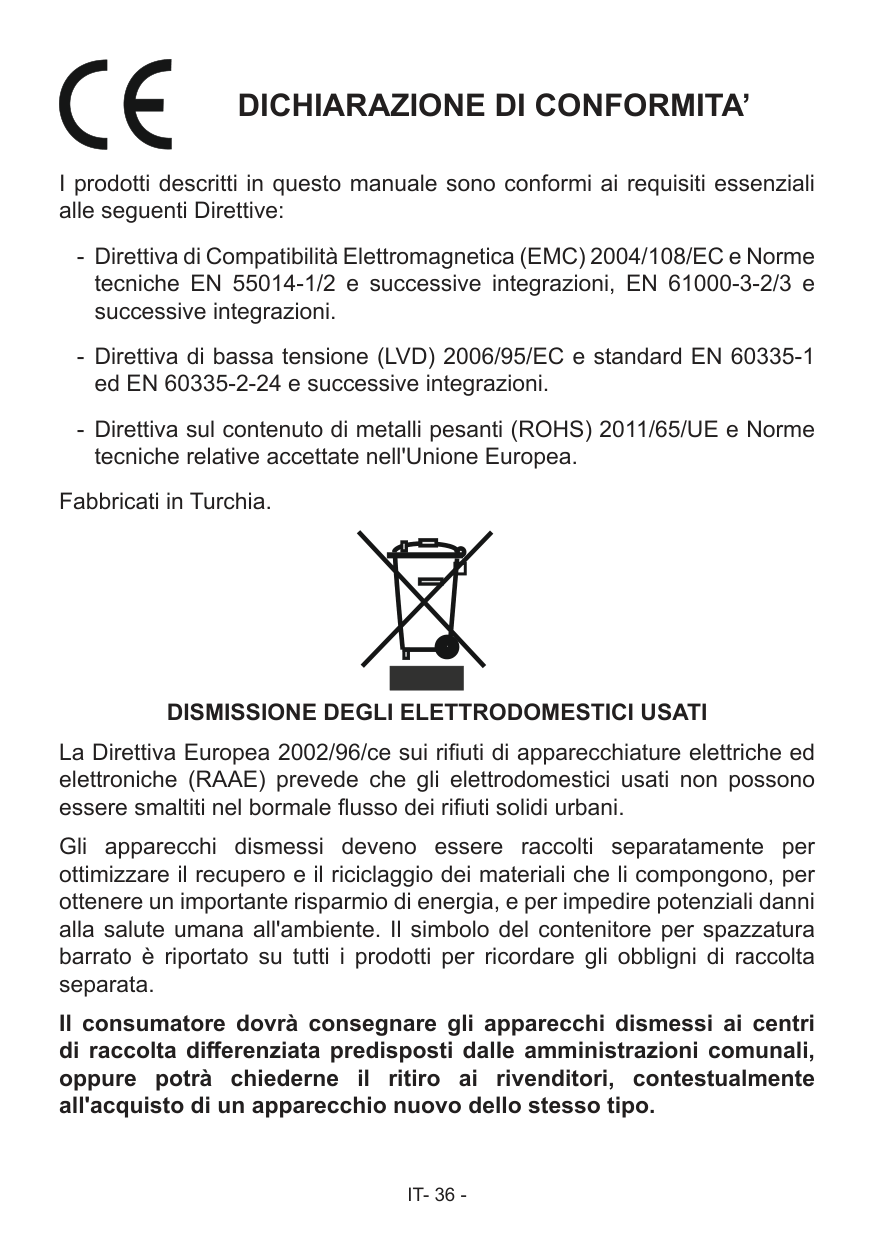
COMPONENTI DELL’ELETTRODOMESTICO E SCOMPARTI
| | | |---|---| | | |
| | | | |---|---|---| | | | |
|Questa presentazione è puramente informativa sui componenti dell’apparecchio. I componenti potrebbero variare a seconda del modello dell’apparecchio.|
|---|
##### DICHIARAZIONE DI CONFORMITA’
I prodotti descritti in questo manuale sono conformi ai requisiti essenziali alle seguenti Direttive:
Fabbricati in Turchia.
####### DISMISSIONE DEGLI ELETTRODOMESTICI USATI
La Direttiva Europea 2002/96/ce sui rifiuti di apparecchiature elettriche ed elettroniche (RAAE) prevede che gli elettrodomestici usati non possono essere smaltiti nel bormale flusso dei rifiuti solidi urbani.
Gli apparecchi dismessi deveno essere raccolti separatamente per ottimizzare il recupero e il riciclaggio dei materiali che li compongono, per ottenere un importante risparmio di energia, e per impedire potenziali danni alla salute umana all'ambiente. Il simbolo del contenitore per spazzatura barrato è riportato su tutti i prodotti per ricordare gli obbligni di raccolta separata.
Il consumatore dovrà consegnare gli apparecchi dismessi ai centri di raccolta differenziata predisposti dalle amministrazioni comunali, oppure potrà chiederne il ritiro ai rivenditori, contestualmente all'acquisto di un apparecchio nuovo dello stesso tipo.
Sommaire
AVANT D'UTILISER L'APPAREIL ........................................................... 38 Avertissements généraux ..........................................................................38 Avertissements en matière de sécurité......................................................40 Installation et utilisation de votre réfrigérateur ...........................................41 Avant d’utiliser votre réfrigérateur ..............................................................42
COMMENT FAIRE FONCTIONNER L'APPAREIL .................................. 43 Réglage du thermostat ..............................................................................43 Super congélation et bouton de température ambiante faible ...................44 Avertissements relatifs aux réglages de la température ............................44 Accessoires ...............................................................................................45
Fabrication de glaçons (Bac à glaçons) .........................................................45 Porte-bouteilles (Dans certains modèles) ................................................................45
CONSERVATION DES ALIMENTS DANS L'APPAREIL ........................ 48 Compartiment réfrigérateur .......................................................................48 Compartiment congélateur ........................................................................48
####### NETTOYAGE ET ENTREITIEN ................................................................ 49
Dégivrage ..................................................................................................50 Partie de réfrigération ...............................................................................................50 Partie de congélation; ..............................................................................................50
Remplacement de l’ampoule du réfrigérateur ...........................................51 Remplacement du voyant à LED ..............................................................51
####### EXPÉDITION ET REPOSITIONNEMENT ................................................ 51 AVANT D'APPELER LE SERVICE D'ENTRETIEN ................................. 51
####### Astuces d'économie d'énergie ...................................................................53 PARTIES ET PIÈCES DE VOTRE RÉFRIGÉRATEUR ........................... 54
AVANT D'UTILISER L'APPAREILPARTIE - 1.
#### Avertissements généraux
AVERTISSEMENT : Maintenir les ouvertures de la pièce dans laquelle se trouve l’appareil.
AVERTISSEMENT : N’utilisez pas d’appareils mécaniques ou d’autres moyens en dehors de ceux recommandées par le fabricant pour accélérer le processus de dégivrage.
AVERTISSEMENT : Évitez d’utiliser des appareils électriques dans le compartiment réservé à la conservation des aliments. Seuls les appareils électriques recommandés par le fabricant font exception.
AVERTISSEMENT : N’endommagez pas le circuit réfrigérant. AVERTISSEMENT : Pour éviter tout risque lié à l’instabilité de l’appareil, fixez le suivant les instructions prescrites.
######### Vieux réfrigérateurs et réfrigérateurs en panne
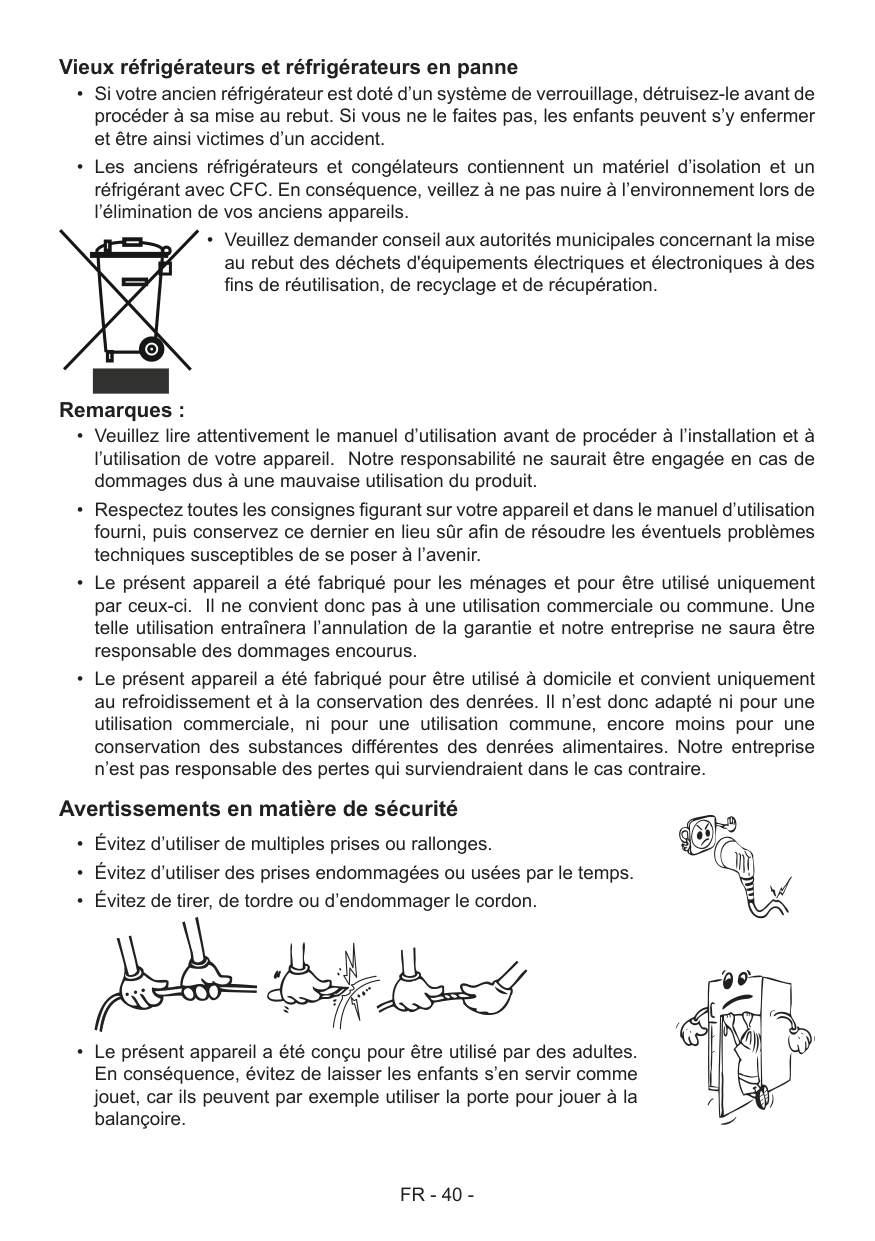
• Veuillez demander conseil aux autorités municipales concernant la mise au rebut des déchets d'équipements électriques et électroniques à des fins de réutilisation, de recyclage et de récupération.
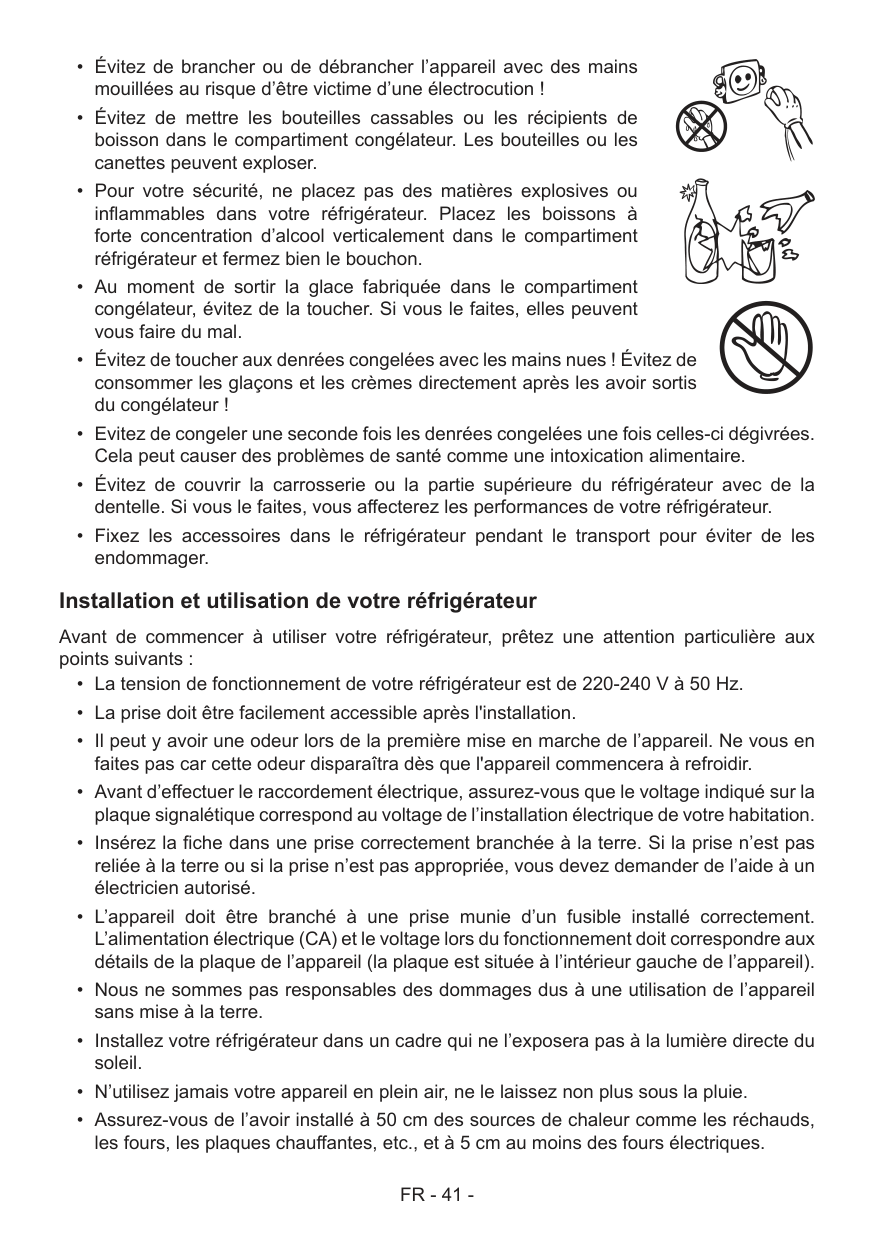
######### Remarques :
######## Avertissements en matière de sécurité
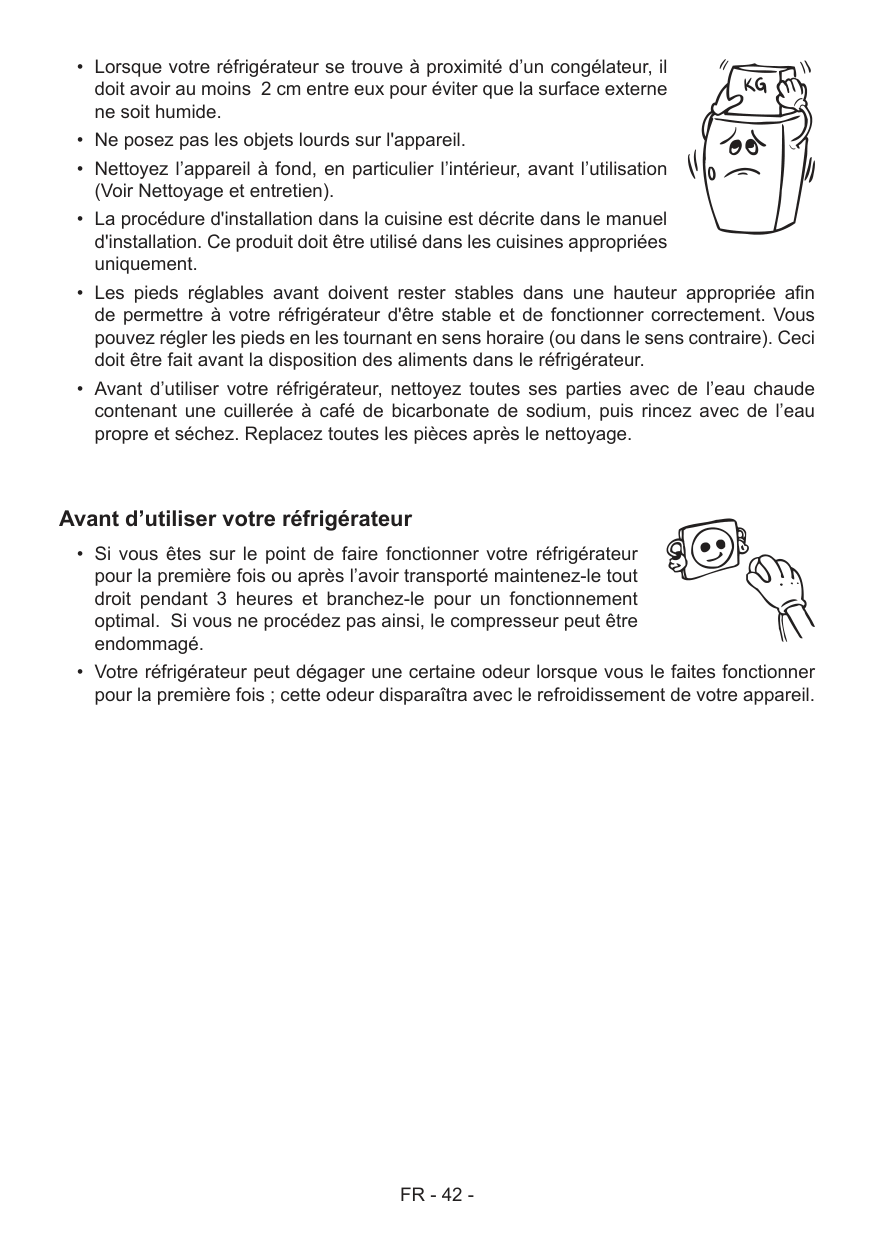
######## Installation et utilisation de votre réfrigérateur
Avant de commencer à utiliser votre réfrigérateur, prêtez une attention particulière aux points suivants :
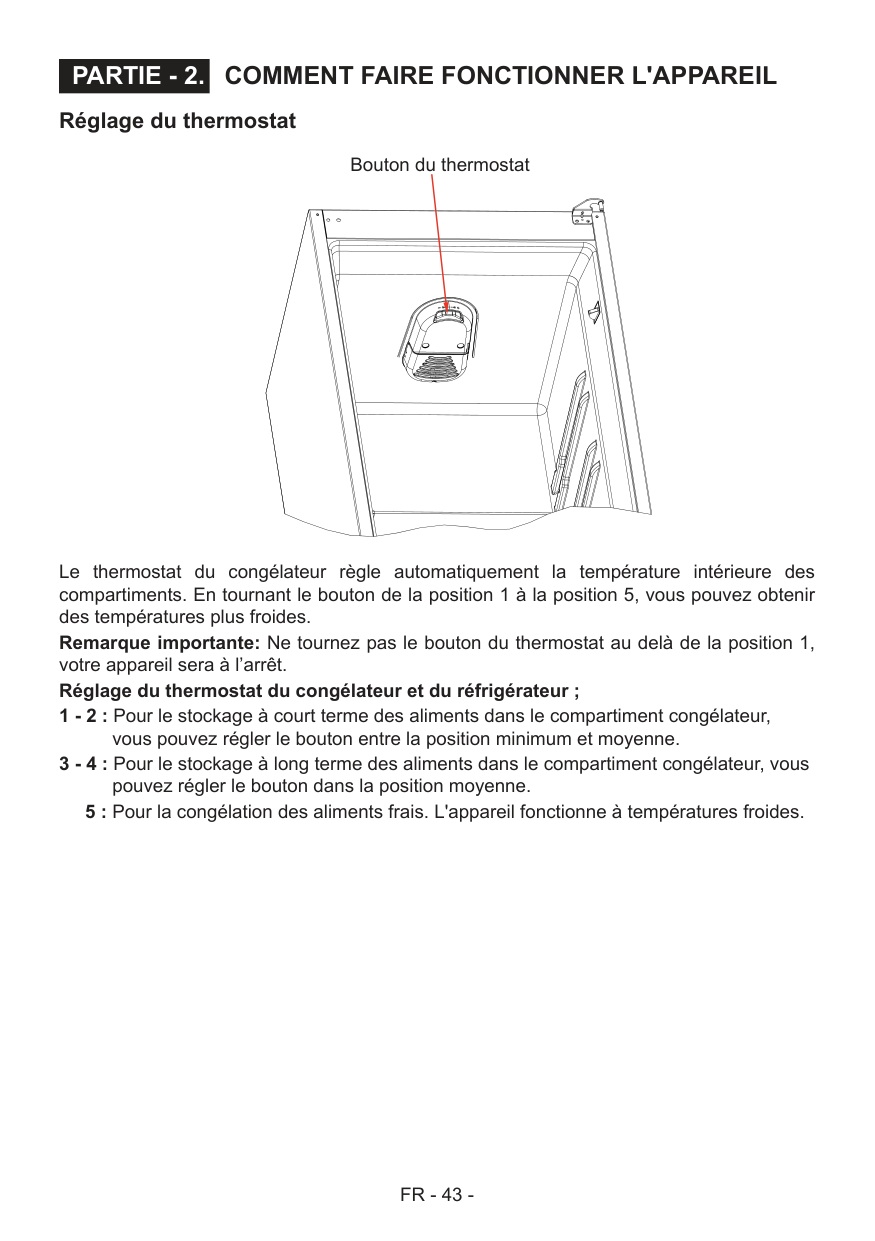
######## Avant d’utiliser votre réfrigérateur
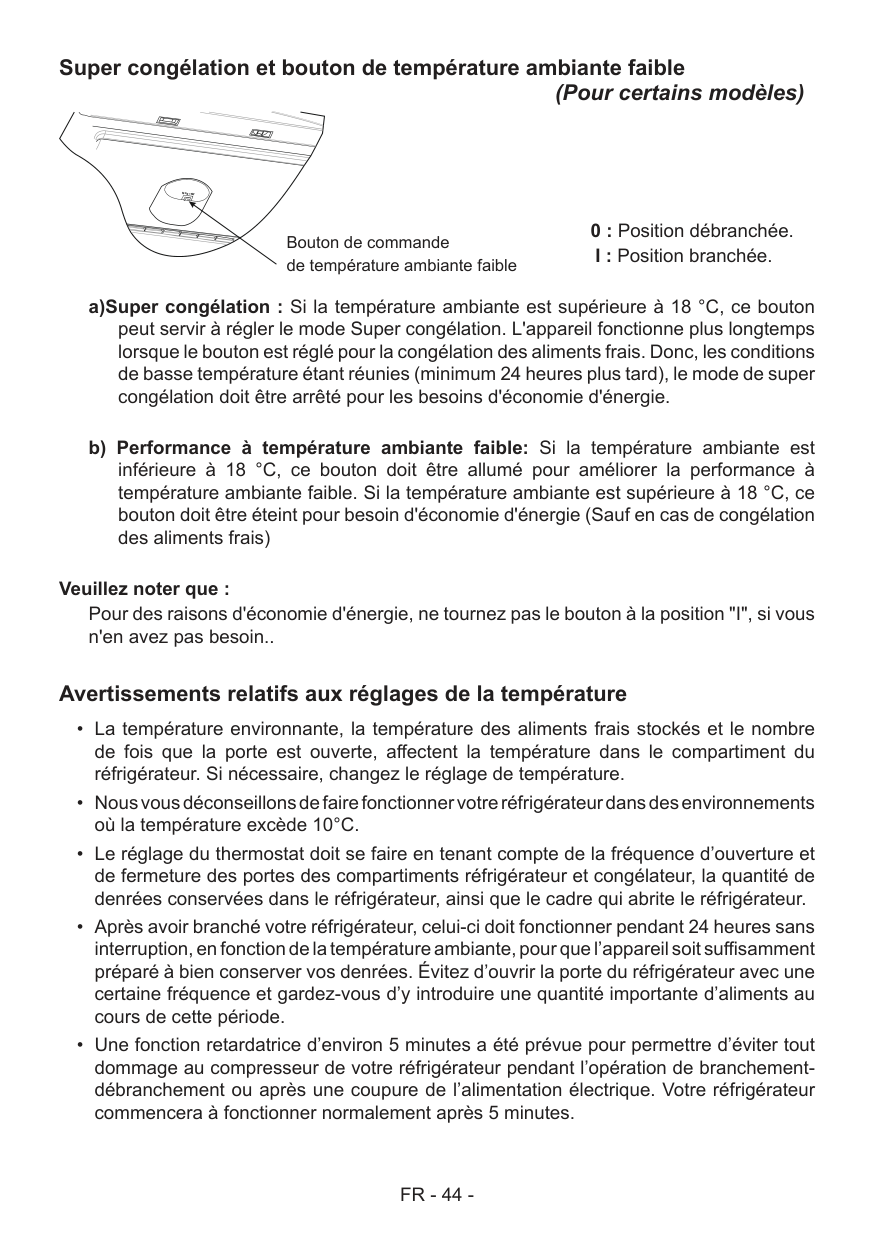
###### COMMENT FAIRE FONCTIONNER L'APPAREILPARTIE - 2. Réglage du thermostat
Bouton du thermostat
| | | |---|---| | | |
| | |
|---|---| | | |
Le thermostat du congélateur règle automatiquement la température intérieure des compartiments. En tournant le bouton de la position 1 à la position 5, vous pouvez obtenir des températures plus froides.
Remarque importante: Ne tournez pas le bouton du thermostat au delà de la position 1, votre appareil sera à l’arrêt.
Réglage du thermostat du congélateur et du réfrigérateur ; 1 - 2 : Pour le stockage à court terme des aliments dans le compartiment congélateur,
vous pouvez régler le bouton entre la position minimum et moyenne.
3 - 4 : Pour le stockage à long terme des aliments dans le compartiment congélateur, vous
pouvez régler le bouton dans la position moyenne.
5 : Pour la congélation des aliments frais. L'appareil fonctionne à températures froides.
######## Super congélation et bouton de température ambiante faible
######## (Pour certains modèles)
MAX W
0 : Position débranchée. I : Position branchée.
Bouton de commande de température ambiante faible
Veuillez noter que : Pour des raisons d'économie d'énergie, ne tournez pas le bouton à la position "I", si vous n'en avez pas besoin..
######## Avertissements relatifs aux réglages de la température
|Classe climatique|Témpérature ambiante (oC)| |---|---| |T|Entre 16 et 43| |ST|Entre 16 et 38| |N|Entre 16 et 32| |SN|Entre 10 et 32|
Accessoires Fabrication de glaçons (Bac à glaçons)
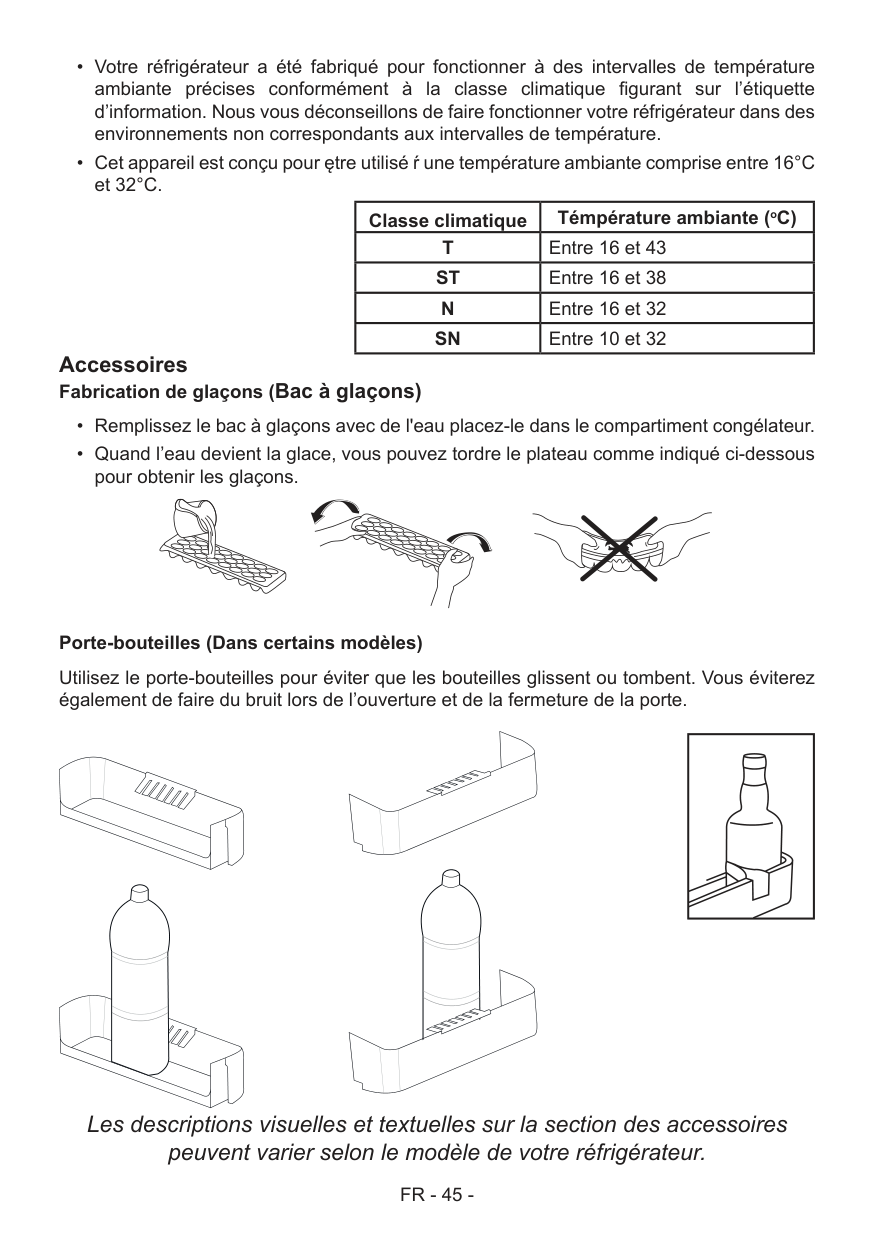
• Remplissez le bac à glaçons avec de l'eau placez-le dans le compartiment congélateur. • Quand l’eau devient la glace, vous pouvez tordre le plateau comme indiqué ci-dessous
pour obtenir les glaçons.
########## Porte-bouteilles (Dans certains modèles)
Utilisez le porte-bouteilles pour éviter que les bouteilles glissent ou tombent. Vous éviterez également de faire du bruit lors de l’ouverture et de la fermeture de la porte.
Les descriptions visuelles et textuelles sur la section des accessoires peuvent varier selon le modèle de votre réfrigérateur.
########## Indicateur de température « OK »
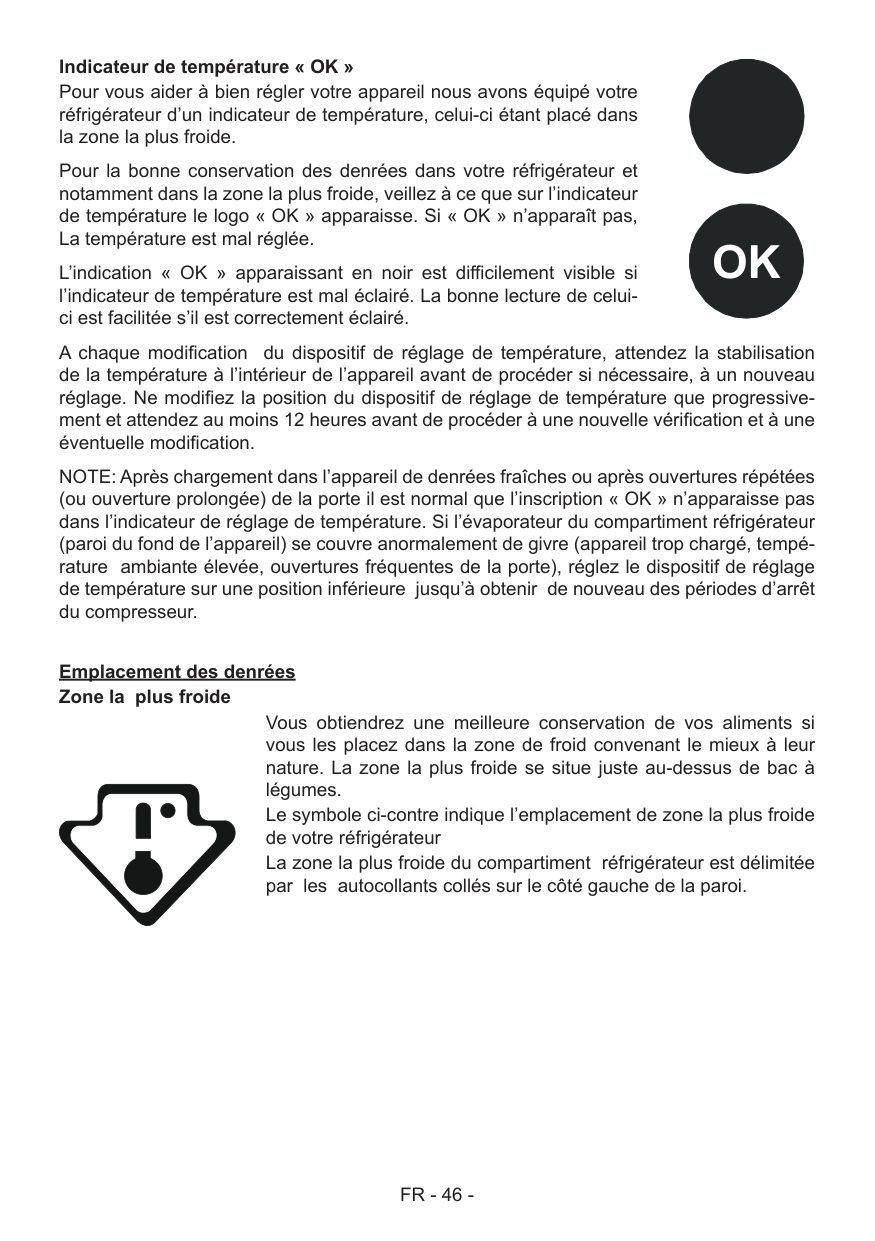
Pour vous aider à bien régler votre appareil nous avons équipé votre réfrigérateur d’un indicateur de température, celui-ci étant placé dans la zone la plus froide.
Pour la bonne conservation des denrées dans votre réfrigérateur et notamment dans la zone la plus froide, veillez à ce que sur l’indicateur de température le logo « OK » apparaisse. Si « OK » n’apparaît pas, La température est mal réglée.
L’indication « OK » apparaissant en noir est difficilement visible si l’indicateur de température est mal éclairé. La bonne lecture de celuici est facilitée s’il est correctement éclairé.
OK
A chaque modification du dispositif de réglage de température, attendez la stabilisation de la température à l’intérieur de l’appareil avant de procéder si nécessaire, à un nouveau réglage. Ne modifiez la position du dispositif de réglage de température que progressivement et attendez au moins 12 heures avant de procéder à une nouvelle vérification et à une éventuelle modification.
NOTE: Après chargement dans l’appareil de denrées fraîches ou après ouvertures répétées (ou ouverture prolongée) de la porte il est normal que l’inscription « OK » n’apparaisse pas dans l’indicateur de réglage de température. Si l’évaporateur du compartiment réfrigérateur (paroi du fond de l’appareil) se couvre anormalement de givre (appareil trop chargé, température ambiante élevée, ouvertures fréquentes de la porte), réglez le dispositif de réglage de température sur une position inférieure jusqu’à obtenir de nouveau des périodes d’arrêt du compresseur.
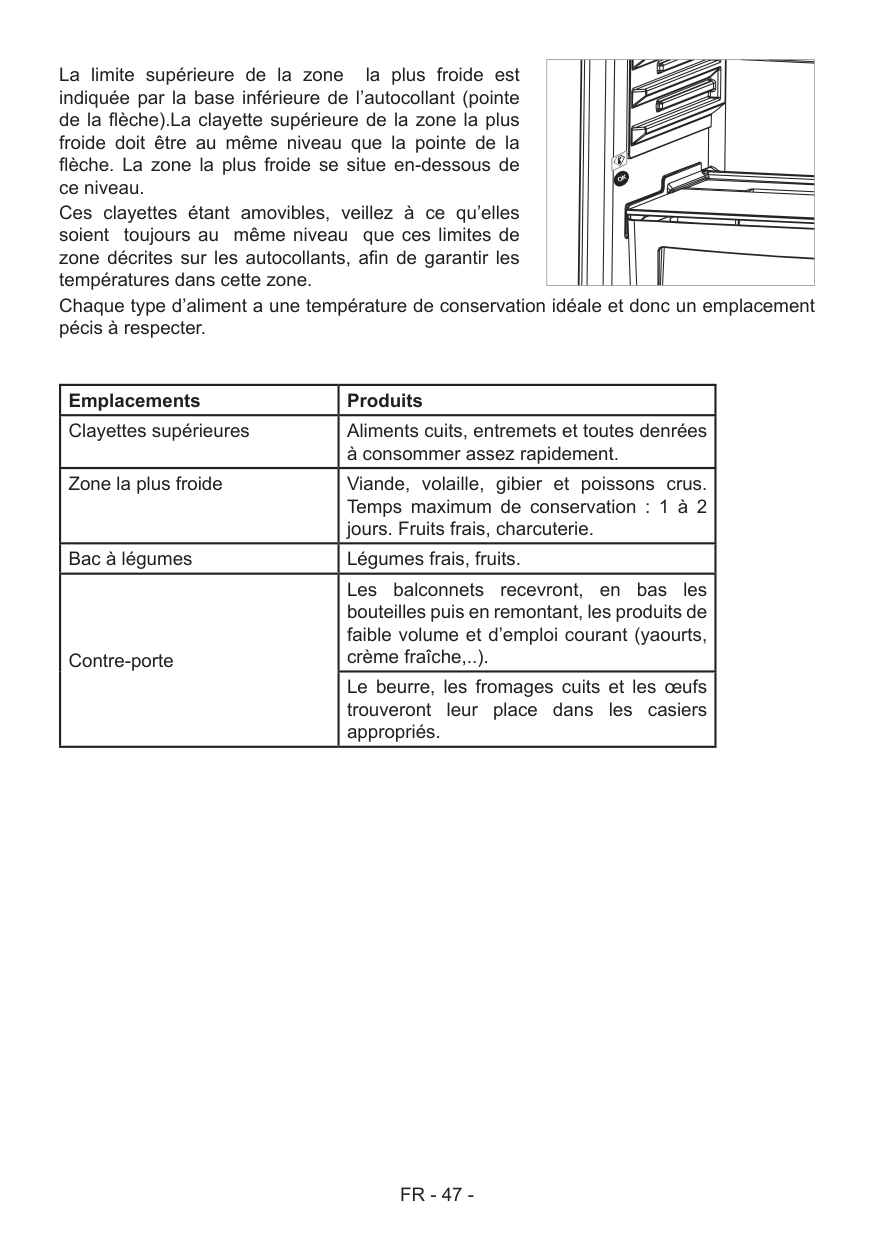
Emplacement des denrées Zone la plus froide
Vous obtiendrez une meilleure conservation de vos aliments si vous les placez dans la zone de froid convenant le mieux à leur nature. La zone la plus froide se situe juste au-dessus de bac à légumes.
Le symbole ci-contre indique l’emplacement de zone la plus froide de votre réfrigérateur La zone la plus froide du compartiment réfrigérateur est délimitée par les autocollants collés sur le côté gauche de la paroi.
La limite supérieure de la zone la plus froide est indiquée par la base inférieure de l’autocollant (pointe de la flèche).La clayette supérieure de la zone la plus froide doit être au même niveau que la pointe de la flèche. La zone la plus froide se situe en-dessous de ce niveau.
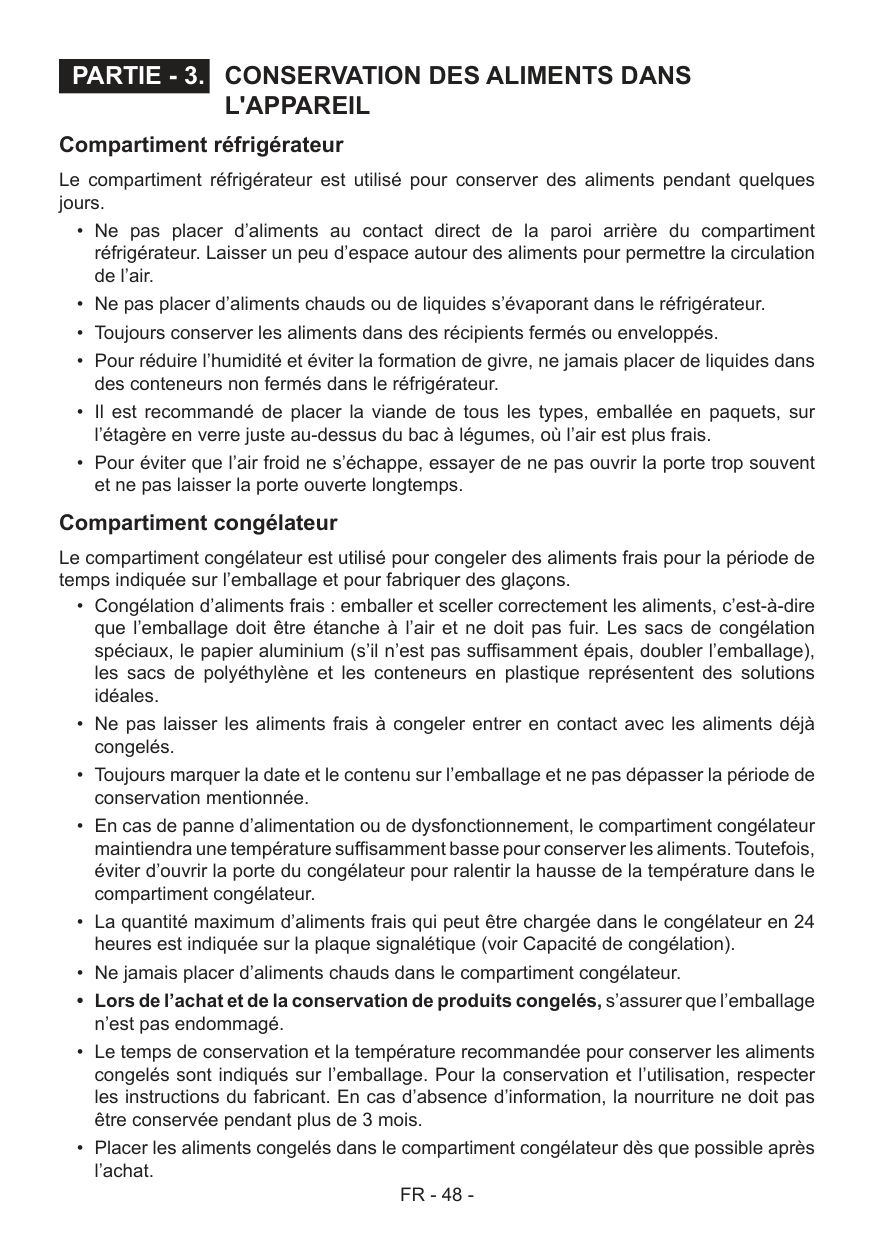
Ces clayettes étant amovibles, veillez à ce qu’elles soient toujours au même niveau que ces limites de zone décrites sur les autocollants, afin de garantir les températures dans cette zone.
Chaque type d’aliment a une température de conservation idéale et donc un emplacement pécis à respecter.
|Emplacements|Produits| |---|---| |Clayettes supérieures|Aliments cuits, entremets et toutes denrées à consommer assez rapidement.| |Zone la plus froide|Viande, volaille, gibier et poissons crus. Temps maximum de conservation : 1 à 2 jours. Fruits frais, charcuterie.| |Bac à légumes|Légumes frais, fruits.| |Contre-porte|Les balconnets recevront, en bas les bouteilles puis en remontant, les produits de faible volume et d’emploi courant (yaourts, crème fraîche,..).| |Contre-porte|Le beurre, les fromages cuits et les œufs trouveront leur place dans les casiers appropriés.|
###### PARTIE - 3.
###### CONSERVATION DES ALIMENTS DANS L'APPAREIL
######## Compartiment réfrigérateur
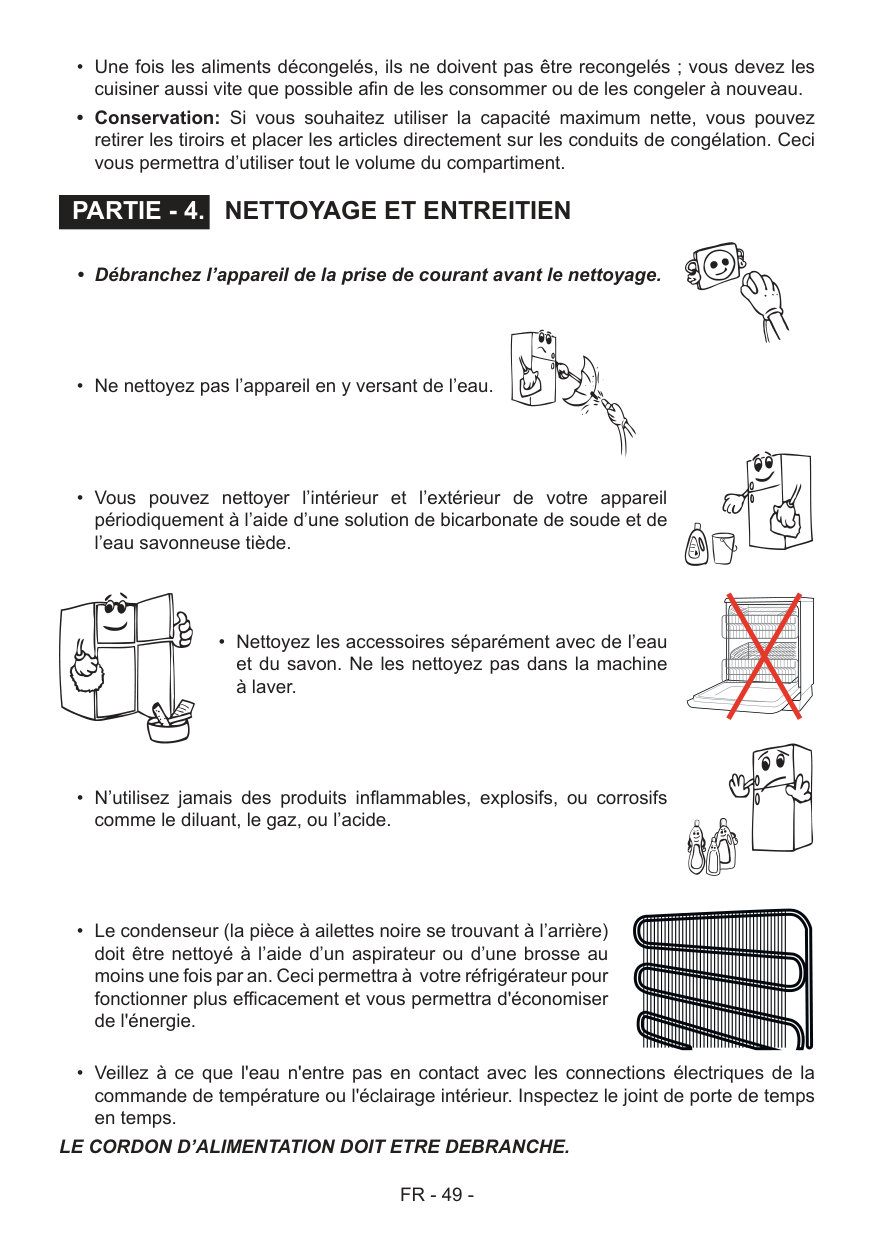
Le compartiment réfrigérateur est utilisé pour conserver des aliments pendant quelques jours.
######## Compartiment congélateur
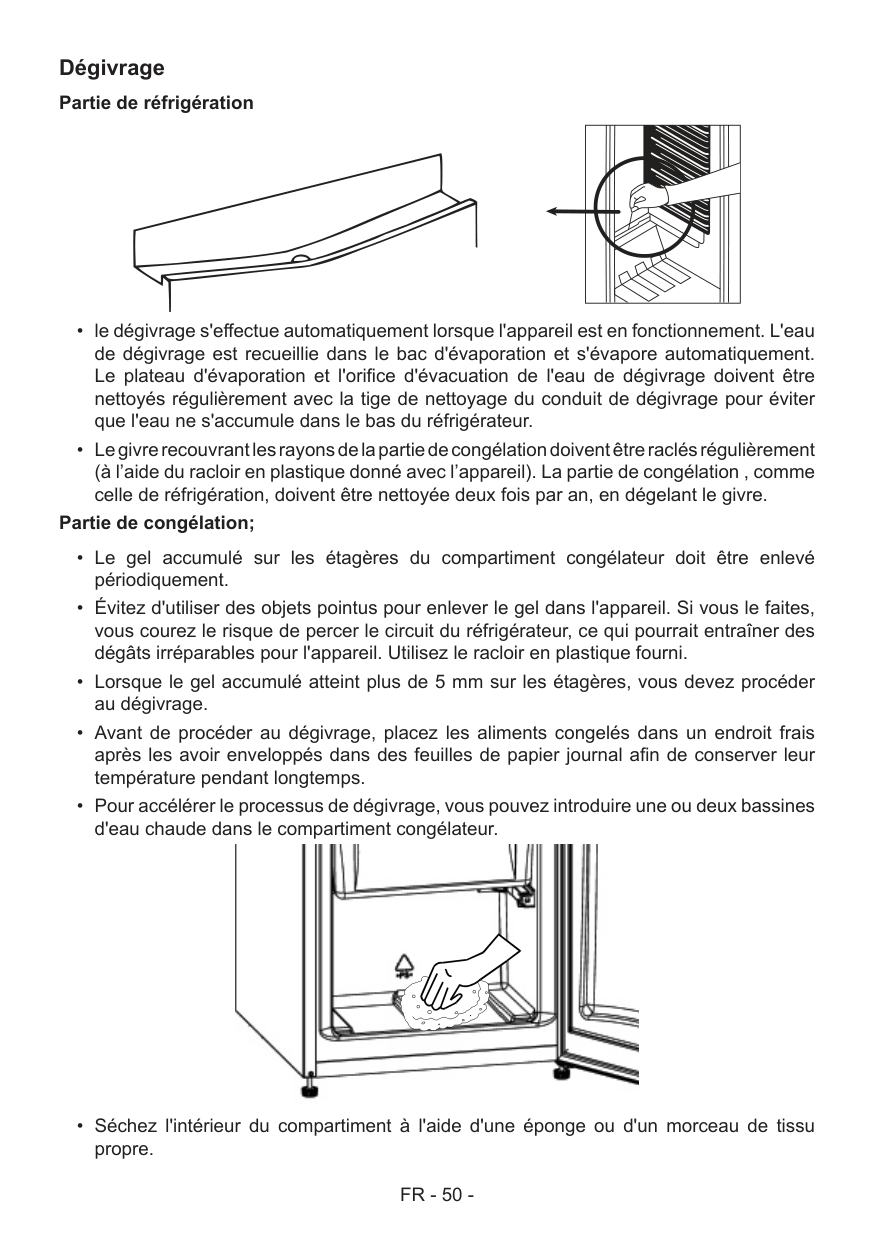
Le compartiment congélateur est utilisé pour congeler des aliments frais pour la période de temps indiquée sur l’emballage et pour fabriquer des glaçons.
###### NETTOYAGE ET ENTREITIENPARTIE - 4.
• Nettoyez les accessoires séparément avec de l’eau et du savon. Ne les nettoyez pas dans la machine à laver.
LE CORDON D’ALIMENTATION DOIT ETRE DEBRANCHE.
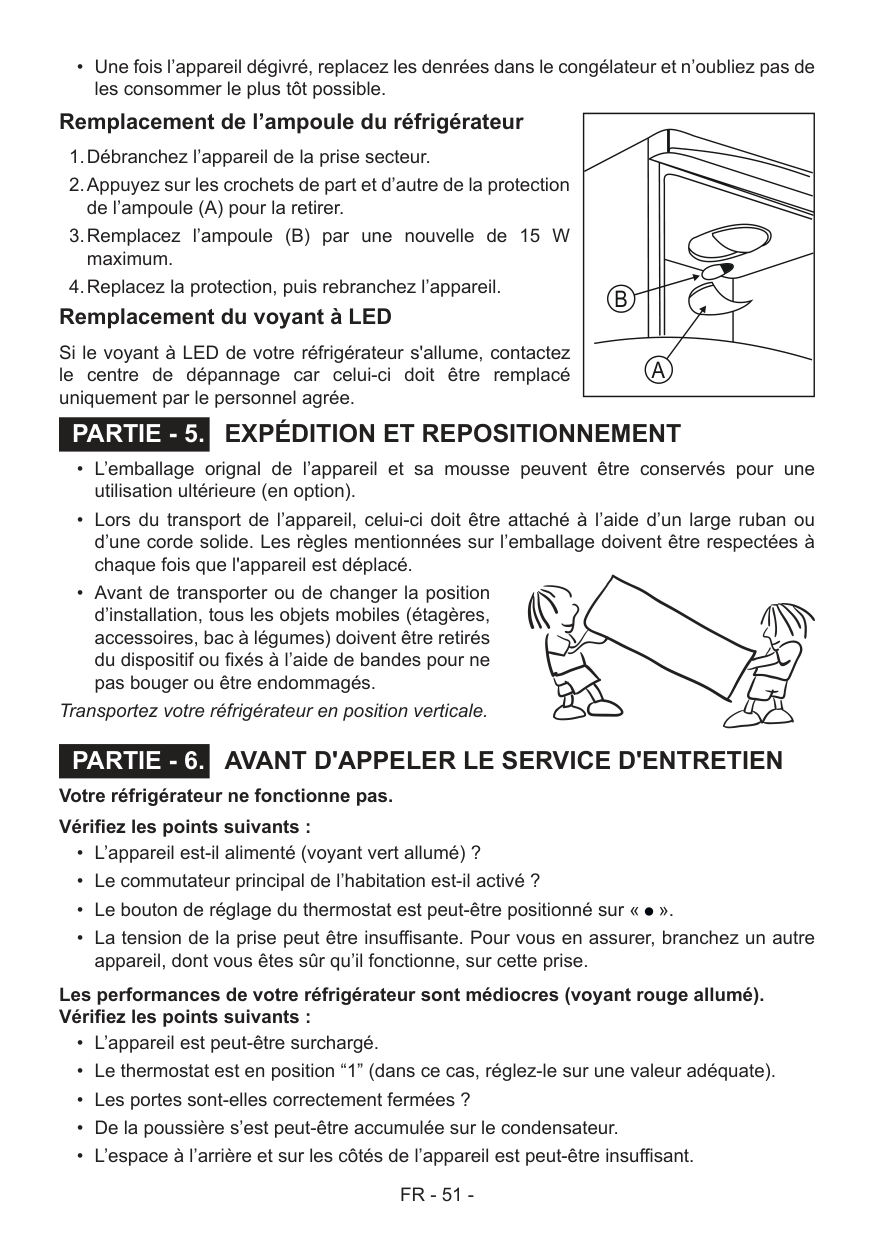
######## Dégivrage Partie de réfrigération
########## Partie de congélation;

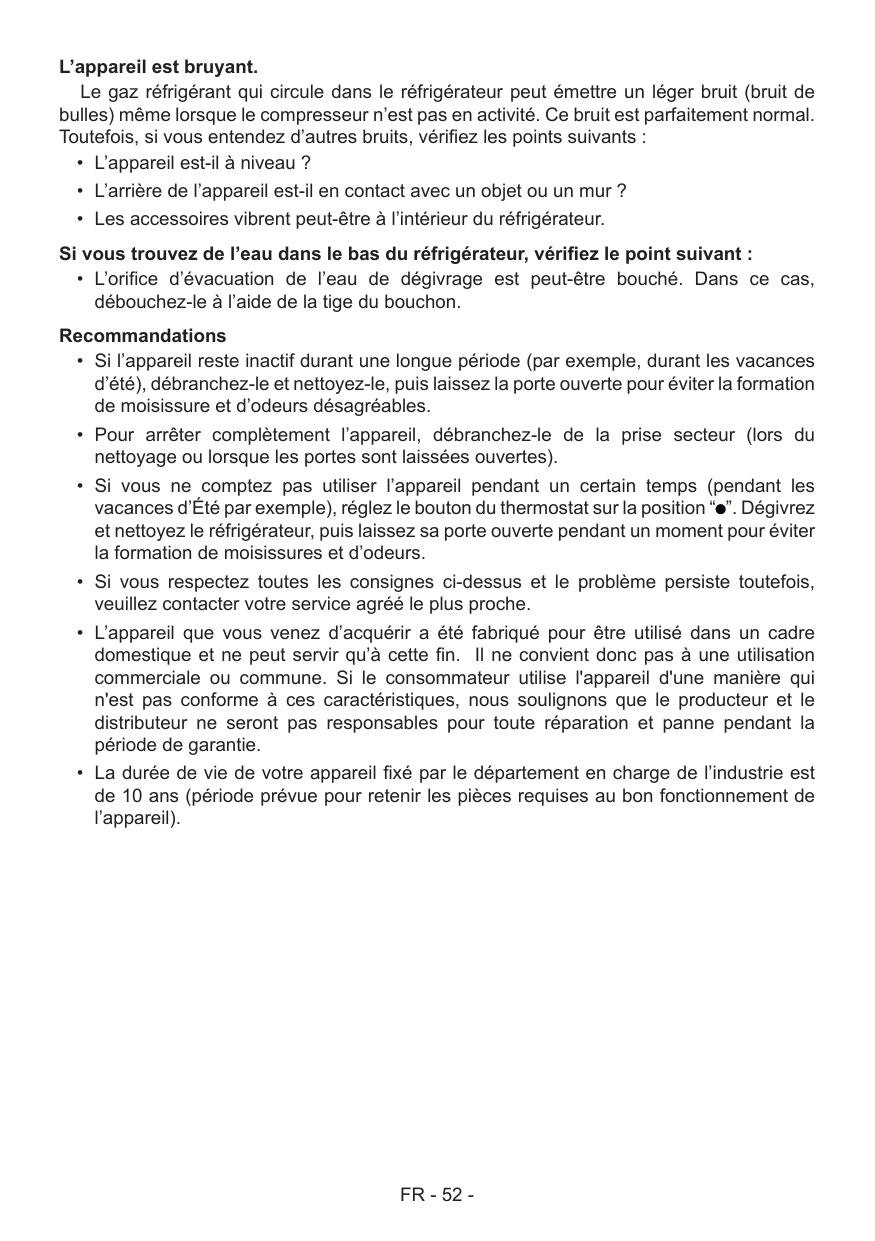
######## Remplacement de l’ampoule du réfrigérateur
|B
A| |---|
######## Remplacement du voyant à LED
Si le voyant à LED de votre réfrigérateur s'allume, contactez le centre de dépannage car celui-ci doit être remplacé uniquement par le personnel agrée.
###### EXPÉDITION ET REPOSITIONNEMENTPARTIE - 5.
Transportez votre réfrigérateur en position verticale.
###### AVANT D'APPELER LE SERVICE D'ENTRETIENPARTIE - 6. Votre réfrigérateur ne fonctionne pas. Vérifiez les points suivants :
Les performances de votre réfrigérateur sont médiocres (voyant rouge allumé). Vérifiez les points suivants :
########## L’appareil est bruyant.
Le gaz réfrigérant qui circule dans le réfrigérateur peut émettre un léger bruit (bruit de bulles) même lorsque le compresseur n’est pas en activité. Ce bruit est parfaitement normal. Toutefois, si vous entendez d’autres bruits, vérifiez les points suivants :
########## Si vous trouvez de l’eau dans le bas du réfrigérateur, vérifiez le point suivant :
• L’orifice d’évacuation de l’eau de dégivrage est peut-être bouché. Dans ce cas,
débouchez-le à l’aide de la tige du bouchon. Recommandations
######## Astuces d'économie d'énergie
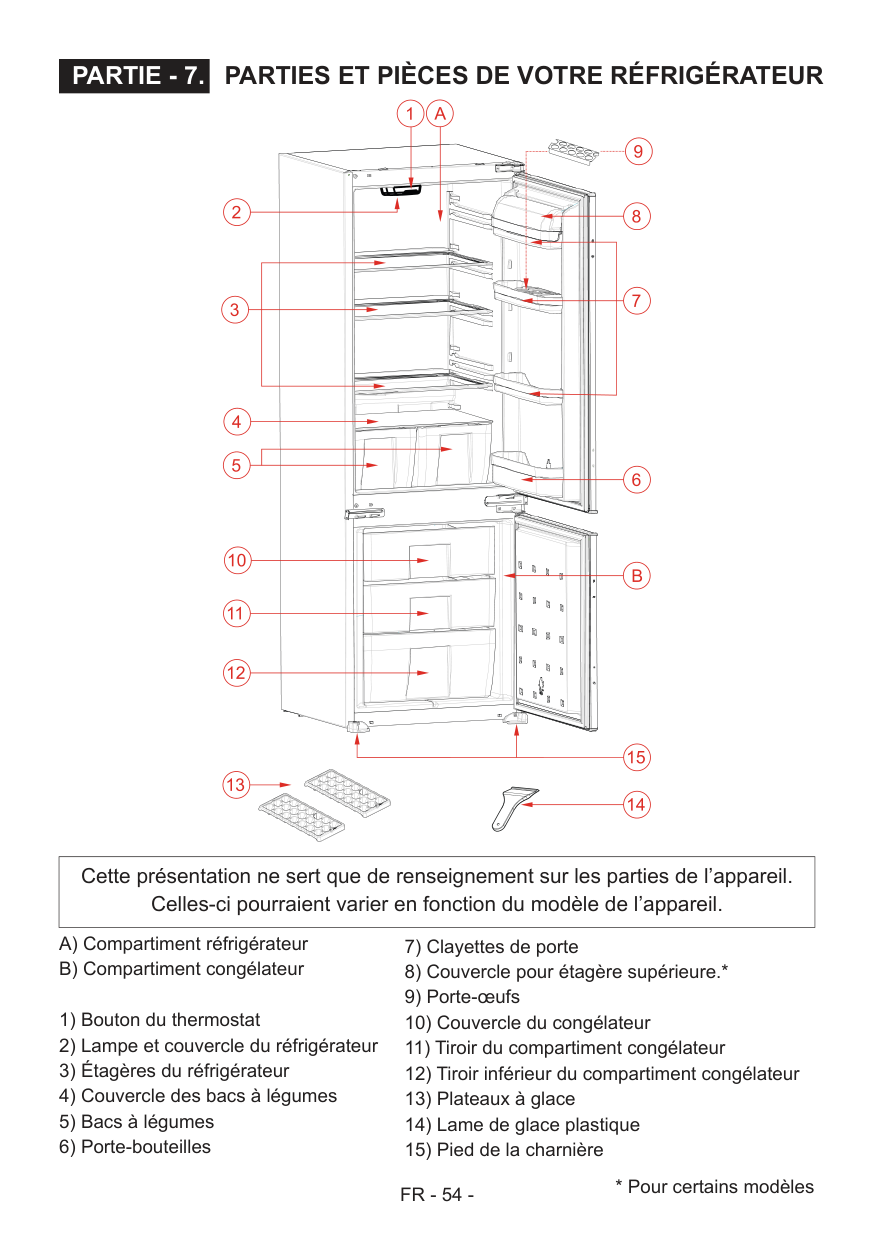
###### PARTIES ET PIÈCES DE VOTRE RÉFRIGÉRATEURPARTIE - 7.
| | | | |---|---|---| | | | |
| | | | |---|---|---| | | | |
|Cette présentation ne sert que de renseignement sur les parties de l’appareil. Celles-ci pourraient varier en fonction du modèle de l’appareil.| |---|
A) Compartiment réfrigérateur B) Compartiment congélateur
IMPORTATO E DISTRIBUITO DA Gruppo Industriale VESIT S.p.A. – Società Unipersonale Via Polidoro da Caravaggio, 6 20156 - Milano (MI)
52236981