
Ask AI
— answers from the official manualAnswers from the official manual.
Common questions
Common Questions
20 totalWhat water temperature does the GSD820 require for good washing and drying?
The entering water must be between 120°F and 140°F for good washing and drying. To prevent dish damage, inlet water should not exceed 150°F. If your water temperature is less than 140°F, you should use the WASH HEAT BOOST option. (Page 6)
How do I use the WASH HEAT BOOST option and how long does it add to the cycle?
Select the WASH HEAT BOOST option before starting your wash cycle. When selected, the wash cycle will be extended by 21 minutes while the dishwasher heats the water for good washing and drying. Note that selecting the ENERGY SAVER option will also cancel the WASH HEAT BOOST. (Page 4)
My dishwasher won't run — what should I check first?
A fuse in your home may be blown, or the circuit breaker may have tripped. Replace the fuse or reset the circuit breaker, and remove any other appliances from the circuit. (Page 12)
How do I remove spots and film from glassware?
Remove all metal utensils, add no detergent, and select the POTSCRUBBER cycle. After 15–20 minutes into the main wash, open the door and pour 2 cups (500ml) of white vinegar into the bottom of the dishwasher, then allow the cycle to complete. If vinegar doesn't work, repeat the process using 1/4 cup (60ml) of citric acid crystals instead. (Page 13)
How do I properly fill the rinse agent dispenser?
Unscrew the dispenser cap and add liquid rinse agent until it just reaches the bottom of the lip inside the dispenser opening, then replace the cap. The dispenser holds 4.5 ounces and should last about 3 months. If you accidentally spill rinse agent, wipe it up immediately with a damp cloth, as it can prevent your detergent from working. (Page 6)
What items should NOT be washed in the GSD820 dishwasher?
Iron, pewter, tin, and wood should never be washed in the dishwasher, as they will rust, tarnish, or warp. Non-dishwasher items such as electronic air cleaner filters, furnace filters, and paint brushes should also never be washed, as they can damage the dishwasher and cause discoloration. Plastic items not marked 'dishwasher safe' should be checked with the manufacturer before washing. (Page 10)
Show 14 more questions
What should I do if there are suds in the dishwasher tub?
How do I start the dishwasher and what is the correct order of steps?
How much detergent should I use based on my water hardness?
What warranty coverage comes with the GSD820 dishwasher?
How do I remove spots and filming from glassware?
What should I do if the detergent cup won't latch after adding detergent?
How should I prepare my dishes before loading them in the dishwasher?
What should I do if my dishwasher won't run?
What water temperature should I use for best dishwashing results?
How much detergent should I use in my dishwasher?
What should I do if my dishes aren't drying properly?
How do I clean the air gap in my dishwasher drain?
What items are not safe to wash in my dishwasher?
Why is there water standing in the bottom of my tub?
Full Manual
18 pages
Use and Care Guide Dishwasher Contents Air Gap 11 POTSCRUBBER Cycle 4,5 Appliance Registration 2 Problem Solver 12-14 Care and Cleaning 11 Rinse Agent ~ China, Crystal, Sterfing 10 Safety Instructions 3 Consumer Services 19 User Maintenance Instructions 11 Cycle Features 4,5 Warranty Back Cover Detergent, Detergent Guide 6,7 Water Temperature 6 Dispenser Cups 7 Winter Storage 11 Ener~ Saver Stitch 4 Ener~-Sating Tips 2 Front Panel Color Change 15 Loading 8,9 Model and Serial Numbers 2 O~erdtinq Instructions 4.5 Cycle Selection 5 GE Answer Center m Drfing Options 4,5 800.626.2000 Built-in Models GSD820 ~
Gsd840 ~
GE Appliances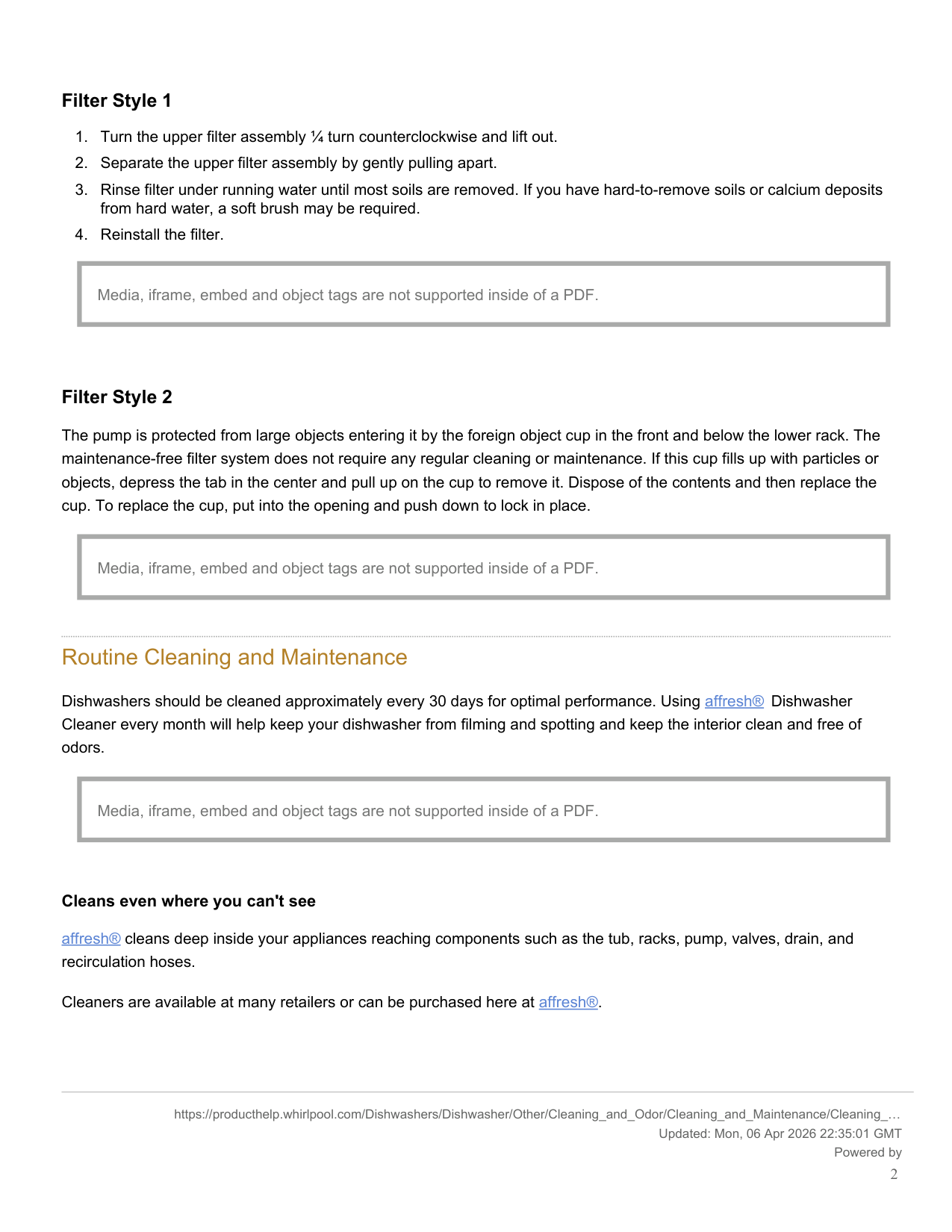
Help us help you... Before using your dishwasher, read this book carefully. It is intended to help you operate and maintain your new dishwasher properly. Keep it handy for answers to your questions. If you don’t understand something or need more help, write (include your phone number): Consumer Affairs GE Appliances Appliance Park Louisville, KY 40225 Write down the model and serial numbers. You’ll find them on a label fastened to the tub wall just inside the dishwasher door. These numbers are also on the Consumer Product Ownership Registration Card that came with your dishwasher. Before sending in this card, please write these numbers here: Model Number Serial Number Use these numbers in any correspondence or service calls concerning your dishwasher. If you received a damaged dishwasher... Immediately contact the dealer (or builder) that sold you the dishwasher. Save time and money. Before you request service... Check the Problem Solver section. It lists causes of minor operating problems that you can correct ourself. To obtain a Spanish language version of this book, call GE Answer Center ‘“ 800.626.2000 consumer information service. Para obtener la versi6n en espafiol de este manual, name a GE Answer Center;’) servicio de information para el consumidor, tel~fono 800.626.2000. Energy-saving tips G Operate dishwasher only when it’s full. Let the dishes accumulate in dishwasher. When you put in only a partial load, use the RINSE & HOLD cycle to rinse off heavy soils. Be sure to latch the door when waiting for a full load. This helps keep soils moist, easier to remove. G If you don’t need your dishes right away, use your ENERGY SAVER no-heat boost drying feature that turns the drying heater off automatically. Dishes dry naturally over a longer period such as overnight. G Always select the cycle that uses least amount of water that will remove the soil from the load. See How to Operate Your Dishwasher section. If you need service To obtain service, see the Consumer Services page in the back of this book. We’re proud of our service and want you to be pleased. If for some reason you are not happy with the service you receive, here are three steps to follow for further help. FIRST, contact the people who serviced your appliance. Explain why you are not pleased. In most cases, this will solve the problem. NEXT, if you are still not pleased, write all the details—including your phone number—to: Manager, Consumer Relations GE Appliances Appliance Park Louisville, Kentucky 40225 FINALLY, if your problem is still not resolved, write: Major Appliance Consumer Action Panel 20 North Wacker Drive Chicago, Illinois 60606 G Turn your water heater down to 120°F. and use the WASH HEAT BOOST Option. Make sure the entering water temperature is no less than 1200F. (See How to Operate Your dishwasher section). 2
Important Safety Instructions
Read all instructions before using this appliance. A WARNING—When using this appliance, always exercise basic safety precautions, including the following: G Use this appliance only for its intended purpose, as you will find described in this Use and Care Guide. G This dishwasher must be properly installed and located in accordance with the Installation Instructions before it is used. If you did not receive an Installation Instructions sheet with your dishwasher, you can obtain one by contacting the service location nearest you. —This appliance must be connected to a grounded metal, permanent wiring system; or an equipment-grounding conductor must be run with the circuit conductors and connected to the equipment-grounding terminal or lead of the appliance. —Connect to a properly rated, protected and sized power-supply circuit to avoid electrical overload. G Do not store or use combustible materials, gasoline or other flammable vapors and liquids in the vicinity of this or any other appliance. G Use only powder or liquid detergents or wetting agents recommended for use in a dishwasher. G Do not wash plastic items unless marked “dishwasher safe” or the equivalent. For plastic items not so marked, check the manufacturer’s recommendations. G Load light plastic items so they will not become dislodged and drop to the bottom of the dishwasher—they might come into contact with the heating unit and be damaged. To minimize the possibility of injury. G When loading items to be washed: A, Locate sharp items so that they are not likely to damage the door seal, and B. Load sharp knives with the handles up to reduce the risk of cut-type injuries. G Do not touch the heating element during or immediately after use. G Do not operate your dishwasher unless all enclosure panels are properly in place. G Do not tamper with controls. G Do not abuse, sit on, or stand on the door or dish rack of the dishwasher. G Close supervision is necessary if this appliance is used by or near children. Do not allow children to play inside, on or with this appliance or any discarded appliance, Dispose of discarded appliances and shipping or packing material properly. Before discarding a dishwasher, remove the door of the washing compartment. G Keep all washing detergents and wetting agents out of the reach of children, preferably in a locked cabinet. Observe all warnings on container labels to avoid personal injury. “ To minimize the possibility of electric shock, disconnect this appliance from the power supply before attempting any maintenance. Note: Turning the control dial to the OFF position does not disconnect the appliance from the power supply. We recommend having a qualified technician service your appliance.Awarninghydrogen
GAS is produced by the chemical action within your water heater. It can accumulate in the water heater andor water pipes if hot water has not been used for a period of two weeks or longer.Hydrogen Gas Is
EXPLOSIVE. To prevent the possibility of damage or injury, if you have not used hot water for two weeks or more, or moved into a residence in which the hot water system may not have been used for some time, turn on all hot water faucets and allow them to run for several minutes before using any electrical appliance which is connected to the hot water system. This will allow any hydrogen gas to escape. Also, since the gas is flammable, do not smoke or use an open flame or appliance during this process.Save These
Instructions
3
How to operate your dishwasher STEP 1. Load your dishwasher with dishes, silverware, pots, pans, bowls, etc., according to the Loading section. STEP 2. Add detergent to the detergent dispenser. Make sure the Cycle Indicator Dial is at OFF position before adding detergent. (See the Detergent Guide.) Use rinse aid agent to help prevent spotting. Occasionally check to insure that rinse agent container is at least half full. (See How to Use a Rinse Agent section.) STEP 3. Select drying option.
E
HEATED DRY. Turns the drying heater on for fast drying. Available on all wash cycles except RINSE& Hold.
ENERGY SAVER (no heat boost). Turns the drying heater off to save energy. Dishes will dry naturally over a longer period such as overnight. Available on all wash cycles. If you need your dishes sooner, open the dishwasher door after the cycle is complete to reduce the natural drying time. Note: The ENERGY SAVER option will also cancel the WASH HEAT BOOST. To obtain WASH HEAT BOOST without HEATED DRY, select only the WASH HEAT BOOST option. (See Energy- Saving Tips.)Step 4. Wash Heat Boost
Option.Wash Heat
Boost
K
To test water temperature, see “How To Test Water Temperature section.” The entering water must be between 120°F. and 1400F. Use the WASH HEAT BOOST option when water is less than 140°F. When selected, the wash cycle will be extended for21 minutes while the dishwasher heats the water for good washing and drying. STEP 5. Select the wash cycle and start the dishwasher. (See Cycle Selection Hints.) If your dishwasher drains into a food waste disposer, operate the disposer until it is empty before starting the dishwasher. G For POTSCRUBBER, NORMAL WASH and LIGHT WASH cycles:Pot-
Normal
Light
Scrubber
Wash
Wash
a. Push selected cycle button. b. Latch the door. c. Slowly turn Cycle Indicator Dial to ON position to start the cycle. You will hear the motor start. There is a time delay between start-up and water fill so you will not hear any wash action right away. To obtain the benefits of a complete cycle, be careful that you do not turn the dial any further than necessary to start the dishwasher. G For RINSE & HOLD cycle: o~, ;.,Orying ‘\*
.,Q’
Washing
I
,“ a. Be sure door is unlatched. Do not use detergent. b. Select ENERGY SAVER drying option. c. Slowly turn Cycle Indicator Dial to RINSE& HOLD position. d. Latch the door to start the cycle. 4
Cycle selection hints It is important to f(~llow the loading instructions. (See how to Load Your Dishwasher section.) Then select the appropriate cycle. POTSCRUBBER—For items such as pots, pans and casseroles with dried-on or baked-on soils. Evcrydfiy dishes may be included. NORM AL WASH—For most lotids of everyday dishes, glasses and cookware with medium soils. LIGHT WASH—For dishes that are lightly soiled with soi Is that have not dried on. Also for everyday dishes that have extra preparation be tore loading. What happens in each cycle G You 1 I hear occasional c1 icking sounds: —Soft food disposer shredding action. —Drain valve opening to pump water out. —Timer control as cycle prc>gresses. —Detergent cup openin&. RINSE & HOLD—For rinsing partial loads which will be washed later. Select ENERGY SAVER drying option. D() not u.ve d(’tergent. G During the drying period: —The motor stops. — Water vapor comes through the vent by the door latch during drying and when water is being pumped out. Wash W:ltcr Use Cycle Tir]le Gall(~IIs Minutes W:lsh ~.y~i~s ([ipprox.) (upprox.) C’ycle Sequellcc PorrS(:RLJBBE:R
12. I
fi~ wmmmmmmNorma1, Wash
I?. 1
41 mmmmmmm I.lGHT WASH 10,3 ~~:, mmmmmmRinsf; & Hoi.1}
3. I
8 mm *Unextended times. These cycle times will be increased approximately 21 minutes if Wash Heat Boost Option is selected. Drying Options: HEATED DRY. Available on all wash cycles exccpl RINSE & HOLD. Add 25 minutes to wash cycle time. ENERGY SAVER (N() Heat B()(]st). Drying heater is turned off. Dishes dry naturally.
Good dishwashing starts with HOT water To get dishes clean and dry you need hot water. To help you get water of the proper temperature, your dishwasher has a WASH HEAT BOOST feature. When selected (see How to Operate Your Dishwasher section), this water heating feature allows you to turn down your household water heater and save energy if you’re willing to let the dishwasher run a little longer while it heats water. For good washing and drying, the entering water must be between 1200F. and 1400F. To prevent dish damage, inlet water should not exceed 150°F. How to test water temperature: Higher water temperature is needed to dissolve grease and activate powder detergents. If the water temperature is less than 140°F., use the WASH HEAT BOOST option. See WASH HEAT BOOST section. Check your water temperature with a candy or meat thermometer. Turn on the hot water faucet nearest the dishwasher. Put the thermometer in a glass and let the water run continuously into the glass until the temperature stops rising. [f the water temperature is below 1200F. adjust your water heater. Helpful hints: If outside temperatures are unusually low, or if your water travels a long distance from water heater t. dishwasher, you may need to set your water heater’s thermostat up. If you have not used hot water for some time, the water in the pipes will be cold. Turn on the hot water faucet at the sink and allow it to run until the water is hot. Then start the dishwasher. If you’ve recently done laundry or run hot water for showers, give your water heater time to recover before operating the dishwasher. How to use a Rinse Agent How to choose and use A rinse agent makes water flow off detergent dishes quicker than usual. This lessens water spotting and makes drying faster, too. For best dishwashing performance, use of a rinse agent such as JET- DRY brand is recommended. Rinse agents come in either liquid or solid form. Your dishwasher’s dispenser uses the liquid form. How to fill the rinse agent dispenser. Unscrew the cap. Add the liquid rinse agent until it just reaches the bottom of the lip inside the dispenser opening. Replace the cap. The dispenser automatically releases the rinse agent into the final rinse water. If you accidentally spill: Wipe up the rinse agent with a damp cloth. Don’t leave the spill in the dishwasher. It can keep your detergent from working. If you can’t find any rinse agent, write:
Benckiser Consumer
Products, Inc.
(“Jet-Dry”)
411 W. Putnam Ave. Greenwich, CT 06830 Your dishwasher’s rinse agent container holds 4~2 ounces. This should last about 3 months. Fill as needed. Do not overfill. First, use only powder or liquid detergents specifically made for use in dishwashers. Other types will cause oversudsing. Second, check the phosphate content. Phosphate helps prevent hard-water materials from forming spots or film on your dishes. If your water is hard (7 grains or more), your detergent has to work harder. Detergents with a higher phosphate level will probably work better. If the phosphate content is low (8.7qo or less), you’ll have to use extra detergent with hard water. Your water department can tell you how hard your water is. So can your county extension agent or your area’s water softener company. Just call and ask them how many “grains of hardness” there are in your water. How much detergent should you use? That depends. Is your water “hard” or “soft”? With hard water, you need extra detergent to get dishes clean. With soft water, you need less detergent. Too much detergent with soft water not only wastes money, it can be harmful. It can cause a permanent cloudiness of glassware, called “etching.” An outside layer of glass is etched away! Of course, this takes some time. But why take a chance when it’s easy to find out the hardness of your water. Keep your detergent fresh and dry. Under the sink isn’t a good place to store detergent. Too much moisture. Don’t put powder detergent into the dispenser until you’re ready to wash dishes, either. (It won’t be fresh OR dry.) If your powder detergent gets old or lumpy, throw it away. It won’t wash well. Old detergent often won’t dissolve. If you use a liquid dishwasher detergent, these precautions are not necessary because liquid detergents don’t “lump” as they age or come in contact with water. 6
You’ll find two detergent dispensers on the inside door of your dishwasher. Two, because some cycles use two washes. See “Detergent Usage Guide” below. (Be sure the Cycle Indicator Dial is at OFF position before adding detergent. Otherwise, the detergent (’up will not (lo,re and latch properly.)
Grasp Handle,
Rotate And
Close Tightly /{
Close the main ~:up. NOTE: Detergent (up may be opened manualldv with no harm. Turn handle cc~untercl{]ckwi.ve until it releases. A snapping sound is normal when it opens. How to prepare the dishes for washing If this is your first dishwasher, or if you’re replacing a much older model, you may wonder how much preparation your dishes need. Actually very little. Pre-rinsing of normal food soils is not necessary. With common sense and a little practice you’ll soon know what foods to remove. Here are some guidelines:Soft Water
(0-3 grains hardness)Cycles
Main Cup Open CupPotscrubber
andNormal Wash
cycles LIGHT WASH cycle RINSE& HOLD cyc[eI
1 Tablespoon 1 Tablespoon minimum minimum +Medium Water
Hard Water
(3-7 grains) (7- I 2 grains*) Main Cup Open Cup Main Cup$ Open Cup* Half Full Half Full Completely Completely Full Full + + Half Full None Completely None FullI
Use no detergent Use no detergent
How to load your dishwasher How to load the TOP MCK This i,s a rand(~m mixed l{~ad, the m(~.st ({~mm

How to load the BOTTOM WCK Load platters, pots, pans and bowls along the sides, in corners or in the back. All large items, such as pitchers, salad bowls and mixing bowls, should be washed in the lower rack. Heavily soiled pots, pans and casseroles MUST be loaded in the bottom rack, facing down. Prop broiler pans and racks along the edge. Don’t let anv \ item extend” through bottom. Put flatware in the removable basket with handles up to protect your hands. Mix knives, forks and suoons so thev Take out anvthin~ that may fall or extend through the Precaution! don’t n;st together. Distribute evenly. Smali plastic “ bottom of tfie ba;ket. “ . items, such as measuring spoons and lids from small containers are not recommended for automatic dishwashing. If placed in the dishwasher, they should go in the bottom of silverware basket with silverware on top.

What you can usually wash safely in your dishwasher. And what you can’t. Usually Safe Material Exceptions (not safe) Special Instructions Aluminum
Yes
Some colored anodized aluminum can fade. Some darkening or spotting possible. Remove by scouring with soap-filled steel wool pads. ChintiStonewareYes
Yes
Antique, metal-trimmed, hand-painted or over-the-glaze patterns fade. Gold leaf will discolor. Antique, metal-trimmed or hand- painted patterns fade. Gold leaf will discolor. If in doubt, check with the manufacturer, or test wash one piece daily for at least a month. Compare with the rest of the set. Load securely to prevent movement. Check manufacturer’s instructions for your crystal. Crystal Non-dishwasher items+uch as electronic air cleaner filters, furnace filters! paint brusbes, etc.No
Do not wash in dishwasher. Damage to dishwasher and discoloration or staining of dishwasher may result. GlassYes
Milk glass may yellow. IronNo
Iron will rust. PewterNo
Pewter tarnishes. PlasticsYes
If it doesn’t say DISHWASHER SAFE, test one piece in the top rack before dishwashing an entire set. Wash in top rack only. Stainless”steelYes
Rinse if not washing immediately. Salty or acid foods can stain if left on. Sterling silver and silver plateYes
Don’t put in same silverware basket with stainless steel. Contact between metals can damage silver. Don’t wash copper utensils in the same load. Silver may get a brown film. Adhesive used to attach some hollow-handle knives can loosen. Rinse if not washing immediately. Salty or acid foods can stain if left on. Dry detergent can cause difficult-to- remove black spots. Place in back section of silverware basket to avoid exposure to detergent from the detergent cup. After washing, wipe the non-stick coating area with vegetable oil to keep it from losing its non-stick quality. Non-stick coatingsYes
TinNo
Tin can rust. Wood can warp, crack or lose its finish with any type of washing. WoodNo
Forget a dish? Here’s when you can add it. Add dishes any time during the RINSE & HOLD cycle. With other wash cycles, you can add dishes at any time BEFORE the main detergent wash portion of the cycle. Here’s how to add a forgotten dish:
Care and Cleaning
User Maintenance
Instructions
Clean the control panel with a lightly dampened cloth. Dry thoroughly. Do not use abrasives or sharp objects on the panel. They can damage it. Clean the outside with a good appliance polish wax. The outside cabinet finish is durable, but it can scratch. So use no scouring pads, or harsh or gritty cleaners. Appliance Polish Wax & Cleaner (Cat. No. WR97X0216) is available from CJE Appliance Parts Mart. The inside usually takes care of itself. If it should ever need cleaning, use a mild cleansing powder. Scouring pads and harsh cleaners can mar the finish. Built-in dishwashers often use an air gap. Keep it clean. An air gap is a plumbing device. It protects your dishwasher against water backing up into it if a drain clogs. The air gap is not a part of the dishwasher. And you may not even have one. Not all plumbing codes require air gaps. Ill 1., “11: ! I II ITwo Types Of Air Gaps; I
If you have an air gap, check it at least once a month. IT IS NOTPart Of Your Dishwasher.
It Is Not Covered In Your
Warranty.
The air gap is easy to clean. With most types, first turn off the dishwasher, then lift off the chrome cover. Then unscrew the plastic cap and check for any buildup of grit. A toothpick makes cleaning easy. Check the air gap any time your dishwasher isn’t draining well. Not using your dishwasher in winter? Protect against freezing. If your dishwasher is left in an unheated place during the winter, ask a service technician to: G Cut off electric power to the dishwasher. Remove fuses or trip circuit breaker. G Turn off the water supply. G Disconnect the water inlet I ine from the water valve. G Drain water from the inlet line and water valve. (Use a pan to catch the water.) c Reconnect the water inlet line to the water valve. G Remove the plastic pump cover in the tub bottom and use a sponge to soak up water in the rubber boot.I
Pump Cover Screws
11 —
—m Questions? ~’ Use TMs Problem Solver
Problem
\ Possible Cause
Dishwasher
A fuse in your home maybe blown, or the circuit breaker tripped. Replace fuse orWon’T Run
reset circuit breaker. Remove any other appliances from the circuit.Unusual Noise
Utensils may not be secure on rack pins, or something small may have dropped from the rack. Water is causing utensils to rattle. Make sure everything is securely placed in dishwasher.31Shes Don’T Dry
Make sure inlet water temperature is correct. (To test, see How to Test Water Temperature section.) Unload the bottom rack first. Water from dishes in the top rack may be spilling onto the bottom rack. Check for improper loading. Dishes shouldn’t nest together. Avoid overloading. Check the rinse agent dispenser to see that it’s not empty.Unclean Dishes
Check inlet water temperature. It should be at least 120°F. (To test, see How to4Nd Flatware
Test Water Temperature section.) Water pressure may be temporarily low. Turn on a faucet. Is water coming out slower than usual? If so, wait until pressure is normal before using your dishwasher. Plugged air gap. (See Care and Cleaning section.) Improper rack loading. (See Loading section.)3Lack Or Gray
Aluminum utensils often leave marks when they rub against dishes. Remove marksWarks On Dishes
with a mild abrasive cleanser.Ietergent Left
Water may not be reaching the detergent cups. Move dishes that may be blockingN Dispenser Cups
the detergent cup. The dispenser cover may not be opening or may be blocked by improperly loaded items. If you used a powder detergent, open the cups and remove any caked-on detergent. If the cup still doesn’t open automatically, call for service. Detergent may be old. If the powder is hard or caked in the box, throw it away. The detergent may not be working well. Try another brand.>Etergent Cup
Cycle Indicator Dial must be in OFF position for cup lid to close and latch properly. If.Id Won’T Latch
you unlatch the door and open it to dry your dishes, the Cycle Indicator Dial does not4~Er Adding
advance to OFF by itself.>Etergent
Ipots And Filming
Spotting can be caused by all of these things:3N Glasses And
=Atware
Q Extremely hard water. (See How to Choose and Use Detergent section.) G Low inlet water temperature. (To test, see How to Test Water Temperature section. ) G Overloading the dishwasher. 12
Problem
I Possible Cause
;Pots And ~Lming
G Improper loading. (See Loading section.)In Glasses And
%Atware
G Old or damp powder detergent. continued) G Phosphate level in detergent too low. (See How to Choose and Use Detergent section. G Rinse agent dispenser empty. (See How to Use a Rinse Agent section. ) G Too little detergent. (See How to Choose and Use Detergent section.) Due to varying local water conditions and personrd preferences, try several brands of detergents to find one that gives the best results for you. A liquid dishwasher detergent may help reduce filming. To remove spots and film from glassware:2. Do Not Add Detergent.
2Loudiness On
If vinegar or citric acid crystal rinse doesn’t work, the cloudiness is “etching:’3Lassware
The film cannot be removed. It can be prevented: Use less detergent if you have soft water. Wash glassware in the shortest cycle that will get them clean. Water temperature entering dishwasher exceeds 150°F. iELLOW OR Tea or coffee can stain cups. Remove the stains by hand, using a solution of 1/2 cup3Rown Film
bleach and 3 cups warm water. An overall yellow or brown film on dishes or glassware can be caused by iron deposits in water. A special filter in the water supply line is the only way to correct this problem.Your water softener company can tell you about the filter. Yellow film on sterling silver results when you wash copper utensils in the same load. Silver polish will usually remove this stain.I
13
The Problem Solver (continued,
Problem
I pOSSIBLE CAUSEChipping Of China
Rough handling can cause chipping. Load with care. Make sure glassware and china are secure and can’t jar loose. (See Loading section for correct way to load glassware.) Make sure tall glasses and stemware will clear the top of the tub when you push the rack into the dishwasher. Always use the top rack for delicate items.Small Amount Of
Water around the outlet on the tub bottom at the back of the tub is normal. It is cleanWater Standing
water. It’s there to keep the water seal lubricated.In The Bottom
Of The Tub
Water Won’T Pump
If the entire bottom of the tub has water, you may have a drain problem. Clean the airOut Of The Tub
gap, if you have one. (See Care and Cleaning section.) Check the kitchen sink. Is it draining well? You may need a plumber. If dishwasher drains into a disposer, run the disposer to clear. Be sure the disposer is not clogged.Suds In The Tub
Sudsing detergents are not meant for dishwashers. USE ONLY AUTOMATICDishwasher Detergents To Avoid Sudsing.
To remove suds from the tub: Open the dishwasher. Let suds evaporate. Add 1 gallon of cold water to the tub. Close and latch the dishwasher. Pump out water by slowly turning the control dial until a drain period is reached. Repeat if necessary.Dishwasher Leaks
Suds can cause unit to oveflow. That’s why it’s so important to use a detergent that’s designed for automatic dishwashers. Spilling the rinse agent can cause foam during washing. This can lead to overflowing. Wipe up accidental spill of rinse agent with a damp cloth.Motor Hums
Dishwasher has not been used on a regular basis. If you do not use your dishwasher often set it to fill and pump out once every week. This will help keep the seal moist, and the garbage disposer clear. If you need more help.. call, toll free: GE Answer Center@ 800.626.2000 consumer information service 14
How to change color panels If yOLI are redecorating, you can change your dishwasher’s front panels to match or blend with your new colors. The p~nels are held in place by the door trim and the trim on the panel below the door. Each side of each panel is a different color. Or you can paint a panel with the color of your own choice. Do not operate the dishwasher while changing panels or when lower access panel is removed. How to change the door panel:
Order Form
I
1 1 1 Use this form to order, without charge, your choice of [ a color panel not supplied with your dishwasher or \ 1 a wood panel trim kit. 1 1 1 Please mark only one box. 1 1 1 ! White/Almond ~ Harves~lack [ Door and Access Panel GPF 24 24 Door and Access PanelGpf 26
1 I I Kit GPF40 1I
Wood Panel Trim Kit 1 ncFold Here
+ Tp Name: Address: City: State: Zip Code: Model No.: Serial No.: Date Purchased: +I
1I
I
1 1 1 1 1 1I
1 # i 1I
1L
: 1I

--------------------------------------------------------------------------------------7 1
Tape Here
Name Address City, State Zip 1Place
Stamp
Here
1I
I
1I
I
1I
1 1 1 1 1 1 1 1 1 1 1I
1I
1 GE Appliances c/o Dri-View Mfg. 4706AllmondAve. Louisville, KY 40209 #I

Wdll Be There With the purchase of your new GE appliance, receive the assurance that if you ever need information or assistance from GE, w~ll be there. All you have t.o do is call–toll-free GEAnswer Center a In-Home Repair Service
80Me4Ares
(80M32-2737)
A (;kl(onstll~lc>[sct-vi(c rrofkssiorlal” willprolidc. expert lc:[~ililsel-vi(:e, sclledllled al a 1 itnc lhat convenient fi)l- ]OLI. hlan] (;11 ( lorrsunlct- Service (OIll[J:iIly-olJt’I;tleCI” locations” offkr v()(] sc:t-vice tod:ly” or lon]ortow, 01 at your c(mvcnicncc (7:()() a.m. to 7:()() p.m. wt:ekday,s, !1:()() ;i. m. (() 2:()() p.m. Satut-- (iays). our filct( )ry-lrainc’d technicians know )OUI- appliance’ inside and ()(1(—s() nlost tttp:lil-s can he handled in jusl one visil. Service Contracts 80&626-2224 80ti6262000 Whatevct-your- qucsliorl ab(ml any [; major aprliance, (;E Answer ~;ent.er’ infi)rmatiotl service is available to help. Your call-and your (luestior]- will be answered promptly and cour”teously.” And yoLl can call any time>. (;E Answer ( :entcr M scrvicc’ is open 24 hours a day, 7 days a week. You can have the secure feeling that ( ;P; (;(~t]surn(’r Service will still be there afiet- your warranty expires. l)ur- ch:lsc a (;E contract. while your war- t-:inty is stil] in ef~’ect and y(jLI’11 receive a substantial discount. With a tnul[.iple- ye;u contract, you’re assured (~f’fi]ture sc>rvice at today’s rrices. Telecommunication Detice for the Deaf Patis andAccessories80G626-2002
Individu& qutified to service their 0- appfiauces can have needed rat-ts or accessories sent directly 10 their home. ‘Ihc (1E rarts system pr-()- vides access to over 47,()()() parts.. and ;dl (;E: (;cnuine Renewal l)arts are fillly warranted. VISA, Master(;at-d and [)iscovc>r cards are ;tccepted. User maintenance instictions contained in this booHet cover proce- dures intended to be performed by any user. Other servicing generfly should be referred to qudfied ser- vice personnel. Caution must be exercised, since improper servicing may cause unsafe operation. -Am ...,.....,7” .,...,. . . . . . . . . . . . .,.” . . . . . . . . . . . . . . . . . . . . . . ...,, ,., hr Customers With Special Needs... 800626.2000 [Jron re[]uest, (;~will rrovide Ilraillc cotllrolsfi)r” avaric’lyof’( ;k; appliances and ii I>ro(llllte 10 assist in planning ii harrier-flee kitchen fi)t- persons with Iitnitt’d rnohilitv. ‘1-() oht;iin [hc’sc: items fi-ee of’(llar$c, call 800. fj2(j.2000. (;otlsunlet-s with itupaired hearing or spc’cell who have access to a ‘1.1)1) or a corlverltiorlal” teletypewriter may call 800 JI’[)1)-(;E:A(; (800-8:3:34322)” 10 re(lllesl inf’orrn;Ltiotl” or service.