Ask AI
— answers from the official manualAnswers from the official manual.
Common questions
Common Questions
23 totalWhat is the difference between HEAT DRY and AIR DRY options?
With the HEAT DRY option, air inside the dishwasher is heated during the dry part of the cycle. With the AIR DRY option, the air is not heated, which helps save energy, but dishes take longer to dry (overnight) and some water spotting may result. Some items such as plastics may need towel drying when using AIR DRY. (Page 9)
How much detergent should I use depending on my water hardness?
For hard water (8 or more grains of hardness), fill one or both detergent sections to the top line. For medium water (5 to 7 grains), fill to the middle line, and for soft water (0 to 4 grains), fill to the bottom line. Using too much detergent in soft water can cause glassware to etch, while too little will result in unclean dishes. (Page 7)
Which items should not be washed in the dishwasher?
Several items should not be washed in the dishwasher, including delicate or antique china and crystal, cast iron utensils (which will rust and lose their seasoned finish), wood items such as cutting boards and knives with wooden handles, gold flatware, and pewter or pewter-like materials. Plastics should only be washed if marked 'Dishwasher Safe' and placed in the top rack only. (Page 11)
What warranty coverage does the Whirlpool DU7200XS dishwasher come with?
The dishwasher comes with a Full One-Year Warranty from the date of purchase, covering FSP replacement parts and repair labor to correct defects in materials or workmanship. It also includes a Limited Nine-Year Warranty (second through tenth year) covering FSP replacement of the porcelain tub and/or Duraperm inner door if they fail to contain water due to defective materials or workmanship. The warranty does not cover service calls for installation correction, misuse, accident, fire, flood, or any labor costs during the limited warranty period. (Page 16)
Do I need to pre-rinse dishes before loading them in the dishwasher?
It is not necessary to rinse dishes before putting them into the dishwasher. Simply remove large pieces and quantities of food and bones. The self-cleaning filtering system helps eliminate pre-rinsing by removing food particles from the wash water.
What is the difference between the HEAT DRY and AIR DRY options?
With HEAT DRY selected, air inside the dishwasher is heated during the dry part of the cycle. With AIR DRY selected, the air is not heated, which helps save energy but means dishes take longer to dry (overnight) and some water spotting may result. Some items such as plastics may need towel drying when using the AIR DRY option.
Show 17 more questions
How do I add a dish after I have already started the dishwasher?
What should I do if there is spotting and filming on my dishes?
Which items should never be washed in the dishwasher?
What should I check if my dishwasher will not run or stops during a cycle?
What should I do if detergent remains in the covered detergent cup after the cycle?
What should I do if water remains in the bottom of the dishwasher after the cycle?
How do I clean the pump guard on the DU7200XS?
What are the available wash cycles and how long do they take?
How do I add a dish after I've already started a cycle?
What should I do if water remains in the bottom of the dishwasher after a cycle?
How do I remove and clean the pump guard?
Can I put glasses in the bottom rack?
How much detergent should I use?
What should I do before starting my dishwasher?
Can I change the cycle during operation?
What is the difference between HEAT DRY and AIR DRY?
Why are my dishes not drying?
Full Manual
15 pages
Dishwasher
Undercounter ModelsDu7200Xs
DU72l6XS ‘zers Ice Makers O~shwashers Bwll-In Ovens and Surface Uwts Ranges Mwowave Ovens. Trash Compactors Room Au Condwxws Oehumldlllers Aulomallc Washers. Clolhes Oryers Freezers. Re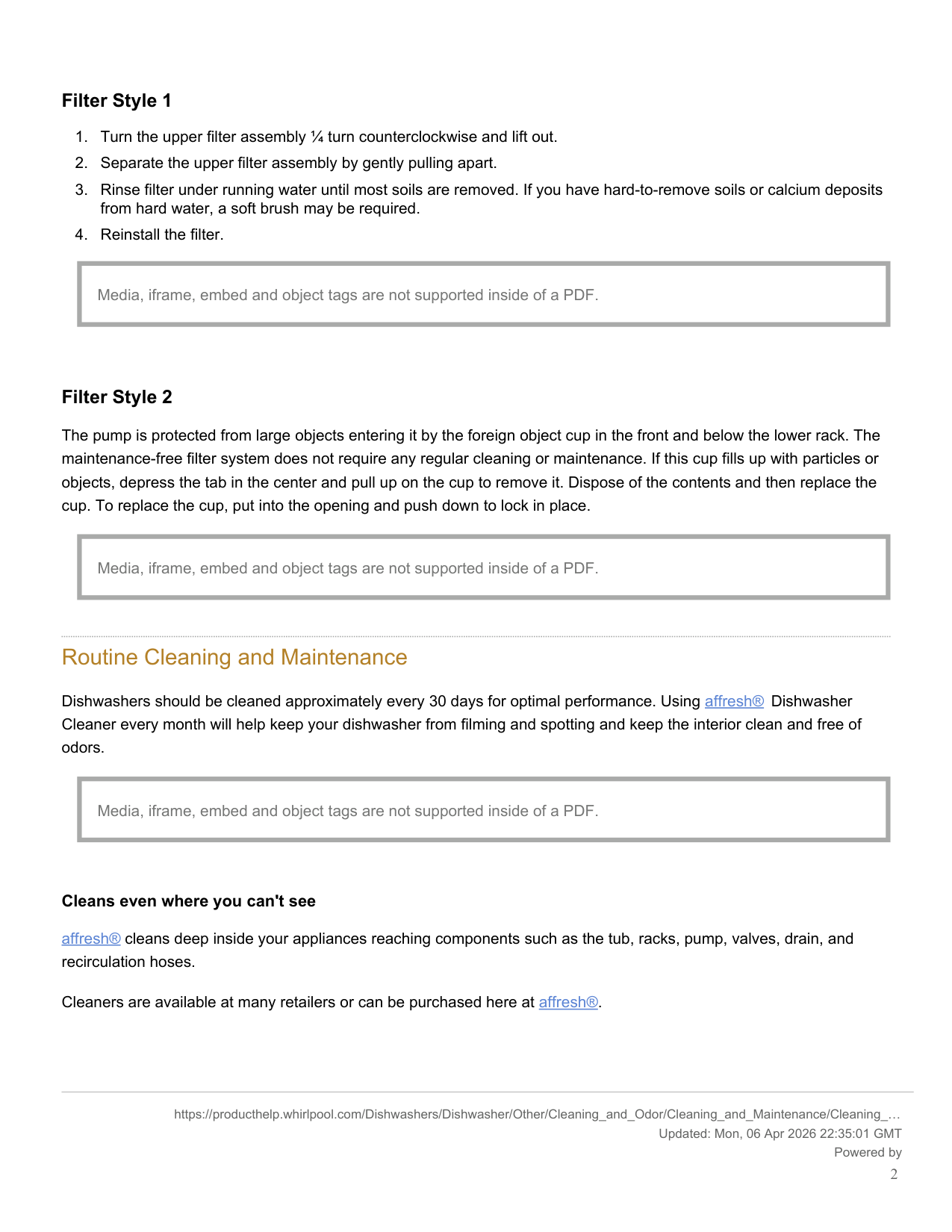
Contents
Before You Use Your Dishwasher
Important Safety Instructions
Parts And Features
For Best Results
The Filtering System. Quiet Operating TipsProperloading..................
Top Rack Loading Bottom Rack Loading Silverware Basket LoadingAdding
Detergent
Page 2 PageBefore Starting Your Dishwasher.
8Starting Your Dishwasher,
8 Selecting a Cycle 8 HEATDRYorAIRDRY ..,.,,...,........ 9 Changing a Setting 9 To Add a Dish After Starting 9Energy Saving Tips
10Special Tips
11Common
Dishwashing
Problems..
12If You Need Service Or Assistance
14Whirlpool
Dishwasher
Warranty
16 01988 Whirlpool Corporation Before you use your dishwasher It is Your personal responsibility and obligation to be sure your dishwasher: l Is installed by a qualified installer. l Has been installed where it is protected from the elements. l Has been installed on a floor strong enough to support its weight. l Has been properly connected to electricity, water and drain? l Has been properly electrically grounded.* l Has had all hang tags and temporary labels removed. l Is not used by children or anyone unable to operate it properly. l Is properly maintained. ‘See installation instructions for complete information.
Parts and features Models
Du7200Xs
and DU72l6XSRack Bumper
Detergent Dispensers
User Guide
(Permanent Label) /Heating Element
Spray
Tower
Lower Spray Arm
Silverware Basket
Model And Serial
eNumber Plate
(not shown)The Overflow
Panel
Access
PROTECTOR is designed to prevent too much water from entering the dishwasher. It is not removable.I
Filter System
(Screen and Removable m\\Pump Guard) , CoLoR pANEL/shT Copy your Model and Serial Numbers here... When you need service or call with a question, hove this information ready: Model Number
For Best Results Your dishwasher cleans by spraying a mix- ture of hot, clean water and detergent against soiled surfaces of dishes. When a cycle is started, the dishwasher fills with water to about the level of the heating element. This water is pumped through the rotating spray arms, drained through the filter system which re- moves food and soil, and pumped back through the rotating spray arms. Soiled water is pumped out and replaced with clean water during a cycle-the number of times depends on the cycle being used. Load dishes so soiled surfaces face pow- erful spray from rotating arms. T The self-cleaning filtering system and removable pump guard help ellmlnare pre- rinsing by removing food particles from the The filtering system It is not necessary to rinse dishes before putting them into the dishwasher. Just remove large pieces and quantities of food and bones. The filtering system helps keep food particles out of the wash water. Small particles are flushed away as water is pumped out. Larger particles are trapped in the pump guard. To remove the pump guard for cleaning...
140°F (60°C).

Proper loading Always load dishes so soiled surfaces are reached by spray from rotating spray arms. Water must be able to drain off completely for best drying results. Be careful to separate items so spray can reach all surfaces. Top rack loading
Cup And Glass Load
The top rack is designed for cups, glasses and smaller items. l Place so open ends face down for clean- ing and draining. l load glasses in top rack only. Bottom rack is not designed for glasses. Damage may occur. l Place items in the rows between prongs. Placing them over the prongs can lead to breakage. l Be sure lightweight items are held firmly in place. l China, crystal and other delicate items must not touch each other during dish- washer operation. Damage may occur. l Load plastic items in the top rack only. Only plastic items marked “dishwasher safe” are recommended. l Plastic items can be melted in the bottom rack. l Small bowls, pans and other utensils can be placed in the top rack. l Items with cooked-on or dried-on foods should be loaded in the bottom rack with soiled surfaces facing the spray.
I\\\
Mixed Load
Bottom rack loading m\ \Dish Load
l Make sure pot handles??% other items do not stop rotation of either the ubper or lower spray arm. Spray arms must move freely. l Load items so they do not block or cover the spray tower. l Securely place heavily soiled cookware face down in rack.A
Utensil Load
. Load cookie sheets, cake pans and other large items at sides and back. Loading such items in front may keep water spray from reaching detergent dispenser.Note:
l Do not load glasses, cups or plastic items in the bottom rack. l When lower rack is removed, replace with bumpers in front. 6 l Place plates, soup bowls, etc., between prongs and facing the spray. SilveryaTe basket loading Load the silverware basket while it’s in or out of the bottom rack. The loaded basket should be in the right front corner of the bottom rack.No
Yes
Load forks and spoons so they don’t nest together. Spray can’t reach nested items. Mix items in each section of the basket with some pointing up and some down. Small items- baby bottle caps, jar lids, etc.- can be put in any section. Make sure sharp items [knives, forks, skewers, etc.) ore put in point down. Make sure long Items do not stop the upper spray arm from turning.
Adding detergent The kind and amount of dishwasher detergent you use is an important part of getting your dishes clean. Read this section carefully. Use automatic dish- washer detergent only. Other detergents are too mild and much too sudsy to work in the dishwasher. Different brands of dishwasher detergent have different amounts of phosphorus. Phos- phorus softens water and helps prevent water spots on dishes. If water is hard and phosphorus content is low (6.0% or less], you may need to use more detergent or use a brand with a higher phosphorus content (8.7% or higher). Do not add detergent until you are ready to wash. Fresh automatic dishwasher detergent is necessary for best washing results. Store detergent tightly closed in a cool dry place. The detergent dispenser The detergent dispenser has one section with a cover and one without. l Put detergent in both sections for cycles with two washes. l Put detergent in the covered section only for cycles with one wash. l Push the cover down until it is latched. The cover opens auto- matically when the main 4 wash starts. Detergent in
Normal Wash
Cycle How much detergent to use The amount of detergent to use depends on the hardness of your Water. If too little is used, dishes won’t be clean. However, if too much is used in soft water, glassware will begin to etch. Find out your waters hardness by asking your local water depart- ment, water softener company or county extension agent. l HARD-Fill 1 or both sections to top line if water is 8 or more grains of l MEDIUM - Fill 1 or both sections to middle line if water is 5 to 7 grains of l SOFT - Fill 1 or both sections to bottom line if water is 0 to 4 grains of hardness.
Before starting your dishwasher
Dry Selector Switch
Normal
WASH cycle...
I
Cycle Control
Knob
HEAT DRY or AIR DRY? If the HEAT DRY Optton is selected, air in the dishwasher is heated during the “dry” par-t of the cycle. If the AIR DRY Optton is selected, air in the dishwasher is not heated. Using this option helps save energy, but dishes take longerto dry (over- night] and some water spotting may result. Some items (such as plastics) may need towel drying. For best results, use a solid rinse aid Changing a setting You can change a setting anytime during any cycle.Light Wash.
helps reduce the amount of moisture that
Energy saving tips You can help save energy if you:

Special tips on dishwasher use Remember, use your dishwasher only for the job it was designed to do. Some items are not dishwasher safe or may require special care. Read these special tips for the following items: hUUiUUIU: Aluminum loses its bright,shiny appearance and darkens in color due to minerals in the water and the alkalinity of the dishwasher detergent. Colored aluminum may fade. TIPS: If washed in the dishwasher avoid placing directly in front of detergent dispenser where it could be sprinkled with undissolved detergent, causing spotting, pitting, and discoloration. Follow utensil manufacturers’ cleaning instructions. China: Hand-painted, metal-trimmed, and antique china fade due to high water temperatures and alkaline detergent solution in the dishwasher. NOTE: Delicate, antique items should not be washed in the dishwasher. TIPS: Load china carefully. Do not allow pieces to touch each other. Test one piece by washing it daily in the dishwasher for several weeks. Then compare it with the rest of the set to see if colors have changed. Crystal and decorative @asses: Crystal can break from sudden exposure to high water temperature. Metal trim and colorful decoration on glass will fade in time when washed in the dishwasher. NOTE: Delicate, antique items should not be washed in the dishwasher. TIPS: Load crystal carefully in top rack only. Be sure to load a few larger items in the bottom rack to reduce amount of force of water spray reaching glassware from lower spray arm. Use the shortest cycle. Flatware: Salty and acidic foods may tarnish silver and stainless flatware if allowed to remain on the utensils. A film may form on sterling silver and silver plate items washed in a dishwasher. This film is caused by reaction of silver with chlorine in the detergent. Gold flatware is not dishwasher safe. TIPS: Rinse flatware as soon as possible, especially if it is not to be washed right away. Dishwasher detergent may remove antique finishes. Wash by hand.Tarnish and film build-up can be removed with silver polish. Cast iI’OU UtCUSik The seasoned finish will be removed in the dishwasher. Rusting will result. TIPS: Wash by hand.To re-season, coat with unsalted fat and heat in a slow oven for an hourortwo. Plastics: Many plastics will have “Dishwasher Safe” written on them. Some plastics are heat sensitive and may melt or warp. TIPS: If in doubt, try one piece. Place in upper rack only. AIR DRY option provides additional protection. Non-stick finish UtCUSih: Most can be washed in the dishwasher. TIPS: Follow manufacturers’ suggestions. Wood: Many wooden items will crack and warp or lose their finish. TIPS: Do not wash cutting boards, wooden salad bowls or knives with wooden handles in the dishwasher. Pewter Or pewter-like materials: May streak, discolor, and pit. TIPS: To keep pewter at its very best, hand wash with mild detergent. Dishwasher care & cleaning: Exterior

Common dishwashing problems
Problem
Caused
By
Solution
Spottlng and fllmlng [hard water film] Small particles deposlted on Items Dishes not dry Black marks on dishes Chlpplng or breaking glassware 12 Hard water Water is not hot enough Not enough detergent, or improper detergent “0ld”detergent Improper loading No rinse aid AIR DRY Setting used Spray arm or arms not rotating freely “0ld”detergent Not enough detergent, or improper detergent Water is not hot enough Water pressure may be low, dishwasher is not filling properly Water is not hoi enough Improper loading No rinse aid AIR DRY Setting used Aluminum utensils rubbing against items during washing Improper loading Fill detergent dispensers to capacity. Use dishwasher de- tergent with highest available phosphorus content. May be necessary to install water softener. To remove spots and film, try a vinegar rinse...140°F (60°C).
Set water heater thermostat to a higher setting. Run water at sink until hot before starling. Use more dishwasher detergent. Use detergent with high- est available phosphorus content...especially with hard water. Use only fresh dishwasher detergent. Store tightly closed container, in cool, dry place. Discard old detergent. Do not fill dispensers until ready to start dishwasher. Make sure dishes and glassware are loaded so spray reaches all surfaces and items drain properly. Do not ov- erload. Do not nest items. Make sure large items do not block spray from reaching detergent dispensers. Try a bar rinse aid such as Solid Jet DRY” Follow package directions. Drying without heat may result in some spotting of glasses and silver. Check spray arms to make sure they turn freely after load- ing. Be sure a utensil has not prevented their turning. Use only fresh dishwasher detergent. Store tightly closed container, in cool, dry place. Discard old detergent. DO not fill dispensers until ready to start dishwasher. Use more dishwasher detergent. Use detergent with high- est available phosphorus content...especially with hard water. Water temperature should be at least140°F (60°C).
Set water heater thermostat to a higher setting. Run water at sink until hot before starting. If water pressure IS low, do not use water for other purposes while dishwasher is running (to assure correct fills). Water temperature should be at least140°F (6O”C].
Set water heater thermostat to a higher setting. Run water at sink until hot before starting. Make sure dishes and glassware are loaded so spray reaches all surfaces and items drain properly. Do not ov- erload. Do not nest items. Try a bar rinse aid such as Solid Jet DRY’. Follow package directions. Allow more time when using AIR DRY Option, or use HEAT DRY. Plastic items may need towel drying. Use care In loading alumlnum utensils, especially any llghtwelght toll container. Place so they do not touch dlshes. Remove black marks with plaslic scouring pad and a mild abrasive cleanser. Do not overload. Load glasses in the top rack only. Load between prongs, not over them. Glasses loaded over prongs will not be supported and may chip or break.
Problem
Dlshes not washing clean Cloudy film on glassware, etching-Or-
Dark spots on flatwareCaused By
Water is not hot enough Improper loading Spray arm or arms not rotating freely Not enough detergent or improper detergent “0ld”detergent. Water pressure may be low, dishwasher is not filling properly loo much detergent in soft water Inadequate rinsing Iron or manganese in water Allowing salty or acidic foods such as mayonnaise, vinegar. fruit juices, salad dressings, milk products to remain on flatware. Undissolved detergent coming in contact with flatware Silverplate is worn off. Exposed base metal takes on a bronzed hue. Dishwasher cycle not completed Clogged drain air gapSolution
Water temperature should be at least140°F (6O’C).
Set water heater thermostat to a higher setting. Run water at sink until hot before starting. Make sure dishes and glassware are loaded so spray reaches all surfaces and items drain properly. Do not ov- erload. Do not nest items. Make sure large items do not block spray from reaching detergent dispensers. Check spray arms tc make sure they turn freely after load- ing. Be sure a utensil has not prevented their turning Use more dishwasher detergent. Use detergent with high- est available phosphorus content...especially with hard water. Use only fresh dishwasher detergent. Store tightly closed container, in cool, dry place. Discard old detergent. Do not fill dispensers until ready to start dishwasher. If water pressure is low, do not use water for other purposes while dishwasher is running [to assure correct fills]. Check for rainbow hue on glasses. A rainbow hue is the first sign of etching (corrosion of glass). Reduce the amount of drshwasher detergent. Use a detergent with a lower phosphorus content. If water pressure is low do not use water for other purposes while dishwasher is running (to assure correct water fills). Make sure dishes and glassware are loaded properly to assure adequate rinsing and draining. Do not overload. Temporary remedy:
If you need service or assistance, we suggest you follow these five steps:
Franchised
Service
l Have you checked your home’s main fuses or Whirlpool has a nationwide net- work of franchised TECH-CARE@ Serv- ice Companies. TECH-CARE service technicians are trained to fulfill the product warranty and provide after- warranty service, circuit breaker box? l Is the dishwasher wired into a live circuit with the proper voltage(Du7200Xs)?
l Is the power supply cord plugged into a live circuit with the proper voltage(Du7216Xs)?
l If the motor has stopped because of an over- load, it will automatically reset itself within a few minutes. If the motor does not start, call for service. If water remains in the dishwasher: l Has the cycle completed? l A small amount of remaining water IS normal l Is drain air gap clogged? If detergent remains in the covered detergent cup: . Is the bottom rack in backwards? (The rack bumpers should be at the front.) l Is the dishwasher detergent fresh? l Is the cycle completed?Cool-Line@
service as- sistance telephone number. Dial free from anywhere in the U.S.: l-800-2534301 and talk with one of our trained Consultants. The Consultant can instruct you in how to obtain sat- isfactory operation from your appliance or, if service is necessary, recommend a qualified service company in your area. anywhere in the United States. To locateTech-
CARE service in your area, call our COOL-LINE service assistance telephone number (see Step 2) or look in your telephone directory Yellow Pages under:Appliances
Household
Electrical
Appliances
Major
Service
& Repair
Major
Repairing
8 Parts
Or
WHlR?POCLAppliances
Whirlpool
Appl!Aivces
FRAhCHISkUTech Care Serucf
FRANCHIStDTech-Care Service
Ye,&\
if’k , f,!f/‘\ L/f,. .Sb’:li i /c ‘E , ‘f J.%f/‘A .\ ib,.’Xyz Service “0
Xyz Service Cc
123 Mape 333 3999 '23 Maple 999 3999Or
Washing
Machines,
Dryers
8 Ironers
Servicing
'b'?hlRLPO@L APPLIANCES FRANCHISED TECh CARE SEWCF \l-fi,',C ,A c O\f/'i \/tXyl Sewce
10 123 %ple 999 33992000 M-63
Benton Harbor, Ml 49022